Church History on Trial: Rome, the Reformation, and the Bible Believer Examine Two Thousand Years of Christianity
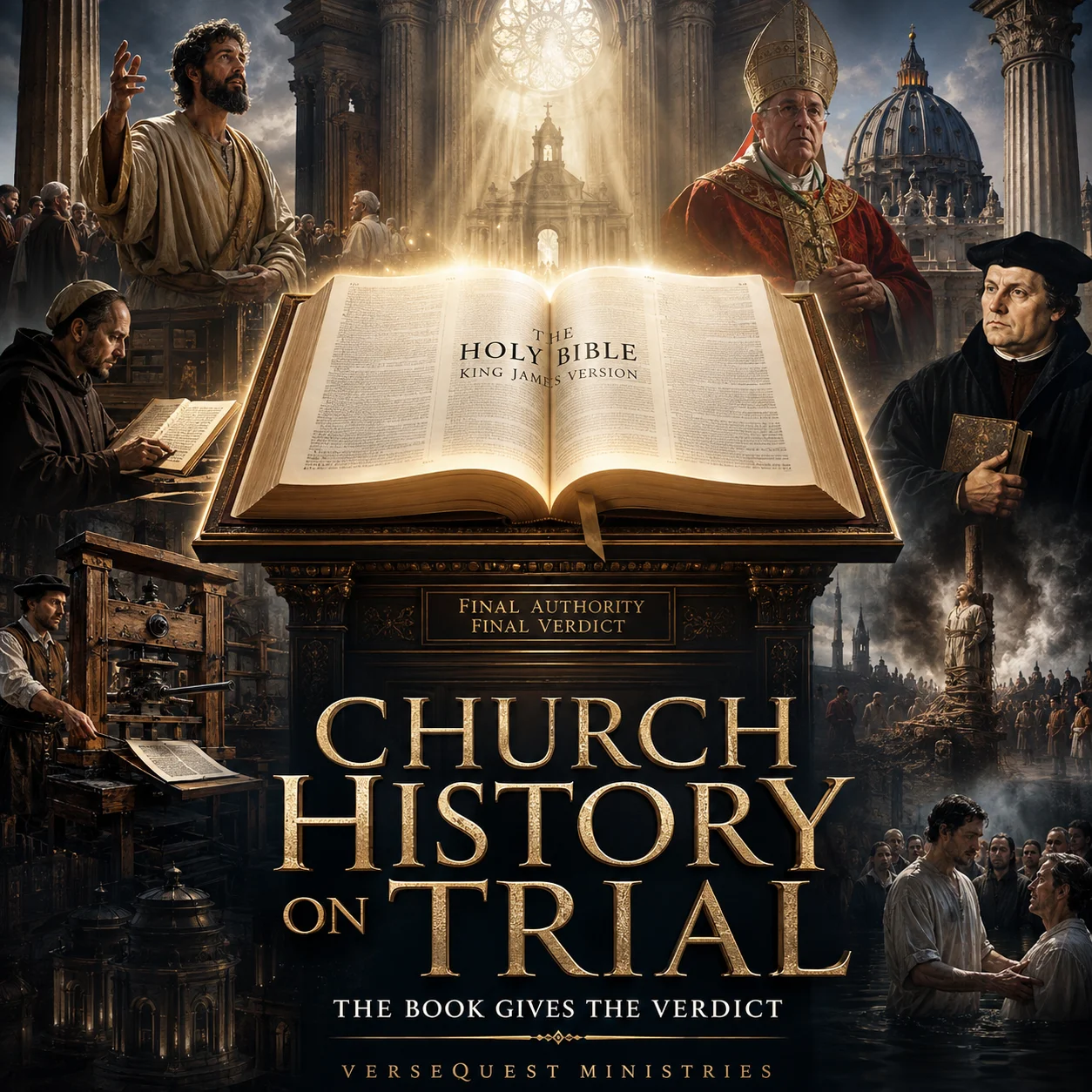
Church History on Trial is an extraordinary 1,055-page downloadable PDF book examining two thousand years of Christianity through 120 detailed studies, a full introduction, comprehensive conclusion, and final illustrated Bible-study chart.
Follow the story from Acts and the early Church through Constantine, Augustine, medieval Rome, the Reformation, Tyndale, Calvin, Trent, Baptists, religious liberty, missions, Vatican I, German criticism, Westcott and Hort, the 1881 Revised Version, Vatican II, and the modern authority debate.
Rome makes its case from continuity. The Reformation makes its case from recovery. The Bible-believing case tests them both by revelation, preservation, rightly divided doctrine, and the final authority of Scripture.
This is a substantial KJV-centered church-history reference designed for serious Bible students, pastors, teachers, preachers, families, and readers who want more than a denominational version of Christian history.
1,055 pages. Downloadable PDF. $24.99.
$24.99
Description
Church History on Trial is a massive 1,055-page downloadable PDF book containing a full introduction, 120 detailed church-history studies, a comprehensive conclusion, and a final illustrated Bible-study chart bringing the entire investigation together. Priced at $24.99, this is a major VerseQuest reference work designed for Bible students, pastors, preachers, teachers, families, church-history readers, and anyone who wants to understand how Christianity developed from the apostolic age into the complicated religious world we see today.
This book began with a fundamental question: How can historians examine the same Constantine, Augustine, medieval papacy, Reformation, Council of Trent, Vatican councils, Baptist dissenters, revivalists, missionaries, manuscripts, and modern churches—and reach dramatically different conclusions about what those events mean? The answer is that church history is never merely a collection of dates. Every interpretation depends upon what the historian believes about authority, Scripture, tradition, the Church, salvation, doctrinal development, and the preservation of truth.
The book therefore places church history itself in the courtroom. Rome is allowed to make its strongest case from continuity, apostolic succession, institutional development, sacramental theology, councils, and the historic episcopate. The Protestant Reformation makes its case from corruption and recovery, especially the recovery of biblical authority and justification by faith. The Bible-believing position examines both through the final authority of Scripture, emphasizing revelation, preservation, rightly divided doctrine, the local church, salvation by grace through faith, liberty of conscience, and the continuing necessity of testing every human claim by the Word of God.
The investigation begins with the apostolic church—Peter, Paul, Pentecost, Acts 15, local congregations, bishops, elders, and the earliest questions concerning authority. It then follows Christianity through Clement, Ignatius, Irenaeus, Tertullian, Origen, Cyprian, persecution, Constantine, Nicaea, Augustine, Jerome, Gregory the Great, medieval papal development, monasticism, the Crusades, scholastic theology, Aquinas, purgatory, indulgences, the Inquisition, the Waldenses, Wycliffe, Hus, and the breakdown of medieval Christendom.
The Reformation receives extensive examination through Erasmus, Luther, Tyndale, Zwingli, Calvin, the Anabaptists, Henry VIII, the English Bible, the Puritans, Separatists, Baptists, the Authorized Version of 1611, Trent, the Jesuits, and the wars of confessional Europe. The book does not treat the Reformation as though Protestantism instantly restored every element of New Testament Christianity. Luther recovered monumental truths while retaining doctrinal and ecclesiastical baggage. Calvin challenged Rome while governing within a coercive religious commonwealth. Anglicanism rejected papal jurisdiction while retaining enough historic Catholic structure to help produce the later Oxford Movement.
The modern period brings another set of witnesses into court: Whitefield and Wesley, the Enlightenment, religious liberty, Baptist dissent, the missionary century, the Oxford Movement, Vatican I, German higher criticism, Westcott and Hort, the Revised Version of 1881, modern textual criticism, Vatican II, and twentieth-century Catholic-Protestant dialogue. The reader follows the changing controversy from Who has authority to interpret Scripture? to the deeper modern question, Are we even certain what Scripture originally said?
The book also deliberately challenges bad historical apologetics. Martyrdom proves sincerity, not doctrinal correctness. Antiquity proves age, not inspiration. Institutional continuity proves survival, not divine authorization. Protestantism is not automatically right because it opposes Rome. Baptists are not automatically right because they were persecuted. Scholarship is not automatically unbelief because it asks difficult questions. Textual criticism is not identical with higher criticism. Church Fathers are valuable witnesses, but they do not become inspired because they lived closer to the apostles.
Particular attention is given to the development of the papacy, infant baptism, sacramental theology, sacerdotal priesthood, the Mass, purgatory, Marian devotion, church-state relationships, persecution, religious liberty, justification, biblical authority, preservation, translation, the Received Text tradition, and the place of the King James Bible in English-speaking Christianity.
Throughout the book, the same courtroom principle governs the investigation: history supplies witnesses, but the Book gives the verdict. The final authority is not the oldest institution, the most celebrated theologian, the bravest martyr, the most influential reformer, the most prestigious university, the largest denomination, or the loudest scholar. Romans 3:4 establishes the final rule: “let God be true, but every man a liar.”
The closing conclusion gathers the entire two-thousand-year investigation and brings every human witness down from the bench. The included final Bible-study chart, Church History on Trial — Two Thousand Years of Christianity Before the Final Authority, provides a visual overview of the major historical eras, doctrinal fault lines, interpretive approaches, turning points, biblical witnesses, recurring patterns, and final conclusions of the complete series.
This 1,055-page downloadable PDF is designed to function not merely as a book to read once, but as a long-term church-history and Bible-study reference. It can be searched, studied, taught, revisited by subject, paired with Scripture, and used to prepare lessons, sermons, classes, discussions, and further research.
Price: $24.99
The final authority of Scripture — Every pope, council, reformer, historian, denomination, tradition, and scholarly reconstruction must ultimately be tested by the written Word of God. Three interpretations of church history — Rome emphasizes continuity and development; the Reformation emphasizes corruption and recovery; the Bible-believing case emphasizes revelation, departure, preservation, remnant witness, and final scriptural authority. The apostolic starting point — The New Testament church is examined before later ecclesiastical structures are read backward into it. Peter and the development of papal claims — Peter's biblical prominence is distinguished from the later universal papal monarchy. Bishops, elders, pastors, and hierarchy — The historical growth of ecclesiastical offices is compared with New Testament terminology. Scripture and Tradition — Catholic claims concerning apostolic Tradition are examined alongside Protestant and Bible-believing claims concerning scriptural sufficiency. Doctrinal development — The book repeatedly asks whether later clarification faithfully unfolds revelation or adds doctrines not demonstrably apostolic. Infant baptism and believer's baptism — The movement from apostolic conversion-and-baptism patterns toward territorial and sacramental Christianity is traced historically. The Lord's Supper and the Mass — Memorial, real-presence, sacrificial, and transubstantiation claims are examined historically and biblically. The growth of the priesthood — The transformation of New Testament ministry into an increasingly sacerdotal system is investigated. Church and state — Constantine, Christendom, medieval papal power, Protestant establishments, Puritan commonwealths, and Baptist religious liberty all come before the court. Persecution and liberty of conscience — The book examines Catholic, Protestant, and colonial persecution without granting doctrinal correctness merely because someone suffered. Augustine's enormous influence — Grace, original sin, baptism, predestination, coercion, and ecclesiology are traced through later Catholic and Protestant history. Medieval Catholic development — Papal power, monasticism, relics, images, purgatory, indulgences, scholasticism, the sacraments, and the Inquisition receive detailed treatment. The Waldenses, Wycliffe, Lollards, and Hus — Pre-Reformation challenges to ecclesiastical authority and restrictions upon Scripture are examined. Renaissance humanism and the Greek New Testament — Erasmus and the return to original-language sources help prepare the Reformation. The Protestant Reformation — Luther, Zwingli, Calvin, the English Reformation, Tyndale, justification, Bible translation, and Protestant institutionalization are examined without treating reformers as infallible. The Council of Trent — Rome's formal answer to the Reformation is presented accurately before its claims are tested biblically. The Jesuits and Catholic renewal — Education, missions, apologetics, organization, and Counter-Reformation strategy are examined without resorting to conspiracy mythology. Baptists and the voluntary church — Believer's baptism, liberty of conscience, voluntary membership, and separation from coercive state religion receive major attention. The King James Bible and 1611 — The Authorized Version's historical setting, textual inheritance, translation tradition, and later place in English-speaking Christianity are examined. Enlightenment rationalism — Human reason increasingly assumes the authority to judge revelation. German higher criticism — Source theories, naturalistic assumptions, historical reconstruction, and the treatment of Scripture as merely ancient literature are examined. The modern textual controversy — The Received Text tradition, Vaticanus, Sinaiticus, Westcott, Hort, Burgon, the Revised Version, and later textual criticism are distinguished carefully. Providential preservation — The book argues that God did not merely inspire His words and abandon them to history. The missionary century — Protestant and Catholic global missions, Bible translation, empire, commerce, printing, and Providence are considered together. Vatican I and papal infallibility — The actual Catholic doctrine is distinguished from caricature before being tested against Scripture and history. Vatican II and ecumenism — Changes in Catholic liturgy, Scripture use, religious liberty, Protestant relations, and dialogue are distinguished from doctrines Rome continued to affirm. Right division — Israel and the Church, law and grace, salvation and discipleship, and other doctrinal distinctions prevent church history from being read through the wrong biblical covenant. The danger of historical mythology — False stories weaken a true doctrinal case. Christ above every institution — Jesus Christ, not a denomination or ecclesiastical structure, remains the one Mediator and Head of the Church.
Central Argument
Church history contains invaluable testimony, but historical continuity, antiquity, scholarship, suffering, institutional success, or denominational pedigree cannot replace divine revelation. History supplies witnesses. Scripture gives the verdict.
Three Major Historical Claims
Rome: Christianity continues through the visible historic Church, apostolic succession, doctrinal development, sacramental life, councils, and the Roman teaching office.
The Reformation: Medieval Christianity became corrupted and obscured essential Gospel truth; the Reformation recovered Scripture’s authority and justification by faith.
The Bible-Believing Position: Revelation was given, men and institutions departed in varying degrees, God preserved His Word and Gospel, and every later claim must be tested by Scripture.
Major Observations
- Early Christianity was simpler institutionally than later Catholic Christendom.
- Roman primacy developed historically rather than appearing fully formed in Acts.
- Historical development alone does not determine whether a doctrine is biblically authorized.
- The Reformation recovered major biblical truths but did not remove every inherited doctrine or church-state structure.
- Catholics and Protestants both persecuted religious dissenters when given coercive power.
- Believer’s baptism naturally supports voluntary church membership and liberty of conscience.
- Martyrdom demonstrates conviction but cannot establish doctrinal truth.
- Councils can clarify biblical doctrine but cannot manufacture revelation.
- Catholic history should be represented accurately rather than through caricatures.
- Protestant heroes must remain subject to Scripture.
- Academic scholarship can uncover genuine historical facts while still operating from faulty philosophical assumptions.
- Legitimate textual study must be distinguished from naturalistic biblical criticism.
- The KJV defense is strengthened, not weakened, when inaccurate historical arguments are discarded.
- Vatican II substantially altered Catholic practice, relationships, and tone without formally repealing the major doctrinal issues contested at the Reformation.
- Church history repeatedly demonstrates the danger of joining ecclesiastical authority to political coercion.
Important Doctrinal Distinctions
- Scripture versus ecclesiastical tradition
- Inspiration versus historical testimony
- Preservation versus continual reconstruction
- Salvation versus sacramental participation
- Justification versus sanctification
- Salvation versus discipleship
- Standing versus state
- Israel versus the Church
- Local church versus universal institutional hierarchy
- Ordinances versus saving sacraments
- Civil government versus spiritual church authority
- Historical development versus apostolic authorization
- Sincerity versus doctrinal truth
Memorable Teaching Points
History supplies witnesses. The Book gives the verdict.
Continuity proves survival; Scripture determines truth.
Martyrdom proves conviction, not inspiration.
A council can correctly describe truth; it cannot vote truth into existence.
False history does not defend a true Bible.
Leaving Rome is not the same thing as removing all of Rome’s theological furniture.
The preacher carries a Bible, not a badge.
A doctrine can be ancient and still require biblical authorization.
The easiest pope to overlook is the one a religious group quietly installs inside its own camp.
When every witness has spoken, the Book gets the last word.
Questions Worth Further Study
- How early can the major claims of Roman papal authority actually be documented?
- When does historical doctrinal development become theological addition?
- How did infant baptism change the relationship between church membership and society?
- What role did Constantine play in changing Christianity’s relationship to political power?
- Which elements of Augustine most strongly influenced Catholicism and Calvinism?
- How much of medieval Catholic sacramental theology can be demonstrated directly from the New Testament?
- Which Reformation doctrines represented genuine recovery, and which medieval assumptions survived?
- Why did Protestants who rejected papal coercion sometimes reproduce religious coercion themselves?
- How did Baptist ecclesiology contribute to religious liberty?
- How did Enlightenment assumptions alter the study of Scripture?
- How did nineteenth-century German criticism affect modern seminaries?
- What changed in Protestant preaching culture after the rise of modern textual criticism?
- How should Bible believers discuss manuscript evidence without surrendering preservation?
- Which changes at Vatican II concerned doctrine, and which concerned language, liturgy, relationships, or pastoral practice?
- What does two thousand years of church history teach about the danger of substituting an institution for Christ?
Personal Bible Study: Use the book as a long-term study companion while reading Acts, Romans, Galatians, church epistles, and Revelation 2–3. Individual essays can be studied independently by historical period or doctrine.
Sermon Preparation: Pastors and preachers can use the historical material to supply context for sermons on biblical authority, justification, apostasy, church government, religious liberty, the Reformation, preservation, or church-state relationships.
Sunday School: The 120-study arrangement allows teachers to build extended church-history courses without trying to cover two thousand years in several rushed lessons.
Small Groups: Individual essays can serve as discussion studies, especially those concerning authority, baptism, salvation, the papacy, the Reformation, religious liberty, missions, or Bible preservation.
Discipleship: The book helps Christians understand why churches differ, where major doctrines developed, why denominational traditions exist, and why every doctrine must ultimately be tested by Scripture.
Family Study: Older students and families studying Christian history can use selected essays alongside a Bible, map, and timeline to understand the relationship between biblical doctrine and major historical events.
Classroom Instruction: Bible institutes, homeschool settings, Christian schools, adult classes, and ministry-training programs can use the material to organize a broad survey of church history from the apostolic age through Vatican II and modern textual criticism.
Apologetics Training: The book teaches readers to represent opposing positions accurately before answering them, strengthening Catholic-Protestant discussions and preventing weak arguments based upon historical myths.
Topical Teaching: Because the essays examine specific subjects individually, readers can study baptism, councils, papal authority, the Mass, religious liberty, textual criticism, missions, Augustine, Luther, Calvin, the Jesuits, Vatican councils, or many other topics without reading the entire work sequentially.
Reference Use: At 1,055 pages, this PDF can remain in a digital ministry library as a searchable church-history reference for future teaching and research.
King James Bible — The essential primary authority to keep beside this study. Every historical and doctrinal conclusion should ultimately be tested against Scripture.
Strong's Exhaustive Concordance — Helpful for tracing doctrinal terminology, related passages, and recurring biblical themes throughout the study.
A Reliable Bible Dictionary — Useful for apostolic geography, Roman history, biblical offices, Jewish institutions, ancient cities, and historical context.
Bible Atlas and Historical Maps — Especially useful for following Jerusalem, Antioch, Rome, Asia Minor, the Reformation, missionary expansion, and the changing geographical centers of Christianity.
Cross-Reference Bible Tools — Valuable for comparing passages related to church government, justification, baptism, preservation, apostasy, and ecclesiastical authority.
Primary Historical Documents — Readers will benefit from consulting the texts of major creeds, confessions, councils, Reformation writings, and Catholic doctrinal statements when pursuing particular topics more deeply.
Church-History Timelines — A chronological timeline can help readers place emperors, councils, popes, reformers, Bible translations, missionary movements, and textual controversies in relation to one another.
Manuscript and Bible-Translation Reference Materials — Especially useful alongside the sections concerning Erasmus, the Received Text, the Authorized Version, Vaticanus, Sinaiticus, Westcott and Hort, Burgon, and the Revised Version.
VerseQuest Romans Without Confusion — A useful companion for deeper study of justification, grace, Israel and the Church, and the Pauline doctrines repeatedly involved in the controversies examined throughout this book.
The Included Church History on Trial Bible Study Chart — Use the final chart as a visual review sheet for the three competing historical lenses, major turning points, doctrinal fault lines, courtroom questions, key Scriptures, and the final verdict of the series.
Related products
-
No Condemnation
-
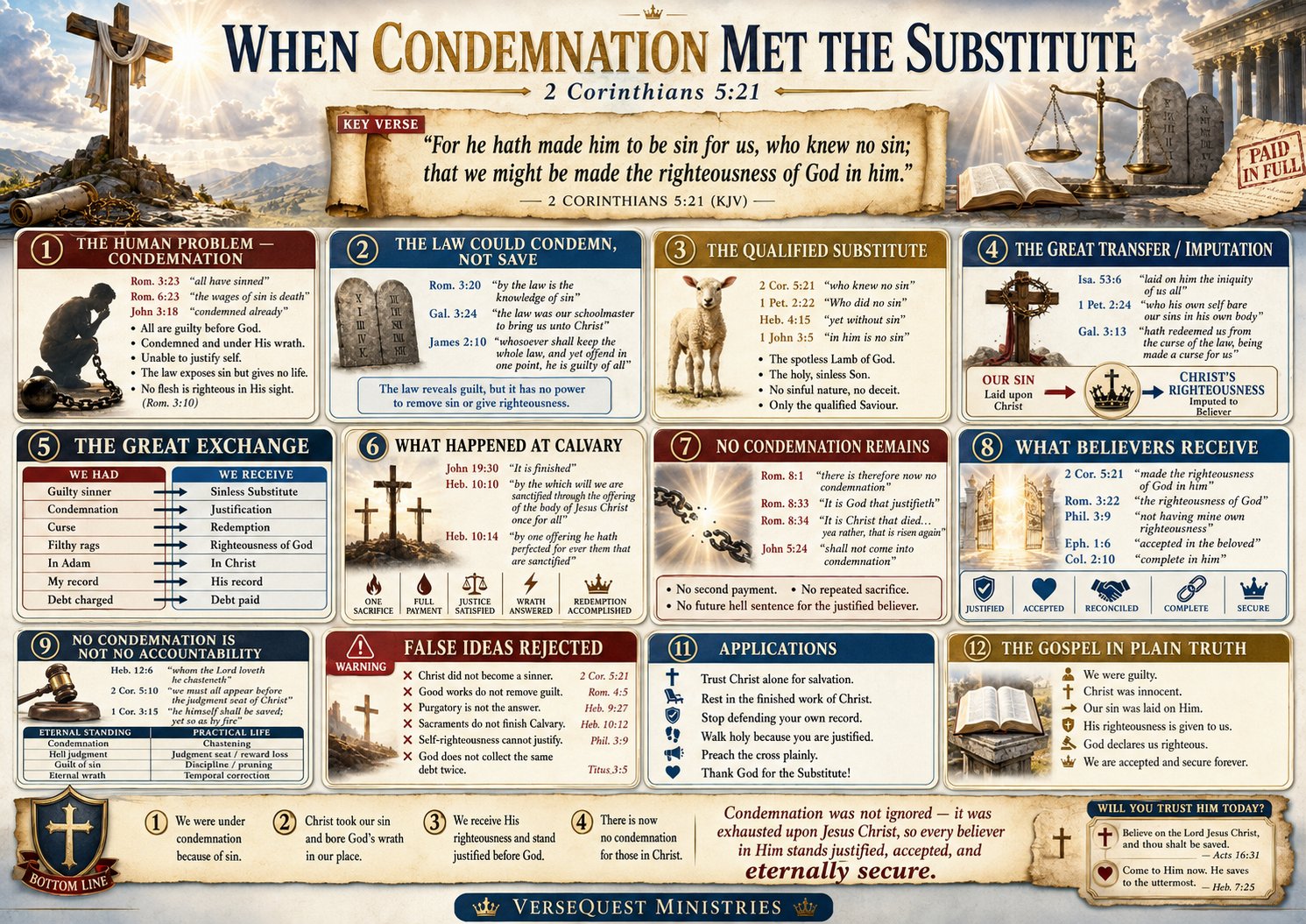
- When Condemnation Met the Substitute – 2 Corinthians 5:21, Imputed Righteousness, and No Condemnation in Christ (KJV Bible Study Chart)
- Understand 2 Corinthians 5:21 with this detailed KJV Bible study chart covering condemnation, Christ the sinless Substitute, imputed righteousness, justification, the great exchange, and eternal security.
- $3.99
- Add to cart
-
-
Romans and James
-
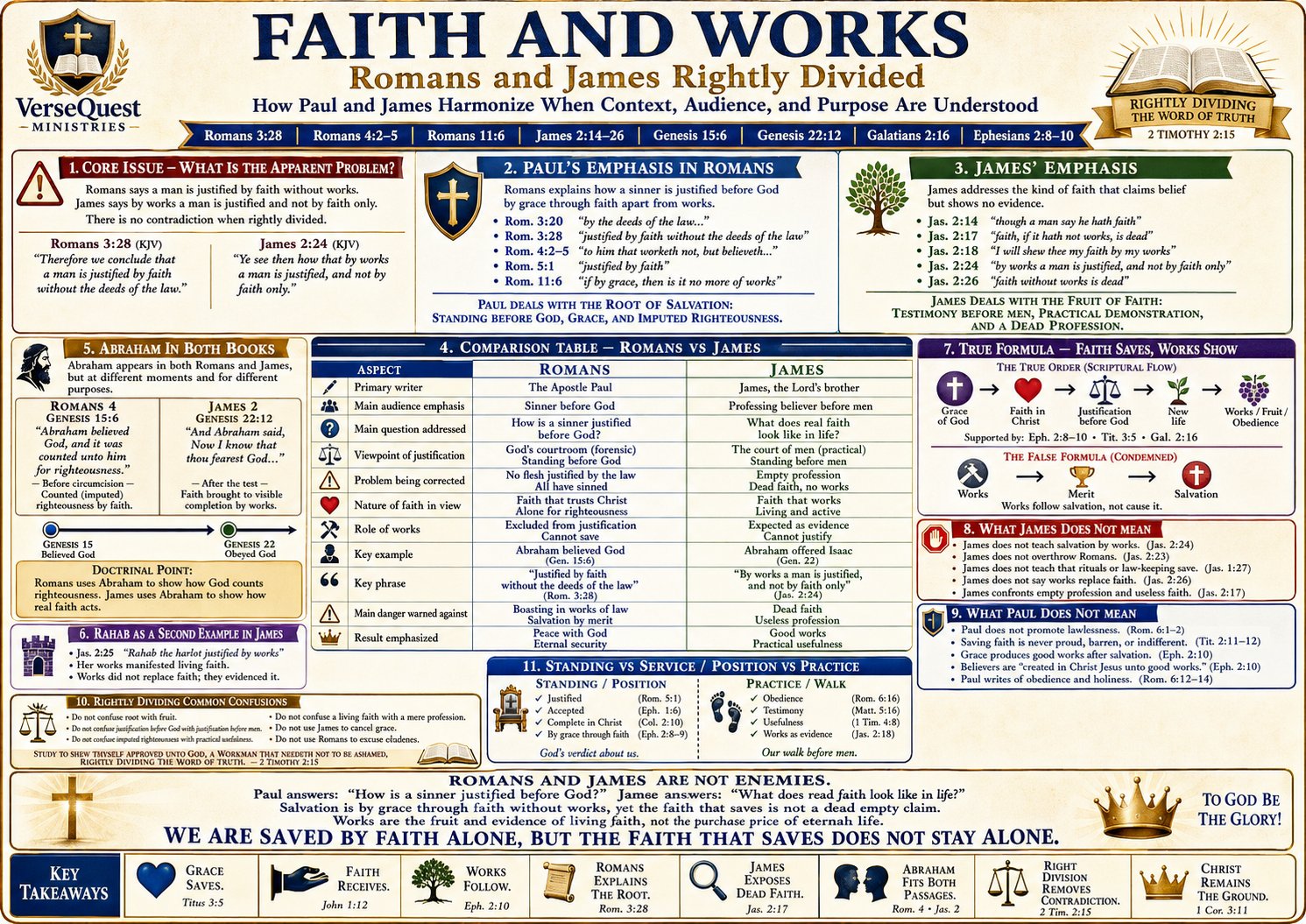
- Faith and Works – Romans and James Rightly Divided: Justification Before God and the Evidence of Living Faith (KJV Bible Study Chart)
- Understand how Romans and James harmonize with this detailed KJV chart covering justification by faith, dead profession, Abraham, Rahab, grace versus works, and the difference between salvation’s root and its…
- $3.99
- Add to cart
-
-
Doctrine Series
-
Christian Growth After Salvation
-
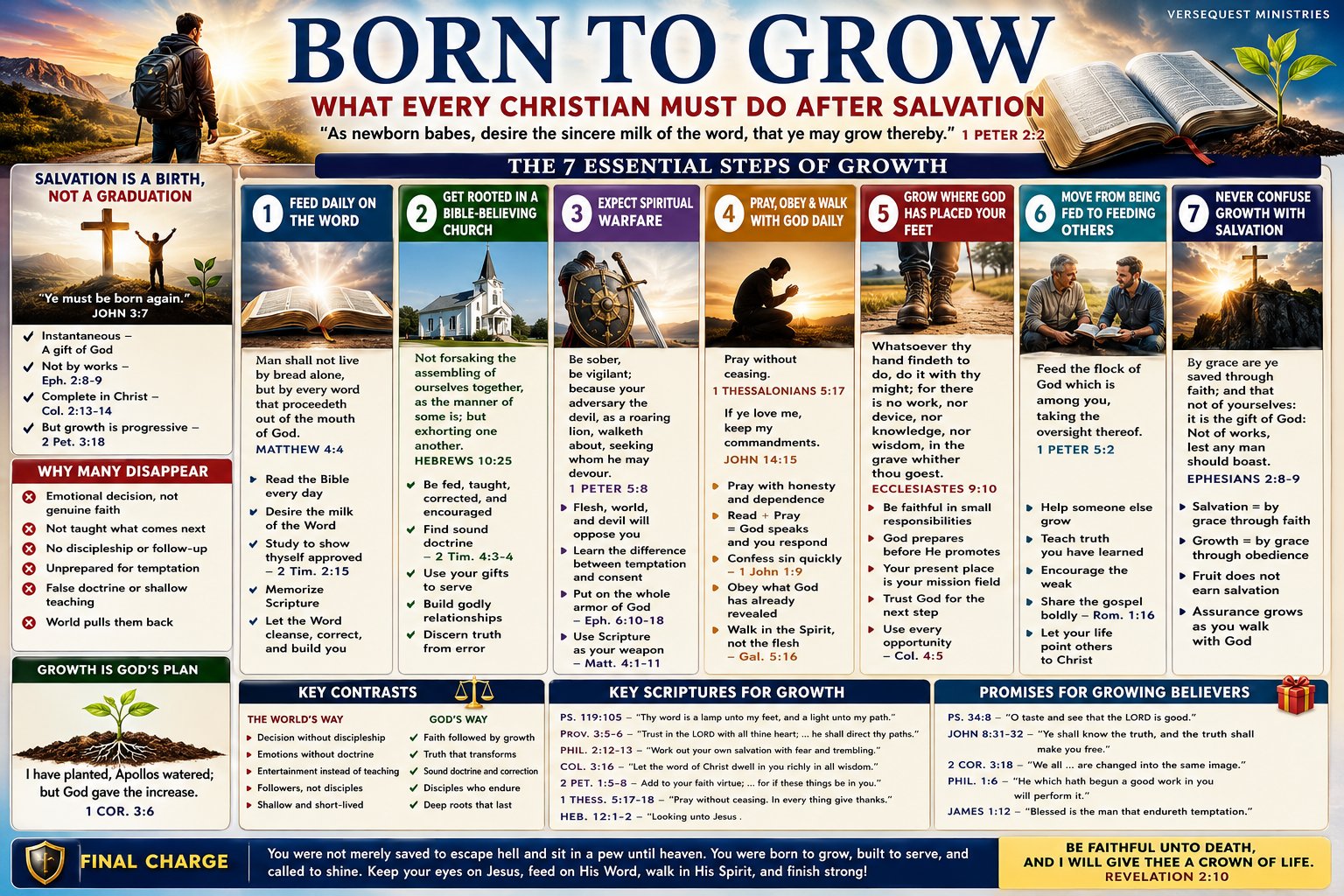
- Born to Grow – Seven Essential Steps Every Christian Must Take After Salvation (KJV Bible Study Chart)
- Help new and growing believers follow seven essential steps after salvation with this detailed KJV chart on Scripture, church, spiritual warfare, prayer, obedience, service, grace, and assurance.
- $3.99
- Add to cart
-
-
Abassadors For Christ
-
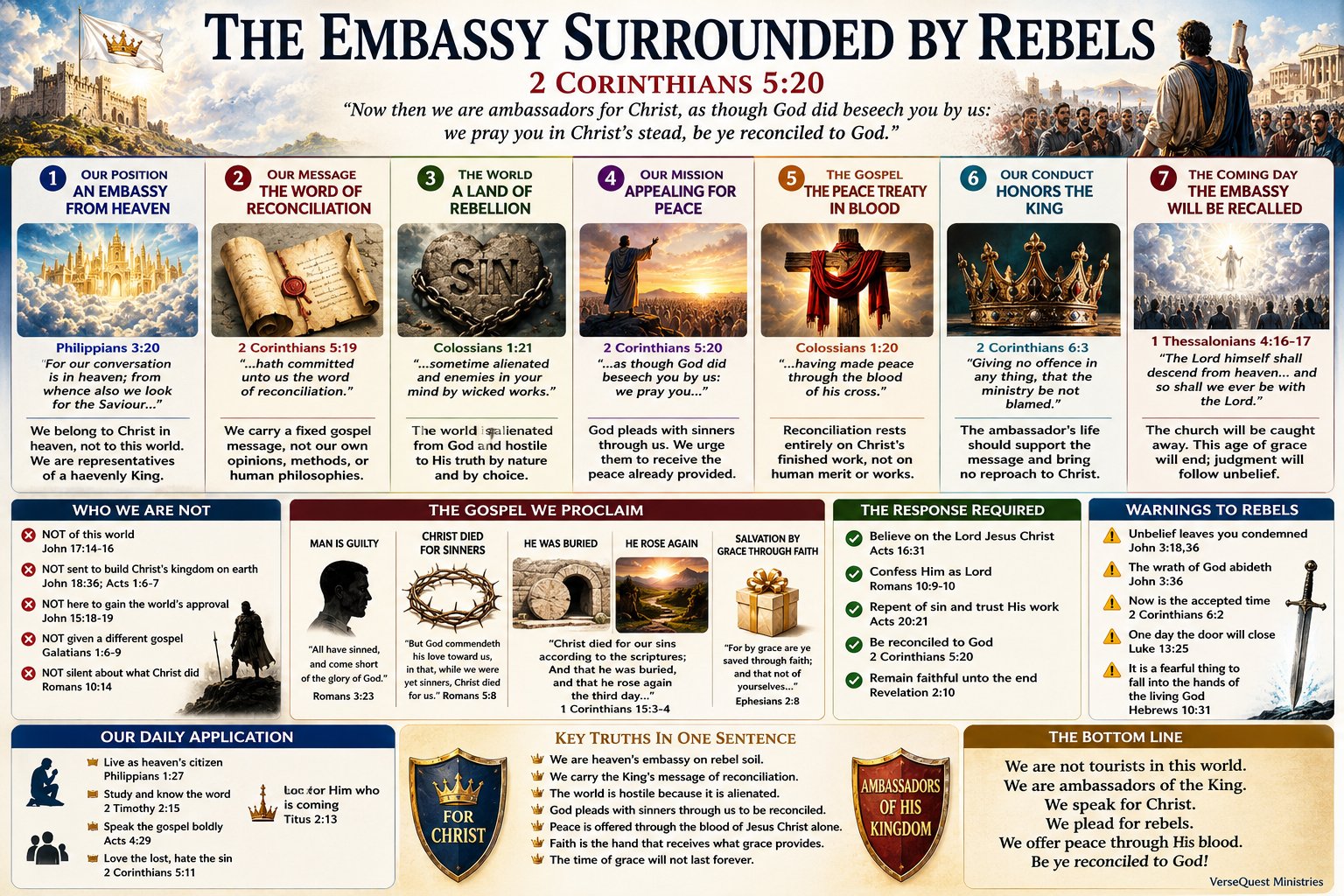
- The Embassy Surrounded by Rebels Bible Study Chart – Ambassadors for Christ and the Ministry of Reconciliation (KJV)
- Understand the Christian’s mission with this detailed KJV chart covering ambassadors for Christ, heavenly citizenship, the gospel of reconciliation, faithful conduct, evangelism, and the coming Rapture.
- $3.99
- Add to cart
-