
VerseQuest Daily — December 2026: The Person and Work of Jesus Christ
VerseQuest Daily — December 2026 is a 67-page downloadable devotional PDF containing thirty-one KJV studies on the Person and work of Jesus Christ. Each daily portion includes an assigned Scripture passage, a developed rightly divided devotional, Seven Things to Learn, and a memorable Thought for the Day.
The readings progress from the earliest promise of the Redeemer through Christ’s birth, earthly ministry, deity, humanity, sinlessness, offices, priesthood, headship, and future return. Use it throughout December or begin on any date as a substantial thirty-one-day Christ-centered discipleship study for personal, family, church, or small-group use.
$6.99
Description
VerseQuest Daily — December 2026 is a 67-page downloadable KJV devotional PDF containing thirty-one daily studies centered upon the Person and work of the Lord Jesus Christ. This is Month Four of VerseQuest Daily Discipleship Level One: Foundations and Growth. September established the authority of Scripture, the gospel, assurance, and the believer’s standing in Christ. October developed identity in Christ and the daily Christian walk. November trained the believer in prayer, worship, gratitude, and stewardship. December now directs the reader’s full attention toward who Jesus Christ is, why He came, what He accomplished, and what Scripture reveals concerning His offices, authority, headship, and return.
The month begins with the earliest promises and prophecies of the Redeemer, including the Seed promised in Eden, the virgin birth, the ruler from Bethlehem, the eternal Word made flesh, and the Son who was given. The readings then follow Christ into His earthly life and ministry, examining His birth, sinlessness, identification as the Lamb of God, humility, baptism, temptation, compassion, authority over unclean spirits, and example of communion with the Father.
The later studies develop essential Christological doctrine. Readers examine Christ as the image of the invisible God, the bodily fulness of the Godhead, Prophet, Priest, and King, the one Mediator between God and men, the unchangeable High Priest, the Head of the Church, the Last Adam, and the Firstborn among many brethren. These studies defend the full deity, true humanity, sinlessness, preeminence, exclusive mediation, and eternal priesthood of Jesus Christ directly from the King James Bible.
The closing Strong Meat readings address subjects frequently obscured by tradition or doctrinal confusion. The study carefully examines what the Bible does and does not say about December 25, the prophetic distinction between Christ’s first and second advents, Old Testament appearances of Christ, and the KJV declaration that God was manifest in the flesh. These subjects are handled devotionally without surrendering their doctrinal depth or dispensational setting.
Every daily portion begins with an assigned King James Bible passage and a clearly identified topic. The devotional explains the text in its biblical setting, establishes its doctrine, and applies its truth to Christian life. Each reading concludes with Seven Things to Learn and a memorable Thought for the Day. The month progresses through eight Milk readings, ten Bread readings, nine Meat readings, and four Strong Meat readings, allowing newer believers to begin with clear foundational truths while steadily leading serious students into deeper doctrine.
The PDF may be read on a computer, tablet, or mobile device or printed for regular use. It may be followed throughout December 2026 or begun on any date as a thirty-one-day discipleship study. It is suitable for personal devotions, family Bible reading, church groups, Sunday school classes, one-to-one discipleship, ministry training, and focused studies of Jesus Christ.
The promised Redeemer — God announced the coming Seed immediately after sin entered the world. Messianic prophecy — Christ’s birth, birthplace, identity, ministry, government, and future return were revealed before His incarnation. Progressive revelation — Later Scripture develops earlier promises without pretending that every generation possessed the same amount of revealed truth. The virgin birth — Jesus Christ entered humanity through a miraculous conception by the Holy Ghost. The eternal Word made flesh — The One born in Bethlehem existed eternally as God before entering the world as man. The full deity of Christ — Jesus Christ is not a created being or lesser god; all the fulness of the Godhead dwells bodily in Him. The true humanity of Christ — The Son genuinely partook of flesh and blood while remaining completely sinless. The sinlessness of Christ — Christ experienced real temptation without possessing a sinful nature or yielding to sin. The Lamb of God — Jesus Christ came as God’s appointed sacrifice for sin. The humility of the incarnation — The eternal Son took the form of a servant and willingly submitted to the death of the cross. Christ’s earthly obedience — His baptism, temptation, submission, compassion, prayer, and ministry reveal perfect obedience to the Father. Authority over the spiritual realm — Devils recognized an authority in Jesus Christ that religious men frequently resisted. The preeminence of Christ — Christ stands before and above all creation as its Creator, Sustainer, and rightful Lord. Prophet, Priest, and King — The threefold office of Christ brings together revelation, mediation, sacrifice, authority, and government. The one Mediator — Access to God is found through Jesus Christ rather than through saints, priests, religious institutions, or human merit. The unchangeable High Priest — Christ’s priesthood continues forever because He lives forever. The Head of the Church — The Church is Christ’s Body and must remain under His authority. The Last Adam — Christ is the Head of a new humanity and the source of resurrection life. The meaning of Firstborn — The biblical title expresses rank and preeminence rather than creation or a beginning of existence. The defeat of death — Christ partook of flesh and blood so that through death He might destroy the devil’s claim through the power of death. Scripture and religious tradition — Biblical facts concerning Christ’s birth must be distinguished from dates and customs not stated in Scripture. The two advents of Christ — Prophecy distinguishes Christ’s first coming in grace from His future return in judgment and kingdom authority. Old Testament appearances of Christ — The Son acted and appeared before His incarnation without ceasing to be the eternal God. God manifest in the flesh — The incarnation is the revealed mystery of godliness and a central confession of biblical Christianity.
- Central argument: Jesus Christ must be known as Scripture reveals Him rather than reduced to a seasonal figure, moral example, religious symbol, or sentimental tradition.
- Daily structure: Each entry contains an assigned KJV passage, a defined topic, a developed devotional exposition, Seven Things to Learn, and a Thought for the Day.
- Progressive design: The month contains eight Milk readings, ten Bread readings, nine Meat readings, and four Strong Meat readings.
- Christ before Bethlehem: The doctrine of Christ begins in Genesis, develops through Old Testament prophecy, and reaches its fullest revelation in the New Testament.
- Progressive revelation must be respected: Genesis 3:15 begins the promise of redemption, but it does not contain every detail later revealed concerning the gospel or the Body of Christ.
- The virgin birth is essential doctrine: Jesus Christ was genuinely born of a woman while being conceived by the Holy Ghost.
- Emmanuel declares identity: Christ is not merely a man enjoying divine assistance; He is God with us.
- The Word did not begin in Bethlehem: John 1 presents the Word as eternally existing with God and as God before He was made flesh.
- Christ was truly tempted but never sinful: Temptation does not require a sinful nature, and Christ’s victory was complete.
- The Lamb was God’s provision: John the Baptist identified Jesus as the Lamb of God, connecting His coming with sacrifice and the removal of sin.
- The incarnation displays humility: Christ did not cease to be God when He took the form of a servant.
- Christ’s baptism was not repentance from sin: The sinless Son identified Himself with God’s program and fulfilled all righteousness.
- The temptation exposed the true King: Jesus refused the devil’s shortcuts and answered temptation with the written word.
- His compassion accompanied His doctrine: Christ saw scattered people as sheep without a shepherd and taught them many things.
- Devils recognized His authority: The spiritual realm knew that Jesus possessed authority exceeding that of scribes, rulers, and religious institutions.
- Christ’s prayer life reveals communion: The sinless Son still withdrew from crowds to pray, demonstrating that public ministry cannot replace private fellowship.
- Image does not mean created copy: Christ is the image of the invisible God because He perfectly reveals God, not because He is a created imitation.
- Firstborn describes preeminence: Romans 8:29 and Colossians 1 use the title to express rank, inheritance, and supremacy.
- All fulness dwells in Christ: Colossians 2:9 leaves no room for treating Jesus as partially divine.
- Christ fulfills three great offices: As Prophet He reveals God, as Priest He represents and intercedes, and as King He rules.
- There is one Mediator: Scripture gives no additional heavenly mediator between God and men.
- Christ’s priesthood cannot be transferred: Because He lives forever, His priestly office is unchangeable and permanent.
- The Church has one Head: No pastor, pope, council, organization, or government can occupy the position belonging to Jesus Christ.
- The Last Adam begins a new order: What was ruined under the first Adam finds its answer in the risen Christ.
- The incarnation prepared for Calvary: Christ took part of flesh and blood so that He could suffer death and defeat the one possessing the power of death.
- The Bible does not name December 25 as Christ’s birthday: A traditional date must not be presented as though it were an inspired statement.
- The comma separates two advents: Isaiah 61:1–2 joins the gracious ministry of Christ’s first coming with the future day of vengeance, while Luke 4 shows Christ stopping before the judgment portion.
- Old Testament appearances do not contradict the incarnation: The eternal Son could appear before Bethlehem, while the incarnation marked His permanent entrance into humanity.
- The KJV confession is direct: First Timothy 3:16 states that “God was manifest in the flesh,” presenting the incarnation without ambiguity.
- Further study question: How do Old Testament promises concerning Israel’s Messiah relate to Christ’s present position as Head of the Church?
- Further study question: What errors arise when Firstborn is interpreted as though it meant the first being God created?
- Further study question: How do the offices of Prophet, Priest, and King unite the different aspects of Christ’s ministry?
- Further study question: Which details about Christ’s birth come from Scripture, and which entered Christian culture through later tradition?
- Memorable teaching point: Bethlehem was Christ’s entrance into human flesh, not the beginning of His existence.
- Memorable teaching point: The cradle matters because of who entered it, and the cross matters because of what He accomplished there.
- Memorable teaching point: A Christ who is less than God cannot reveal God perfectly, defeat sin completely, or save eternally.
Personal Bible study — Read each assigned KJV passage before completing the devotional, reviewing the seven lessons, and carrying the Thought for the Day into daily life.
Thirty-one-day discipleship — Use the complete volume to establish a believer in the identity, offices, authority, incarnation, and saving work of Jesus Christ.
Family devotions — Read one study each day and discuss what the passage reveals about the character, compassion, authority, or work of Christ.
Sunday school instruction — Develop individual entries into lessons about Messianic prophecy, the virgin birth, Christ’s deity, His threefold office, or His two advents.
Christmas-season teaching — Use the studies to center December upon the biblical Christ while distinguishing Scripture from unsupported religious tradition.
Sermon preparation — Use the passages, doctrinal observations, distinctions, and practical applications as foundations for Christ-centered preaching.
Small-group Bible study — Assign daily readings and use the Seven Things to Learn as discussion points during weekly meetings.
One-to-one discipleship — Guide a newer believer from foundational truths about Christ’s birth and earthly ministry into deeper doctrines of His deity, mediation, priesthood, and headship.
Apologetics instruction — Use the studies addressing the deity, virgin birth, sinlessness, preexistence, and exclusive mediation of Christ to answer false teachings.
Ministry training — Teach preachers and teachers to present Jesus Christ accurately without confusing His earthly ministry to Israel, His present headship over the Church, and His future kingdom.
Independent study outside December — Begin the PDF on any date and use it as a self-contained thirty-one-day study of Jesus Christ.
A King James Bible for reading each assigned passage in its complete chapter and biblical context.
A Strong’s Exhaustive Concordance for tracing titles such as Christ, Messiah, Son of God, Son of man, Lamb, Word, Mediator, High Priest, Firstborn, and Last Adam.
A reliable King James Bible dictionary for studying biblical offices, titles, geography, Jewish customs, priesthood, sacrifice, and Messianic terminology.
The Treasury of Scripture Knowledge or another KJV-compatible cross-reference resource for tracing promises and prophecies concerning Christ.
A dispensational Bible timeline showing Old Testament prophecy, Christ’s earthly ministry, the present Church age, the Second Advent, and the future kingdom.
A harmony of the Gospels for comparing the events of Christ’s birth, baptism, temptation, ministry, death, and resurrection.
A study of Messianic prophecy using Genesis 3:15, Genesis 49:10, Psalm 22, Psalm 110, Isaiah 7:14, Isaiah 9:6–7, Isaiah 53, Isaiah 61:1–2, Micah 5:2, and Zechariah 12:10.
A study of Christ’s deity using John 1:1–14, John 8:58, John 10:30–33, John 20:28, Colossians 1:15–19, Colossians 2:9, 1 Timothy 3:16, Hebrews 1:1–12, and Revelation 1:8–18.
A study of Christ’s priesthood using Psalm 110:4 and Hebrews 4–10.
A study comparing Adam and Christ using Romans 5:12–21 and 1 Corinthians 15:20–49.
VerseQuest Daily — September 2026 for foundational instruction concerning Scripture, salvation, assurance, and the believer’s standing in Christ.
VerseQuest Daily — October 2026 for instruction concerning identity in Christ and the daily Christian walk.
VerseQuest Daily — November 2026 for studies of prayer, worship, gratitude, and stewardship.
Related products
-
KJV Bible Study Resources
-
-60%
- Practical Christianity for Daily Battles – 329-Page KJV Study PDF
- A premium 329-page KJV study PDF with 40 full essays applying sound, rightly divided Bible doctrine to real daily Christian battles. Topics include temptation, anxiety, marriage, parenting, pornography, grief, church…
- Original price was: $24.99.$9.99Current price is: $9.99.
- Add to cart
-
-60%
-
Luke commentary
-
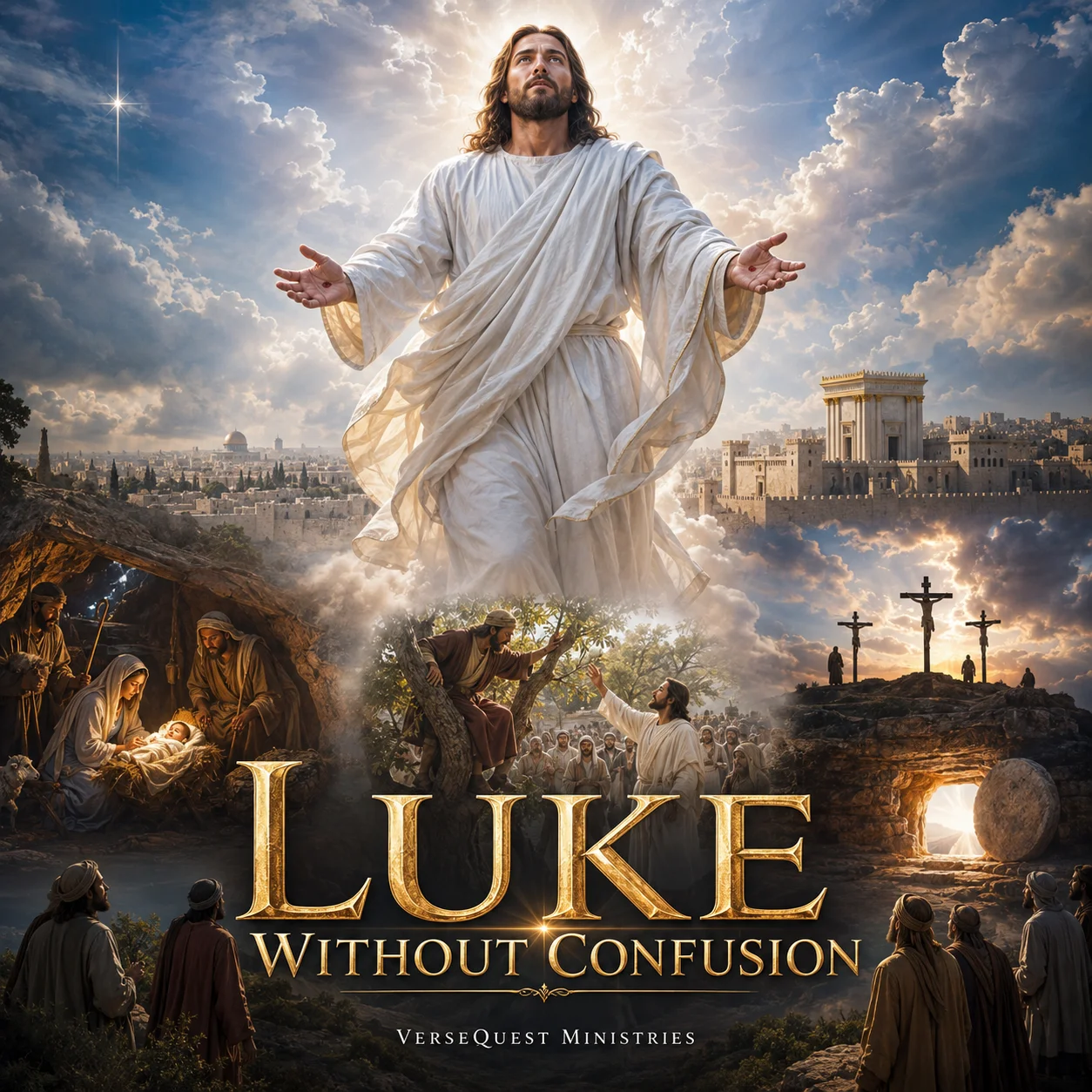
- Luke Without Confusion – 1,072-Page KJV Commentary PDF
- Luke Without Confusion is a massive 1,072-page KJV commentary covering all 24 chapters of Luke through 84 detailed studies. It includes a thorough introduction, a full conclusion, and a premium…
- $9.99
- Add to cart
-
-
VerseQuest Premium Library
-
-67%
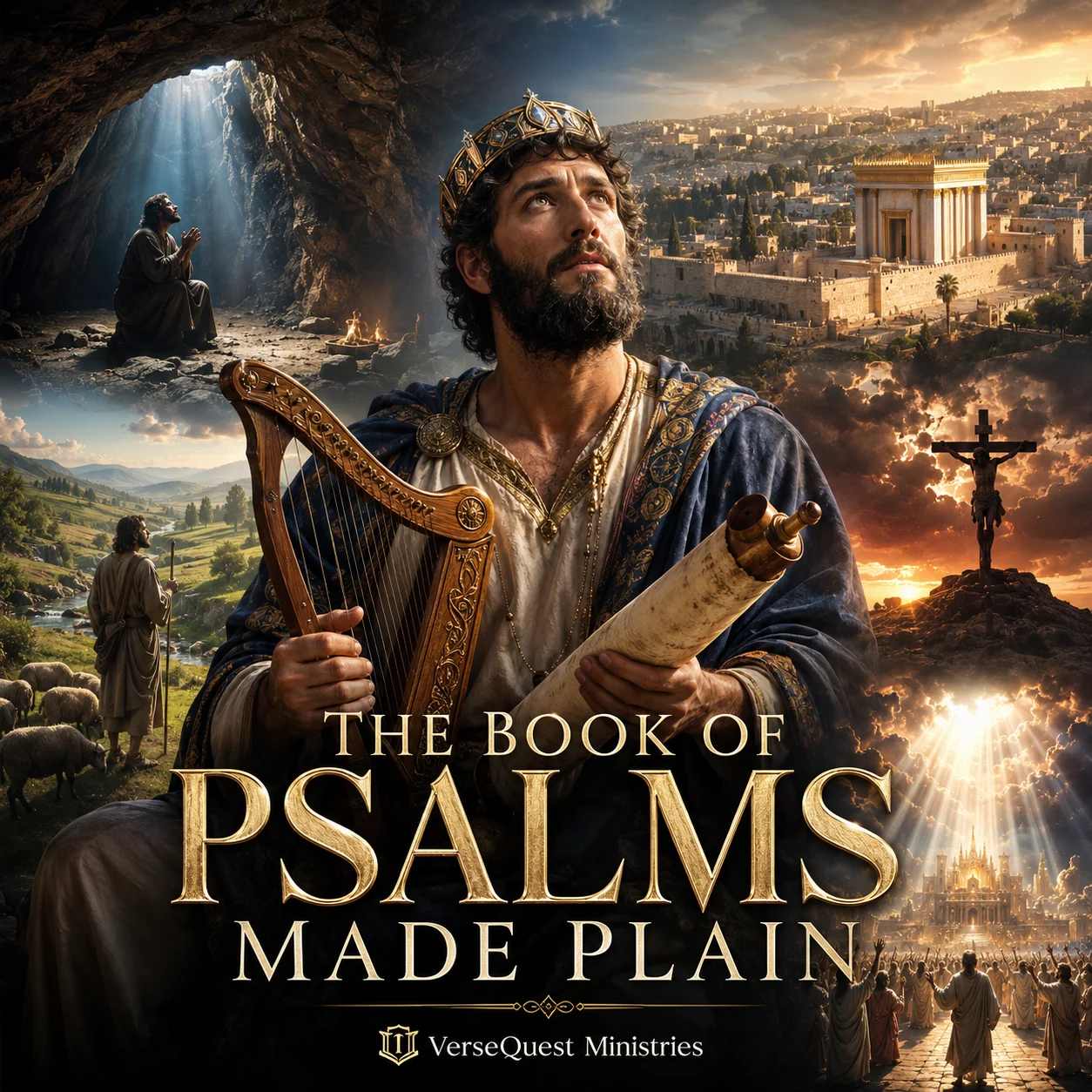
- The Book of Psalms Made Plain – 383-Page KJV Psalm Study
- The Book of Psalms Made Plain is a 383-page premium KJV Bible study featuring 54 detailed essays through the major themes, doctrines, prophecies, prayers, laments, and praises of the Psalms.…
- Original price was: $29.99.$9.99Current price is: $9.99.
- Add to cart
-
-67%
-
Miracles of Christ
-
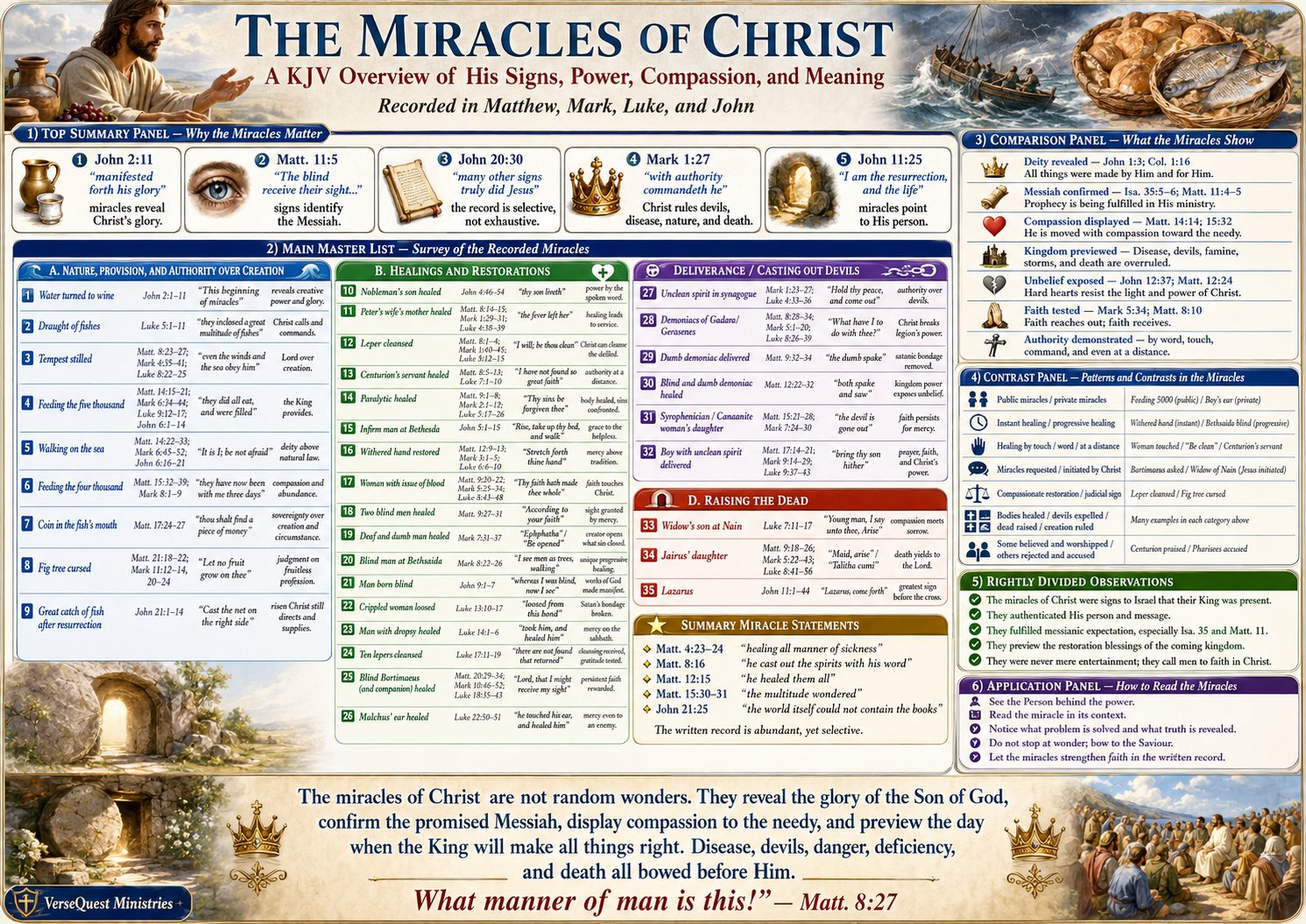
- The Miracles of Christ KJV Bible Study Chart – Printable Download
- This printable Miracles of Christ KJV Bible Study Chart gives a detailed overview of the recorded miracles of Jesus Christ in the Gospels. It covers His healings, deliverances, power over…
- $4.99
- Add to cart
-
-
Witnessing Handbook
-
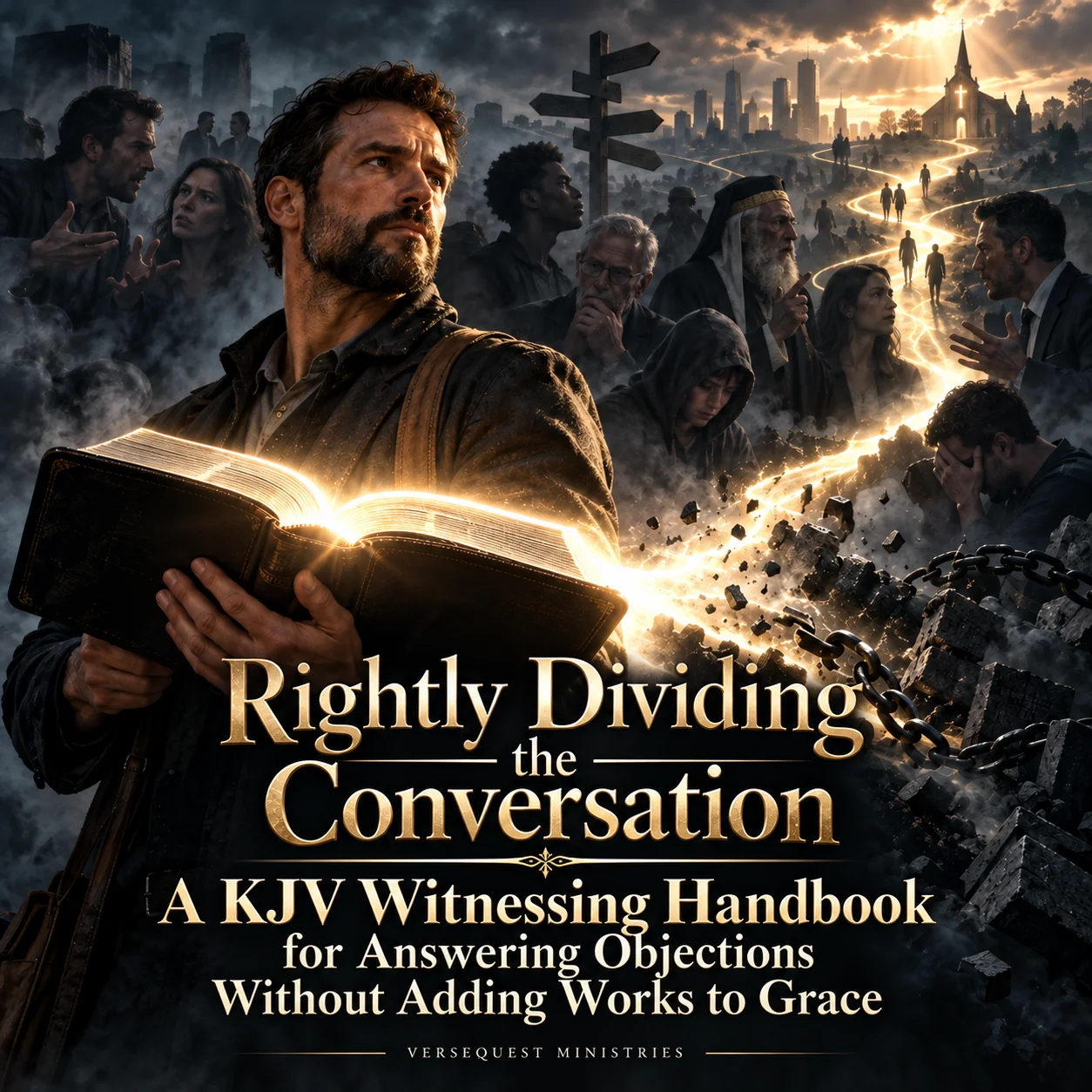
- Rightly Dividing the Conversation: A KJV Witnessing Handbook for Answering Objections Without Adding Works to Grace
- Rightly Dividing the Conversation is a monumental 1,275-page downloadable KJV witnessing handbook containing 175 detailed studies designed to prepare Bible believers for the objections, religions, excuses, cultural questions, painful experiences,…
- $39.99
- Add to cart
-