
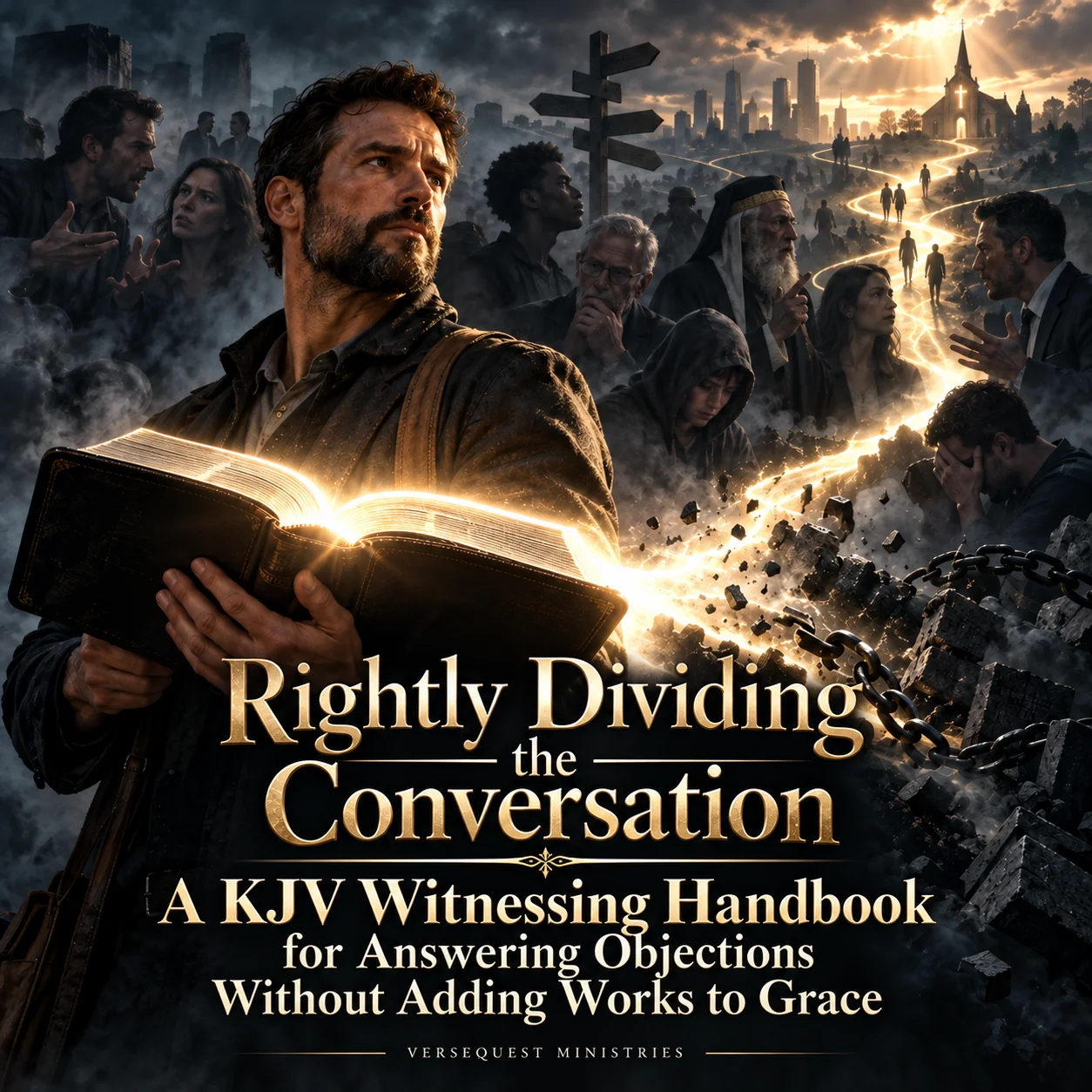
Rightly Dividing the Conversation: A KJV Witnessing Handbook for Answering Objections Without Adding Works to Grace
Rightly Dividing the Conversation is a monumental 1,275-page downloadable KJV witnessing handbook containing 175 detailed studies designed to prepare Bible believers for the objections, religions, excuses, cultural questions, painful experiences, and real-life situations that arise when the conversation turns toward God, Scripture, Jesus Christ, sin, salvation, judgment, and eternity.
The book covers atheism, science and creation objections, alleged Bible contradictions, the deity and resurrection of Christ, salvation and eternal security, Catholicism, Islam, Mormonism, Jehovah’s Witnesses, major world religions, New Age spirituality, occultism, religious trauma, deconstruction, cultural and moral objections, Israel, political distraction, hospital and funeral witnessing, family evangelism, online conversations, and what to do after someone believes.
Every section is built around the King James Bible, rightly divided, with the gospel of grace kept central throughout. The volume includes an Introduction, 175 complete essays, a detailed Conclusion, organized Table of Contents, and final Bible-study chart.
Digital PDF — 1,275 pages — $39.99
$39.99
Description
Rightly Dividing the Conversation is a massive 1,275-page KJV witnessing handbook built for Christians who want to be ready when conversations about God, the Bible, Jesus Christ, salvation, religion, morality, suffering, culture, and eternity become difficult. Containing 175 full-length studies, this downloadable digital book moves far beyond a collection of quick apologetic answers. It examines the objections people actually raise, the excuses people use to avoid the gospel, the religious systems that redefine Christ, the personal wounds that can harden into unbelief, and the practical situations in which believers must know not only what to say but how to say it.
The foundation of the entire book is the gospel of the grace of God. Before answering atheists, cults, world religions, skeptics, spiritual seekers, wounded former churchgoers, or cultural objections, the book establishes what the believer is carrying: Christ died for our sins according to the Scriptures, was buried, and rose again the third day according to the Scriptures. Salvation is kept separate from discipleship, justification from Christian service, standing from state, Israel from the Church, and free grace from religious systems that attach human performance to the finished work of Christ.
The opening sections establish the believer as an ambassador for Christ and deal with the actual mechanics of a gospel conversation. The reader is taught to listen before answering, ask questions that expose the real objection, distinguish intellectual resistance from moral rebellion or emotional injury, know when to answer a fool and when to end a fruitless debate, and keep secondary issues from carrying the conversation so far away that Calvary disappears over the horizon. The goal is not to manufacture clever arguers. It is to produce believers who can open the King James Bible, recognize what kind of objection is actually in front of them, and bring the conversation back to Christ.
A major portion of the book tackles questions about God, reality, creation, science, suffering, morality, miracles, divine sovereignty, atheism, agnosticism, and the problem of evil. It answers challenges such as “Who made God?”, “Why does God seem hidden?”, “Can morality exist without God?”, “Why do bad things happen to good people?”, “What about cancer?”, “Has science disproved God?”, “What about evolution?”, and “Why should anyone believe in miracles?” These studies are written to equip the reader with biblical answers rather than academic evasions.
The book then moves deeply into questions about the Bible itself. It addresses inspiration, preservation, the King James Bible, alleged contradictions, manuscript transmission, the canon of Scripture, Constantine, Nicaea, the so-called lost gospels, the Apocrypha, the Dead Sea Scrolls, claims that Paul invented Christianity, and allegations that Jesus was copied from pagan mythology. These chapters are designed to strengthen confidence in the written word of God while showing how many popular objections collapse when context, history, doctrine, and rightly divided Scripture are allowed to speak.
Another major section centers entirely upon Jesus Christ: His deity, Sonship, virgin birth, incarnation, substitutionary death, crucifixion, bodily resurrection, prophetic credentials, and exclusive claim to be the only way to the Father. The book does not present Christ as one religious teacher among many. It presents the Christ of Scripture—the eternal Word made flesh, the Creator, the Lamb of God, the risen Lord, and the only Saviour.
The studies on sin, judgment, hell, salvation, grace, works, eternal security, baptism, law keeping, tongues, assurance, and the Judgment Seat of Christ provide a detailed doctrinal backbone for evangelism. Questions such as “I am a good person,” “God knows my heart,” “Nobody is perfect,” “How can a loving God send anyone to hell?”, “What about people who never heard?”, “What about babies?”, “Can someone be too far gone?”, “Can I lose my salvation?”, and “Does James 2 contradict Romans 4?” are handled directly from the King James Bible.
Rightly Dividing the Conversation also contains an extensive examination of counterfeit gospels and confused Christianity. Roman Catholicism, the Mass, Marian mediation, purgatory, infant baptism, Eastern Orthodoxy, Lordship Salvation, Calvinism, perseverance theology, Seventh-day Adventism, Hebrew Roots, Church of Christ baptismal regeneration, Oneness Pentecostalism, charismatic experience, the prosperity gospel, modern apostles and prophets, progressive Christianity, and universalism are examined against the Pauline gospel of grace.
The world-religion section confronts Jewish objections to Jesus as Messiah, dual-covenant salvation, Islam, Mormonism, Jehovah’s Witness theology, Hinduism, Buddhism, Sikhism, Bahá’í progressive revelation, the Nation of Islam, Black Hebrew Israelite identity claims, Unitarian Universalism, and religious pluralism. The purpose is not to train the reader to mock people of other religions. It is to show where those systems contradict Scripture and how to move the conversation toward the identity and finished work of Jesus Christ.
The book then enters the modern spiritual marketplace: Christ consciousness, “spiritual but not religious,” manifestation, astrology, tarot, witchcraft, spirit guides, reincarnation, crystals, psychedelic spirituality, starseeds, ancient-alien religion, Freemasonry, Scientology, and artificial intelligence treated as spiritual authority. These studies expose how old rebellion repeatedly returns wearing new vocabulary and how Scripture answers every attempt to replace the Creator, redefine sin, bypass judgment, or discover salvation somewhere other than Christ.
A particularly important section addresses the apathetic, wounded, deconstructed, and religiously disillusioned. It deals with boredom with church, hypocrisy, religious trauma, unanswered prayer, deconstruction, family conflict surrounding sexuality, predators in pulpits, cultural Christianity, and former professing Christians. These chapters recognize that not every objection begins in a philosophy textbook. Some objections begin beside a hospital bed, inside an abusive church, after unanswered prayer, or in a family crisis. The book teaches believers to distinguish compassion from doctrinal surrender.
Cultural and moral objections receive direct treatment as well, including “Love is love,” “Born this way,” abortion, accusations that Christianity is a “white man’s religion,” charges that the Bible hates women, moral relativism, personal autonomy, changing cultural standards, political Christianity, and debates surrounding Israel. The emphasis remains consistent: politics, identity, morality, history, and culture matter, but none of them can replace the gospel.
The final portions of the book move from argument into actual ministry. Readers are taught how to witness to an unsaved spouse, children and teenagers, aging parents and relatives, coworkers, neighbors, hospital patients, grieving families, prisoners, addicts, strangers in public, people online, cult missionaries at the door, and individuals who may be facing their last conversation. These practical studies turn apologetics into real-world evangelism rather than leaving it on a classroom whiteboard.
The final nine essays deal with what happens after someone believes. They cover confirming what the person actually trusted, assurance from Scripture, patient spiritual growth, standing versus state, beginning Bible study, prayer, baptism, the local church, doubt, defeat, chastening, and the believer’s eventual responsibility to become the next ambassador. The entire handbook therefore comes full circle: one sinner hears the gospel, believes Christ, grows in the truth, and then carries that same word of reconciliation to somebody else.
The volume also includes a detailed Introduction, a substantial Conclusion, a complete organized Table of Contents, and a final illustrated Rightly Dividing the Conversation Bible-study chart summarizing the central witnessing framework.
At 1,275 pages, this is one of the most extensive VerseQuest resources devoted specifically to evangelism, apologetics, objections, world religions, false gospels, difficult conversations, and follow-up discipleship. It is designed as both a book to read from beginning to end and a long-term reference work to return to when a particular objection or witnessing situation arises.
Format: Downloadable digital PDF book
Length: 1,275 pages
Studies: 175 full-length essays plus Introduction, Conclusion, and final study chart
Price: $39.99
The Gospel of Grace — Salvation rests completely upon the death, burial, and resurrection of Jesus Christ and is received by faith without religious works added to the finished transaction. Rightly Dividing Scripture — The book consistently preserves distinctions between Israel and the Church, law and grace, salvation and discipleship, standing and state, free salvation and earned reward, and the Rapture and Second Advent where applicable. Evangelism and Ambassadorship — Believers are presented as ambassadors carrying God’s word of reconciliation rather than manipulators responsible for forcing conversion. Listening and Discernment in Conversation — The book teaches how to identify whether an objection is intellectual, moral, emotional, religious, cultural, or simply argumentative. Apologetics Without Losing the Gospel — Objections are answered thoroughly without allowing secondary debates to replace Christ’s death, burial, and resurrection. Authority and Preservation of Scripture — Inspiration, preservation, the King James Bible, textual objections, alleged contradictions, canon questions, church councils, and historical attacks upon Scripture receive sustained treatment. The Deity and Uniqueness of Jesus Christ — Christ is presented as eternal God, Creator, incarnate Son, sinless Substitute, risen Lord, only Mediator, and coming Judge. Sin and Human Guilt — Human beings are not merely confused, spiritually undeveloped, wounded, or unenlightened; they are sinners who require justification and reconciliation. Grace Versus Works — Baptism, law keeping, sacraments, perseverance, religious offices, ceremonies, moral reform, and human merit are consistently kept out of justification. Eternal Security and Assurance — The believer’s standing rests upon Christ, the sealing of the Holy Spirit, and God’s record rather than fluctuating feelings or personal performance. Israel and the Church — Romans 9–11, Israel’s national identity, Gentile boasting, replacement theology, modern political confusion, and Israel’s future are handled without merging Israel into the Church. World Religions and Cults — Islam, Mormonism, Jehovah’s Witness theology, Hinduism, Buddhism, Sikhism, Bahá’í, the Nation of Islam, Black Hebrew Israelite movements, and Unitarian Universalism are compared with Scripture. Counterfeit Christian Gospels — Roman Catholic sacramentalism, Eastern Orthodoxy, Lordship Salvation, Calvinistic assurance problems, Adventism, Hebrew Roots, baptismal regeneration, Oneness teaching, charismatic excesses, prosperity theology, modern apostles, progressive Christianity, and universalism are examined. Occultism and New Spirituality — Astrology, tarot, witchcraft, spirit guides, reincarnation, manifestation, crystals, psychedelic spirituality, starseeds, and esoteric systems are confronted biblically. Suffering and Religious Trauma — The book distinguishes honest acknowledgment of pain from allowing pain, hypocrisy, abuse, or unanswered prayer to become a replacement authority over Scripture. Cultural and Moral Objections — Sexual morality, abortion, racial objections, charges of misogyny, moral relativism, autonomy, changing cultural standards, and political distraction receive dedicated studies. Real-Life Witnessing — Marriage, family, children, employment, neighbors, hospitals, funerals, prisons, addiction, public encounters, online debate, cult missionaries, and crisis situations are addressed practically. Discipleship After Conversion — Assurance, spiritual growth, standing and state, Bible study, prayer, baptism, church fellowship, chastening, failure, and the believer’s growth into an ambassador are included.
Central Argument: The believer must know the gospel clearly, rightly divide Scripture accurately, understand the objection actually being raised, and bring every conversation back to the finished work and identity of Jesus Christ.
The Gospel Governs Everything: First Corinthians 15:1–4 provides the controlling message. Christ died for our sins, was buried, and rose again. Any system adding human merit to justification or replacing this Christ with another Jesus has changed the gospel.
Answer the Person, Not Merely the Argument: The same objection can arise from intellectual skepticism, moral rebellion, grief, abuse, family pressure, cultural identity, or religious training. Wise witnessing identifies the real issue before unloading an answer.
Do Not Confuse Salvation and Discipleship: Salvation is a gift received by faith. Discipleship concerns the saved believer’s walk, service, obedience, sacrifice, growth, reward, and accountability.
Standing and State Must Remain Distinct: A believer’s standing in Christ is based upon Christ’s righteousness and God’s sealing. Daily state can rise or fall through obedience, carnality, confession, growth, or chastening.
Israel Is Not the Church: National Israel retains its biblical identity and future. Gentiles and the Church do not need to appropriate Israel’s covenant identity or prophetic promises.
Religious Vocabulary Must Be Defined: Different systems may use the words God, Jesus, grace, salvation, revelation, faith, or eternal life while assigning them meanings completely contrary to Scripture.
Sincerity Is Not a Test of Truth: People can sincerely believe contradictory things. The authority remains the written word of God rather than emotion, tradition, religious ancestry, institutional loyalty, or personal experience.
The Occult Often Repackages Ancient Rebellion: Manifestation, spirit guides, astrology, tarot, witchcraft, reincarnation, and Christ consciousness may use modern therapeutic or spiritual language while retaining old attempts to obtain power, identity, knowledge, or guidance apart from God.
Pain Must Be Heard Without Becoming Authority: Religious trauma, hypocrisy, unanswered prayer, abuse, death, and disappointment deserve serious attention. They may explain unbelief, but they cannot determine whether Christ rose from the dead.
Apologetics Is a Road-Clearing Ministry: Answering an objection is not the final goal. A man can abandon atheism, Mormonism, Islam, occultism, or religious pluralism and still remain unsaved. The conversation must eventually reach Christ.
The Believer Is an Ambassador, Not the Holy Ghost: Christians speak, reason, answer, plead, pray, and proclaim. God convicts and gives the increase.
Questions for Further Study: How does Paul distinguish justification from Christian service? How does Romans 9–11 preserve Israel while maintaining one gospel for individual salvation? How should difficult passages apparently teaching works be handled dispensationally? What biblical principles distinguish legitimate listening from endless fruitless debate? What are the clearest gospel passages to memorize for unexpected witnessing opportunities?
For personal Bible study, the book can be read sequentially as a complete course in evangelism, apologetics, false doctrine, world religions, and discipleship, or individual essays can be selected according to a particular question or conversation.
For pastors and preachers, the 175 topics provide extensive material for sermon development, evangelism training, doctrinal teaching, apologetics series, Sunday evening studies, and topical messages addressing common objections.
For Sunday school teachers, the book offers ready-made subjects for multi-week studies on witnessing, salvation, cults, world religions, biblical authority, cultural objections, the occult, and Christian assurance.
For discipleship, the later sections provide a structured path from conversion to assurance, Bible study, prayer, baptism, local-church life, understanding standing and state, handling failure, and becoming a witness to others.
For family study, selected essays can help parents and older children discuss atheism, evolution, religious pluralism, cultural pressure, occult practices, sexuality, spiritual trends, and common objections encountered at school or online.
For ministry training, the practical witnessing chapters can be used to prepare church workers, evangelists, outreach teams, prison ministers, hospital visitors, street witnesses, and online ministry workers for real conversations rather than theoretical scenarios.
For reference use, the book can remain available as a long-term handbook when a Muslim, Mormon, Jehovah’s Witness, skeptic, former Christian, occult practitioner, hurting family member, coworker, or religious objector raises a particular question.
A King James Bible should remain the primary companion resource, particularly Romans, John, Acts, Galatians, Ephesians, Colossians, Hebrews, and 1 Corinthians.
A Strong’s-style concordance or comprehensive KJV concordance can help locate repeated biblical terms, doctrinal connections, and cross-references during further study.
A King James Bible dictionary can assist with biblical vocabulary, historical terms, places, customs, offices, religious practices, and doctrinal terminology.
A cross-reference Bible or Treasury-style cross-reference tool is valuable for comparing Scripture with Scripture when studying salvation, Israel, prophecy, the Godhead, judgment, resurrection, and disputed passages.
Bible maps and historical timelines can help readers locate biblical nations, apostolic journeys, historical settings, and chronological relationships relevant to apologetic discussions.
Related VerseQuest material already represented within this volume can be revisited by subject, especially the studies on Romans 9–11 and Israel, the gospel of grace, eternal security, biblical authority, world religions, counterfeit gospels, occultism, and witnessing situations.
Related products
-
Angels
-
-67%
- The Doctrine of Angels Made Plain – 620-Page KJV Bible Study PDF
- The Doctrine of Angels Made Plain is a 620-page KJV Bible study that traces angels from Genesis to Revelation. This premium VerseQuest PDF explains holy angels, Christ’s supremacy over angels,…
- Original price was: $29.99.$9.99Current price is: $9.99.
- Add to cart
-
-67%
-
Revelation
-
-71%
- Moses and Elijah: The Two Witnesses Made Plain
- Moses and Elijah: The Two Witnesses Made Plain is a 636-page premium VerseQuest PDF study proving from Scripture that the Two Witnesses of Revelation 11 are Moses and Elijah. This…
- Original price was: $34.99.$9.99Current price is: $9.99.
- Add to cart
-
-71%
-
KJV Bible Study Resources
-
-60%
- Practical Christianity for Daily Battles – 329-Page KJV Study PDF
- A premium 329-page KJV study PDF with 40 full essays applying sound, rightly divided Bible doctrine to real daily Christian battles. Topics include temptation, anxiety, marriage, parenting, pornography, grief, church…
- Original price was: $24.99.$9.99Current price is: $9.99.
- Add to cart
-
-60%
-
Jesus Christ
-
-67%
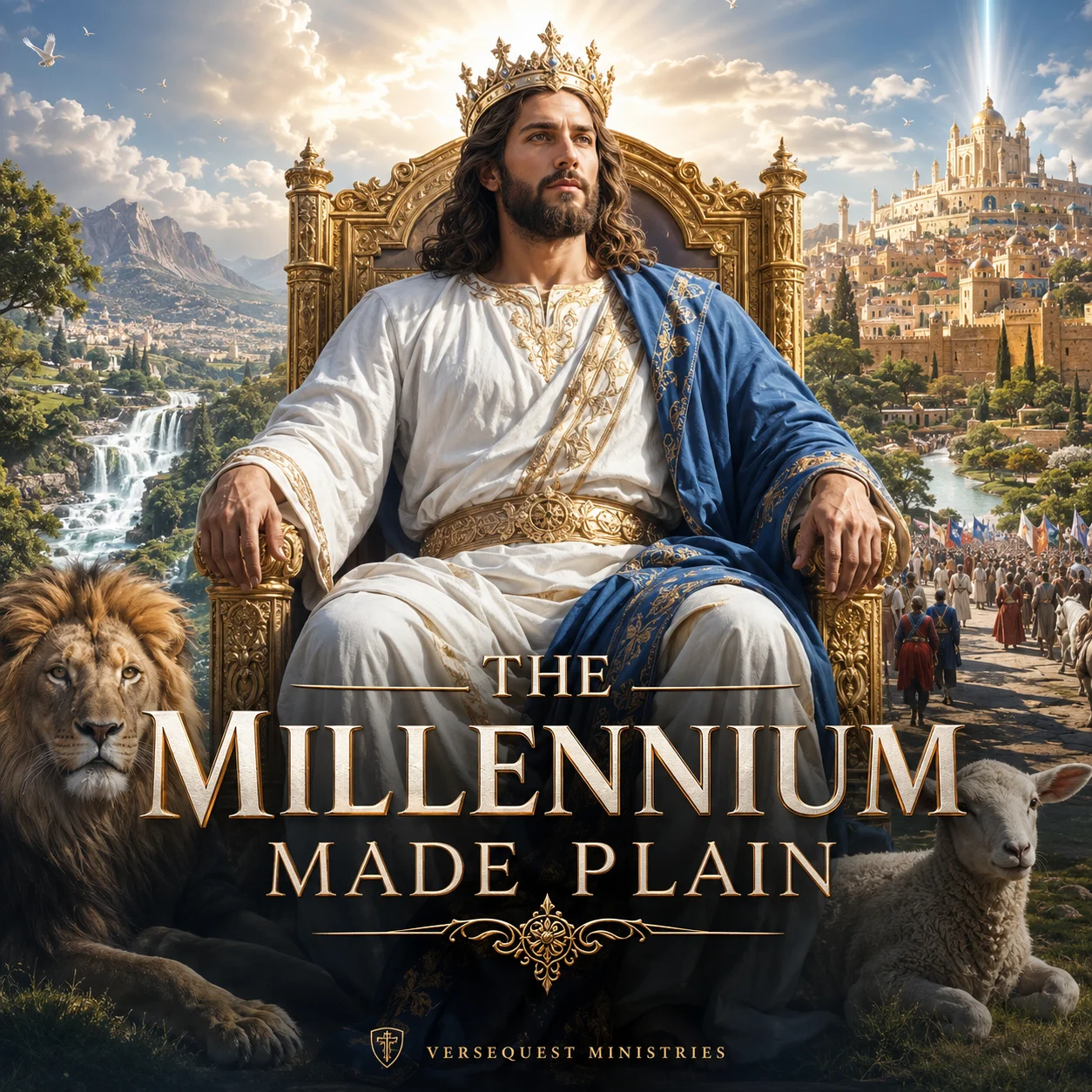
- The Millennium Made Plain – 416-Page KJV Study on Christ’s Future Reign
- A premium 416-page KJV, rightly divided Bible study on the literal future Millennial reign of Jesus Christ. The Millennium Made Plain explains Revelation 19–20, Israel’s restoration, Satan’s binding, the Kingdom…
- Original price was: $29.99.$9.99Current price is: $9.99.
- Add to cart
-
-67%
-
The Rapture
-
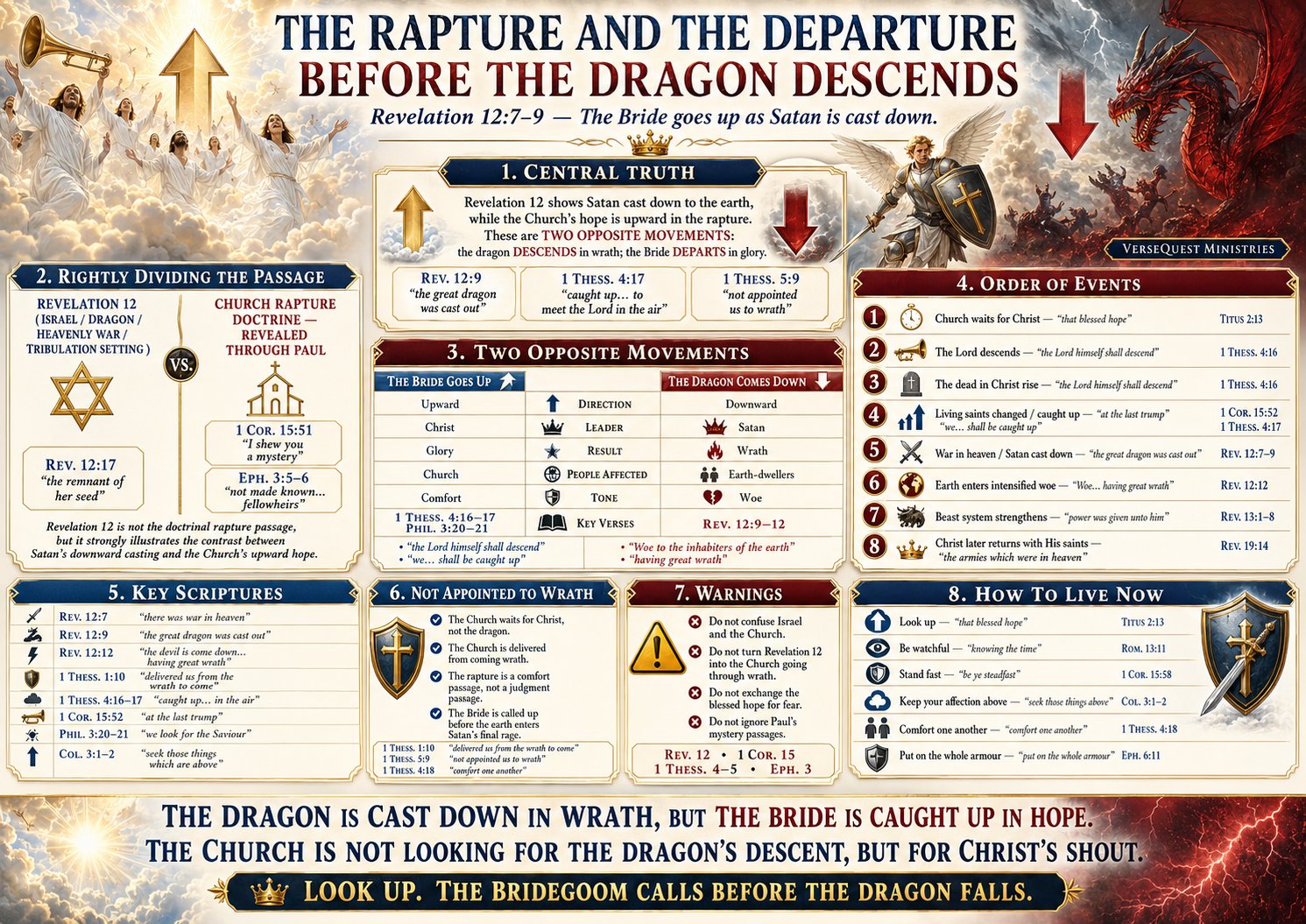
- The Rapture and the Departure Before the Dragon Descends – Printable Bible Study Chart
- Printable KJV Bible study chart on The Rapture and the Departure Before the Dragon Descends, showing the Bride caught up before Satan is cast down in wrath. This premium VerseQuest…
- $4.99
- Add to cart
-