
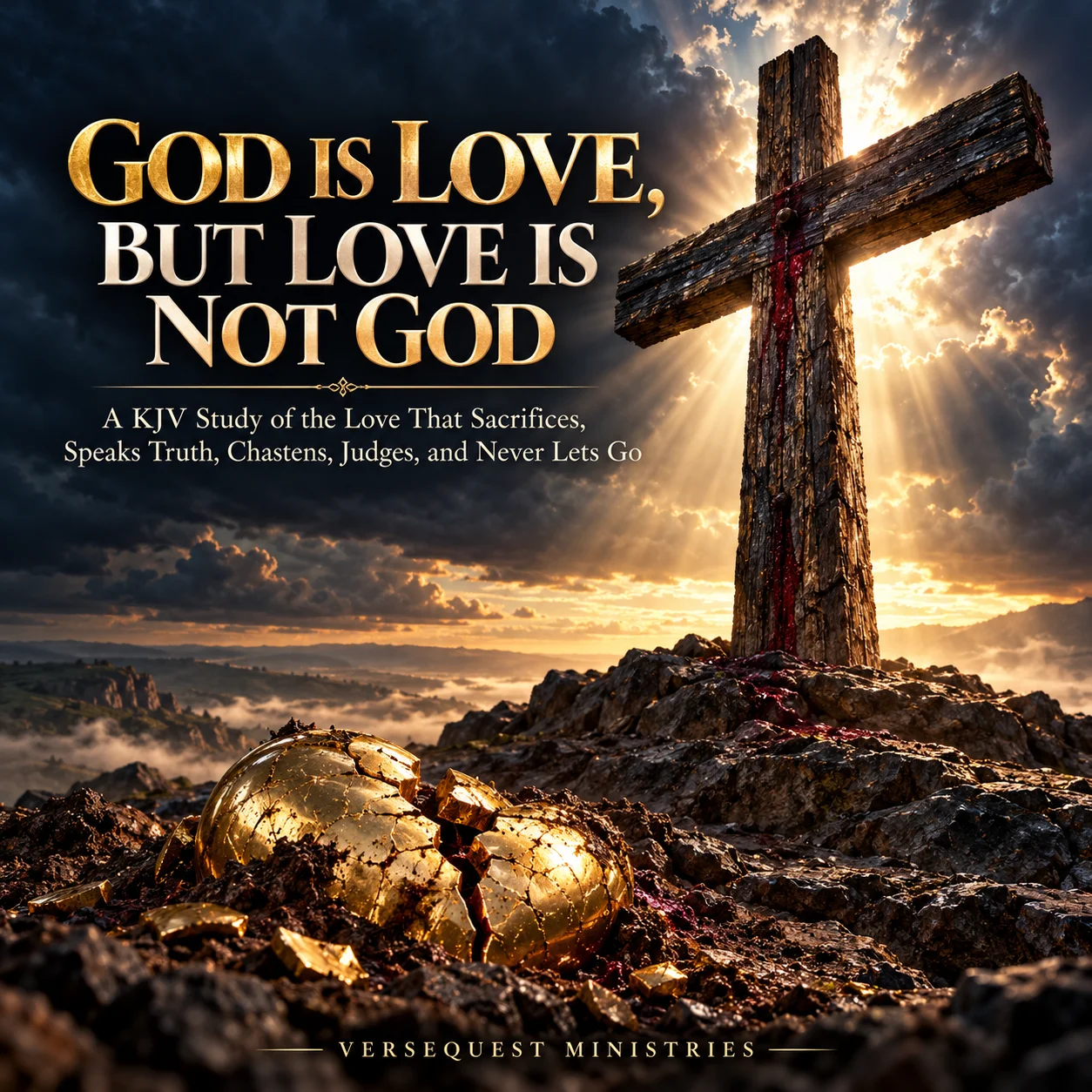
God Is Love, But Love Is Not God: A KJV Study of the Love That Sacrifices, Speaks Truth, Chastens, Judges, and Never Lets Go
God Is Love, But Love Is Not God is a substantial 214-page downloadable PDF book containing an introduction, 25 detailed KJV-based essays, a comprehensive conclusion, and an extensive Bible-study chart. It examines the love of God from Abraham and Isaac in Genesis 22 to the believer’s unbreakable assurance in Romans 8.
The book addresses the only begotten Son, Calvary, propitiation, charity, truth, rebuke, chastening, holiness, divine jealousy, the fear of God, Christian separation, marriage, the corrupted loves of the last days, and eternal security in Christ. It exposes the sentimental counterfeit that uses “love” to excuse sin while presenting the biblical love that sacrifices, speaks truth, corrects, judges righteously, and never abandons those saved through Jesus Christ.
This complete digital study is available as a downloadable PDF for $19.99 and is suitable for personal study, sermon preparation, Sunday school teaching, discipleship, family study, and topical Bible instruction.
$19.99
Description
“God is love” is among the best-known declarations in the Bible—and among the most frequently reversed, diluted, and misused. Scripture declares that God is love, but modern religion quietly turns the words around and insists that whatever man calls love must therefore be God. That reversal produces a sentimental idol who approves nearly everything, confronts almost nothing, and bears little resemblance to the holy God revealed in the King James Bible. God Is Love, But Love Is Not God restores the biblical order: God defines love; love does not redefine God.
This substantial 214-page downloadable PDF book contains an introduction, 25 detailed essays, a comprehensive conclusion, and a richly developed Bible-study chart. Available for $19.99, it examines divine love across the entire biblical landscape—from Abraham and Isaac on Mount Moriah to the unbreakable assurance of Romans 8. Rather than treating love as a vague religious feeling, these studies follow the words, contexts, doctrines, warnings, promises, and distinctions preserved in the King James Bible.
The opening studies establish the foundation. The Bible’s first mention of love appears in Genesis 22, where a father takes his beloved son toward a mountain of sacrifice. Isaac carries the wood, Abraham carries the fire and knife, and father and son walk together toward the altar. That inspired picture points forward to God the Father giving His only begotten Son at Calvary. Long before John 3:16 was written, the doctrine behind it had already been planted in Genesis. Biblical love begins with sacrifice, not sentiment.
The book then examines the unique Sonship of Jesus Christ, the indispensable words “only begotten Son,” the propitiation for our sins, and the love God commended toward helpless, ungodly, sinful enemies. Christ did not die because mankind had discovered its hidden worth. He died because sinners were lost, guilty, condemned, and unable to save themselves. Calvary does not flatter the sinner; it reveals both the horror of his condition and the immeasurable greatness of the love that paid his debt.
Several essays confront the misuse of John 3:16 and the false doctrines commonly smuggled into it. God loved the world and provided salvation through His Son, but the verse does not teach universal salvation, universal fatherhood, or unconditional divine approval. The same chapter declares that unbelievers are condemned already and that the wrath of God abideth upon those who reject the Son. The love of God provides the remedy; it does not pretend the disease is harmless.
The studies on charity, truth, and Christian speech expose another popular counterfeit—the idea that love must remain silent whenever truth might offend someone. First Corinthians 13 says that charity “rejoiceth not in iniquity, but rejoiceth in the truth.” Ephesians 4:15 commands believers to speak the truth in love, not to bury the truth beneath politeness. This book distinguishes biblical boldness from fleshly cruelty and genuine charity from cowardly compromise. Love governs the motive and manner of Christian speech, but truth governs its substance.
The hard words of Jesus Christ, the rebuke of Laodicea, and the chastening described in Hebrews 12 demonstrate that divine love is neither weak nor indulgent. Christ rebukes and chastens those He loves. A father who refuses to correct his child is not displaying superior compassion; he is permitting present foolishness to produce future ruin. The book carefully distinguishes chastening from eternal condemnation, persecution, ordinary suffering, and the punishment of the lost.
Other essays examine the consuming fire of divine holiness, the jealousy of God, the command to hate evil, the proper interpretation of “Jacob have I loved, but Esau have I hated,” and the relationship between perfect love and the fear of God. These studies refuse the false choice between love and holiness. The God who loves is also righteous, jealous, pure, and just. Calvary did not make sin insignificant. Calvary revealed what sin deserved and what divine love was willing to suffer to save the sinner.
The later studies address loving enemies without joining their rebellion, loving without dissimulation, refusing to love the present world system, and recognizing why men love darkness rather than light. The last days are shown to be filled with love—but love directed toward self, money, pleasure, and religious appearance instead of God. The book also examines Christ’s sacrificial love for the Church as the divine pattern for marriage, demonstrating that biblical headship is measured by responsibility, sacrifice, protection, nourishment, and faithfulness.
The final essay rises into the triumphant assurance of Romans 8:35–39. The love of God in Christ is not sentimental, but neither is it fragile. The love that confronted our sin, supplied the sacrifice, satisfied divine justice, gave us righteousness, and adopted us as sons will not abandon those purchased by Christ’s blood. Tribulation, distress, persecution, famine, peril, death, life, angels, principalities, powers, the present, and the future cannot separate the saved believer from the love of God in Christ Jesus.
This book is designed for serious Bible students, pastors, preachers, teachers, Sunday school classes, families, discipleship groups, and believers who want more than religious slogans. Its 25 essays may be studied consecutively as one unified argument or used individually for topical teaching. The detailed chart at the end provides a visual review of the principal doctrines, passages, contrasts, and practical applications. This is a direct, Scripture-centered study of a love holy enough to confront sin, strong enough to speak truth, costly enough to reach Calvary, and eternal enough never to let the saved sinner go.
God Defines Love — Love must be understood through God’s revealed character and actions rather than through changing cultural feelings. Love Is Not God — Human sentiment, desire, approval, or affection cannot be made into an authority that overrules Scripture. The First Mention of Love — Genesis 22 establishes sacrifice, fatherhood, sonship, obedience, substitution, and prophetic foreshadowing as foundational truths. The Only Begotten Son — God’s love is revealed through the unique Person and saving work of Jesus Christ. Propitiation and Divine Justice — Christ’s sacrifice satisfies the righteous demands of God against sin rather than merely providing an emotional demonstration. Love Toward the Ungodly — Romans 5 magnifies grace by describing the helpless and hostile condition of those for whom Christ died. John 3:16 in Context — God’s love for the world provides salvation through His Son, but it does not teach universal salvation or universal approval. Charity and Truth — Biblical charity refuses to rejoice in iniquity and cannot be separated from doctrinal and moral truth. Truth Spoken in Love — Christian speech must be faithful, spiritually beneficial, honest, and free from both cowardice and fleshly cruelty. The Hard Words of Christ — Severe biblical rebuke may be an expression of holy love when falsehood places souls in danger. Rebuke and Chastening — Divine correction is evidence of sonship, fatherly concern, and God’s intention to produce holiness. Holiness, Wrath, and Judgment — The love of God does not cancel His righteousness, jealousy, vengeance, or consuming holiness. The Hatred of Evil — Biblical love possesses moral discrimination and refuses neutrality toward what God condemns. Election and Right Division — Jacob and Esau are examined within their Old Testament, national, historical, and prophetic setting. Perfect Love and Godly Fear — Freedom from final torment does not eliminate reverence, caution, obedience, or accountability. Enemies and Separation — Christians can love, pray for, feed, and witness to enemies without entering unequal yokes or compromising truth. Love Without Dissimulation — Genuine love rejects hypocrisy, flattery, concealed self-interest, and conditional loyalty. The World and Its Counterfeit Affections — The lust of the flesh, the lust of the eyes, and the pride of life compete against devotion to God. The Corrupted Loves of the Last Days — Self-love, materialism, pleasure, and powerless religion reveal the direction of final apostasy. Christ and His Church — The Lord’s sacrificial love for His Bride supplies the pattern and price for biblical marriage. Eternal Security in Christ — Nothing can separate the saved believer from the love of God that is in Christ Jesus.
The central argument of this book is contained in its title: God is love, but love is not God. First John 4:8 reveals something true and glorious about God’s nature, but the statement cannot be reversed without creating an idol. God determines what love is because love proceeds from His character and is revealed through His actions. Man cannot take every feeling, desire, relationship, or social cause bearing the label “love” and force God to approve it. Divine love remains perfectly consistent with divine holiness, righteousness, jealousy, wrath, and judgment.
The first biblical occurrence of “love” supplies a controlling picture for the entire study. Genesis 22:2 introduces love in connection with Abraham, Isaac, a mountain, wood, fire, a knife, sacrifice, and a substitute. The father and son walk together toward the altar. Isaac carries the wood upon which he is to be offered. A ram eventually dies in his stead. The passage reaches beyond Abraham’s family and points prophetically toward the Father giving His only begotten Son. The Bible introduces love through sacrifice before fallen man has an opportunity to redefine it as indulgence.
First John 4:9–10 provides Scripture’s own definition: God manifested His love by sending His only begotten Son to be the propitiation for sins. Propitiation means that the sacrifice of Christ addresses the righteous demands of God against sin. Calvary was not divine theater, a vague symbol of kindness, or an announcement that sin no longer mattered. If God could excuse sin without satisfaction, the cross would have been unnecessary. At Calvary, divine justice and divine love meet without either being weakened.
Romans 5:6–10 describes the recipients of this love as without strength, ungodly, sinners, and enemies. Those descriptions remove human boasting. Christ did not die for people who had made themselves acceptable or discovered sufficient merit to attract God’s favor. He died for the undeserving. A gospel that spends its time flattering man will inevitably diminish the cross, because the greatness of the remedy cannot be understood while the disease is being disguised.
John 3:16 must be read with the remainder of John 3. God loved the world and gave His only begotten Son so that believers might possess everlasting life. The offer is worldwide, the provision is sufficient, and the invitation is genuine, but salvation is received through faith in Christ. The unbeliever remains condemned, and the wrath of God abides upon the one who rejects the Son. God’s love provides rescue from condemnation; it does not deny that condemnation exists.
First Corinthians 13 joins charity to truth. Charity suffers long, seeks not her own, behaves properly, bears, believes, hopes, and endures, but it does not rejoice in iniquity. Love that celebrates sin, protects deception, or silences biblical warnings is a counterfeit. Ephesians 4:15 likewise requires truth to be spoken in love. This forbids cruelty, pride, vengeance, and dishonest motives, but it does not command the believer to whisper when Scripture sounds a trumpet. The test is not merely whether speech sounds pleasant; the test is whether it is true, faithful, and directed toward the spiritual good of the hearer.
Jesus Christ demonstrates that hard words and perfect love are not contradictions. He called religious deceivers hypocrites, blind guides, serpents, and vipers. He overturned tables, exposed hidden motives, rebuked unbelief, and warned of hell. His severity did not arise from wounded pride or personal spite. It arose from holiness and concern for people being led toward destruction. A warning can be painful and still be loving; silence can be pleasant and still be cruel.
Revelation 3:19 and Hebrews 12 establish that rebuke and chastening are expressions of love. God chastens His children because they belong to Him and because He intends to make them partakers of His holiness. Chastening must be distinguished from eternal condemnation. The believer’s judicial standing is settled in Christ, but his earthly conduct remains subject to the Father’s correction. Security is not permission to treat God carelessly; sonship brings both assurance and accountability.
God’s love is also jealous, holy, and morally discriminating. Scripture commands those who love the Lord to hate evil. That hatred is not permission for personal malice, bitterness, or revenge. It is agreement with God concerning what destroys, corrupts, defiles, and deceives. A love incapable of opposing evil is not mature charity; it is sentiment without a backbone. Genuine love hates the poison because it values the person being poisoned.
The statements concerning Jacob and Esau require careful attention to context. Malachi addresses historical nations and God’s covenant dealings, while Romans 9 concerns Israel, divine purpose, and the faithfulness of God’s promises. The passage should not be converted into a system teaching that God created helpless individuals solely to damn them. Neither should it be erased because modern sentiment finds divine hatred uncomfortable. Right division allows the words to remain exactly where God placed them.
Perfect love casts out the fear connected with torment and the believer’s final condemnation, but it does not abolish reverence, godly fear, caution, or accountability. A Christian may rest securely in Christ while still trembling at the Word of God. Likewise, loving enemies does not require joining them. Kindness is not compromise, forgiveness is not automatic fellowship, and concern for a sinner’s soul does not demand cooperation with his rebellion.
The book concludes with the permanence of God’s love in Christ. Romans 8 does not promise an easy life; it names tribulation, distress, persecution, famine, nakedness, peril, and sword. It then declares that none of these things can separate the believer from divine love. The assurance rests neither upon the believer’s emotional condition nor upon his ability to hold God tightly. It rests upon the finished work, continuing intercession, and unbreakable faithfulness of Jesus Christ. The love that paid the purchase price will not misplace the possession.
Important questions for continued study include these: How does Genesis 22 prepare the reader for John 3:16? Why is “only begotten Son” essential to the doctrine of love? How does propitiation unite love and justice? What is the difference between chastening and condemnation? How can a Christian love an enemy while remaining separate from falsehood? Why does charity rejoice in truth rather than merely in agreement? How does Romans 8 ground assurance in Christ rather than human performance? These questions help carry the doctrine beyond religious vocabulary and into careful biblical understanding.
Personal Bible Study: Readers can work through the essays in order, tracing the doctrine of love from its first appearance in Genesis to its final appearance in Revelation. The related passages and concluding chart support comparison, cross-referencing, and doctrinal review.
Sermon Preparation: Pastors and preachers can use individual essays as foundations for topical sermons on Calvary, propitiation, charity, truth, rebuke, chastening, holiness, separation, marriage, and eternal security.
Sunday School Lessons: The 25-part structure provides a natural lesson sequence. Each essay focuses on a distinct passage or doctrinal question while contributing to the book’s larger argument.
Small Groups and Discipleship: Groups can study one essay at a time and discuss how biblical love differs from sentimentality, compromise, self-interest, worldliness, and unconditional approval.
Family Bible Study: Parents can use selected chapters to teach children and teenagers that love includes sacrifice, truth, correction, faithfulness, moral boundaries, and protection from evil.
Bible Institute or Classroom Instruction: Teachers can use the book to demonstrate first mention, typology, contextual interpretation, doctrinal distinctions, cross-referencing, and the importance of allowing Scripture to define its own terms.
Marriage Teaching: The study of Ephesians 5 offers a biblical framework for examining sacrificial headship, submission, responsibility, protection, nourishment, faithfulness, and Christ’s relationship with the Church.
Topical Review: The final chart can be used as a rapid-reference teaching aid after the essays have been read, helping students connect the principal passages and doctrinal conclusions.
The King James Bible — The primary resource for every subject covered in this book. Readers should compare every argument, distinction, and conclusion with the complete context of the cited passages.
A King James Bible Concordance — A complete concordance helps readers trace the words “love,” “charity,” “beloved,” “chasten,” “rebuke,” “jealous,” “wrath,” “truth,” and related terms throughout Scripture.
Treasury of Scripture Knowledge — A useful cross-reference resource for connecting the book’s principal passages with related statements throughout the Bible.
Webster’s 1828 American Dictionary — Helpful for examining older English words and meanings that correspond closely to the language of the King James Bible.
A King James Bible Dictionary — Useful for studying biblical terms such as propitiation, charity, dissimulation, chastening, begotten, jealousy, condemnation, and sanctification.
Biblical Maps and Timelines — Maps of Moriah, Jerusalem, Israel, Edom, and the lands associated with Jacob and Esau can strengthen the historical and geographical portions of the study.
The Fear of the Lord — The Missing Ingredient in Modern Christianity — A related VerseQuest study for readers who want to examine the relationship between divine love, reverence, holiness, obedience, and accountability.
Chastening — When the Father Takes His Children to the Woodshed — A companion VerseQuest study that develops the biblical doctrine of fatherly correction and distinguishes chastening from condemnation.
Walking in the Spirit — Not Charismatic Theater, but Biblical Obedience — A complementary VerseQuest resource addressing practical Christian obedience, spiritual fruit, and life under the authority of Scripture.
Revelation Without Confusion — A VerseQuest resource for further study of Laodicea, Christ’s rebuke, repentance, judgment, and the prophetic setting of Revelation.
Related products
-
Unity of the Spirit
-
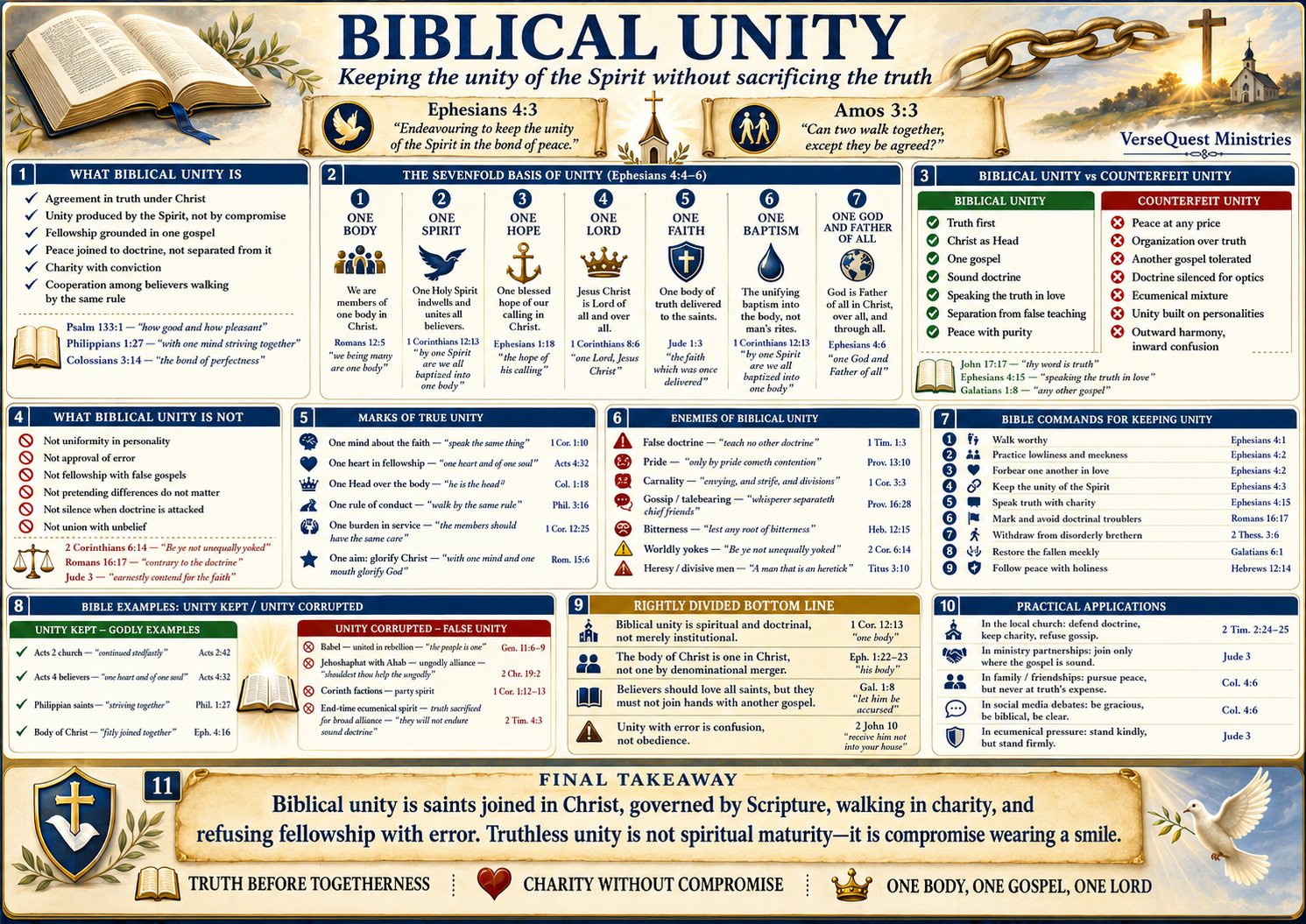
- Biblical Unity – Keeping the Unity of the Spirit Without Sacrificing Truth (KJV Bible Study Chart)
- Understand biblical unity with this detailed KJV chart covering the sevenfold unity of Ephesians 4, one Body, one gospel, sound doctrine, charity, separation from error, and peace without compromise.
- $3.99
- Add to cart
-
-
Spiritual Growth
-
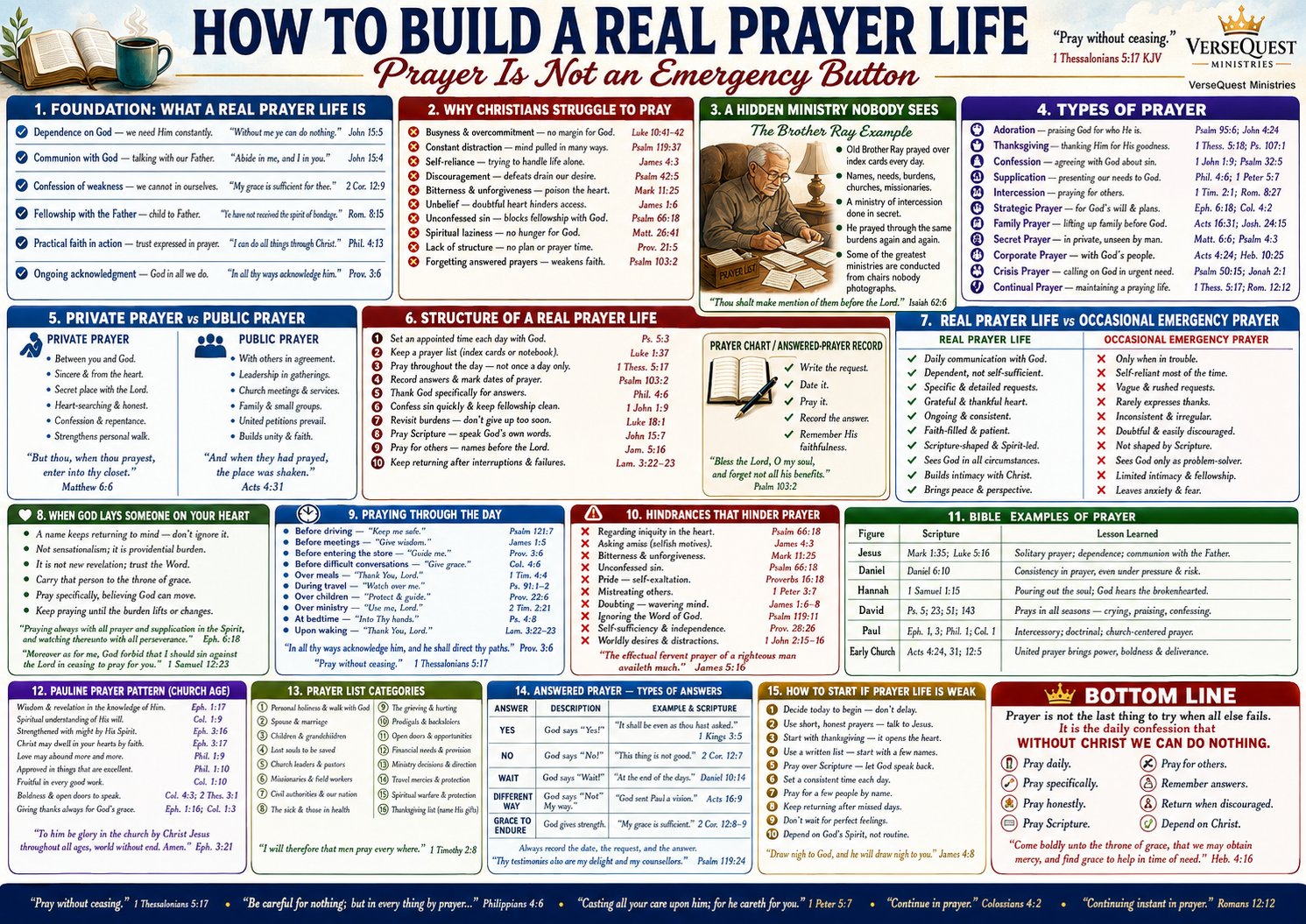
- How to Build a Real Prayer Life – Biblical Prayer Guide and KJV Bible Study Chart
- Build a consistent, biblical prayer life with this detailed KJV Bible study chart. Explore the foundations of prayer, types of prayer, common hindrances, answered prayer, Bible examples, and practical ways…
- $3.99
- Add to cart
-
-
Biblical Submission
-
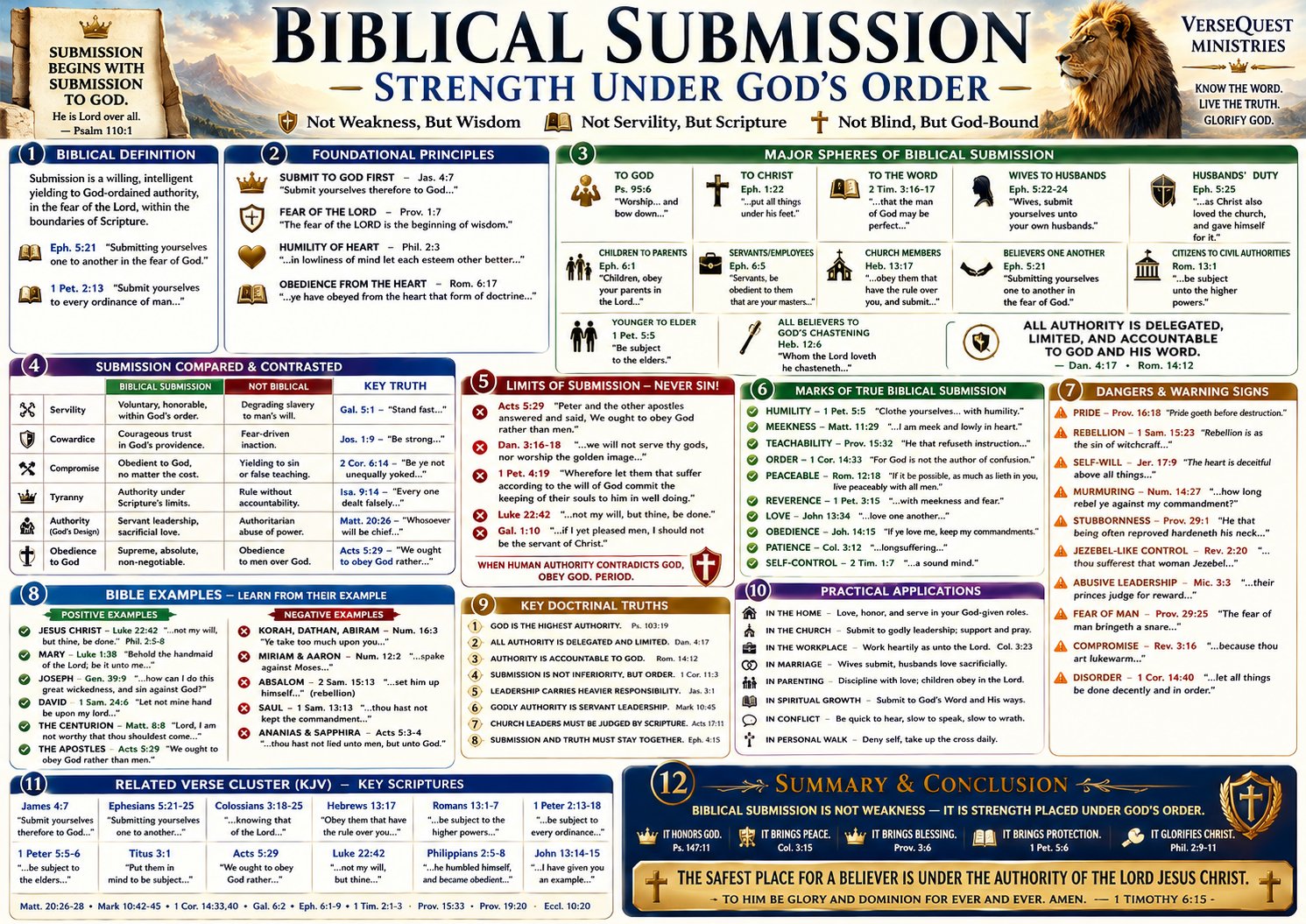
- Biblical Submission Bible Study Chart – Strength Under God’s Order, Authority, and Scriptural Limits (KJV) Product Description
- Study biblical submission with this detailed KJV chart covering God-ordained authority, servant leadership, obedience, marriage, church, government, and the Scriptural limits of submission.
- $3.99
- Add to cart
-
-
October 2026 Devotional
-
- VerseQuest Daily — October 2026: Identity in Christ and the Daily Walk
- VerseQuest Daily — October 2026 is a 67-page downloadable PDF containing thirty-one KJV devotionals on identity in Christ and the daily Christian walk. Each reading includes an assigned Scripture passage,…
- $6.99
- Add to cart
-
-
Biblical Humility
-
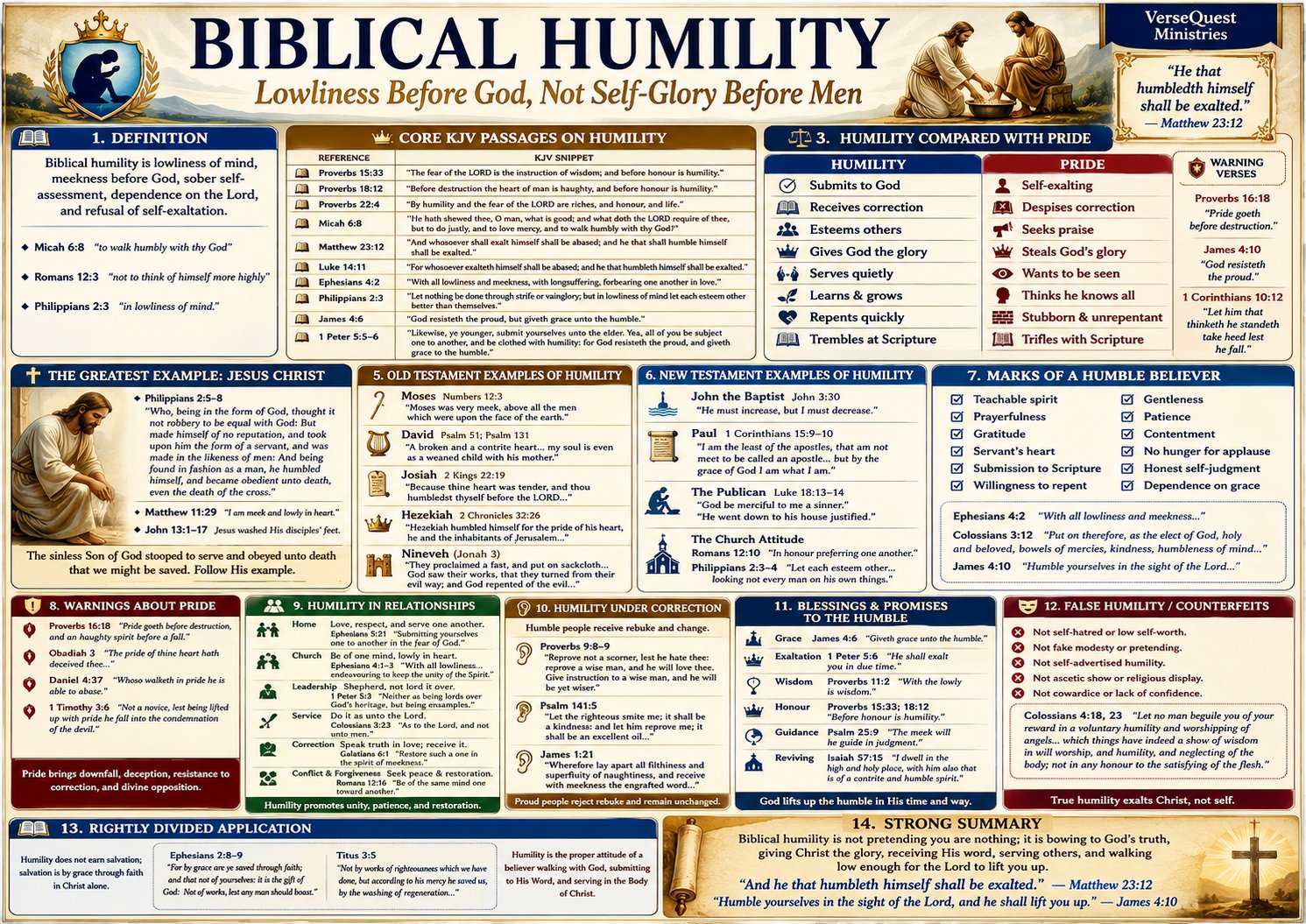
- Biblical Humility Bible Study Chart – Lowliness Before God, Not Self-Glory Before Men (KJV)
- Study biblical humility with this detailed KJV chart comparing humility and pride, Christ’s example, receiving correction, servant leadership, grace, and practical Christian living.
- $3.99
- Add to cart
-