
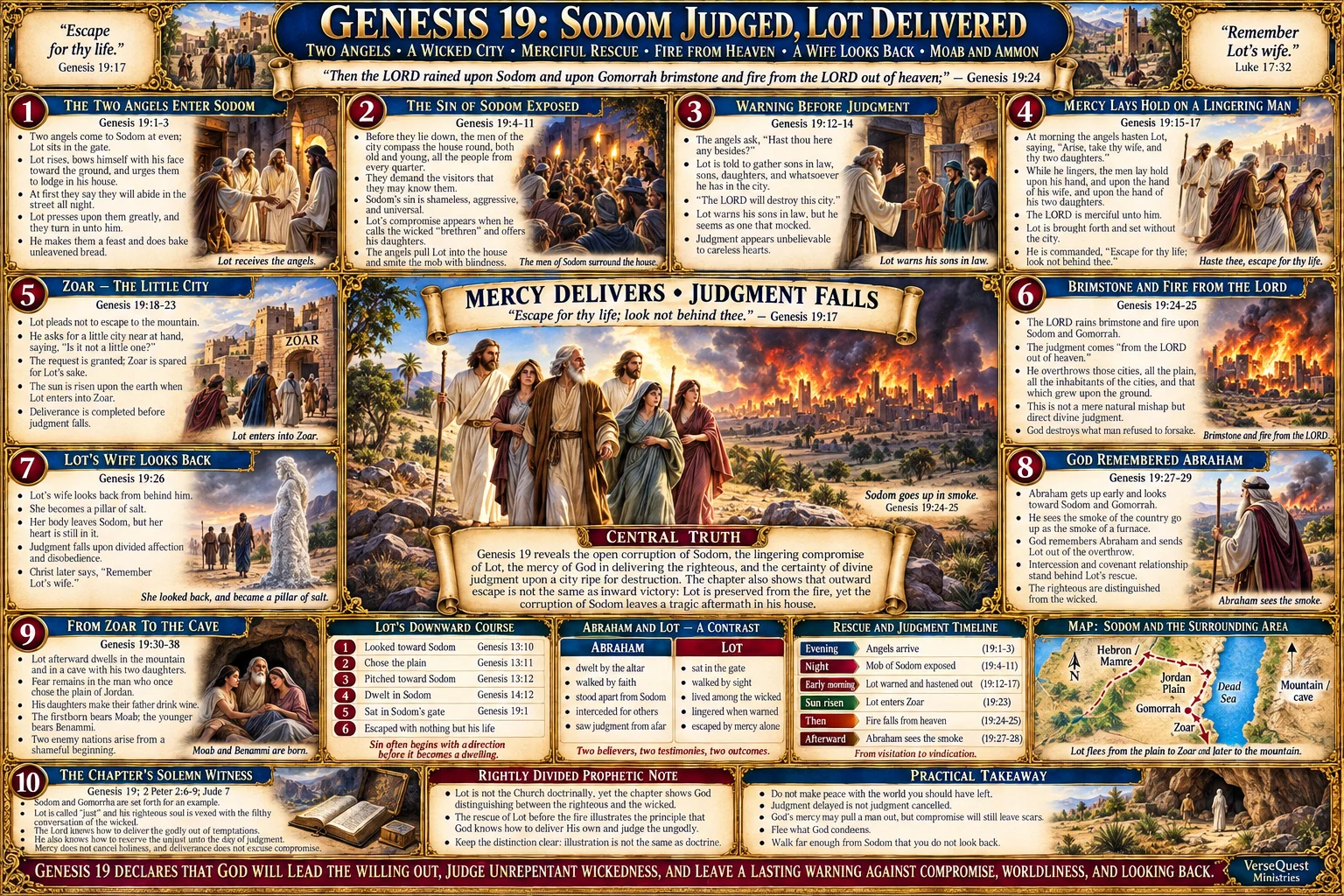
Genesis 19 – Sodom Judged, Lot Delivered: Two Angels, Fire from Heaven, Lot’s Wife, Zoar, Moab, and Ammon (KJV Bible Study Chart)
Explore Genesis 19 with this detailed KJV Bible study chart covering the arrival of the two angels in Sodom, the city’s open wickedness, Lot’s warning, his lingering departure, and the LORD’s merciful rescue. Follow Lot to Zoar as brimstone and fire fall from heaven upon Sodom and Gomorrah, and examine the solemn warning of Lot’s wife, whom Jesus later said to remember. The chart also traces Abraham’s view of the judgment, God remembering Abraham, Lot’s downward course from looking toward Sodom to living within it, and the later birth of Moab and Ammon. Ideal for personal Bible study, Sunday school, homeschool, sermon preparation, discipleship, judgment studies, and teaching on holiness, compromise, mercy, and separation.
$4.99
Description
Genesis 19: Sodom Judged, Lot Delivered is a detailed KJV Bible study chart tracing the final judgment of Sodom and Gomorrah, the merciful rescue of Lot, the tragic death of Lot’s wife, and the aftermath that produces Moab and Ammon. The chapter stands as one of Scripture’s clearest warnings concerning moral corruption, delayed obedience, worldly compromise, divine judgment, and the mercy of God toward the righteous.
Two angels arrive in Sodom at evening and find Lot sitting in the gate. Lot receives them into his house, prepares a meal, and urges them not to remain in the street overnight. Before they retire, the men of Sodom surround the house and demand that Lot surrender the visitors to them. The wickedness of the city is shown openly and aggressively. The angels pull Lot back inside, shut the door, and strike the hostile men with blindness.
Lot is then warned that the LORD will destroy the city. He speaks to his sons-in-law, but his warning seems to them “as one that mocked.” When morning comes, the angels hasten Lot, his wife, and his two daughters to leave. Yet Lot lingers. Genesis 19:16 contains one of the chapter’s most revealing statements: the angels take hold of their hands “the LORD being merciful unto him.” Lot’s deliverance is grounded in divine mercy, not in the strength of his response.
The command is urgent: “Escape for thy life; look not behind thee.” Lot pleads to flee instead to Zoar, and God grants the request. Judgment does not fall until Lot reaches safety. Then the LORD rains “brimstone and fire from the LORD out of heaven” upon Sodom and Gomorrah, overthrowing the cities, the plain, the inhabitants, and what grew upon the ground.
Lot’s wife looks back and becomes a pillar of salt. Jesus later compresses the entire warning into three words: “Remember Lot’s wife.” Her body leaves Sodom, but her backward look reveals a divided attachment. The account warns that outward separation from a corrupt system is not the same as inward freedom from it.
Abraham rises early and sees the smoke of the destroyed cities ascending like the smoke of a furnace. Genesis states that “God remembered Abraham” and sent Lot out of the overthrow. Abraham’s intercession in Genesis 18 and God’s covenant relationship stand behind the rescue.
The chapter closes in a mountain cave, where Lot’s daughters conceive Moab and Ben-ammi through their father. The consequences of Sodom do not disappear merely because Lot survives the fire. Genesis 19 therefore leaves a solemn testimony: God knows how to deliver the righteous, God knows how to judge the wicked, and compromise can leave wounds long after outward rescue has occurred.
Genesis 19, Sodom and Gomorrah, Lot, Lot’s wife, two angels, judgment of Sodom, fire from heaven, brimstone and fire, divine mercy, escape for thy life, Zoar, lingering Lot, warning before judgment, wickedness of Sodom, remember Lot’s wife, Abraham intercedes, God remembered Abraham, righteous Lot, Moab, Ammon, compromise, separation, divine judgment, deliverance
Genesis 19 continues directly from Genesis 18. The two angels who left Abraham enter Sodom at evening and find Lot sitting in the gate. His position suggests that he has become integrated into the city’s public life. His downward movement began earlier: he looked toward Sodom, chose the plain, pitched his tent toward the city, dwelt in Sodom, and now sits in its gate. Spiritual decline often begins with direction long before it becomes destination.
Lot urges the angels into his house, but the men of Sodom surround the home and demand access to the visitors. Genesis presents the city’s wickedness as public, aggressive, and widespread. Lot’s response in offering his daughters is morally indefensible and shows how deeply life in Sodom has damaged his judgment. The angels intervene, pull him inside, shut the door, and strike the attackers with blindness.
Lot is warned that the city will be destroyed. He speaks to his sons-in-law, but they think he is joking. A compromised testimony can weaken the force of a true warning. At dawn the angels urge Lot to leave immediately, yet “while he lingered,” they take him, his wife, and his daughters by the hand because “the LORD being merciful unto him.” His rescue rests upon divine mercy rather than heroic faithfulness.
Lot asks to flee to Zoar rather than to the mountain, and his request is granted. The angels state that judgment cannot proceed until he arrives there, showing that God distinguishes between the righteous and the wicked. This principle is later emphasized in 2 Peter 2:7–9, where Lot is called “just” and “righteous” despite the obvious failures recorded in Genesis.
The LORD then rains brimstone and fire upon Sodom and Gomorrah and overthrows the cities of the plain. The judgment is presented as a real historical event, not merely a moral symbol. Jesus, Peter, and Jude all treat it as an actual warning of divine judgment.
Lot’s wife looks back and becomes a pillar of salt. Jesus later says, “Remember Lot’s wife.” Her backward look signifies more than geography; it reveals divided affection. She had physically left Sodom, but her attachment remained behind.
Genesis 19:29 states that “God remembered Abraham” and sent Lot out of the overthrow. This connects Lot’s deliverance with Abraham’s covenant relationship and intercession. Prayer did not cancel judgment, but God preserved Lot from it.
The chapter ends painfully. Lot’s daughters make him drunk and conceive Moab and Ben-ammi. These become ancestors of the Moabites and Ammonites. Lot survives Sodom, but Sodom’s influence follows his family into the cave. Genesis 19 therefore teaches that mercy can rescue a believer from judgment while compromise still leaves lasting consequences.
Genesis 19 is useful for teaching the certainty of divine judgment, the danger of lingering near what God has condemned, the difference between outward escape and inward victory, the importance of taking God’s warnings seriously, and the mercy shown in rescuing the righteous. It also provides material for studying Sodom’s moral condition, Lot’s downward course, Lot’s wife, intercessory prayer, the origins of Moab and Ammon, and New Testament warnings from Luke 17, 2 Peter 2, and Jude. The chart is well suited for personal Bible study, Sunday school, homeschool instruction, sermon preparation, Bible institutes, prophetic studies, discipleship, and teaching on holiness and separation.
King James Bible, Strong’s Concordance, Thompson Chain-Reference Bible, Treasury of Scripture Knowledge, Nave’s Topical Bible, Genesis 13–19 study notes, Sodom and Gomorrah charts, Lot and Abraham comparison studies, Lot’s wife Scripture studies, Luke 17 studies, 2 Peter 2 judgment studies, Jude commentary notes, Ezekiel 16 studies, maps of the Jordan plain and Dead Sea region, Moab and Ammon studies, VerseQuest Genesis charts
Related products
-
Genesis Study
-
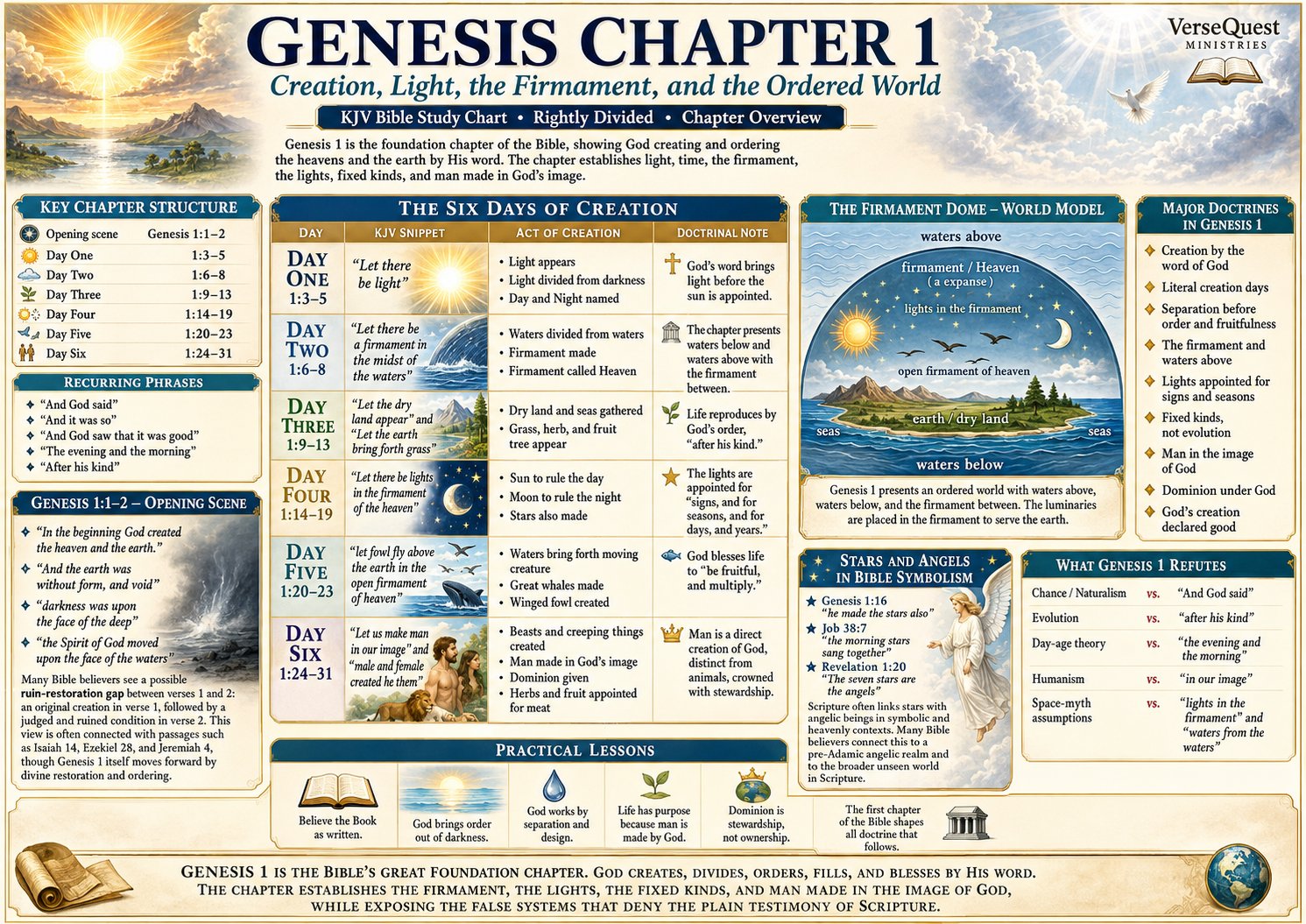
- Genesis Chapter 1 Bible Study Chart – Creation, Light, the Firmament, and the Ordered World (KJV)
- Explore Genesis Chapter 1 with this detailed KJV Bible study chart covering the six days of creation, the firmament, light, fixed kinds, man in God’s image, major doctrines, recurring phrases,…
- $3.99
- Add to cart
-
-
Law vs Grace
-
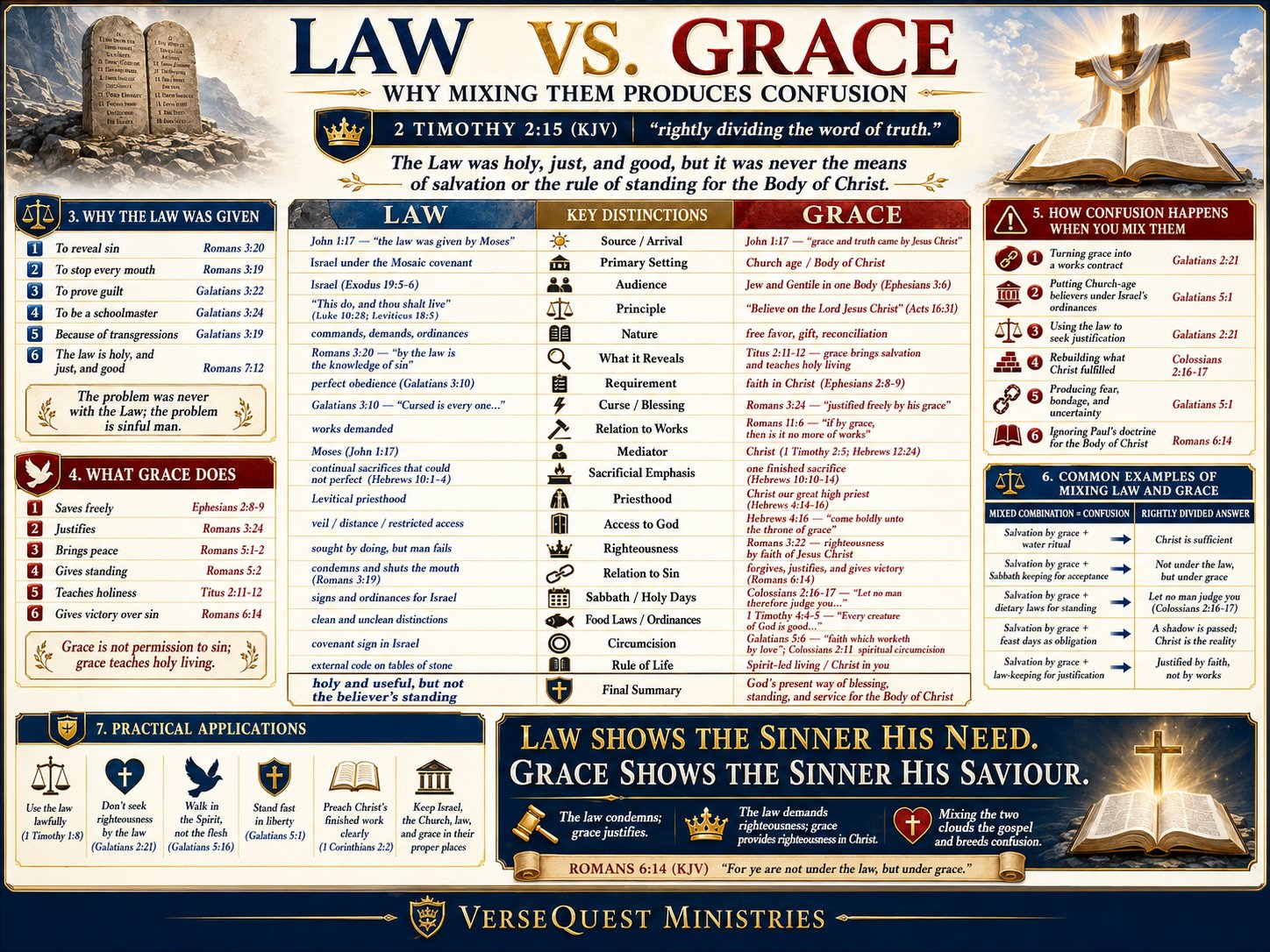
- Law vs. Grace Bible Study Chart – Why Mixing Them Produces Confusion (KJV)
- Compare law and grace with this detailed KJV Bible study chart explaining salvation, justification, holiness, Israel’s Mosaic covenant, Christian liberty, and the danger of mixing law with the gospel.
- $3.99
- Add to cart
-
-
Bible Study Chart
-
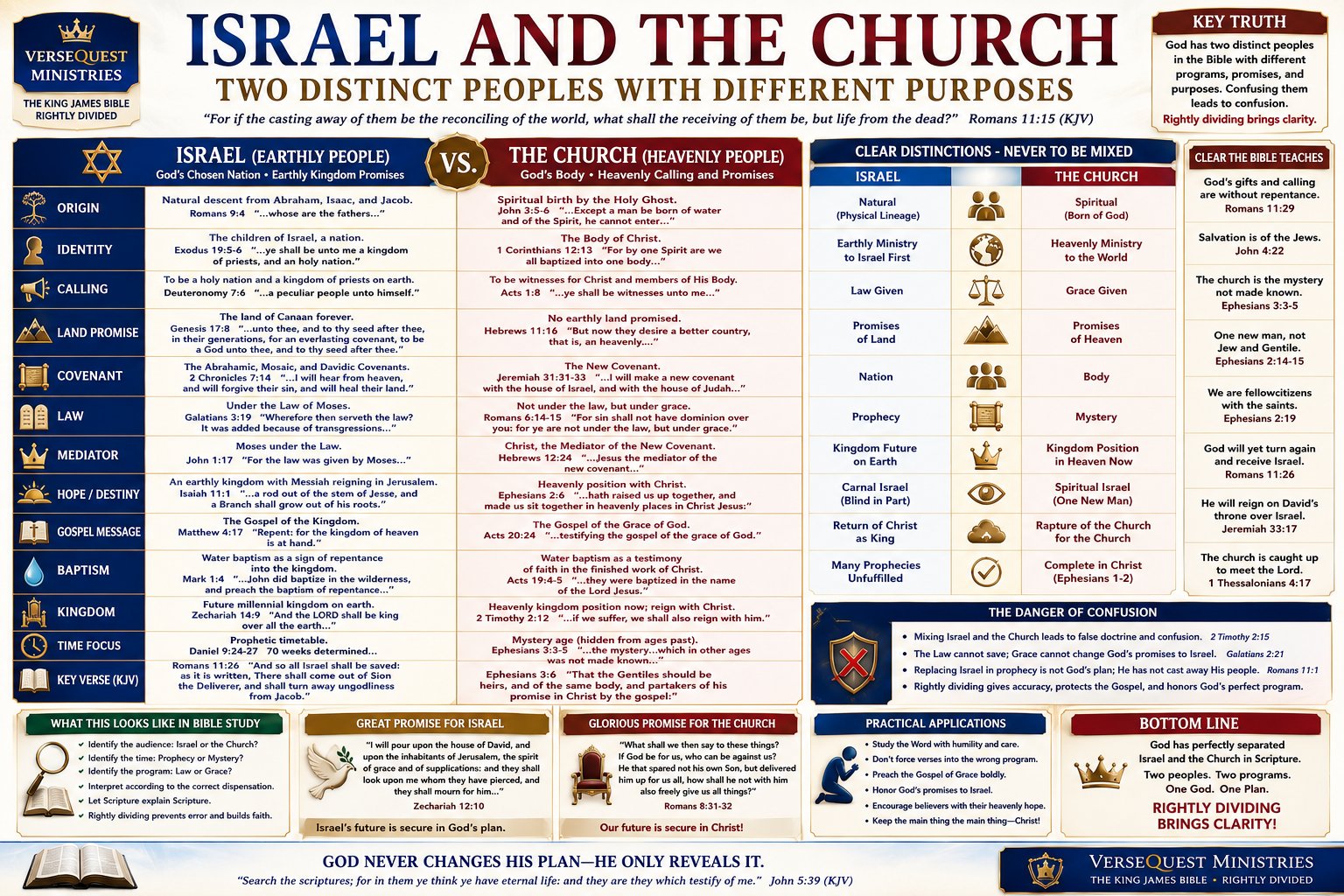
- Israel and the Church Bible Study Chart – Two Distinct Peoples with Different Purposes (KJV)
- Compare Israel and the Church with this detailed KJV Bible study chart covering their distinct origins, identities, covenants, callings, promises, gospel programs, and future destinies.
- $3.99
- Add to cart
-
-
Prayer
-
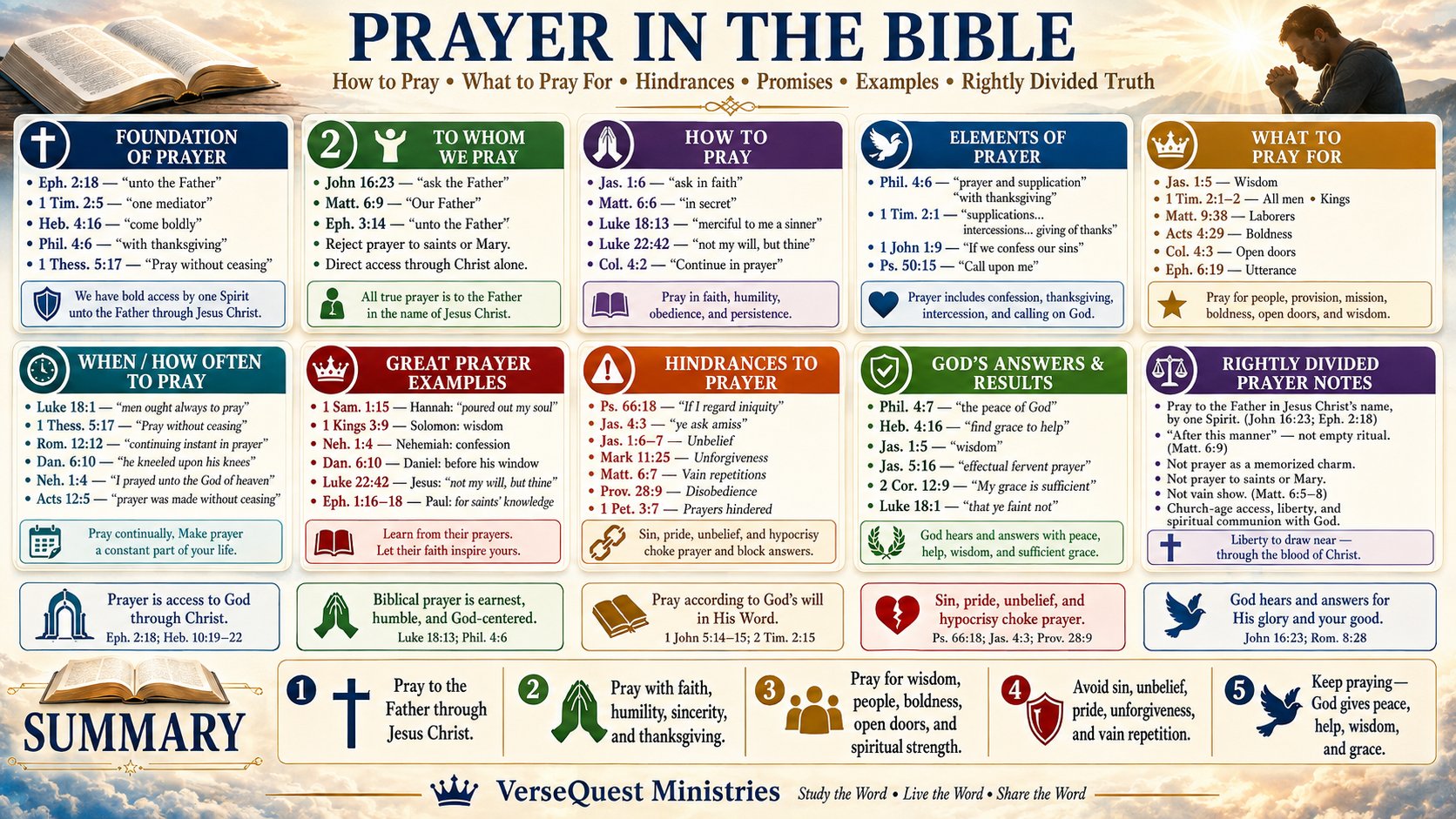
- Prayer in the Bible Chart – How to Pray According to Scripture
- Discover what the Bible teaches about prayer through this easy-to-follow VerseQuest study chart. Learn who to pray to, how to pray, what hinders prayer, what to pray for, and key…
- $4.99
- Add to cart
-
-
Ages To Come
-
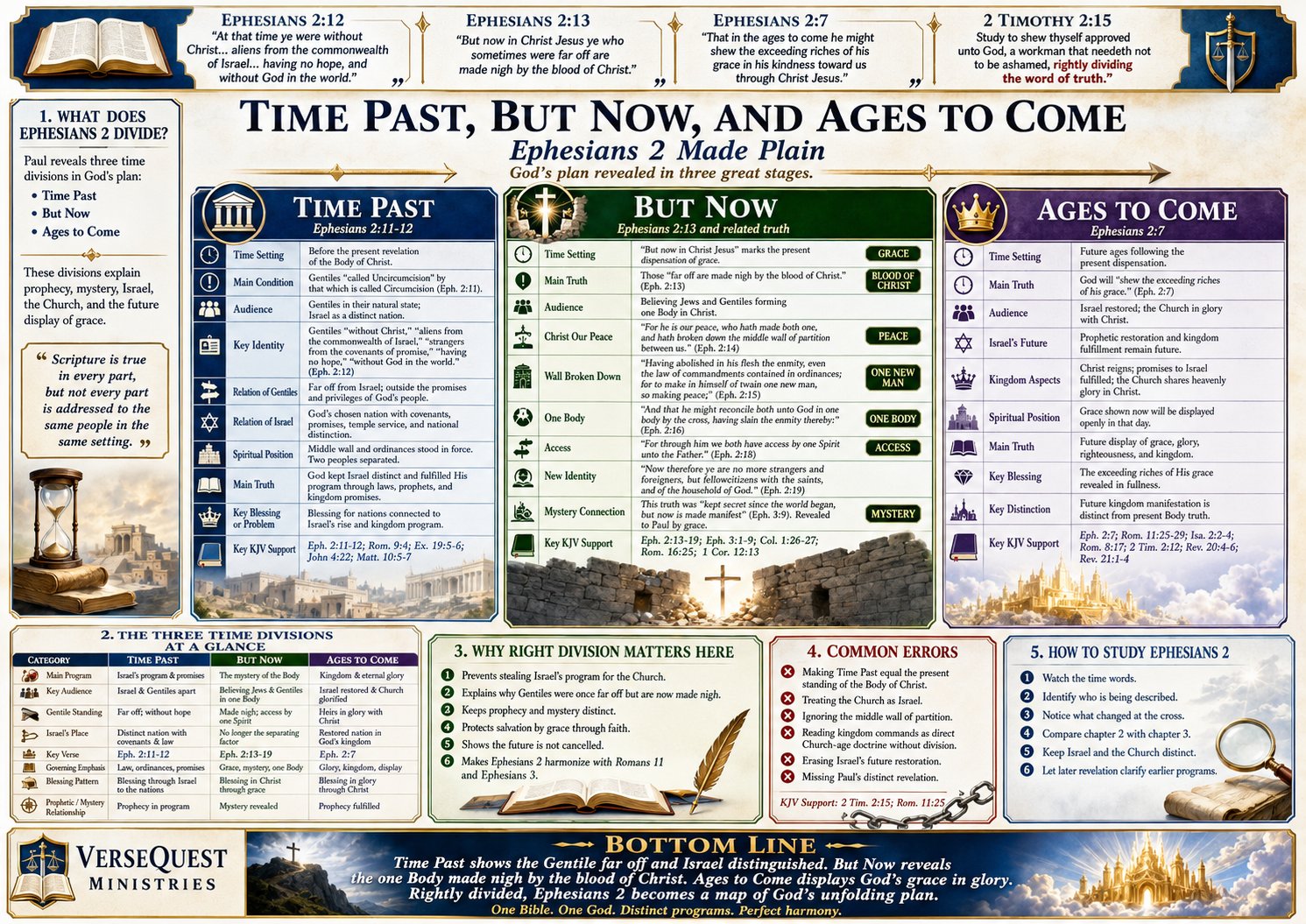
- Time Past, But Now, and Ages to Come – Ephesians 2 Rightly Divided KJV Bible Study Chart
- Understand Ephesians 2 with this detailed KJV chart explaining Time Past, But Now, Ages to Come, Gentile distance, the one Body, Israel’s future, and the importance of right division.
- $3.99
- Add to cart
-