
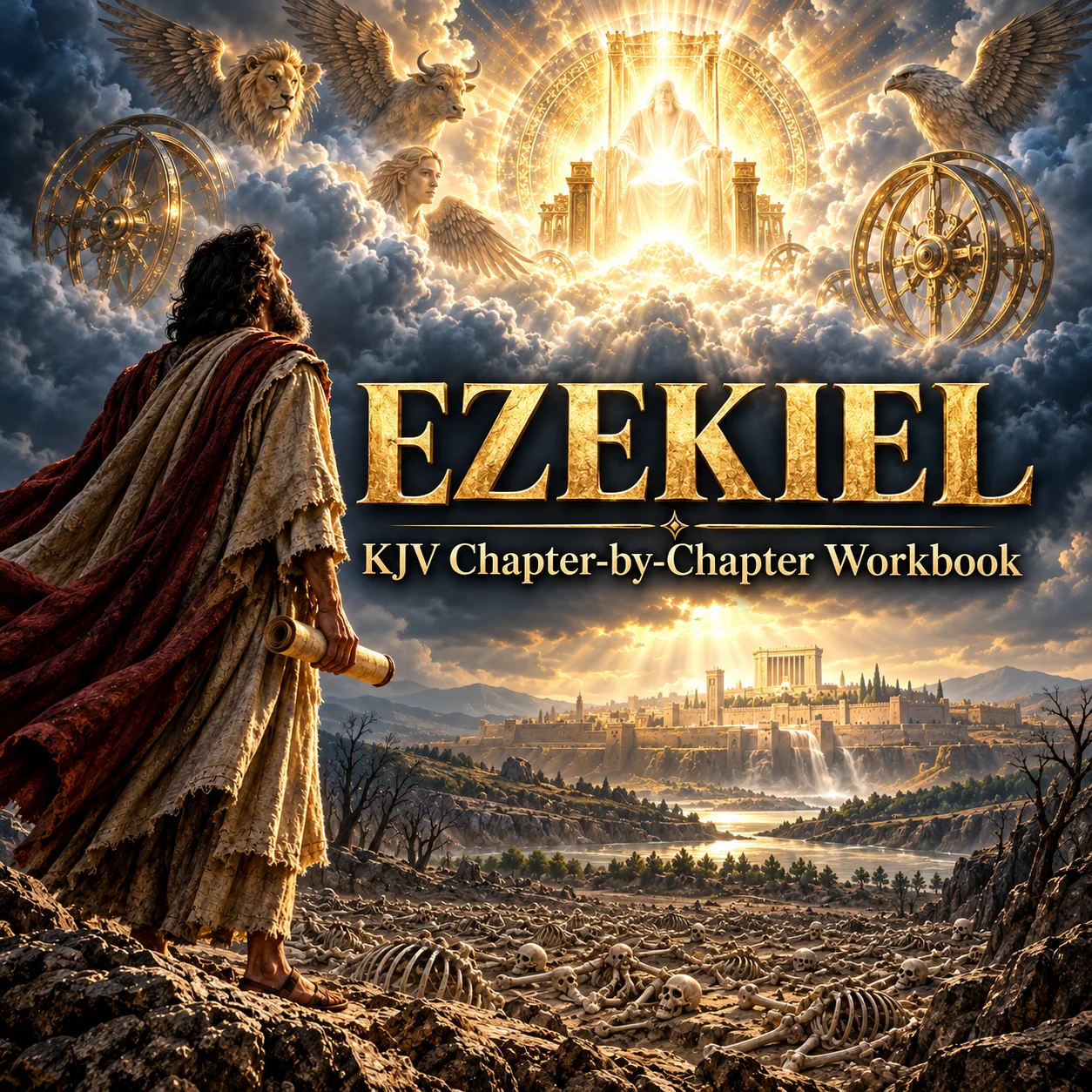
Ezekiel KJV Chapter-by-Chapter Workbook
The Ezekiel KJV Chapter-by-Chapter Workbook is a complete 1,300-page downloadable PDF study course covering all 48 chapters of Ezekiel. It combines detailed exposition, historical background, KJV vocabulary, whole-Bible cross-references, doctrinal distinctions, prophetic chronology, difficult-passage studies, charts, worksheets, reviews, teaching tools, and purposeful space for your own notes and answers.
Follow Ezekiel from the opened heavens and the glory of God at Chebar through Jerusalem’s judgment, the departing glory, Tyre and the anointed cherub, Israel’s shepherds, the valley of dry bones, the two sticks, Gog and Magog, the restored nation, and the future temple, priesthood, river, land, and city of Ezekiel 40–48.
Designed for serious personal study, pastors, preachers, Sunday school teachers, homeschool families, Bible institutes, and ministry training, this workbook is built to help you understand Ezekiel well enough to explain and teach it from an open King James Bible.
$41.99
Description
The Ezekiel KJV Chapter-by-Chapter Workbook is an exhaustive 1,300-page Bible-study course designed to take the student through all 48 chapters of Ezekiel with an open King James Bible. Rather than reducing one of Scripture’s most difficult prophetic books to a short outline or collection of devotional thoughts, this workbook slows the reader down and works through Ezekiel’s history, visions, judgments, prophetic signs, doctrines, nations, restoration promises, kingdom passages, difficult texts, cross-references, and future temple material in substantial detail.
Ezekiel begins among the captives by the river Chebar with the heavens opened and the glory of God revealed. From that opening vision, the book moves through the prophet’s divine commission, Israel’s rebellion, Jerusalem’s coming destruction, enacted prophetic signs, the departure of the glory of the LORD, judgments upon surrounding nations, the fall of Tyre and Egypt, the watchman ministry, Israel’s shepherds, national restoration, the valley of dry bones, the joining of the two sticks, Gog and Magog, and finally the extraordinary temple, priesthood, worship, river, land divisions, tribal inheritance, and restored city of Ezekiel 40–48.
Every biblical chapter receives a coordinated study unit. The workbook trains the student to identify principal movements, observe the KJV text closely, establish historical setting and chronology, trace important vocabulary, compare Scripture with Scripture, recognize prophetic horizons, preserve doctrinal distinctions, examine difficult passages, evaluate typological and kingdom connections, and summarize the chapter in his or her own words. Questions, written assignments, cross-reference exercises, teach-back activities, study panels, and carefully placed personal-note areas make the course interactive rather than merely informational.
Special attention is given to the interpretive distinctions that are essential to understanding Ezekiel. Israel remains Israel. Jerusalem remains Jerusalem. National restoration, land promises, the Davidic ruler, priesthood, sacrifices, the future sanctuary, and kingdom promises are studied in their biblical context rather than being automatically transferred to the Church. Historical fulfillment is established before prophetic or typological extensions are considered, and difficult prophetic connections are handled with appropriate distinctions between what Scripture states explicitly, what follows by strong inference, what remains possible, and what should remain speculative.
The workbook also explores the major prophetic and supernatural passages for which Ezekiel is famous. Students examine the living creatures, wheels, firmament, throne, glory of the LORD, the movements of that glory through the early chapters, the spiritual power revealed behind the king of Tyre, the resurrection and restoration imagery of Ezekiel 37, the chronological questions surrounding Ezekiel 38–39, and the literal details of the Millennial Temple and worship system. Cross-reference work reaches into the Law, historical books, Psalms, Isaiah, Jeremiah, Daniel, the Gospels, Pauline epistles, and Revelation where those passages genuinely illuminate Ezekiel.
The course is built from a broad research foundation while remaining unified and Scripture-centered. Historical observations, whole-Bible cross-reference work, dispensational structure, prophetic chronology, literary patterns, kingdom studies, difficult-passage analysis, and traditional exposition have been synthesized into original VerseQuest curriculum rather than presented as a collection of commentator quotations. The Authorized King James Bible remains the controlling text and final authority throughout.
The workbook includes extensive course preparation, all 48 chapter studies, advanced studies and worksheets, cumulative reviews, master charts, final assessment material, an expanded KJV glossary, indexes, teaching tools, and a final teaching project. Purposeful writing space is distributed throughout so the reader can record observations, cross-references, doctrinal distinctions, questions, lesson ideas, sermon material, and personal conclusions as the study progresses.
This is designed to serve multiple settings. A serious individual student can work through Ezekiel at his own pace. A homeschool family can divide individual chapter units across several days. A Sunday school teacher can turn the material into extended lesson series. Pastors and preachers can use the structure, cross-references, prophetic distinctions, and study tools while preparing sermons. Bible institutes and ministry-training programs can assign chapter work, advanced studies, reviews, and teaching projects as formal coursework.
The Ezekiel KJV Chapter-by-Chapter Workbook is delivered as one complete downloadable digital PDF and is priced at $41.99. It is intended to become more than a workbook that is completed once. With its notes, charts, written answers, cross-reference chains, indexes, and personal study material, it can become a permanent Ezekiel reference volume for years of continued Bible study and teaching.
The Glory of the LORD — Its appearance, movement, departure from Jerusalem, and eventual return form one of Ezekiel’s major structural themes. The Prophet as Watchman — Ezekiel’s responsibility to warn Israel demonstrates the seriousness of receiving and delivering the word of God. Israel’s Rebellion — The book repeatedly traces national apostasy, idolatry, covenant violation, and resistance to God’s prophets. Jerusalem Under Judgment — Ezekiel explains why the city and sanctuary come under divine judgment and why Babylonian destruction is not accidental. Prophetic Signs and Object Lessons — Ezekiel acts out divine messages through extraordinary signs that make judgment visible. Personal Responsibility — Ezekiel 18 and 33 require careful study of personal righteousness, wickedness, responsibility, life, and death. The Nations — Ammon, Moab, Edom, Philistia, Tyre, Zidon, Egypt, and other peoples are brought into the prophetic judgment program. Tyre and the Anointed Cherub — Ezekiel 28 contains both historical judgment and extraordinary spiritual material connected with Satan. False Shepherds and the True Shepherd — Ezekiel 34 contrasts corrupt leadership with God’s future provision for His flock. Israel’s National Restoration — Regathering, cleansing, land, unity, covenant, Davidic government, and renewed worship are central to the latter half of the book. The Valley of Dry Bones — Ezekiel 37 presents one of Scripture’s most important restoration and resurrection passages. The Two Sticks — Judah and Joseph are joined into one nation under one king. Gog and Magog — Ezekiel 38–39 demands careful chronological, geographical, prophetic, and cross-reference study. The Millennial Kingdom — Later chapters describe literal national, geographical, governmental, priestly, and worship conditions associated with the future kingdom. The Future Temple — Ezekiel 40–48 provides extraordinary architectural and ceremonial detail that cannot responsibly be reduced to vague symbolism. The Zadokite Priesthood — The sons of Zadok receive a distinctive future ministry within the sanctuary. The Prince — Ezekiel’s future prince requires careful distinction from the Messiah and other kingdom rulers. Future Sacrifices — Ezekiel explicitly describes offerings in the future temple system and requires careful dispensational interpretation. The River from the Sanctuary — Ezekiel 47 presents life-giving waters flowing eastward from the future temple. The Restored Land and Tribes — The closing chapters divide the land among Israel’s tribes in a future national arrangement. THE LORD IS THERE — Ezekiel concludes with the restored city identified by the presence of the LORD.
Ezekiel is structured around the glory, holiness, judgment, restoration, and presence of God. The book opens with Ezekiel among the captives, but the prophet’s circumstances do not limit the revelation he receives. The heavens are opened, the glory of God appears, and Ezekiel is commissioned to speak to a rebellious house whether they hear or refuse.
One of the first major interpretive requirements is to keep Ezekiel’s historical setting intact. The prophet ministers during the Babylonian captivity while Jerusalem still stands for part of the book. His early ministry therefore warns of a destruction that many of his hearers either refuse to believe or expect God to prevent. The fall of Jerusalem later confirms the prophetic word and changes the emphasis of the book from approaching judgment toward restoration.
The repeated expression “they shall know that I am the LORD” helps unify the book. God is made known through judgment as well as restoration. Jerusalem will know. Israel will know. The surrounding nations will know. Pharaoh, Tyre, Edom, Gog, and other enemies are not independent actors outside divine government.
Ezekiel’s visions should be allowed to retain their extraordinary biblical language. The living creatures are later explicitly identified as cherubim. The wheels accompany them. The firmament is over their heads. The throne and the appearance of the glory of the LORD are above. The student should first record exactly what the KJV states before importing assumptions into the scene.
Chapters 8–11 form a major turning point because the abominations within Jerusalem are exposed and the glory of the LORD progressively departs. The movement matters. Ezekiel later sees the glory return to the future temple, creating a deliberate theological contrast between defiled Jerusalem and restored worship.
Ezekiel 18 and 33 require particularly careful right division. Expressions concerning a righteous man turning from righteousness, a wicked man turning from wickedness, life, death, and personal righteousness occur within Ezekiel’s Old Testament covenant setting. These passages should not be carelessly rewritten into Pauline justification doctrine or used to deny eternal security for a regenerated member of the Body of Christ.
Ezekiel 28 begins with an earthly ruler but develops language extending far beyond an ordinary human king. Eden, the anointed cherub, the holy mountain of God, perfection, beauty, pride, and expulsion require comparison with the broader biblical revelation concerning Satan. Historical context and spiritual reality must both be preserved.
The restoration material of Ezekiel 34–37 is intensely national. Israel is scattered and regathered. The mountains and land are restored. The people are cleansed. A new heart and spirit are promised. The dry bones are identified with the whole house of Israel. Judah and Joseph are joined. One king rules over them. David appears in the kingdom promise. The sanctuary is established among them. These details resist interpretations that simply replace Israel with the Church.
Ezekiel 38–39 should be studied slowly rather than forcing every detail into a preconceived prophetic chart. Participants, geographical descriptions, Israel’s condition, divine intervention, burial, weapons, timing indicators, Revelation parallels, and differences between related battles must all be compared before drawing conclusions.
Ezekiel 40–48 is not an appendix to rush through. It represents nearly one-fifth of the entire book and provides extensive measurements, structures, chambers, gates, altar regulations, priestly distinctions, offerings, worship arrangements, land divisions, tribal portions, and a river flowing from the sanctuary. The level of architectural and geographical detail is itself an argument against dismissing the entire section as loose symbolism.
A central teaching question throughout Ezekiel is: What does the text say explicitly, who receives the promise or warning, and where does later Scripture clarify its fulfillment? Maintaining those questions protects the student from confusing Israel and the Church, the historical fall of Jerusalem and future judgment, the Rapture and Second Advent, the Millennium and eternity, or a possible type with an explicit prophecy.
The book begins with the glory of God appearing to a prophet among captives and concludes with a restored city whose name declares the final emphasis of the prophecy: “THE LORD IS THERE” (Ezekiel 48:35).
For personal Bible study, the workbook provides a structured path through all 48 chapters while leaving room to record discoveries, questions, cross-references, doctrinal distinctions, and personal summaries. It is especially useful for readers who have wanted to study Ezekiel but found the chronology, visions, imagery, and prophetic shifts difficult to organize.
For sermon and teaching preparation, pastors and preachers can use the chapter movements, historical settings, cross-reference chains, prophetic classifications, difficult-passage material, and teaching assignments as foundations for sermons or extended Ezekiel series.
For Sunday school and small-group instruction, individual chapter units can be divided into weekly lessons. Observation exercises, discussion questions, charts, and teach-back sections help turn the material into participatory study instead of lecture-only instruction.
For homeschool use, the course can be spread across an academic year or used as an advanced Bible elective. Students can complete observation work, written answers, chapter summaries, reviews, charts, and final projects while parents or teachers use the leader material to guide evaluation.
For Bible institutes, ministry schools, and discipleship programs, the advanced studies, cumulative reviews, final assessment, teaching project, glossary, indexes, and doctrinal distinctions provide a substantial curriculum for serious study.
For pastoral reference, the completed workbook becomes a personal Ezekiel notebook containing the student’s own cross-references, teaching ideas, notes, outlines, questions, and conclusions alongside the prepared material.
An Authorized King James Bible should remain open throughout the entire course and serves as the controlling text.
A KJV concordance can help trace repeated expressions such as “son of man,” “know that I am the LORD,” “the glory of the LORD,” “house of Israel,” “land,” “sanctuary,” “prince,” and “David.”
A KJV chain-reference Bible or cross-reference system is particularly valuable for connecting Ezekiel with Exodus, Kings, Isaiah, Jeremiah, Daniel, the Gospels, and Revelation.
A Bible atlas and historical map set can help locate Jerusalem, Babylon, Chebar, Tyre, Zidon, Egypt, Edom, Ammon, Moab, the mountains of Israel, and the geographical boundaries appearing in Ezekiel 40–48.
A biblical chronology or Old Testament timeline is useful for tracking Jehoiachin’s captivity, Zedekiah, Jerusalem’s fall, Babylon, and the dated prophecies recorded throughout Ezekiel.
A Bible dictionary can provide background on priesthood, temple terminology, sacrifices, ancient nations, measurements, gates, and geographical locations while the biblical text remains controlling.
For further Scripture study, compare Isaiah, Jeremiah, Daniel, Zechariah, Matthew 24, Revelation 4, Revelation 19–22, and the Pentateuchal passages governing Israel’s priesthood, worship, land, and covenant history.
Related products
-
Doctrine Series
-
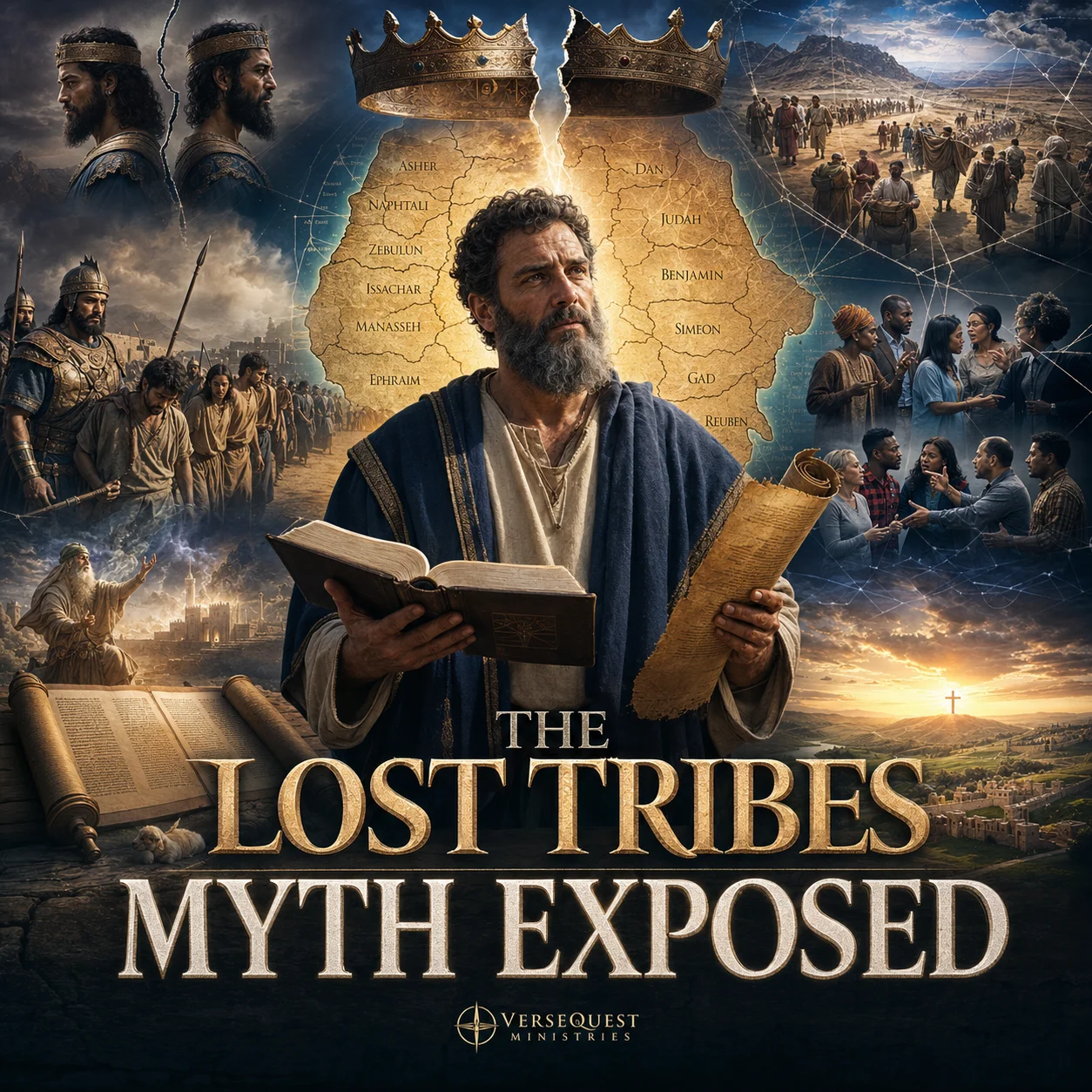
- The Lost Tribes Myth Exposed (213-Page Premium Study)
- A 213-page premium KJV study exposing the Lost Tribes myth, tribal identity errors, prophecy abuse, race theories, and false Israel claims through 35 detailed essays.
- $24.99
- Add to cart
-
-
Bible Prophecy Charts
-
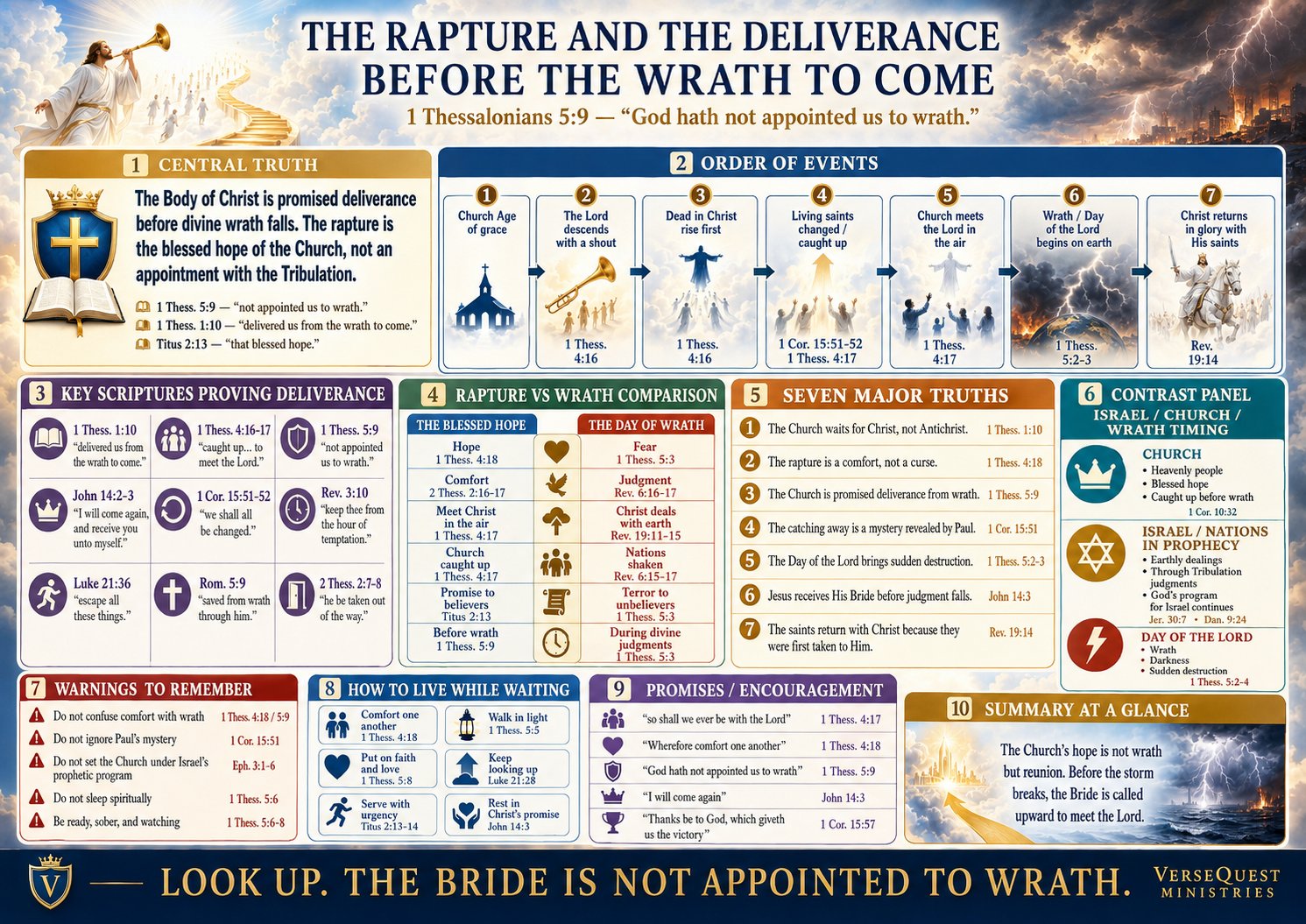
- The Rapture and the Deliverance Before the Wrath to Come – Printable Bible Study Chart
- Printable KJV Bible study chart on The Rapture and the Deliverance Before the Wrath to Come, showing from 1 Thessalonians 5:9 that the Church is not appointed to wrath. This…
- $4.99
- Add to cart
-
-
Bible Study Chart
-
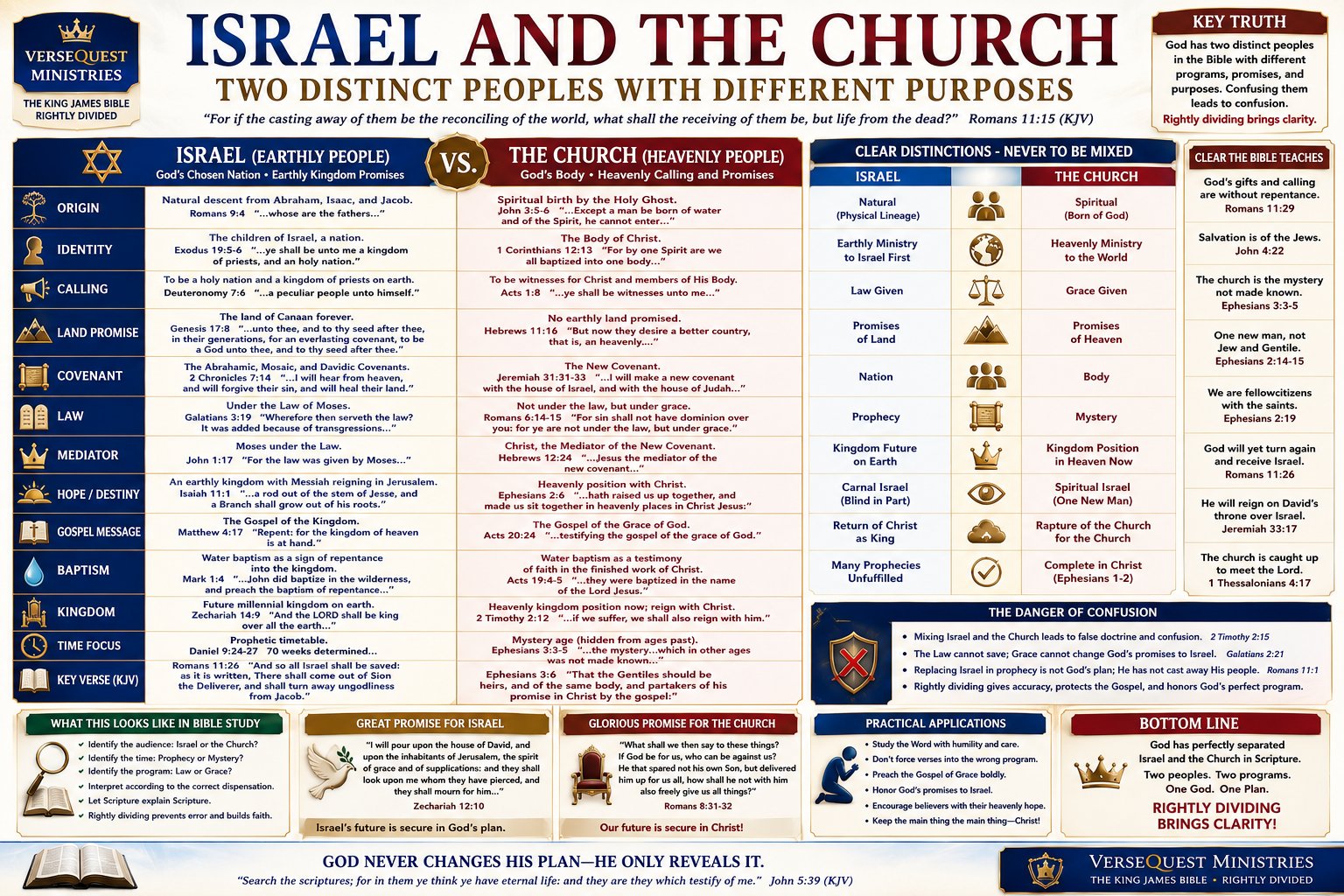
- Israel and the Church Bible Study Chart – Two Distinct Peoples with Different Purposes (KJV)
- Compare Israel and the Church with this detailed KJV Bible study chart covering their distinct origins, identities, covenants, callings, promises, gospel programs, and future destinies.
- $3.99
- Add to cart
-
-
Ages To Come
-
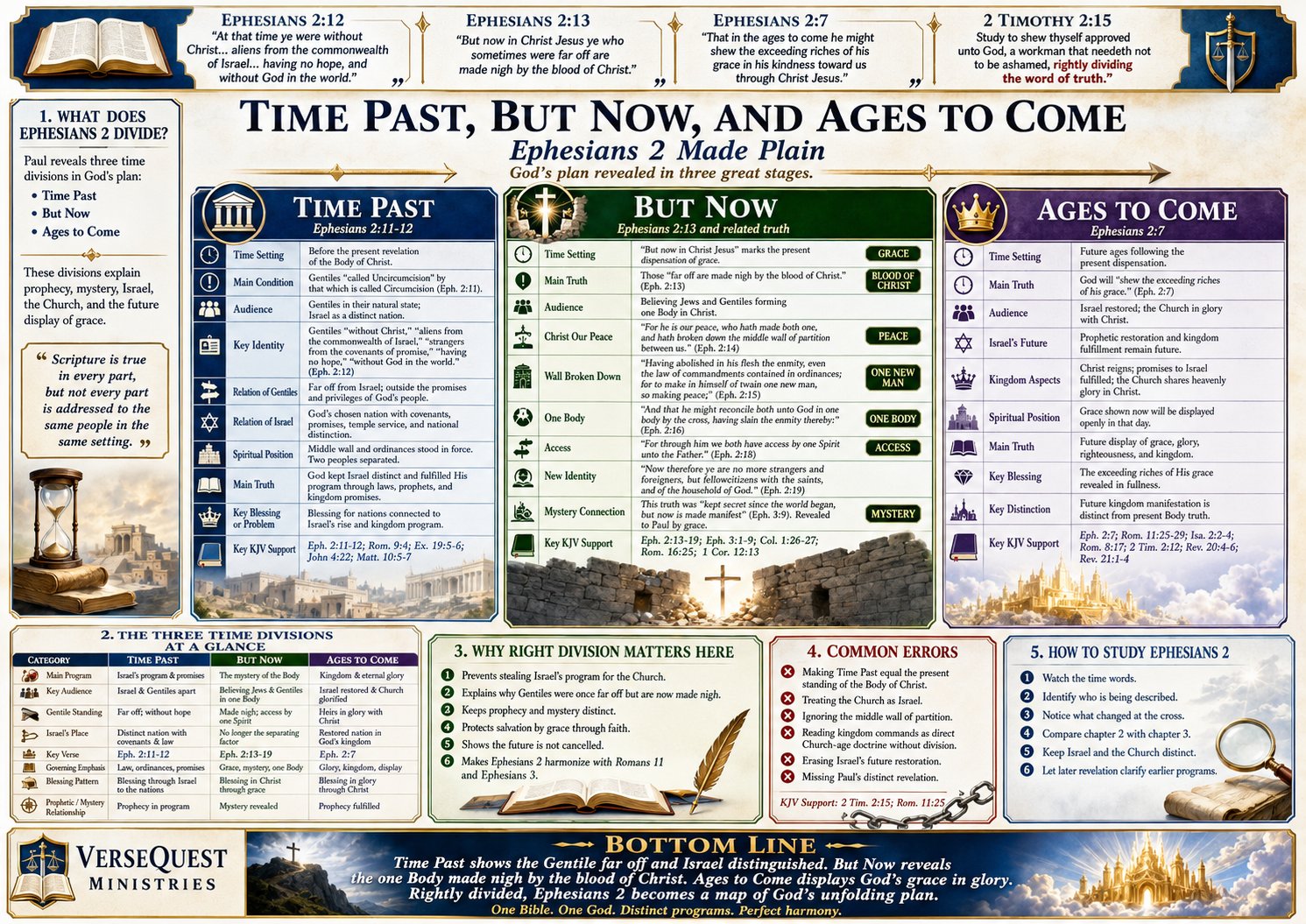
- Time Past, But Now, and Ages to Come – Ephesians 2 Rightly Divided KJV Bible Study Chart
- Understand Ephesians 2 with this detailed KJV chart explaining Time Past, But Now, Ages to Come, Gentile distance, the one Body, Israel’s future, and the importance of right division.
- $3.99
- Add to cart
-
-
The Church Age vs The Tribulation
-
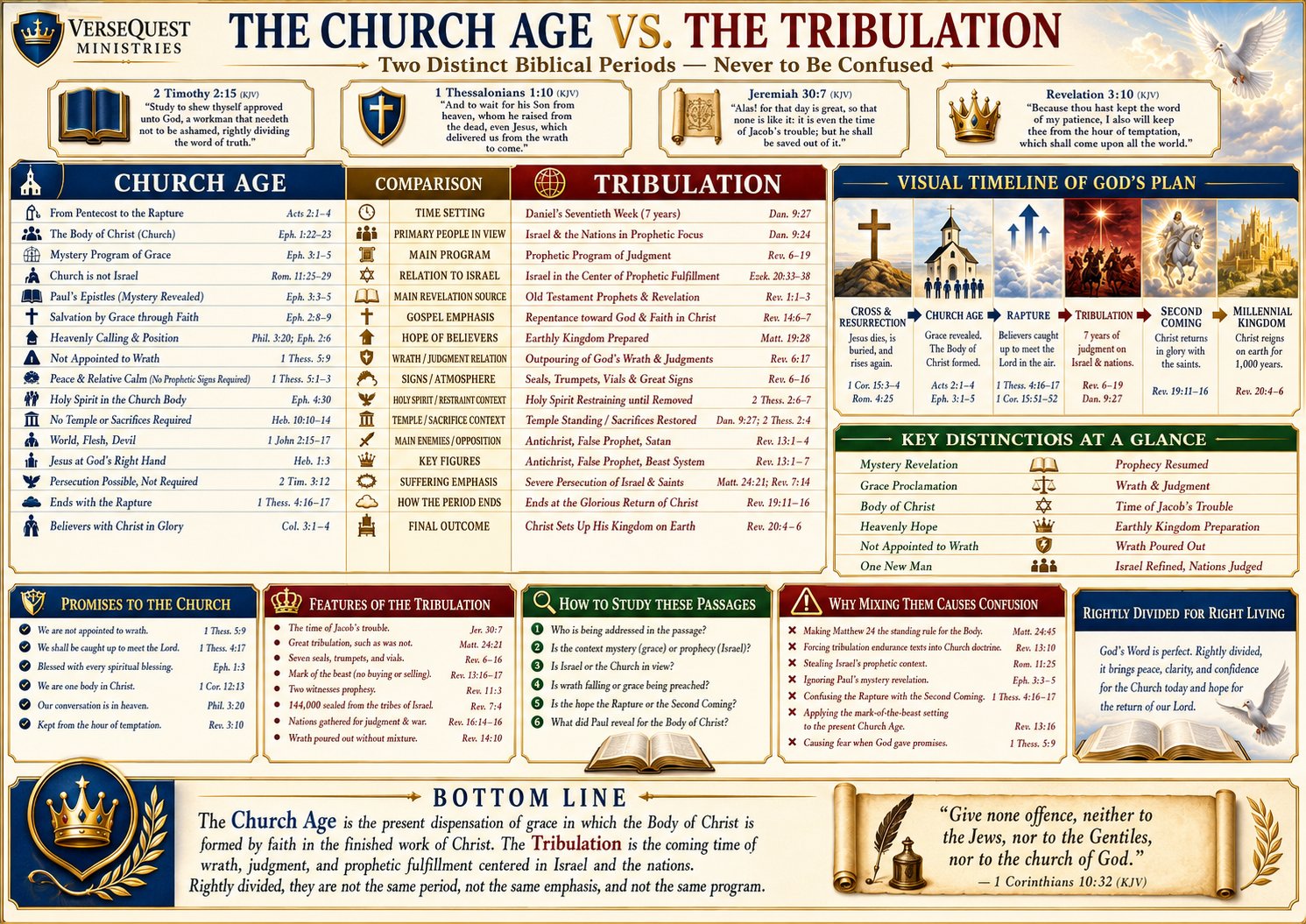
- The Church Age vs. the Tribulation – Two Distinct Biblical Periods KJV Bible Study Chart
- Compare the Church Age and the Tribulation with this detailed KJV chart covering the Body of Christ, Israel, grace, wrath, the Rapture, Antichrist, the Second Coming, and the millennial Kingdom.
- $3.99
- Add to cart
-