
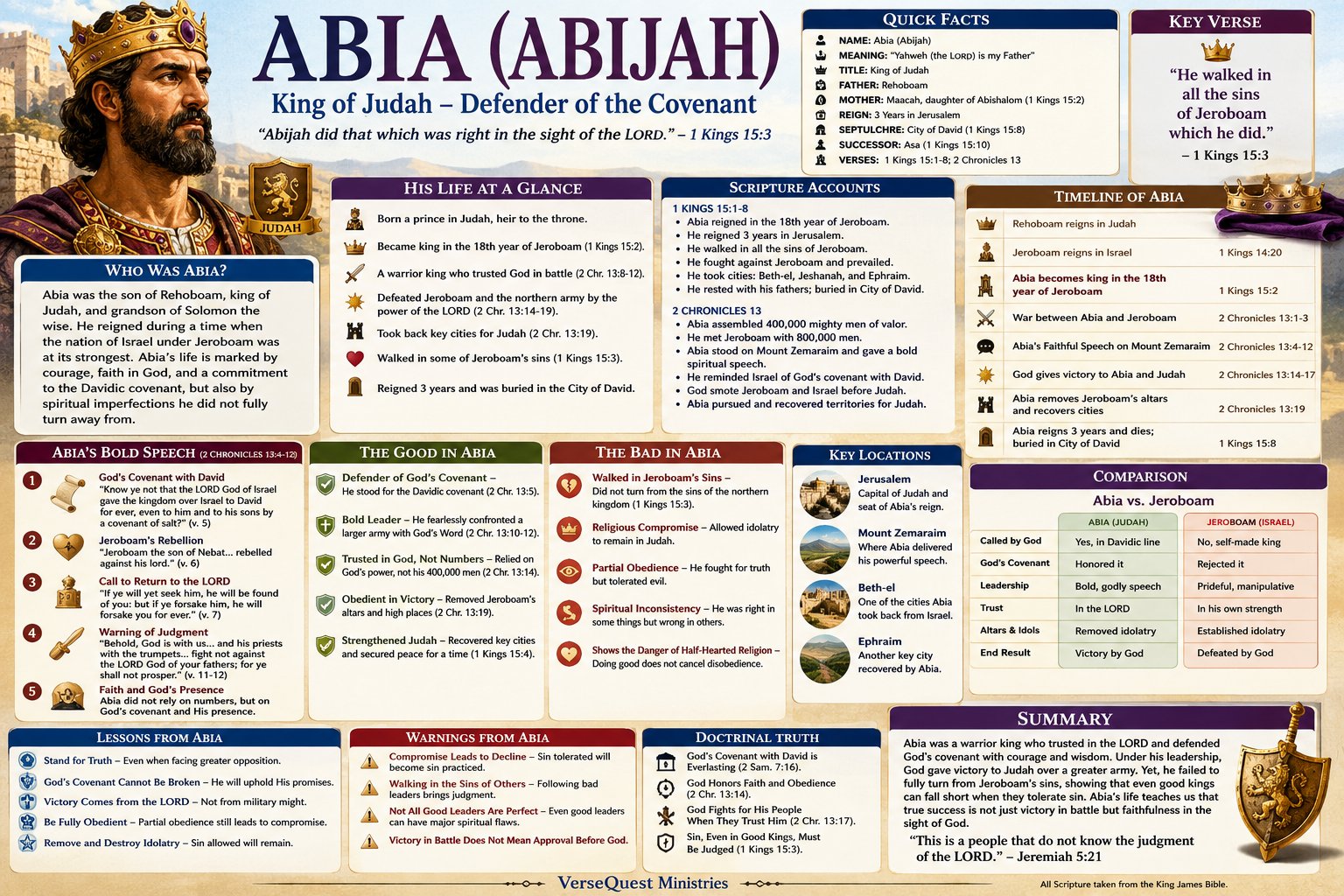
Abia (Abijah) – King of Judah, Defender of the Davidic Covenant, and Warning Against Half-Hearted Religion (KJV Bible Study Chart)
Study Abia, also called Abijah and Abijam, with this detailed KJV chart covering his Davidic heritage, bold covenant speech, victory over Jeroboam, reliance upon the LORD, spiritual compromise, and imperfect heart.
$3.99
Description
Abia (Abijah): King of Judah—Defender of the Covenant is a detailed KJV Bible-character chart examining the brief, complex, and highly instructive reign of Rehoboam’s son and Solomon’s grandson. Known as Abijam in 1 Kings, Abijah in 2 Chronicles, and Abia in Matthew’s genealogy, this king stood boldly for the Davidic covenant during a national crisis while still tolerating serious spiritual compromise within his own life and kingdom.
Abia became king of Judah during the eighteenth year of Jeroboam’s reign over the northern kingdom of Israel. The once-united nation had been divided following Solomon’s death. Rehoboam ruled Judah in the south, while Jeroboam established a rival kingdom in the north with counterfeit worship, golden calves, unauthorized priests, and substitute religious centres at Bethel and Dan.
Abia inherited a nation surrounded by instability, rivalry, idolatry, and the consequences of previous leadership failures. His reign lasted only three years, yet Scripture records one of the most dramatic battles and boldest covenant speeches in the history of the divided kingdom.
The chart brings together the two principal biblical accounts of Abia. First Kings 15:1–8 supplies the sober divine evaluation of his personal walk, while 2 Chronicles 13 records his confrontation with Jeroboam, his defense of Judah’s covenant position, and the remarkable victory God granted when Judah relied upon the LORD.
These two accounts do not contradict one another. They reveal different sides of the same man. Abia could speak accurately about God’s covenant, lead Judah in a moment of genuine reliance upon the LORD, and still possess a heart that was not fully surrendered.
First Kings states that Abia walked in the sins practised before him and that “his heart was not perfect with the LORD his God, as the heart of David his father.” His reign therefore warns that correct doctrine, powerful preaching, public courage, and even divine victory do not automatically prove complete personal obedience.
Abia was born into the royal house of David. His father was Rehoboam, his grandfather was Solomon, and he inherited Judah’s throne within the covenant line through which God had promised to preserve David’s house.
The preservation of that line did not depend upon Abia’s perfection. First Kings explains that the LORD maintained a lamp in Jerusalem for David’s sake. God’s covenant faithfulness continued even when individual kings failed to match the spiritual devotion of David.
This distinction is central to the chart. God’s promise was secure because of His own faithfulness, but Abia remained personally accountable for his choices. Covenant privilege never cancelled moral responsibility.
The most dramatic event of Abia’s reign was his war with Jeroboam. According to 2 Chronicles 13, Abia assembled four hundred thousand chosen warriors, while Jeroboam brought eight hundred thousand mighty men. Judah faced an enemy force twice its size.
Before battle, Abia stood upon Mount Zemaraim and addressed Jeroboam and the northern army. His speech was not merely political rhetoric. It appealed directly to God’s covenant, Israel’s rebellion, Judah’s legitimate priesthood, and the danger of fighting against the LORD.
Abia reminded Israel that the LORD had given the kingdom over Israel to David and his sons “by a covenant of salt.” This expression emphasized permanence, preservation, and the enduring nature of God’s promise to David’s house.
He then exposed Jeroboam’s rebellion. Jeroboam had risen against the house of David, taken advantage of Rehoboam’s weakness, and established a rival kingdom through political manipulation and religious corruption.
Jeroboam understood that continued worship in Jerusalem might turn the people’s loyalty back toward David’s house. He therefore created golden calves, appointed priests who were not sons of Levi, and offered Israel a more convenient religious system.
Abia contrasted this counterfeit system with Judah’s continued possession of the Temple, Aaronic priesthood, morning and evening sacrifices, incense, shewbread, and God-appointed worship.
His message was unmistakable: Jeroboam had numerical strength, but Judah possessed the covenant, the priesthood, the Temple, and the God who had established them.
Abia warned the northern army, “O children of Israel, fight ye not against the LORD God of your fathers; for ye shall not prosper.” His words placed the conflict above ordinary politics. To resist God’s revealed order was to fight against the LORD Himself.
Yet while Abia spoke, Jeroboam secretly arranged an ambush behind Judah. The southern army suddenly discovered enemies before and behind them. Their strategy had failed, their numerical disadvantage remained, and escape appeared impossible.
Judah then cried unto the LORD, and the priests sounded with the trumpets. The men of Judah shouted, and God smote Jeroboam and the northern army before Abia and Judah.
Second Chronicles records that five hundred thousand chosen men of Israel fell in the battle. The inspired explanation for Judah’s victory is explicit: “the children of Judah prevailed, because they relied upon the LORD God of their fathers.”
The victory did not come from superior numbers, military brilliance, political influence, or human strength. It came because God defended His covenant purpose and Judah relied upon Him in the moment of crisis.
Abia followed the victory by taking the cities of Bethel, Jeshanah, and Ephrain from Jeroboam. Jeroboam did not recover his former strength during Abia’s lifetime, while Abia himself became increasingly powerful.
The chart carefully balances this victory with the divine evaluation found in First Kings. Abia defended the covenant publicly, yet his own heart remained divided. He opposed Jeroboam’s idolatry while failing to remove every compromise from Judah.
This is one of the sharpest lessons of his life: a man may be right in a battle and still be wrong in parts of his walk. Winning a public conflict does not prove that every private matter has been surrendered to God.
Abia possessed the ability to explain why Jeroboam’s religion was false. He could identify unauthorized priests, counterfeit worship, political manipulation, and rebellion against divine order. Yet discernment concerning another man’s sins did not automatically produce complete obedience within himself.
His life exposes the danger of half-hearted religion. Partial obedience may defend some truths while tolerating other forms of compromise. It may stand firmly in public while negotiating with sin in private.
Abia’s faith was real in the battle, but his faithfulness was inconsistent across his reign. Scripture does not permit one victorious episode to erase the larger moral evaluation of his life.
The chart therefore compares the good and bad found in Abia. He defended God’s covenant, confronted a larger army with Scripture, relied upon the LORD rather than numbers, removed Jeroboam’s altars from captured cities, and strengthened Judah.
At the same time, he walked in earlier sins, tolerated religious compromise, displayed partial rather than complete obedience, and failed to possess a heart wholly devoted to the LORD.
The contrast with Jeroboam remains significant. Jeroboam was a self-appointed king who rejected God’s established order and built an idolatrous system to preserve political power. Abia stood within David’s covenant line and defended the true priesthood.
Jeroboam trusted numbers, manipulation, false worship, and military strategy. Abia trusted the LORD in the decisive battle. Jeroboam’s ambush failed, while Judah’s cry to God brought deliverance.
Nevertheless, defeating a more corrupt opponent did not make Abia spiritually complete. Comparison with Jeroboam could make Abia appear righteous, but comparison with David exposed the condition of his heart.
The Bible’s standard is not whether a person appears better than his enemy. God evaluates faithfulness according to His Word.
The chart also emphasizes the difference between covenant faithfulness and personal faithfulness. God remained true to His promise concerning David even when David’s descendants faltered. The preservation of the royal line magnified divine mercy rather than human merit.
Abia occupies an important place in the genealogy leading to Jesus Christ. Matthew 1:7 includes Abia within the royal line from David through Solomon. His inclusion does not endorse his failures; it demonstrates that God preserved the Messianic line through flawed human rulers.
Jesus Christ is the perfect Son of David whom Abia could never be. Abia ruled briefly and imperfectly. Christ will reign righteously and forever.
Abia defended the covenant of David in one battle, but Jesus Christ is the ultimate fulfillment of that covenant. He possesses the throne by divine right, defeats every enemy, and will establish a Kingdom that no rebellion can overthrow.
The practical lessons are direct. Stand for truth even when the opposition appears greater. Trust God rather than numbers. Remember that God’s promises cannot be broken. Reject counterfeit worship and political religion. Remove idolatry rather than merely arguing against it.
The chart also warns believers to examine their own hearts while confronting public error. It is possible to identify another person’s compromise while protecting a different compromise of our own.
Powerful preaching does not replace personal obedience. Ministry success does not erase hidden sin. One spiritual victory does not make continued compromise harmless.
Abia’s short reign teaches that the true measurement of a leader is not only whether he can win a battle, deliver a speech, recover territory, or strengthen an institution. The deeper question is whether his heart is fully surrendered to the LORD.
This resource is ideal for personal Bible study, Old Testament king studies, divided-kingdom instruction, leadership training, Davidic covenant teaching, faith-under-pressure lessons, Sunday school, homeschool Bible curriculum, Christian schools, Bible institutes, sermon preparation, and anyone studying the difference between public courage and private faithfulness.
Abia king of Judah, Abijah king of Judah, Abijam, divided kingdom, Davidic covenant, covenant of salt, Jeroboam’s rebellion, Mount Zemaraim, Judah versus Israel, trusting the LORD, victory against greater numbers, true priesthood versus false worship, golden-calf religion, public courage, partial obedience, imperfect heart, religious compromise, covenant faithfulness, leadership accountability, Messianic royal line
The King James Bible uses three related forms of this king’s name: Abijam in 1 Kings, Abijah in 2 Chronicles, and Abia in Matthew’s genealogy.
Abia was the son of Rehoboam and grandson of Solomon. He inherited the throne of Judah within the royal line of David.
He began reigning during the eighteenth year of Jeroboam, king of the northern tribes, and ruled in Jerusalem for three years.
The accounts in Kings and Chronicles emphasize different aspects of his reign. Kings provides the moral evaluation of his heart, while Chronicles records his covenant speech and military victory.
First Kings says Abia walked in earlier sins and that his heart was not perfect with the LORD as David’s heart had been.
Second Chronicles records Judah relying upon the LORD and receiving an extraordinary victory under Abia’s leadership.
These truths are complementary. A man may exercise genuine faith in one crisis while remaining spiritually inconsistent in other areas.
Abia’s speech on Mount Zemaraim appealed to the covenant God made with David. He understood that Judah’s royal line was established by divine promise rather than human popularity.
The covenant of salt expressed permanence and preservation. Salt was associated with endurance and covenant faithfulness.
Jeroboam had rejected God’s order and created a rival religious system to protect his political power.
The golden calves at Bethel and Dan demonstrate how political fear can manufacture convenient religion.
Jeroboam appointed unauthorized priests and lowered the biblical standard so that nearly anyone willing to participate could enter the religious office.
Abia correctly exposed the difference between Judah’s God-appointed priesthood and Jeroboam’s counterfeit ministry.
Correctly identifying false worship did not make Abia personally complete. Discernment must be joined with self-examination.
Abia entered battle with four hundred thousand men against Jeroboam’s eight hundred thousand.
The numerical disadvantage demonstrated that Judah’s survival could not be attributed merely to military strength.
Jeroboam arranged an ambush so that Judah was attacked from the front and rear.
When Judah cried unto the LORD and the priests sounded the trumpets, God intervened against the northern army.
The inspired reason for victory is that Judah relied upon the LORD God of their fathers.
Faith does not deny the size of the enemy. It recognizes that God remains greater than the enemy.
Abia captured Bethel, Jeshanah, and Ephrain following the battle, weakening Jeroboam’s control.
The recovery of Bethel was especially significant because Jeroboam had made it a centre of counterfeit calf worship.
One moment of victory does not erase a lifetime of tolerated compromise. Spiritual success should never become an excuse to stop examining the heart.
Abia’s leadership demonstrates the danger of being doctrinally strong in public but spiritually divided in private.
Partial obedience may oppose one form of evil while continuing to tolerate another.
God preserved a lamp in Jerusalem for David’s sake. This reveals the faithfulness of God’s covenant rather than the perfection of David’s descendants.
Covenant privilege increases accountability. Receiving a godly heritage does not guarantee a wholly surrendered heart.
Abia was better than Jeroboam in several important respects, but Jeroboam was not God’s standard for Abia. David’s devoted heart exposed Abia’s deficiency.
Comparison with someone worse can create false confidence. Scripture remains the proper standard.
Abia’s inclusion in Matthew’s genealogy demonstrates God’s sovereign preservation of the Messianic line.
The royal genealogy contains flawed people because salvation history displays God’s grace rather than human perfection.
Jesus Christ is the faultless King of David’s line. His heart is perfect, His worship is pure, and His reign will never end.
The central lesson is that God can grant victory through an imperfect servant without approving every area of that servant’s life.
The believer should trust God against overwhelming opposition while also asking whether any private compromise remains protected.
Bible-character studies, divided-kingdom history, teaching the Davidic covenant, leadership under pressure, trusting God against overwhelming odds, distinguishing public victory from private faithfulness, confronting counterfeit religion, resisting political compromise, examining divided loyalties, teaching partial versus complete obedience, comparing Abia and Jeroboam, Old Testament kings classes, Sunday school lessons, homeschool Bible curriculum, Christian school instruction, Bible institute teaching, pastoral training, sermon preparation
King James Bible, Strong’s Concordance, Thompson Chain-Reference Bible, Treasury of Scripture Knowledge, Nave’s Topical Bible, Bible atlas of the divided kingdom, 1 Kings study notes, 2 Chronicles commentary materials, Davidic covenant outlines, charts of the kings of Judah and Israel, Mount Zemaraim battle study, Jeroboam and Rehoboam character comparisons, leadership-accountability resources, Old Testament worship studies, Messianic genealogy charts, VerseQuest Bible-character and Kingdom charts
Related products
-
Ages To Come
-
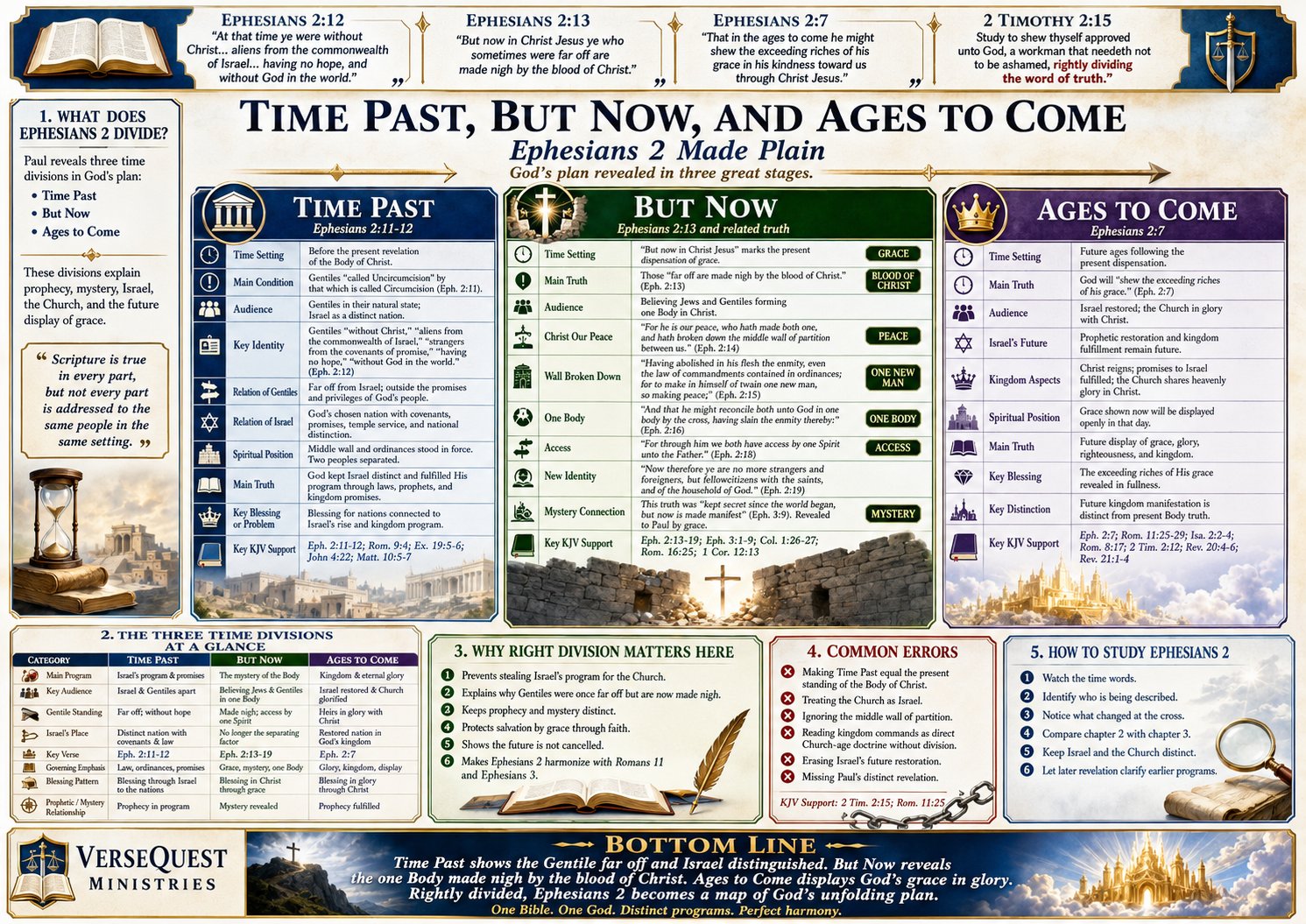
- Time Past, But Now, and Ages to Come – Ephesians 2 Rightly Divided KJV Bible Study Chart
- Understand Ephesians 2 with this detailed KJV chart explaining Time Past, But Now, Ages to Come, Gentile distance, the one Body, Israel’s future, and the importance of right division.
- $3.99
- Add to cart
-
-
Genesis Study
-
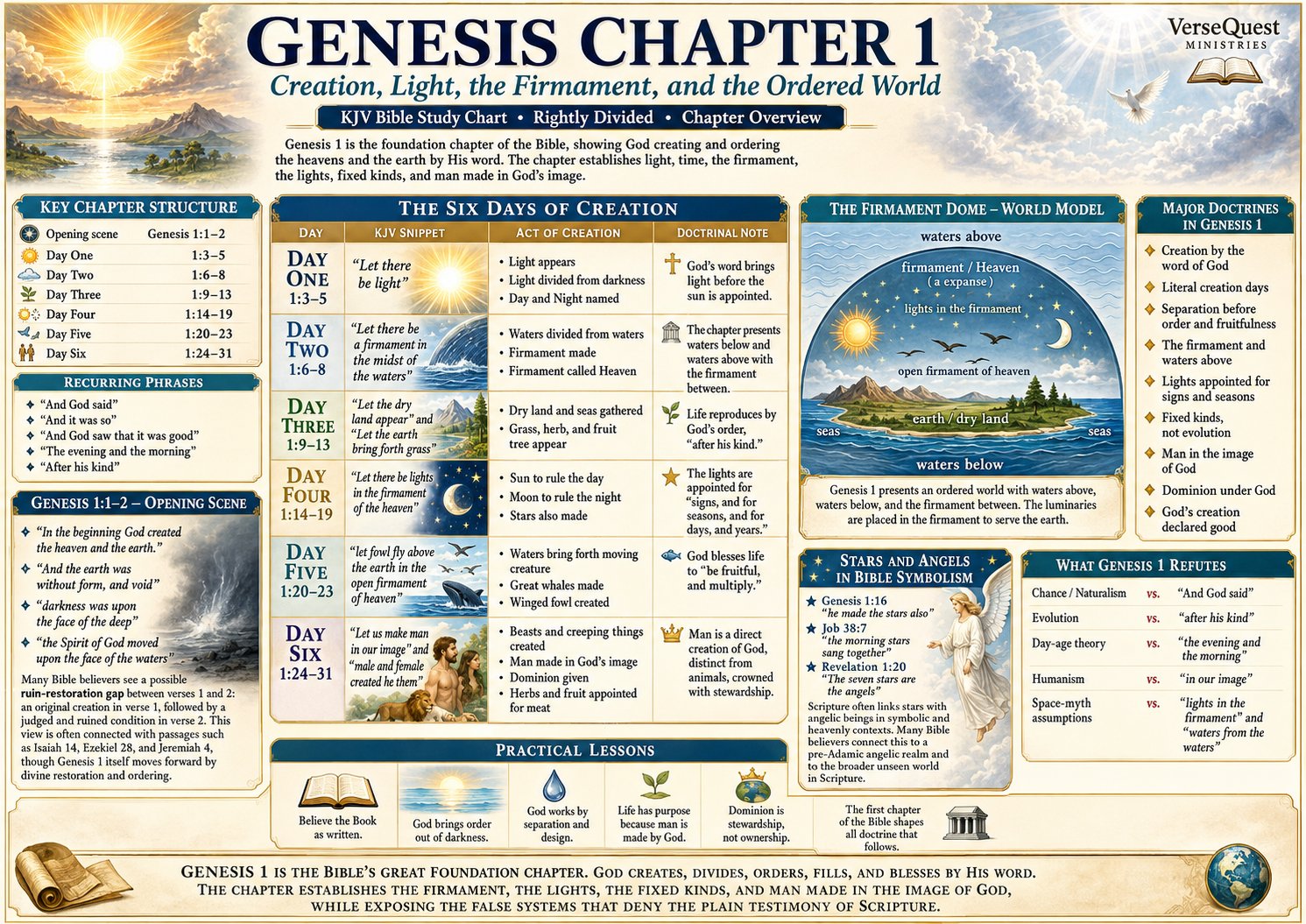
- Genesis Chapter 1 Bible Study Chart – Creation, Light, the Firmament, and the Ordered World (KJV)
- Explore Genesis Chapter 1 with this detailed KJV Bible study chart covering the six days of creation, the firmament, light, fixed kinds, man in God’s image, major doctrines, recurring phrases,…
- $3.99
- Add to cart
-
-
Uncategorized
-
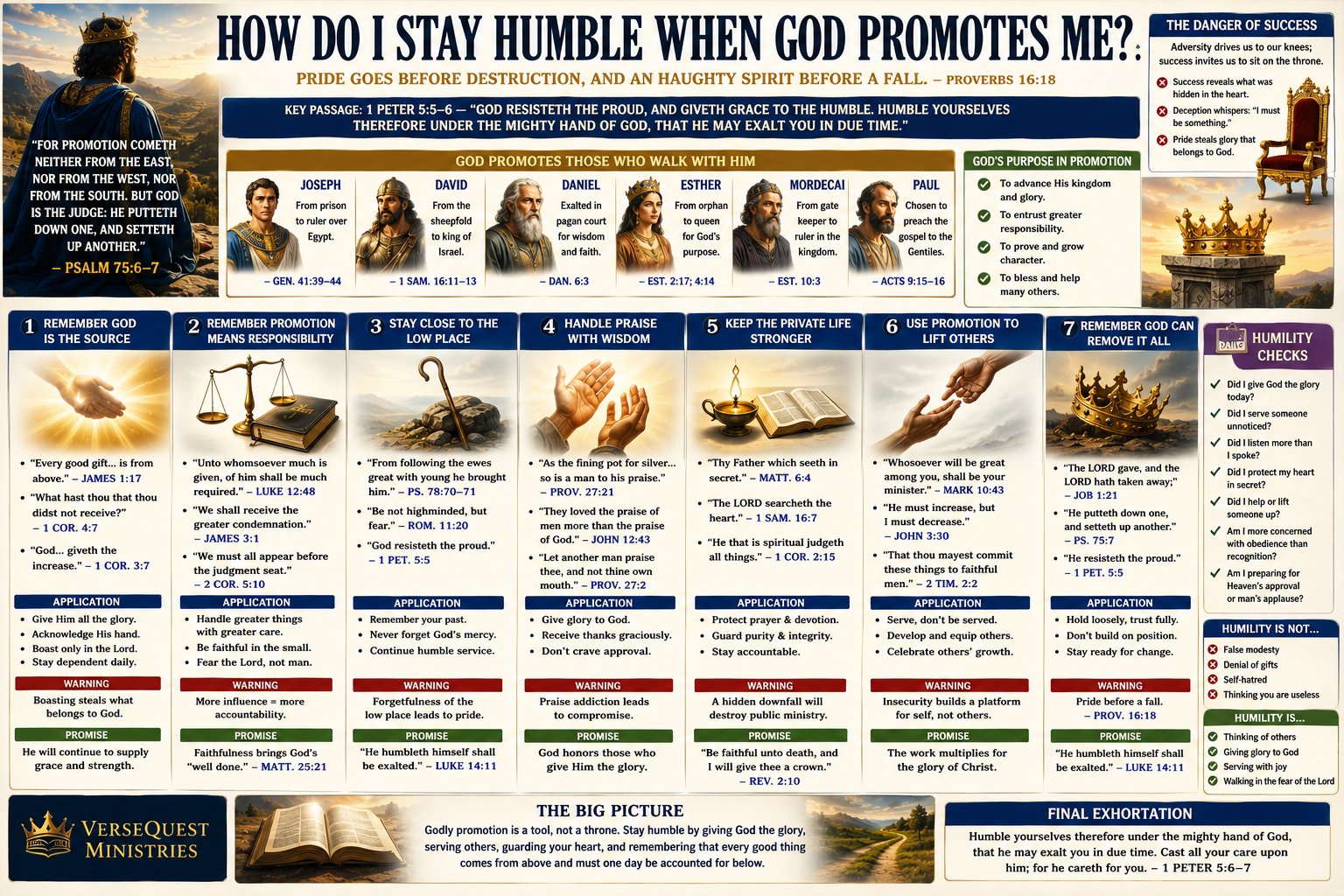
- How to Stay Humble When God Promotes You – Biblical Humility, Success, and Faithful Stewardship (KJV Bible Study Chart)
- Learn how to remain humble when God increases your influence with this detailed KJV Bible study chart covering pride, praise, responsibility, private devotion, servant leadership, and faithful stewardship.
- $3.99
- Add to cart
-
-
Paul and the Twelve
-
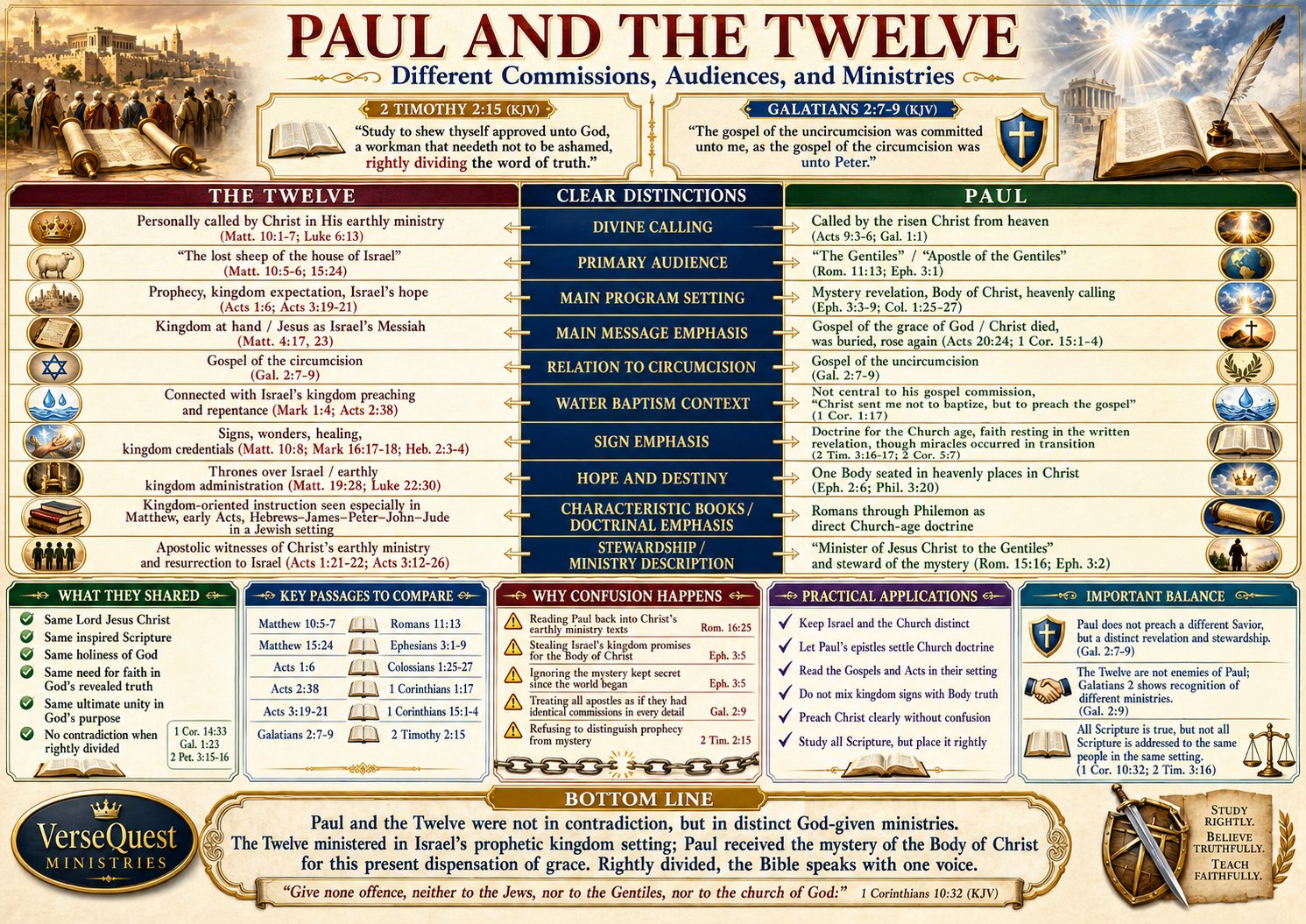
- Paul and the Twelve Bible Study Chart – Different Commissions, Audiences, and Ministries (KJV)
- Compare Paul and the Twelve with this detailed KJV Bible study chart covering their distinct callings, audiences, Kingdom and mystery settings, gospel stewardships, baptism contexts, signs, and future hopes.
- $3.99
- Add to cart
-
-
Christian Growth
-
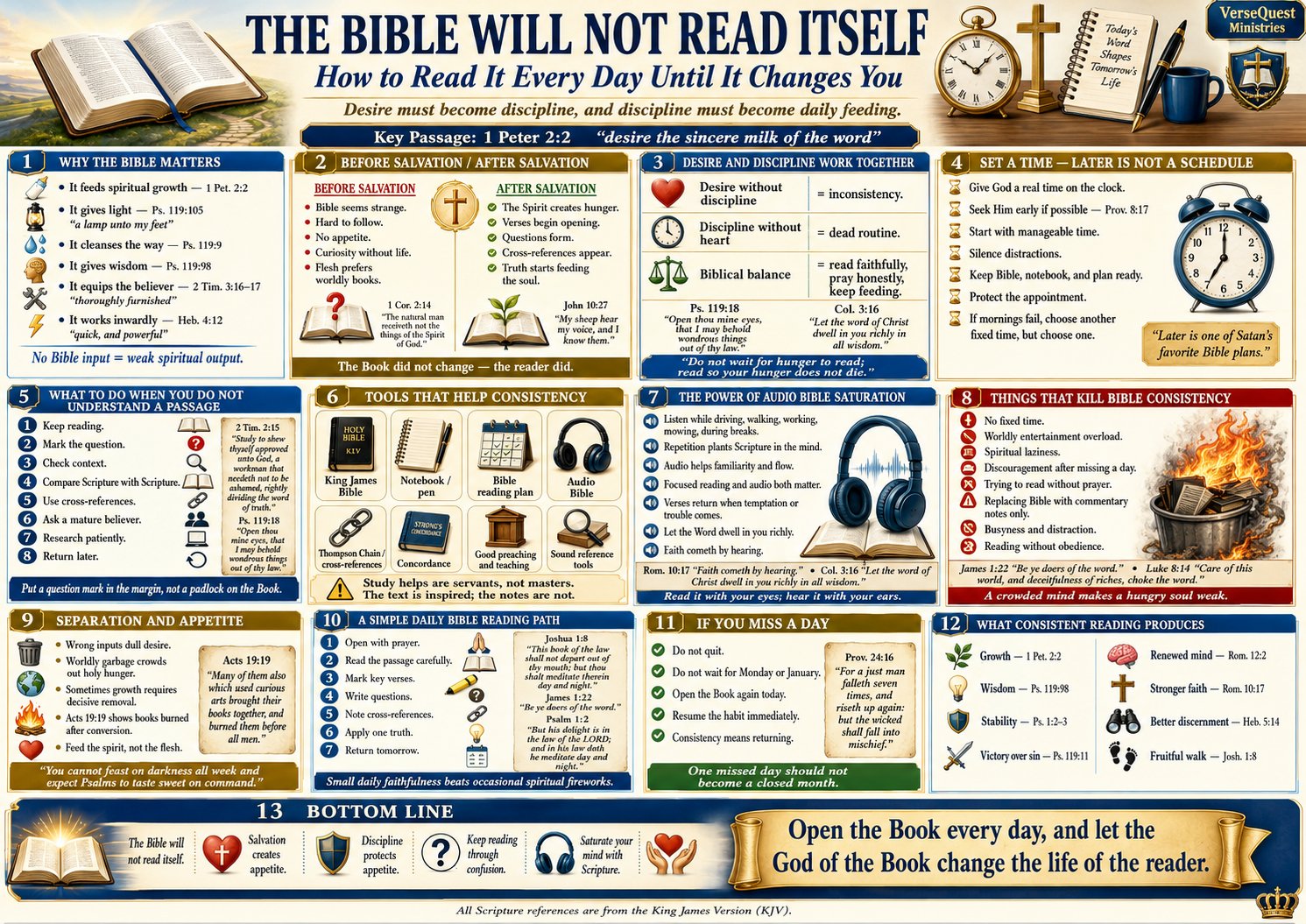
- The Bible Will Not Read Itself – How to Read the Bible Every Day Bible Study Chart (KJV)
- Build a consistent daily Bible reading habit with this detailed KJV Bible study chart. Learn practical steps for reading Scripture faithfully, overcoming inconsistency, understanding difficult passages, and growing spiritually through…
- $3.99
- Add to cart
-