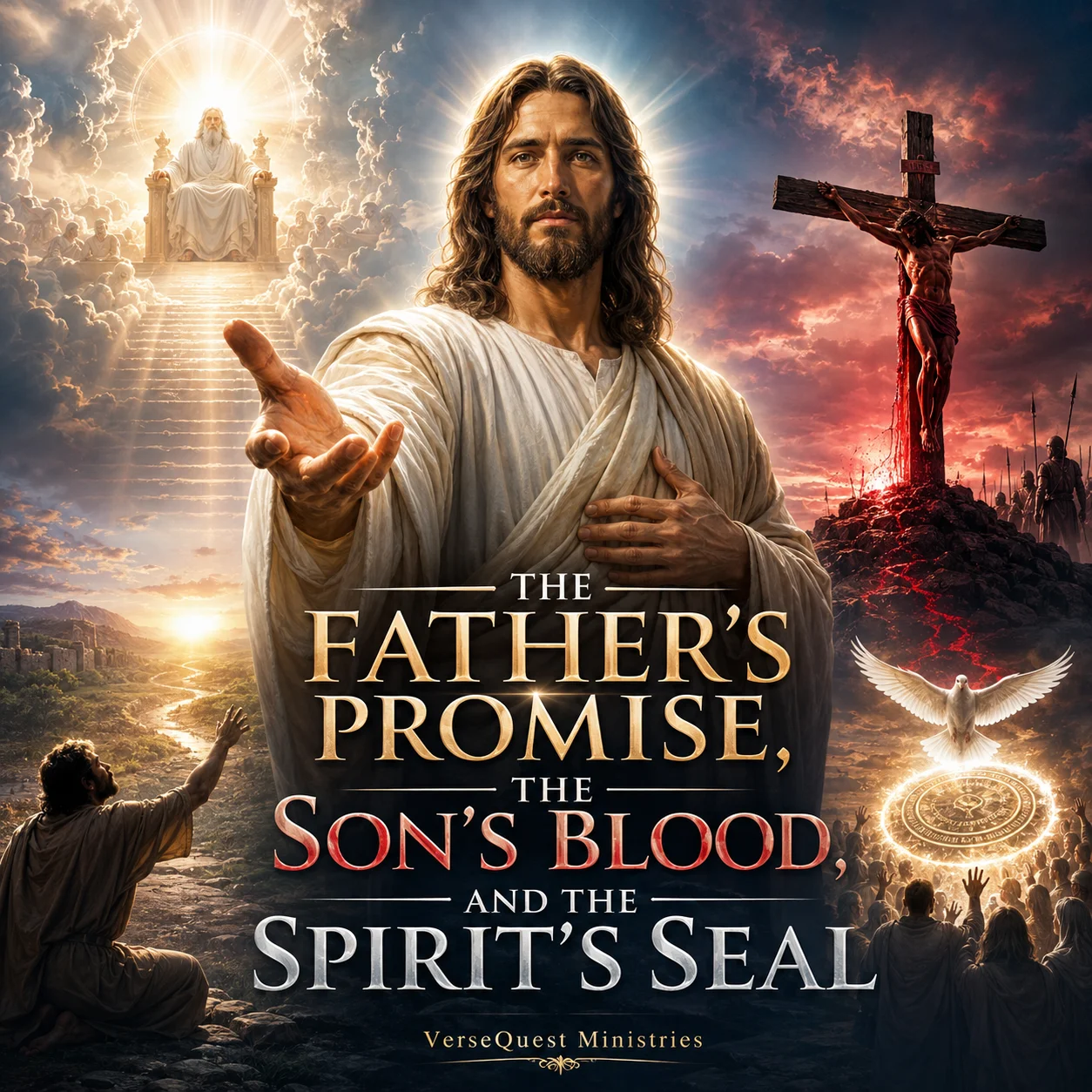
Sermon Title:
Held by the Triune God: The Father’s Promise, the Son’s Blood, and the Spirit’s Seal
Key Passage:
John 6:37–40 — “All that the Father giveth me shall come to me; and him that cometh to me I will in no wise cast out. For I came down from heaven, not to do mine own will, but the will of him that sent me. And this is the Father’s will which hath sent me, that of all which he hath given me I should lose nothing, but should raise it up again at the last day. And this is the will of him that sent me, that every one which seeth the Son, and believeth on him, may have everlasting life: and I will raise him up at the last day.”
Series:
Foundations of the Gospel of Grace
Topic:
The Father’s Saving Purpose, the Son’s Finished Redemption, and the Holy Spirit’s Seal as the Ground of the Believer’s Security
Book:
John, Ephesians, Romans, Colossians, 1 Corinthians, Hebrews, 1 Peter, 2 Corinthians
Speaker:
Paul Tackett
Suggested Sermon Text:
John 6:35–40; John 6:47–51; John 10:27–30; Ephesians 1:3–14; Ephesians 4:30; Romans 5:1–11; Romans 8:1, 28–39; Colossians 1:12–14; Colossians 2:10–14; 1 Corinthians 15:1–4; Hebrews 9:11–15; Hebrews 10:10–14; 1 Peter 1:3–5; 2 Corinthians 1:21–22
Short Sermon Description:
This detailed VerseQuest Ministries sermon outline explains John 6:37–40 and the believer’s security in the saving purpose of the Father, the finished redemption accomplished by the Son, and the sealing ministry of the Holy Spirit. Jesus Christ declares that the one who comes to Him will “in no wise” be cast out, that the Father’s will is that Christ should “lose nothing,” and that everyone who believes on the Son has everlasting life and will be raised up at the last day. This sermon places John 6 in the setting of Christ’s earthly ministry while showing how its security truths harmonize with Paul’s later Church-age revelation of redemption through Christ’s blood and sealing by the Spirit. It distinguishes God’s promise from human performance, salvation from service, security from carelessness, and standing from state. Designed for pastors, preachers, teachers, Bible students, and believers, this outline magnifies the unified work of God in salvation from promise to redemption to final glory.
Held by the Triune God
The Father’s Promise, the Son’s Blood, and the Spirit’s Seal
Introduction
John 6:37–40 gives the believer something stronger than a religious feeling, stronger than a denominational guarantee, stronger than a preacher’s assurance, and certainly stronger than the believer’s own fluctuating performance. It gives the words of Jesus Christ concerning the will of the Father and the security of those who come to the Son. Christ says, “him that cometh to me I will in no wise cast out.” He says it is the Father’s will that of all which He has given Him, “I should lose nothing.” He says the believer may have everlasting life, and He repeats, “I will raise him up at the last day.” Those are not cautious promises written in pencil. They are statements from the Son of God concerning the purpose of the Father.
The sermon theme reaches beyond John 6 into the full revelation of salvation found across the New Testament. The Father purposes and promises. The Son comes down from heaven, does the Father’s will, gives Himself for sinners, sheds His blood, dies, is buried, rises again, and becomes the living ground of redemption. The Holy Spirit applies that finished work to the believer, indwells him, and seals him unto the day of redemption. Salvation is therefore not a human balancing act where man starts with grace and then tries to keep the whole structure from falling apart. The saving work originates in God, is accomplished by Christ, and is sealed by the Spirit.
This must be handled rightly. John 6 occurs during the Lord’s earthly ministry before Calvary, before the revelation of the mystery of the Body of Christ through Paul, and before Ephesians explains the Church-age sealing ministry of the Spirit in full doctrinal clarity. We do not erase those distinctions. But neither do we pretend the Father, Son, and Spirit work against each other. The Christ who promised not to cast out the one who comes is the Christ who later shed His blood. The Father whose will was that Christ lose nothing is the Father who blessed believers with all spiritual blessings in Christ. The Spirit who seals believers is the Spirit of promise given as the earnest of the inheritance. Salvation is not three disconnected ideas. It is one divine work displaying the faithfulness of the triune God.
I. The Father’s Will Stands Behind the Believer’s Security
Key Text: John 6:38–39
Supporting Texts: John 5:30; Romans 8:28–30; Ephesians 1:3–6
Jesus said, “For I came down from heaven, not to do mine own will, but the will of him that sent me.” The saving mission of Jesus Christ was not an improvised rescue attempt. The Son came according to the Father’s will. Then He states that will plainly: “that of all which he hath given me I should lose nothing.” That sentence places the believer’s security inside the purpose of God rather than inside the strength of human flesh.
Romans 8 presents the saving purpose of God moving from foreknowledge to predestination, calling, justification, and glorification. Ephesians 1 speaks of God’s purpose in Christ before moving through redemption, forgiveness, inheritance, and sealing. The Bible’s picture is not of God beginning salvation casually and then leaving the final outcome to Adam’s reliability. God purposes salvation with an end in view.
This should create humility rather than pride. The believer cannot boast that he devised the plan, supplied the Saviour, paid the debt, raised Christ from the dead, or secured the final resurrection. Salvation magnifies divine grace. The Father’s will is not a weak suggestion hanging over the believer’s life. It is the purpose Christ came to accomplish.
Main Truth:
The believer’s security rests first in the saving will and purpose of the Father, not in the strength of human performance.
II. Christ Receives the One Who Comes to Him
Key Text: John 6:37
Supporting Texts: John 6:35; John 6:47; Matthew 11:28; John 5:24
Jesus says, “him that cometh to me I will in no wise cast out.” That is one of the widest and strongest invitations in John’s Gospel. The sinner who comes to Christ does not meet a reluctant Saviour standing behind a locked gate. Christ receives him. The phrase “in no wise” leaves no room for religious fine print. Christ does not say, “I will receive him temporarily.” He does not say, “I will take him under consideration.” He says He will not cast him out.
John 6:35 connects coming and believing: “he that cometh to me shall never hunger; and he that believeth on me shall never thirst.” Verse 47 says, “He that believeth on me hath everlasting life.” John 5:24 similarly says the believer has everlasting life and shall not come into condemnation. These statements direct the sinner away from self and toward Christ. The issue is not trust in religion but trust in the Son.
The sinner should therefore come without trying to improve the invitation. He does not need baptismal merit, sacramental merit, law merit, church merit, charitable merit, or emotional merit to make Christ willing to receive him. He comes because Christ is the Saviour. Faith is the empty hand receiving what grace provides. Christ’s promise stands stronger than the sinner’s past.
Main Truth:
Jesus Christ receives the sinner who comes to Him in faith and promises never to cast him out.
III. The Son Came to Accomplish the Father’s Will, Not Merely Offer Advice
Key Text: John 6:38
Supporting Texts: John 4:34; John 17:4; John 19:30; Hebrews 10:7–10
Christ says He came down from heaven to do the will of the Father. That mission eventually leads straight to Calvary. In John 17:4, Jesus says, “I have finished the work which thou gavest me to do.” At the cross He cries, “It is finished.” The Son did not come merely to give mankind higher moral teaching. He came to perform a saving work.
Hebrews 10 ties Christ’s coming directly to sacrifice: “Lo, I come…to do thy will, O God.” The passage then speaks of believers being sanctified through the offering of the body of Jesus Christ once for all. The will of God was not satisfied by moral lectures alone. Sin required a sacrifice. Death had to be faced. Blood had to be shed. The Son came to accomplish what the sinner could never perform.
This guards the gospel from reduction to imitation. Christians should follow Christ, but sinners are not saved by imitating Him. They are saved because Christ fulfilled the Father’s saving will through His own obedience, death, burial, and resurrection. The believer rests not in how well he copies the Saviour but in what the Saviour accomplished.
Main Truth:
Jesus Christ came to accomplish the Father’s saving will through His obedient and finished work, not merely to provide mankind an example.
IV. The Son’s Blood Secures Redemption
Key Text: Ephesians 1:7
Supporting Texts: Colossians 1:14; 1 Peter 1:18–19; Hebrews 9:12–14
Ephesians 1:7 says, “In whom we have redemption through his blood, the forgiveness of sins, according to the riches of his grace.” The Father’s purpose does not bypass the cross. Salvation is blood-bought. The Son who promised in John 6 not to lose those who come to Him is the same Son who later poured out the redemption price.
First Peter says believers were redeemed not with corruptible things such as silver and gold, but “with the precious blood of Christ.” Hebrews 9 says Christ entered once into the holy place by His own blood, having obtained eternal redemption. Notice the word eternal. The redemption Christ obtained matches the everlasting life He promises. The blood did not purchase temporary spiritual relief.
The believer’s security therefore has a price behind it. Grace is free to the sinner, but it was purchased at infinite cost. Christ did not secure sinners by lowering God’s standard. He secured them by satisfying the righteousness of God through His sacrificial death. The blood answers the guilt that would otherwise condemn the sinner.
Main Truth:
The Son’s blood secures the believer’s redemption and forgiveness, providing the righteous basis of eternal salvation.
V. Christ Says He Will Lose Nothing
Key Text: John 6:39
Supporting Texts: John 10:27–29; John 17:12; Romans 8:33–39
Jesus states the Father’s will: “that of all which he hath given me I should lose nothing.” That is preservation language. Christ does not present Himself as a Shepherd who saves many sheep but expects to misplace a percentage along the road. He does not speak of eternal life as a revolving door. The Father gives; the Son receives; the Son does not lose.
John 10 reinforces the same truth: Christ gives His sheep eternal life, “and they shall never perish.” No man can pluck them out of His hand, and no man can pluck them out of the Father’s hand. Romans 8 asks who can lay anything to the charge of God’s elect and who can separate believers from the love of Christ. Paul searches the universe and concludes that no created thing can separate the believer from the love of God in Christ Jesus.
The security here glorifies Christ’s ability, not the sheep’s ability. The believer should not boast, “I could never fall.” Scripture contains too many warnings against the flesh for that nonsense. His confidence is, “Christ does not lose what belongs to Him.” The glory belongs to the Keeper.
Main Truth:
Christ’s promise to lose nothing places the believer’s preservation in the hands of the Saviour rather than in the weakness of the saved.
VI. The Believer Has Everlasting Life Now and Resurrection Ahead
Key Text: John 6:40
Supporting Texts: John 5:24; John 6:47; Philippians 3:20–21; 1 Corinthians 15:51–53
Jesus says that everyone who sees the Son and believes on Him “may have everlasting life.” Eternal life is not merely a future possibility. John repeatedly speaks of it as present possession. “He that believeth on me hath everlasting life.” John 5:24 says the believer has everlasting life and has passed from death unto life.
Yet John 6 also looks forward: “and I will raise him up at the last day.” Present possession and future completion belong together. The believer has life now, but the body still awaits redemption and resurrection. Paul later explains bodily transformation in 1 Corinthians 15 and Philippians 3. The Saviour will change our vile body and fashion it like His glorious body.
This means salvation has both present certainty and future manifestation. The believer is not waiting to find out whether he possesses life. He is waiting for the resurrection completion of what Christ has already promised. The same Christ who gives eternal life guarantees the resurrection of those who believe.
Main Truth:
The believer possesses everlasting life now and is guaranteed future resurrection by the Lord Jesus Christ.
VII. The Holy Spirit Seals Those Who Believe the Gospel
Key Text: Ephesians 1:13–14
Supporting Texts: Ephesians 4:30; 2 Corinthians 1:21–22; 2 Corinthians 5:5
The full Church-age revelation adds another great security truth: believers are sealed with the Holy Spirit. Ephesians 1:13 gives the order—hear the word of truth, the gospel of salvation; trust Christ; believe; then be sealed “with that holy Spirit of promise.” The seal is not human paperwork. It is God Himself marking the believer.
Verse 14 says the Spirit is “the earnest of our inheritance until the redemption of the purchased possession.” An earnest is a pledge or guarantee. God does not give the Spirit as a temporary deposit on property He expects to abandon. Ephesians 4:30 says believers are sealed “unto the day of redemption.” The destination of the seal is redemption day.
Second Corinthians likewise says God has sealed believers and given the earnest of the Spirit in their hearts. The Father purposes, the Son purchases, and the Spirit seals. Salvation from beginning to future completion bears God’s fingerprints everywhere. Human performance is never allowed to become the saviour behind the Saviour.
Main Truth:
The Holy Spirit seals the believer after faith in the gospel and guarantees the inheritance until redemption is complete.
VIII. Security Does Not Cancel Christian Responsibility
Key Text: Ephesians 4:30
Supporting Texts: Romans 6:1–2; Colossians 3:1–10; Galatians 5:16; Hebrews 12:5–11
The same verse that says the believer is sealed unto the day of redemption says, “grieve not the holy Spirit of God.” Security and responsibility are therefore not enemies. The sealed believer can grieve the Spirit. The preserved sheep can wander. The justified believer can become carnal. The accepted saint can require chastening. None of those truths undo salvation; they show why the Christian walk matters.
Romans 6 answers the charge that grace encourages sin: “Shall we continue in sin, that grace may abound? God forbid.” Colossians 3 tells those whose lives are hidden with Christ to mortify their members upon the earth. Galatians 5 commands believers to walk in the Spirit. Hebrews 12 teaches the Father chastens the children He loves.
Legalism says fear of losing salvation is necessary to make Christians behave. Paul disagrees. Grace, sonship, the indwelling Spirit, the coming judgment seat, love for Christ, and gratitude for redemption provide serious motives for holiness. The believer does not obey to stay purchased. He obeys because he is purchased.
Main Truth:
The believer’s security never excuses sin; it establishes the grace-filled ground from which holiness, obedience, and chastening must be understood.
IX. The Whole Work Ends in the Praise of God’s Glory
Key Text: Ephesians 1:14
Supporting Texts: Ephesians 1:6, 12; Romans 11:36; Revelation 5:9–13
Ephesians 1 repeatedly says salvation is “to the praise of his glory.” The Father’s purpose glorifies God. The Son’s blood glorifies God. The Spirit’s seal glorifies God. The inheritance glorifies God. Final redemption glorifies God. Salvation has been arranged so thoroughly around divine grace that flesh has no place left to boast.
Romans 11:36 says, “For of him, and through him, and to him, are all things: to whom be glory for ever.” Revelation 5 shows heaven praising the Lamb who was slain and redeemed sinners to God by His blood. Heaven does not sing about how firmly believers held themselves together. It praises the Lamb.
This is where security should end: worship. The doctrine is not primarily ammunition for religious arguments, though it answers many of them. It is reason to praise God. The Father did not forget His promise. The Son did not fail in His redemption. The Spirit does not abandon His seal. What God begins in salvation He carries toward glory.
Main Truth:
The Father’s promise, the Son’s blood, and the Spirit’s seal unite to make salvation a work that ends entirely in the praise of God’s glory.
Conclusion
John 6:37–40 places the believer’s security inside the will of the Father and the keeping power of the Son. The one who comes to Christ will in no wise be cast out. The Father’s will is that Christ lose nothing. The believer receives everlasting life. Christ promises resurrection. When later revelation is added, the picture becomes even richer: redemption is through Christ’s blood, and those who believe the gospel are sealed with the Holy Spirit until the day of redemption.
This is not three competing plans. The Father does not promise salvation while the Son leaves it unfinished and the Spirit waits to see whether the believer behaves well enough. The Father purposes. The Son accomplishes. The Spirit seals. The believer rests in a salvation grounded in God from beginning to end. Human responsibility remains real, but human performance never becomes the foundation of acceptance or the keeper of eternal life.
The Church should therefore preach security without carelessness and holiness without legalistic terror. Tell the believer exactly what Christ promised. Tell him exactly what the blood purchased. Tell him exactly how long the Spirit seals. Then tell him to walk worthy, mortify the flesh, grieve not the Spirit, redeem the time, and serve the Lord faithfully. Grace does not weaken obedience. Grace gives obedience its proper foundation.
Final Call
Sinner, the Father’s promise does not belong to you merely because you are religious, moral, baptized, churched, sincere, or interested in Christianity. You must come to Jesus Christ. You must believe the gospel.
Jesus Christ died for your sins according to the Scriptures. He was buried. He rose again the third day according to the Scriptures. Believe on the Lord Jesus Christ, and thou shalt be saved. The Christ who receives sinners is the Christ whose blood purchased redemption.
Believer, stop measuring divine security by human weakness. The Father has a purpose. The Son shed His blood. The Spirit sealed you. Walk holy, serve faithfully, and never use grace as an excuse for sin. But do not let religion talk you into imagining that the triune God began salvation only to hand the final outcome over to Adam.
Closing Verse:
Ephesians 1:13–14 — “After that ye believed, ye were sealed with that holy Spirit of promise, Which is the earnest of our inheritance until the redemption of the purchased possession.”
Closing Statement:
The Father promised, the Son purchased, and the Spirit sealed—so the believer’s security rests not in the weakness of man, but in the faithfulness of God.