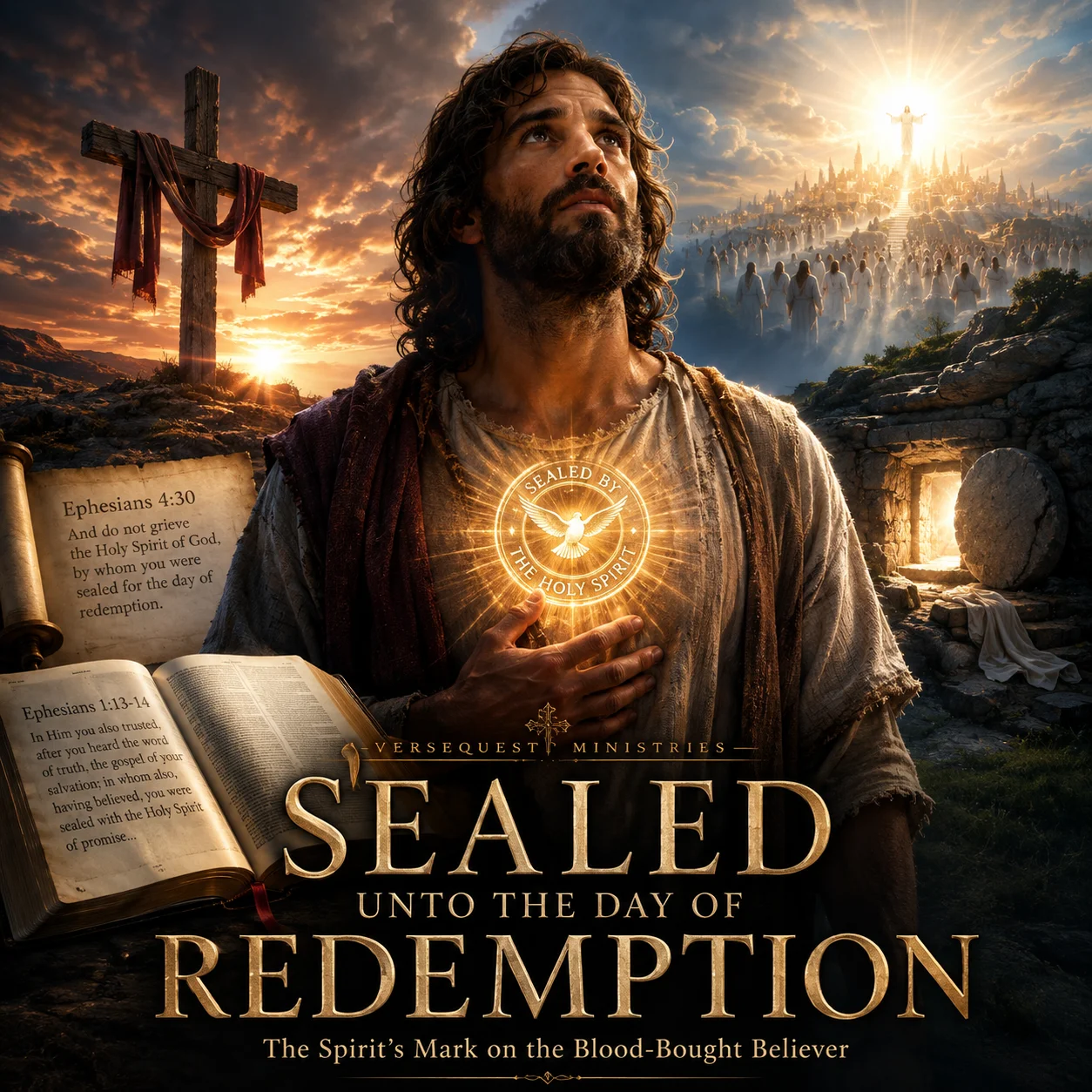
Sealed Unto the Day of Redemption
The Spirit’s Mark on the Blood-Bought Believer
Sermon Title:
Sealed Unto the Day of Redemption: The Spirit’s Mark on the Blood-Bought Believer
Key Passage:
Ephesians 4:30 — “And grieve not the holy Spirit of God, whereby ye are sealed unto the day of redemption.”
Series:
Foundations of the Gospel of Grace
Topic:
The Believer’s Sealing by the Holy Spirit, Eternal Security, and the Call Not to Grieve the Spirit
Book:
Ephesians, Romans, 2 Corinthians, 1 Corinthians, John, Galatians, Colossians, Titus, 2 Timothy
Speaker:
Paul Tackett
Suggested Sermon Text:
Ephesians 4:17–32; Ephesians 1:12–14; Ephesians 2:8–10; Romans 8:9–23; 2 Corinthians 1:21–22; 2 Corinthians 5:5; 1 Corinthians 6:19–20; John 10:27–30; John 14:16–17; Galatians 5:16–25; Colossians 2:13–14; Titus 3:5–7; 2 Timothy 1:12
Short Sermon Description:
This detailed VerseQuest Ministries sermon outline explains Ephesians 4:30 and the doctrine that believers are “sealed unto the day of redemption” by the holy Spirit of God. The sermon shows that the sealing of the Spirit is not a temporary religious feeling, emotional experience, sacramental result, denominational stamp, or probationary blessing, but God’s mark of ownership, security, and future redemption upon those who have trusted Jesus Christ. It connects Ephesians 4:30 with Ephesians 1:13–14, showing that believers are sealed after hearing and believing the gospel of salvation, and that the Spirit is the earnest of the inheritance until the redemption of the purchased possession. This outline also explains what it means to grieve the Spirit, why eternal security is not freedom to sin, how the Spirit-led walk differs from fleshly living, and why the day of redemption points to the believer’s final bodily redemption. Designed for pastors, preachers, teachers, Bible students, and believers, this outline magnifies salvation by grace, assurance in Christ, the indwelling Spirit, holy living, and the finished work of Jesus Christ.
Sealed Unto the Day of Redemption
The Spirit’s Mark on the Blood-Bought Believer
Introduction
Ephesians 4:30 gives the believer both a warning and a comfort in one verse: “And grieve not the holy Spirit of God, whereby ye are sealed unto the day of redemption.” The warning is real: “grieve not.” The comfort is mighty: “ye are sealed unto the day of redemption.” Paul does not tell the believer he is sealed until his next failure, until his next bad day, until religion reviews his record, or until his flesh stumbles badly enough to break God’s promise. He says the believer is sealed unto the day of redemption. That is God’s mark on His own purchased possession. It is not a paper tag tied on by religion. It is the Spirit of God sealing the blood-bought believer until the day God finishes the redemption of the body.
The verse sits in a practical section of Ephesians, where Paul tells believers how to walk. He deals with the old man, the new man, lying, anger, stealing, corrupt communication, bitterness, wrath, clamour, evil speaking, malice, kindness, tenderheartedness, and forgiveness. That means the sealing of the Spirit does not produce careless living. Paul does not say, “Since you are sealed, sin does not matter.” He says, “Grieve not the holy Spirit of God.” Eternal security is not a permission slip for the flesh. It is the strongest reason a believer should live carefully. The Spirit who sealed you also indwells you, witnesses within you, and can be grieved by your sin.
This doctrine must be preached because two errors are always waiting in the ditch. On one side is legalism, which says a believer is not secure and must live under the fear of losing salvation. On the other side is lawlessness, which says security means sin is no serious matter. The Bible rejects both. The believer is sealed unto the day of redemption; that destroys legalistic fear. The believer must not grieve the holy Spirit of God; that destroys careless flesh. The saved man does not keep himself sealed by perfect performance. God seals him by the Spirit. But the saved man must walk worthy because the Spirit of God lives in him. The seal is secure, and the walk is serious.
I. The Believer Is Sealed After Believing the Gospel
Key Text: Ephesians 1:13
Supporting Texts: 1 Corinthians 15:1–4; Romans 10:13–17; Acts 16:31
Ephesians 1:13 gives the order plainly: “In whom ye also trusted, after that ye heard the word of truth, the gospel of your salvation.” The sinner hears the word of truth. That word is the gospel of salvation. He believes and trusts Christ. Then Paul says, “in whom also after that ye believed, ye were sealed with that holy Spirit of promise.” The sealing is not before faith, not through religious birth, not through family heritage, not through water as a saving cause, and not through a sacramental machine. The sinner hears, believes, trusts, and is sealed.
The gospel that saves today is defined by Paul in 1 Corinthians 15:1–4: Christ died for our sins according to the Scriptures, was buried, and rose again the third day according to the Scriptures. That is the word of truth the sinner must believe. The Spirit does not seal a man because he joined a church, turned over a moral leaf, received a ritual, or became emotionally stirred. The Spirit seals the believer who trusts the Lord Jesus Christ according to the gospel of grace.
Acts 16:31 says, “Believe on the Lord Jesus Christ, and thou shalt be saved.” Romans 10:17 says faith cometh by hearing, and hearing by the word of God. This keeps the doctrine clean. Salvation is not earned by works, maintained by law, or dispensed by religious professionals. The sinner believes the gospel, and God seals him with the Spirit. Religion stamps men with memberships; God seals believers with the Holy Ghost.
Main Truth:
The believer is sealed with the Holy Spirit after hearing and believing the gospel of salvation.
II. The Seal Marks God’s Ownership
Key Text: 2 Corinthians 1:21–22
Supporting Texts: 1 Corinthians 6:19–20; Ephesians 1:13–14; 2 Timothy 2:19
Second Corinthians 1:21–22 says God “hath also sealed us, and given the earnest of the Spirit in our hearts.” A seal marks ownership, authority, and security. When God seals the believer, He marks him as belonging to Himself. The believer is not his own. He has been bought with a price. First Corinthians 6:19–20 says the believer’s body is the temple of the Holy Ghost and that he is bought with a price; therefore, he should glorify God in his body and spirit, which are God’s.
This ownership is not theoretical. The saved man belongs to God. His body belongs to God. His spirit belongs to God. His future belongs to God. His service belongs to God. His life is no longer his private little kingdom where the flesh gets to rule without challenge. The Spirit’s seal is not a decorative religious sticker. It is God’s mark that says, “This one is mine.” The devil may accuse, the flesh may struggle, and the world may tempt, but God knows them that are His.
Second Timothy 2:19 says, “The foundation of God standeth sure, having this seal, The Lord knoweth them that are his.” That sure foundation gives assurance, but it also gives responsibility. The same verse says, “Let every one that nameth the name of Christ depart from iniquity.” Ownership and holiness belong together. If God sealed you, you are not free to live as though sin owns you. The seal says God owns the believer; the walk should say the believer knows it.
Main Truth:
The Spirit’s seal marks the believer as God’s purchased possession and calls him to live as one who belongs to the Lord.
III. The Spirit Is the Earnest of the Inheritance
Key Text: Ephesians 1:14
Supporting Texts: 2 Corinthians 5:5; Romans 8:16–17; 1 Peter 1:3–5
Ephesians 1:14 says the Holy Spirit is “the earnest of our inheritance until the redemption of the purchased possession.” An earnest is a pledge, guarantee, or down payment that secures the promised inheritance. God does not give the Spirit as a temporary visitor who may leave if the believer has a difficult week. The Spirit is the earnest until redemption is completed. The believer’s future is tied to God’s pledge, not to the weakness of the flesh.
Second Corinthians 5:5 says God “hath given unto us the earnest of the Spirit.” Romans 8 says the Spirit bears witness with our spirit that we are the children of God, and if children, then heirs. The believer’s inheritance is not imaginary. It is not based on religious speculation. God has given the Spirit as the present pledge of future glory. The saved man may not yet see the redemption of the body, but he has the earnest now.
First Peter 1:3–5 speaks of believers being begotten again unto a lively hope, to an inheritance incorruptible, undefiled, that fadeth not away, reserved in heaven, and kept by the power of God. That fits perfectly with Paul’s doctrine of sealing. The believer is not kept by denominational paperwork, sacramental maintenance, or personal perfection. He is kept by God. The Spirit in him is the earnest that God will finish what He began.
Main Truth:
The Holy Spirit is the earnest of the believer’s inheritance, guaranteeing the future redemption God has promised.
IV. The Believer Is Sealed Unto the Day of Redemption
Key Text: Ephesians 4:30
Supporting Texts: Romans 8:23; Philippians 3:20–21; Ephesians 1:14; 1 Corinthians 15:51–53
Ephesians 4:30 says believers are sealed “unto the day of redemption.” The verse does not say sealed until the next sin, sealed until the next doubt, sealed until the next stumble, or sealed until religion decides otherwise. It says sealed unto the day of redemption. The day of redemption points to the completion of redemption in the believer’s body. The soul is saved now. The body still waits for redemption.
Romans 8:23 says believers wait for “the adoption, to wit, the redemption of our body.” That is future. Philippians 3 says the Saviour shall change our vile body, that it may be fashioned like unto His glorious body. First Corinthians 15 says the dead shall be raised incorruptible, and we shall be changed. The Spirit seals the believer until that day, when the purchased possession is fully redeemed in glory.
This is powerful doctrine for assurance. God does not start redemption and lose the package before delivery. He seals His purchased possession until the appointed day. The believer may be weak, chastened, corrected, and made to grow through many struggles, but the seal of the Spirit points forward to the guaranteed completion of redemption. The same God who justified the believer will glorify him.
Main Truth:
The believer is sealed by the Spirit until the future day when God redeems the body and completes the believer’s salvation in glory.
V. The Seal Defends Eternal Security
Key Text: Ephesians 4:30
Supporting Texts: John 10:27–30; Romans 8:31–39; 2 Timothy 1:12; Jude 24
The doctrine of sealing is one of the Bible’s strongest witnesses to eternal security. If God seals the believer unto the day of redemption, then the believer is secure until that day. Eternal security is not based on the believer’s grip on God, but on God’s grip on the believer. John 10 says Christ’s sheep shall never perish, and no man can pluck them out of His hand. That includes religious men, devils, accusers, and the believer himself as one of the creatures.
Romans 8 declares that nothing can separate believers from the love of God which is in Christ Jesus our Lord. Death cannot. Life cannot. Angels cannot. Principalities cannot. Powers cannot. Things present cannot. Things to come cannot. Any doctrine that makes the believer unsealed before the day of redemption must crawl over Ephesians 4:30 and Romans 8 to do it. That is a hard crawl.
Second Timothy 1:12 says Paul was persuaded that Christ was able to keep that which he had committed unto Him against that day. Jude 24 says God is able to keep believers from falling and present them faultless before the presence of His glory. Security belongs to the keeping power of God, not the preserving power of human flesh. The seal of the Spirit is not Scotch tape from a nervous religion. It is God’s mark until redemption day.
Main Truth:
The Spirit’s seal defends the eternal security of the believer because God keeps His own until the day of redemption.
VI. The Seal Does Not Excuse Sin
Key Text: Ephesians 4:30
Supporting Texts: Romans 6:1–2; Titus 2:11–14; Galatians 5:13; 1 Corinthians 6:19–20
The same verse that says believers are sealed also says, “grieve not.” That destroys the cheap accusation that eternal security means sin does not matter. Paul never reasons that because the believer is sealed, he may live carelessly. He reasons that because the believer is sealed by the holy Spirit of God, he must not grieve Him. The seal increases responsibility; it does not erase it.
Romans 6 answers the slander directly: “Shall we continue in sin, that grace may abound? God forbid.” Titus 2 says the grace of God teaches believers to deny ungodliness and worldly lusts. Galatians 5:13 says believers should not use liberty for an occasion to the flesh. True Bible security does not hand the flesh a license. It tells the believer who owns him, who indwells him, and who has sealed him.
First Corinthians 6 says the body is the temple of the Holy Ghost. That means the believer drags the temple of God into whatever sin he chooses. That ought to make him tremble. He is secure, yes. But he is not independent. He is sealed, yes. But he is not his own. Sin grieves the Spirit, damages fellowship, harms testimony, invites chastening, and robs the believer of usefulness and reward. Eternal security is not sin’s permission slip; it is holiness’s foundation.
Main Truth:
The Spirit’s seal does not excuse sin, but gives the believer a stronger reason to live holy and not grieve the indwelling Spirit.
VII. Grieving the Spirit Is a Serious Matter
Key Text: Ephesians 4:30
Supporting Texts: Ephesians 4:25–32; Isaiah 63:10; 1 Thessalonians 5:19
Paul says, “grieve not the holy Spirit of God.” The Spirit is not an impersonal force, emotional atmosphere, or religious energy. He can be grieved. That means the believer’s sin is personal against the One who indwells him. In the immediate context, Paul deals with lying, anger, stealing, corrupt communication, bitterness, wrath, clamour, evil speaking, malice, and unforgiveness. These are not minor social imperfections. They grieve the Spirit of God.
Isaiah 63:10 says Israel rebelled and vexed His holy Spirit. First Thessalonians 5:19 says, “Quench not the Spirit.” While the dispensational contexts differ, the truth remains that God’s people can resist, grieve, and quench the Spirit’s work in their lives. The sealed believer cannot lose the Spirit as the earnest of his inheritance, but he can grieve the Spirit in his daily walk. The relationship is secure; the fellowship can be wounded.
This is why practical holiness must be preached with doctrine, not with fleshly bullying. The believer does not avoid sin merely to keep a religious image. He avoids sin because the Holy Spirit of God dwells in him. He tells the truth because the Spirit is holy. He controls anger because the Spirit is holy. He speaks edifying words because the Spirit is holy. He forgives because God for Christ’s sake hath forgiven him. Grieving the Spirit is no small thing when the Spirit is the seal of redemption.
Main Truth:
Grieving the Spirit is serious because sin wounds fellowship with the holy Spirit who indwells and seals the believer.
VIII. The Spirit-Led Walk Fits the Sealed Believer
Key Text: Galatians 5:16
Supporting Texts: Ephesians 4:22–24; Romans 8:1–14; Colossians 3:1–10
Galatians 5:16 says, “Walk in the Spirit, and ye shall not fulfil the lust of the flesh.” The sealed believer is called to a Spirit-led walk. He is not called to improve Adam by religious discipline alone. He is called to put off the old man and put on the new man, which after God is created in righteousness and true holiness. Ephesians 4:22–24 gives that practical instruction right before the warning not to grieve the Spirit.
Romans 8 contrasts walking after the flesh with walking after the Spirit. The believer is not in the flesh positionally if the Spirit of God dwells in him, but he can still walk carnally in practice if he yields to the old nature. The Spirit-led walk is not the cause of salvation; it is the proper conduct of the saved man. The seal is God’s work. The walk is the believer’s responsibility under grace.
Colossians 3 tells believers to seek those things which are above, put off the old deeds, and put on the new man. This is not legal bondage. This is resurrection living. The believer sealed unto redemption day should not live as though this present evil world is his home and the flesh is his master. He should walk in the Spirit, feed on the word, flee sin, and live as one already marked for glory.
Main Truth:
The sealed believer should walk in the Spirit, putting off the old man and living in the new life God has given in Christ.
IX. The Seal Points to the Glory of Christ’s Finished Work
Key Text: Ephesians 1:13–14
Supporting Texts: John 19:30; Colossians 2:13–15; Hebrews 10:14; 1 Corinthians 15:3–4
The Spirit’s seal points back to Christ’s finished work and forward to redemption day. If Jesus Christ had not finished the work, there would be no sealing. John 19:30 says, “It is finished.” Colossians 2 says the handwriting against us was blotted out and nailed to Christ’s cross. Hebrews 10:14 says by one offering He hath perfected forever them that are sanctified. The seal of the Spirit rests on a completed redemption.
First Corinthians 15 declares the gospel: Christ died for our sins, was buried, and rose again the third day according to the Scriptures. The Spirit seals those who believe that gospel because the Son has accomplished the work. The Holy Ghost does not seal men into an unfinished redemption. He seals believers because the blood has been shed, the tomb is empty, the Saviour is risen, and the believer is in Christ.
This means the doctrine of sealing glorifies Jesus Christ, not the believer. It does not say, “Look how strong I am.” It says, “Look how sufficient Christ is.” It does not say, “My flesh is dependable.” It says, “God’s promise is dependable.” The Spirit’s seal is heaven’s mark on a redemption purchased by the Son and guaranteed by God. The whole Godhead is involved in the believer’s salvation: the Father planned, the Son purchased, and the Spirit sealed.
Main Truth:
The Spirit’s seal magnifies Christ’s finished work because believers are sealed on the basis of the completed gospel of grace.
Conclusion
Ephesians 4:30 gives the believer a serious command and a settled assurance: “And grieve not the holy Spirit of God, whereby ye are sealed unto the day of redemption.” The believer can grieve the Spirit, and therefore must walk carefully. But the believer is sealed unto the day of redemption, and therefore must stand confidently. God never intended assurance to produce carelessness, and He never intended holiness to be driven by fear of losing salvation. The Bible gives both security and responsibility.
The sealing of the Spirit shows ownership, security, and guarantee. The believer heard the word of truth, believed the gospel of salvation, trusted Christ, and was sealed with the holy Spirit of promise. The Spirit is the earnest of the inheritance until the redemption of the purchased possession. That future redemption includes the body, when the Saviour changes our vile body and completes what grace began. The believer is not sealed until the next sin. He is sealed unto the day of redemption.
The Church must preach this doctrine clearly. Legalism must not be allowed to steal assurance, and lawlessness must not be allowed to abuse grace. The sealed believer belongs to God, is indwelt by the Spirit, and is headed for redemption day. Therefore, let him put away lying, wrath, bitterness, corrupt communication, and malice. Let him be kind, tenderhearted, and forgiving. Let him live like a blood-bought man with God’s seal upon him.
Final Call
Sinner, if you are outside Jesus Christ, you are not sealed unto the day of redemption. You are still in your sins, still under condemnation, and still without the Spirit of God. No religion can seal you. No sacrament can save you. No moral reform can redeem you. You need the Lord Jesus Christ.
Jesus Christ died for your sins according to the Scriptures. He was buried. He rose again the third day according to the Scriptures. Hear the word of truth, the gospel of your salvation. Believe on the Lord Jesus Christ, and thou shalt be saved. Those who trust Him are sealed with the holy Spirit of promise.
Believer, do not grieve the Spirit who sealed you. Walk in the Spirit. Speak truth. Put away bitterness. Forgive as God for Christ’s sake hath forgiven you. Stand secure, but live serious. You are sealed unto the day of redemption by the holy Spirit of God.
Closing Verse:
Ephesians 1:13 — “In whom also after that ye believed, ye were sealed with that holy Spirit of promise.”
Closing Statement:
The blood-bought believer is not held by the weak seal of human effort, but by the holy Spirit of God unto the day of redemption.