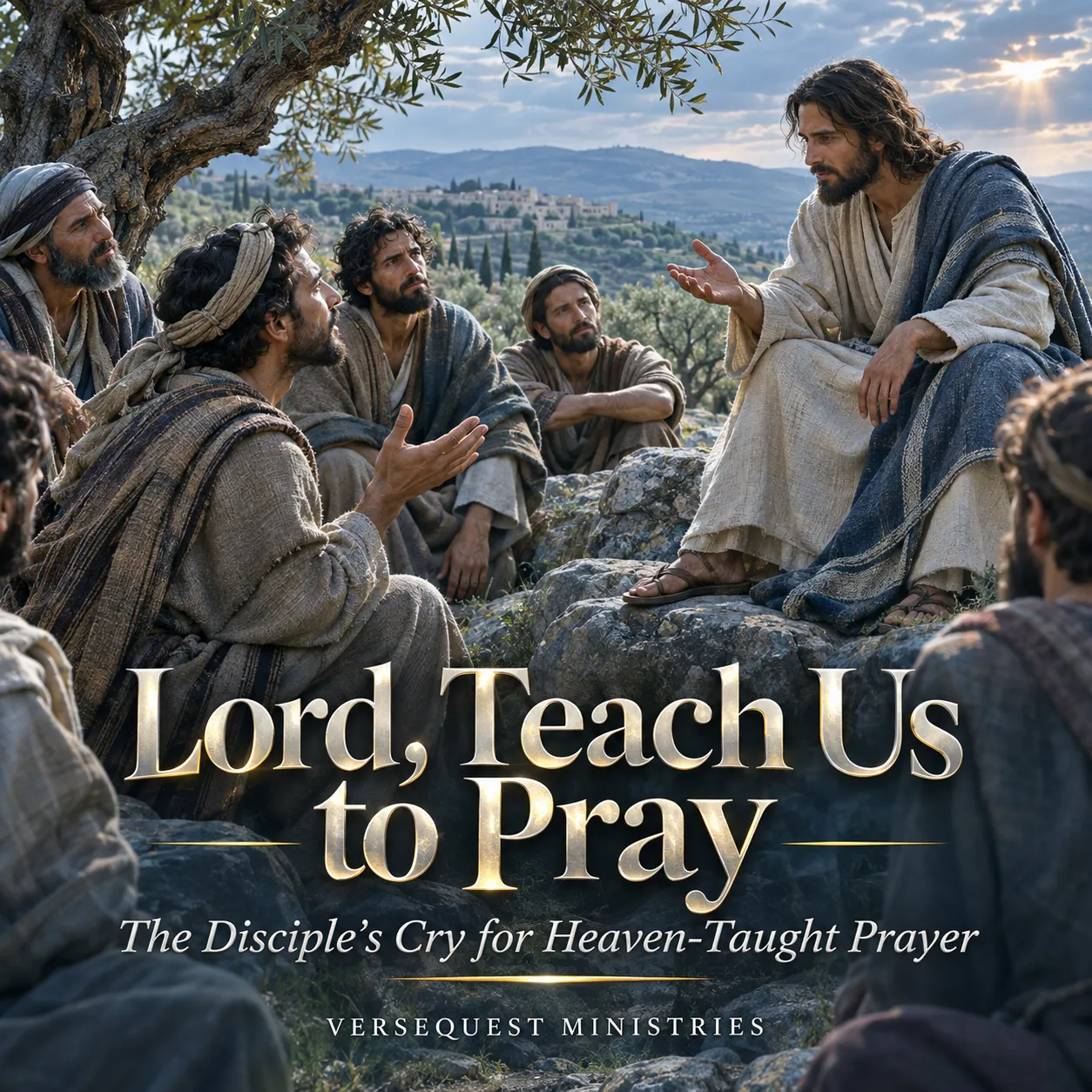
Sermon Title:
Lord, Teach Us to Pray
Key Passage:
Luke 11:1
“And it came to pass, that, as he was praying in a certain place, when he ceased, one of his disciples said unto him, Lord, teach us to pray, as John also taught his disciples.” (Luke 11:1)
Series:
The Book God Gave
Topic:
Learning to Pray According to the Teaching of Jesus Christ, Approaching the Father With Reverence, Understanding the Kingdom Setting of the Disciples’ Prayer, and Developing a Faithful Prayer Life Under Grace
Book:
Luke
Speaker:
Paul Tackett
Suggested Sermon Text:
Luke 3:21–22; Luke 5:15–16; Luke 6:12–13; Luke 9:18, 28–29; Luke 11:1–13; Luke 18:1–14; Luke 21:34–36; Luke 22:39–46; Luke 23:34, 46; Matthew 6:5–15; Matthew 7:7–11; Matthew 21:21–22; Mark 1:35; Mark 11:22–26; John 14:13–14; John 15:7–16; John 16:23–27; John 17:1–26; Acts 1:12–14; Acts 2:42; Acts 4:23–31; Romans 5:1–2; Romans 8:15–27, 34; Romans 10:1–17; Romans 12:9–21; Romans 15:30–33; 1 Corinthians 15:1–4; 2 Corinthians 1:8–11; 2 Corinthians 12:7–10; Galatians 4:4–7; Ephesians 1:13–23; Ephesians 2:8–18; Ephesians 3:12–21; Ephesians 6:10–20; Philippians 1:3–11; Philippians 4:4–9; Colossians 1:3–14; Colossians 4:2–6; 1 Thessalonians 5:16–25; 2 Thessalonians 3:1–5; 1 Timothy 2:1–8; 1 Timothy 4:4–5; 2 Timothy 2:15; Hebrews 4:14–16; Hebrews 7:25; James 1:5–8; James 4:1–10; James 5:13–18; 1 John 5:14–15.
Short Sermon Description:
Luke 11:1 records one of the most important requests ever made by a disciple of Jesus Christ: “Lord, teach us to pray.” This sermon examines the occasion when the disciples observed the Lord praying and asked Him to instruct them in approaching God. It carefully explains the original setting of Christ’s earthly ministry to Israel, the relationship between the prayer recorded in Luke 11:2–4 and the corresponding instruction in Matthew 6:9–13, and the necessity of distinguishing the kingdom emphasis of these passages from the Church-Age believer’s position and privileges under grace. The message develops the principal elements of Christ’s instruction, including reverence for the Father’s name, the coming kingdom, submission to God’s will, dependence upon Him for daily provision, forgiveness, deliverance from temptation, and continued confidence in His goodness. Special attention is given to the illustration of the friend at midnight, the importance of persistence in prayer, the command to ask, seek, and knock, and the Father’s willingness to give good gifts. The sermon also examines Luke 11:13 concerning the Holy Spirit, explaining why that instruction must be understood in its historical setting rather than confused with the believer’s present sealing by the Spirit upon believing the gospel. Drawing upon Romans 8, Ephesians 2–3, Philippians 4, Colossians 4, 1 Timothy 2, and other Pauline passages, the outline establishes how saved believers should approach the Father through Jesus Christ with thanksgiving, supplication, intercession, humility, and submission to His revealed will. It distinguishes prayer from attempts to earn salvation, manipulate God, demand earthly prosperity, or obtain new revelation apart from Scripture. Preachers, teachers, and Bible students will gain a comprehensive, KJV-based, rightly divided, sermon-ready framework for teaching biblical prayer, spiritual dependence, the character of God, Christ’s example, prayer under grace, intercession, perseverance, and faithful Christian obedience.
LORD, TEACH US TO PRAY
Introduction
There is something remarkable about the request recorded in Luke 11:1. The disciples had watched Jesus Christ perform miracles that ordinary men could not explain. They had seen Him heal the sick, cast out devils, command unclean spirits, and exercise authority over circumstances that left other people helpless. They had listened to teaching that exposed the emptiness of religious traditions and the hypocrisy of men who claimed to represent God while continually contradicting His word. Yet when Luke records this particular request, the disciple does not ask, “Lord, teach us to become famous.” He does not ask, “Lord, teach us to perform miracles so everybody will admire us.” He does not ask for a course in attracting crowds, increasing religious influence, or establishing an impressive organization. He says, “Lord, teach us to pray.” There is a world of instruction in those five words. The disciples recognized something in the Lord’s communion with the Father that they desired to understand. They had seen Him praying, and when He finished, they asked to be taught. The Son of God, who possessed authority over the winds and waves, had been observed in prayer. That ought to embarrass a considerable amount of modern religious self-sufficiency. Men who cannot control their own tongues sometimes imagine they can accomplish the work of God without ever seriously approaching the throne of grace. They possess plans, schedules, programs, equipment, and endless opinions, but their prayer lives are so neglected that the average emergency receives more preparation than their daily communion with God. If the disciples could recognize their need for instruction after watching Jesus Christ pray, the modern Christian has very little reason to imagine he has already mastered the subject.
But before we begin lifting phrases from Luke 11 and applying them indiscriminately to every believer under every dispensation, we must understand where we are standing in the Bible. Jesus Christ was ministering during His earthly ministry to Israel. The cross had not yet occurred. The resurrection had not yet taken place. The mystery concerning the body of Christ had not yet been revealed through the Apostle Paul, and the Church had not yet received the full body of doctrinal instruction concerning its heavenly position. The disciples were learning from the Messiah who had proclaimed the kingdom of God. Consequently, the prayer Christ teaches includes the petition, “Thy kingdom come.” It also includes instruction concerning daily bread, forgiveness, temptation, and divine provision. Later in the chapter, Christ speaks about the Father giving the Holy Spirit to those who ask Him. These words must not be lifted out of their setting and turned into a formula for Christians to receive the Holy Spirit repeatedly when Ephesians 1:13 declares that the believer is sealed with the Holy Spirit after believing the gospel. Nor should the instruction concerning forgiveness be twisted into a teaching that the blood of Jesus Christ repeatedly becomes insufficient whenever a saved man struggles with an offense. The believer’s redemption is through Christ’s blood, and his standing rests upon the finished work of the Saviour. Right division does not diminish the value of Christ’s instruction in Luke 11. It preserves its meaning so that the legitimate spiritual principles may be applied correctly rather than buried beneath doctrinal confusion.
The passage also exposes two opposite errors concerning prayer. One error turns prayer into a religious performance designed to impress people. It measures spirituality by vocabulary, volume, length, dramatic gestures, or the ability to repeat beautiful phrases with extraordinary solemnity. The other error treats prayer as an unnecessary activity because God already knows everything. One man performs for the audience, while the other concludes that divine omniscience makes personal dependence irrelevant. Scripture rejects both conclusions. Jesus Christ teaches His disciples to pray, explains the character of the Father, demonstrates dependence, encourages perseverance, and directs their attention toward divine provision. The Pauline epistles likewise command saved believers to continue in prayer, pray without ceasing, make their requests known unto God, and offer supplications and intercessions for others. Prayer is not a method of controlling God or a substitute for studying Scripture. It is the believer’s privilege of approaching the Lord according to the access God Himself has provided. The Christian does not need to invent another mediator, perform a ritual, or manufacture a mystical experience. He needs to understand what God has revealed and learn to pray accordingly. The problem with much modern prayer is not that God has become unwilling to hear His people. It is that His people have become so confident in their own resources that they hardly remember how dependent upon Him they really are. The disciples asked the right question. Now we must examine the Lord’s answer.
I. THE DISCIPLES LEARNED THE IMPORTANCE OF PRAYER BY WATCHING JESUS CHRIST PRAY
Key Text: Luke 11:1
Supporting Texts: Luke 3:21; Luke 5:16; Luke 6:12–13; Luke 9:18, 28–29; Mark 1:35; John 17:1–26
Luke begins, “And it came to pass, that, as he was praying in a certain place, when he ceased, one of his disciples said unto him, Lord, teach us to pray.” The setting is wonderfully instructive. Jesus Christ was praying. The disciples observed Him. The request followed His example. The Lord did not merely distribute information concerning prayer while personally treating communion with the Father as unnecessary. Throughout the Gospel records, we find Him praying at significant moments during His earthly ministry. Luke 3:21 records His praying at His baptism. Luke 5:16 declares, “And he withdrew himself into the wilderness, and prayed.” Luke 6:12 records that He continued all night in prayer to God before selecting the twelve apostles. Luke 9 connects prayer with significant moments of His ministry, including His transfiguration. These passages do not depict a man who occasionally remembered prayer when every other resource had failed. They reveal the incarnate Son of God maintaining communion with the Father throughout the work appointed to Him.
We must be careful concerning the doctrine of Christ’s person. Jesus did not pray because He was merely a helpless religious teacher attempting to acquire divine status through spiritual exercises. He is the eternal Son of God who became flesh. His prayers belong to the reality of His incarnation, His relationship with the Father, and His perfectly obedient earthly ministry. The Father and the Son are distinct Persons, and the Lord’s prayers are not evidence that Jesus Christ is merely a created being or that God is one Person pretending to speak to Himself. The Son’s genuine prayers display His communion with the Father and His obedience during His earthly ministry. John 17 provides an extraordinary example as Christ addresses the Father concerning His work, His disciples, and those who would believe through their word. The believer should not attempt to erase the theological distinctions in order to produce an easy slogan. The fact that the sinless Son of God prayed ought to make the prayerlessness of sinful men appear considerably less impressive.
There is also a practical lesson concerning how spiritual instruction is communicated. The disciples did not merely hear Christ recommend prayer; they saw Him practice it. A parent who desires children to understand the importance of prayer should not treat prayer as something exclusively assigned to children before bedtime. A pastor who teaches a congregation about dependence upon God should exercise that dependence himself. A Bible teacher who explains prayer should not imagine that intellectual familiarity with the subject replaces actual communion with the Lord. Yet public prayer must never become a theatrical display intended to prove how spiritual the speaker is. Christ also warned against praying to be seen of men. The objective is genuine dependence upon God, not religious publicity. The believer may pray privately, with his family, in fellowship with other Christians, or during public worship, but the value of prayer does not originate in the number of spectators. The disciples did not ask Jesus to teach them how to look impressive while praying. They asked Him to teach them how to pray.
Main Truth: Jesus Christ demonstrated genuine communion with the Father throughout His earthly ministry, teaching His disciples that prayer is a serious expression of dependence upon God rather than a religious performance for human admiration.
II. “OUR FATHER WHICH ART IN HEAVEN” ESTABLISHES BOTH ACCESS AND REVERENCE
Key Text: Luke 11:2
Supporting Texts: Matthew 6:9; John 1:12–13; John 20:17; Romans 5:1–2; Romans 8:15–17; Galatians 4:4–7; Ephesians 2:18; Ephesians 3:12
Jesus begins His instruction, “When ye pray, say, Our Father which art in heaven, Hallowed be thy name.” The first thing the Lord directs His disciples to recognize is the One to whom they are speaking. Prayer is not an exercise in speaking religiously into the atmosphere and hoping some benevolent force happens to respond. It is directed toward God. The expression “Our Father” emphasizes relationship and dependence, while “which art in heaven” reminds the hearer of the divine majesty and authority of the One being addressed. The Lord is teaching His disciples to approach the Father, not to entertain an audience with impressive religious language. The opening of the prayer immediately places God before the petitions. Before daily bread, before forgiveness, before deliverance, and before every practical request, the disciple is taught to recognize the Father and honor His name. That order exposes the selfishness that can gradually dominate a prayer life concerned exclusively with personal advantage.
The words “Hallowed be thy name” deserve particular attention. To hallow God’s name is to treat it as holy, sacred, and worthy of reverence. Prayer should never become a casual attempt to command the Creator as though He were an employee waiting for instructions from His creatures. The believer possesses remarkable access to the Father, but access does not eliminate reverence. Familiarity with Scripture should not produce contempt for the Lord. Confidence in divine grace does not make God less holy. A Christian should be able to approach the throne of grace boldly while remembering that the One who receives his prayers is the eternal God, not a human official who can be persuaded through flattery or manipulated through carefully arranged phrases. Matthew 6:9 contains the corresponding instruction, “Our Father which art in heaven, Hallowed be thy name.” Both passages teach reverence, even though the surrounding instruction is given during Christ’s earthly ministry before the accomplishment of His death and resurrection.
For the Church-Age believer, the Pauline epistles explain the access now possessed through Jesus Christ. Romans 5:2 says, “By whom also we have access by faith into this grace wherein we stand.” Ephesians 2:18 declares, “For through him we both have access by one Spirit unto the Father.” The saved man is not attempting to earn permission to approach God through his own righteousness. His access rests upon Jesus Christ. He has been justified by faith, accepted in the beloved, and given the Spirit of adoption. Romans 8:15 says that believers have received “the Spirit of adoption, whereby we cry, Abba, Father.” These truths should produce confidence joined with humility. We do not approach the Father because we have become impressive enough to deserve His attention. We come through the Son who purchased our redemption. Prayer begins to take its proper shape when the believer remembers both truths: God is truly his Father through Jesus Christ, and that Father remains infinitely greater than the child who has come before Him.
Main Truth: Biblical prayer begins with recognizing the holiness and fatherly authority of God, while the saved believer approaches the Father confidently through the access secured by Jesus Christ.
III. “THY KINGDOM COME” TEACHES SUBMISSION TO GOD’S PURPOSE RATHER THAN MAN’S AMBITION
Key Text: Luke 11:2
Supporting Texts: Matthew 6:9–10; Luke 1:30–33; Luke 12:31–32; Luke 22:42; Daniel 2:44; Romans 12:1–2; Colossians 3:1–4
The next petition is “Thy kingdom come. Thy will be done, as in heaven, so in earth.” These words must be understood within the historical setting of Christ’s earthly ministry to Israel. Jesus Christ was proclaiming the kingdom of God, presenting Himself as the promised Messiah, and ministering within the prophetic framework established by the Old Testament Scriptures. Gabriel had announced that the Lord God would give Christ the throne of His father David and that He would reign over the house of Jacob for ever. That prophetic promise must not be dissolved into a vague religious statement that simply means people ought to become nicer. The kingdom anticipated in Scripture concerns the actual reign of the Messiah and the fulfillment of God’s promises. Consequently, when Christ taught His disciples to pray for the kingdom to come, He was not instructing them to build the Church into a political government capable of establishing the Millennium through human effort. He was directing their attention toward the Father’s purpose and the coming fulfillment of the kingdom promises.
This is where right division becomes necessary. The kingdom promises made to Israel must not be confused with the mystery of the body of Christ revealed through the Apostle Paul. The Church possesses heavenly blessings in Christ and looks forward to the catching away of the saints, while God’s prophetic program concerning Israel and the future earthly reign of Jesus Christ remains distinct. This does not mean a Christian may never desire the fulfillment of God’s kingdom promises or pray concerning the will of God. It means he should not erase the distinctions revealed in Scripture. Luke 11:2 belongs to the Lord’s instruction to His disciples during His earthly ministry, and the petition has an actual kingdom context. The Church-Age believer should understand that setting before applying the broader principle of submission to God’s will.
There is also an important practical truth in the order of the prayer. Christ teaches His disciples to desire the Father’s will rather than treating God as a servant employed to fulfill personal ambition. The flesh continually wants its own kingdom to come. It wants its reputation established, its appetites satisfied, its enemies defeated, and its circumstances arranged according to private preference. But the Lord directs attention toward God’s purpose. Later, in Luke 22:42, Jesus prays, “nevertheless not my will, but thine, be done.” The context is His unique approaching suffering and sacrifice, which no Christian can duplicate redemptively. Yet the submission expressed there provides a profound example. The believer should bring requests before God without imagining that personal preference has become divine authority. Romans 12:2 commands Christians to renew their minds so they may prove the will of God. Prayer is not the process of persuading heaven to approve the kingdom of self. It is the privilege of bringing our requests before the Father while remembering that His will is greater than our desires.
Main Truth: Christ’s petition concerning the coming kingdom belongs to the prophetic setting of His earthly ministry to Israel, while its principle of submission teaches believers to place God’s revealed purposes above personal ambition.
IV. “GIVE US DAY BY DAY OUR DAILY BREAD” TEACHES CONTINUING DEPENDENCE UPON THE FATHER
Key Text: Luke 11:3
Supporting Texts: Matthew 6:25–34; Luke 12:22–31; Exodus 16:4–21; Philippians 4:6–7, 19; 1 Timothy 6:6–10, 17; James 1:17
Christ continues, “Give us day by day our daily bread.” There is tremendous instruction in the simplicity of that petition. The disciples are taught to look toward the Father concerning ordinary necessities. Jesus does not instruct them to begin by requesting great wealth, public influence, comfortable estates, magnificent possessions, or an earthly reputation that will impress their neighbors. He speaks of bread. That is the ordinary provision necessary for life. The phrase “day by day” emphasizes continuing dependence rather than the illusion that man can become so prosperous and self-sufficient that he no longer needs God. The natural man enjoys imagining that his possessions have made him independent. He may possess a full pantry, a substantial bank account, a profitable business, and enough material resources to live comfortably for years. Yet those possessions cannot guarantee another breath, preserve his health indefinitely, or eliminate the uncertainty of earthly circumstances. The Lord teaches His disciples to recognize the Father as the source of provision rather than treating provision as a personal accomplishment independent of Him.
The petition also recalls the history of Israel receiving manna in the wilderness. Exodus 16 records the LORD providing bread from heaven while giving instructions concerning its collection. That event belongs to Israel’s particular historical circumstances, and we should not convert it into a promise that every Christian will receive miraculous food without labor. Nevertheless, it provides a powerful illustration of dependence upon God. Israel could not manufacture the manna. The LORD supplied what the people needed according to His instructions. In the Sermon on the Mount, Jesus likewise teaches His hearers not to become consumed with anxiety concerning food, clothing, and the necessities of life. Those teachings must be interpreted in their kingdom setting, but they reveal the Father’s knowledge of human needs and the folly of allowing material concerns to become the controlling purpose of existence. The Christian should distinguish legitimate provision for his household from covetousness disguised as necessity. A man can possess enough food to feed his family for a month and still develop an appetite for possessions that no amount of earthly abundance will ever satisfy.
For believers under grace, Philippians 4:6 instructs, “in every thing by prayer and supplication with thanksgiving let your requests be made known unto God.” Paul also testifies in Philippians 4 concerning learning contentment through differing circumstances, including abundance and need. That is important because biblical dependence upon God does not mean every faithful believer will always possess an abundance of earthly wealth. Some Christians experience genuine hardship while serving the Lord faithfully. Others possess considerable resources and remain responsible for stewarding them wisely. Prayer does not replace honest labor, responsible planning, or legitimate provision for one’s family. Neither does material prosperity prove superior spirituality. First Timothy 6:6 declares, “But godliness with contentment is great gain.” The believer may work diligently and make proper preparations while recognizing that the Lord remains the source of every good gift. The Christian who has learned to thank God for daily bread understands something the covetous man may never discover: provision is a blessing, but the Provider is greater than everything He provides.
Main Truth: The petition for daily bread teaches continuing dependence upon the Father’s provision, encouraging gratitude, contentment, and responsible stewardship rather than covetousness or the expectation of guaranteed earthly prosperity.
V. “FORGIVE US OUR SINS” EXPOSES THE SERIOUSNESS OF SIN AND THE RESPONSIBILITY TO FORGIVE OTHERS
Key Text: Luke 11:4
Supporting Texts: Matthew 6:12–15; Matthew 18:21–35; Ephesians 1:7; Ephesians 4:30–32; Colossians 2:13–14; Colossians 3:12–13; Romans 4:4–8
Jesus continues, “And forgive us our sins; for we also forgive every one that is indebted to us.” These words confront two matters that the flesh repeatedly attempts to separate: the sinner’s need for divine forgiveness and the responsibility to extend forgiveness toward others. During Christ’s earthly ministry, His disciples were instructed to pray concerning their sins and to recognize the relationship between receiving mercy and showing mercy. The corresponding instruction in Matthew 6:12 uses the language of debts, while Luke records the explicit word “sins.” The Lord was not teaching His hearers that wrongdoing is unimportant or that forgiveness is merely a pleasant emotional experience. Sin is real. Guilt before God is serious. Human offenses can produce genuine harm. But the disciple must not seek mercy from God while cultivating a settled determination to withhold mercy from everybody else. The attitude of the heart matters, and the person who continually demands forgiveness while refusing to show compassion should examine whether he understands what he is requesting.
This is also an essential point for rightly dividing the word of truth. Matthew 6:14–15 connects divine forgiveness with forgiving others in the setting of Christ’s earthly kingdom teaching. The Church-Age believer must not simply transfer that conditional formulation into the Pauline doctrine of justification as though salvation through Christ’s blood becomes uncertain whenever a Christian struggles to forgive. Ephesians 1:7 declares, “In whom we have redemption through his blood, the forgiveness of sins, according to the riches of his grace.” Colossians 2:13 speaks of believers being forgiven all trespasses through the work of Christ. The saved man’s judicial standing does not depend upon his ability to maintain a flawless emotional record. Jesus Christ accomplished redemption through His finished sacrifice, and the believer receives that redemption through faith. This distinction does not eliminate the responsibility to forgive. It establishes the proper foundation upon which that responsibility rests. The Church-Age believer is instructed to forgive because he has already been forgiven for Christ’s sake.
Ephesians 4:32 gives the corresponding Pauline command: “And be ye kind one to another, tenderhearted, forgiving one another, even as God for Christ’s sake hath forgiven you.” Notice the order. God has forgiven the believer in Christ, and that forgiveness supplies the reason for showing mercy toward others. This does not require pretending that wrongdoing never occurred, automatically restoring trust, or remaining exposed to continuing dishonesty or abuse. Biblical forgiveness must not become an excuse for concealing serious sin or preventing appropriate accountability. But neither may the believer nourish bitterness, personal vengeance, and malicious speech while claiming that grace makes his conduct irrelevant. Colossians 3:13 commands Christians to forgive one another, even as Christ forgave them. The saved man who remembers the mercy shown to him should become less interested in constructing permanent monuments to every offense committed against him. A Christian who continually rehearses how much another person owes him should occasionally remember how much he himself was forgiven through the blood of Jesus Christ.
Main Truth: Christ’s instruction concerning forgiveness teaches the seriousness of sin and the importance of mercy, while the Church-Age believer’s forgiveness and security rest upon Christ’s finished work and provide the foundation for forgiving others.
VI. “LEAD US NOT INTO TEMPTATION” TEACHES THE NEED FOR DIVINE HELP AGAINST SPIRITUAL DANGER
Key Text: Luke 11:4
Supporting Texts: Matthew 6:13; Luke 22:39–46; Romans 6:11–14; Romans 13:14; 1 Corinthians 10:12–13; Galatians 5:16–17; Ephesians 6:10–18; James 1:12–15
The Lord concludes this portion of His instruction with the petition, “And lead us not into temptation; but deliver us from evil.” These words acknowledge that human life contains genuine spiritual danger and that man is not sufficient in himself to overcome every temptation placed before him. The disciples were being taught to recognize their weakness and seek divine help rather than relying upon the confidence of the flesh. But the petition must never be interpreted as though God is morally corrupt or takes pleasure in enticing His creatures to sin. James 1:13 declares, “for God cannot be tempted with evil, neither tempteth he any man.” Scripture distinguishes God’s holy testing and the circumstances through which faith may be exercised from sinful enticement arising through lust and the work of evil. The Lord’s instruction concerns dependence upon God for preservation and deliverance, not suspicion that the Father might secretly desire His children to become wicked.
The later experience of the disciples in Gethsemane provides an important illustration. Luke 22:40 records Jesus saying, “Pray that ye enter not into temptation.” The disciples were approaching circumstances that would expose their weakness. Peter had spoken confidently concerning his loyalty, yet the coming events would reveal how little confidence should be placed in human determination. The Lord Himself prayed concerning the Father’s will, while the disciples struggled with weariness. The passage reminds us that spiritual temptation cannot safely be faced through boasting about our strength. A man may sincerely believe he will never fail in a particular area, but confidence in the flesh is not a substitute for vigilance. The Christian who imagines he is permanently beyond temptation has already adopted a dangerous assumption. Scripture repeatedly commands watchfulness, humility, and dependence upon God rather than confidence in our own ability to remain upright.
For saved believers today, 1 Corinthians 10:13 declares, “There hath no temptation taken you but such as is common to man: but God is faithful.” The verse continues by explaining that God provides a way to escape so believers may be able to bear temptation. Galatians 5:16 commands, “Walk in the Spirit, and ye shall not fulfil the lust of the flesh.” Ephesians 6 teaches believers to put on the whole armour of God and to pray always with all prayer and supplication in the Spirit. These are practical responsibilities, not alternate methods of purchasing salvation. The believer’s old man is crucified with Christ, yet the flesh continues opposing the Spirit. The Christian should therefore refuse unnecessary exposure to temptation, avoid making provision for the flesh, and depend upon the Lord’s strength. Prayer does not give a man permission to cultivate temptation and then blame God when he yields to it. The Christian who prays for deliverance from temptation while deliberately preparing a comfortable place for sin has misunderstood both the danger and the prayer.
Main Truth: Christ’s petition for deliverance teaches dependence upon God’s protection and strength, while the saved believer must watch, pray, walk in the Spirit, and refuse to make provision for sinful desires.
VII. THE FRIEND AT MIDNIGHT TEACHES PERSEVERANCE IN PRAYER WITHOUT TURNING GOD INTO AN UNWILLING NEIGHBOR
Key Text: Luke 11:5–8
Supporting Texts: Luke 18:1–8; Matthew 7:7–11; Philippians 4:6–7; Colossians 4:2; 1 Thessalonians 5:17; 2 Corinthians 12:7–10
After instructing His disciples concerning prayer, Jesus continues with an illustration involving a man who receives an unexpected visitor at midnight. The host possesses nothing suitable to place before his guest, so he approaches a friend and asks to borrow three loaves. The hour is inconvenient. The friend has already settled his household for the night and does not wish to be disturbed. Yet Christ explains in Luke 11:8, “I say unto you, Though he will not rise and give him, because he is his friend, yet because of his importunity he will rise and give him as many as he needeth.” The word “importunity” directs attention toward persistent and earnest requesting. The man refuses to abandon his request merely because the circumstances are inconvenient. He recognizes a genuine need and continues seeking provision. The illustration follows Christ’s teaching concerning prayer because the disciples need to understand that praying is not necessarily a single hurried request followed by permanent indifference. They are being taught earnestness and perseverance.
But we must not distort the illustration into a doctrine that the heavenly Father is just as irritated, reluctant, and inconvenienced as the sleeping neighbor. The point of the comparison must be understood alongside Christ’s later instruction concerning the Father’s goodness. God is not a sleepy man who requires enough noise before He becomes willing to listen. He is not an earthly official whose attention must be purchased through persistence or a reluctant benefactor who grants requests merely to silence annoying children. The comparison demonstrates the importance of earnest asking while the surrounding passage establishes the Father’s willingness to give good gifts. The Christian must therefore avoid two errors. One is prayerlessness, in which he makes a request once and concludes that the matter no longer deserves attention. The other is the assumption that enough repetition will eventually force God to surrender His wisdom and grant whatever the petitioner demands. Neither represents mature biblical dependence.
Luke 18:1 supplies a related principle when Christ teaches “that men ought always to pray, and not to faint.” That passage contains its own judicial and prophetic setting and should be handled accordingly, but its emphasis upon perseverance is plain. Colossians 4:2 directly commands Church-Age believers, “Continue in prayer, and watch in the same with thanksgiving.” First Thessalonians 5:17 declares, “Pray without ceasing.” These statements teach an ongoing life of dependence upon God. Yet perseverance does not mean the Lord must answer according to the believer’s preferred timetable or in the precise manner requested. Paul prayed three times concerning his thorn in the flesh, and the Lord answered by declaring His grace sufficient rather than removing the affliction. The apostle did not conclude that prayer had failed because the answer differed from his preference. He learned to rest in Christ’s strength. Persistent prayer is not the art of wearing God down until He finally obeys us. It is the practice of continuing to depend upon Him while we learn to trust His wisdom above our own.
Main Truth: The illustration of the friend at midnight teaches earnest perseverance in prayer without suggesting that God is reluctant, can be manipulated through repetition, or must grant every request according to human preference.
VIII. “ASK, SEEK, AND KNOCK” MUST BE UNDERSTOOD IN LIGHT OF THE FATHER’S GOODNESS AND THE DISPENSATIONAL SETTING
Key Text: Luke 11:9–13
Supporting Texts: Matthew 7:7–11; John 14:13–14; John 16:23–27; Romans 8:9, 15–16; 1 Corinthians 12:13; Ephesians 1:13–14; Philippians 4:6–7; James 4:1–3; 1 John 5:14–15
Jesus continues with the familiar instruction, “And I say unto you, Ask, and it shall be given you; seek, and ye shall find; knock, and it shall be opened unto you.” He repeats the principle in verse 10, then illustrates the Father’s goodness through the ordinary relationship between a parent and a child. A father does not respond to his child’s request for bread by deliberately supplying something harmful in its place. Neither does he give a serpent when asked for a fish or a scorpion when asked for an egg. Christ uses these comparisons to direct His disciples toward confidence in the Father’s character. The lesson is not that prayer gives human beings unlimited authority to command their circumstances. It is that those approaching God should recognize Him as good and worthy of trust. The Father possesses a wisdom and goodness greater than that of fallen earthly parents. A child does not need to understand every detail of his father’s responsibilities in order to recognize that a loving father seeks his welfare. How much more should the disciples trust the Father who is perfectly righteous?
Yet this passage has frequently been misused to promote the idea that the Christian can demand virtually anything and require God to provide it. Some religious teachers treat “Ask, and it shall be given you” as though it were a blank check drawn upon heaven’s treasury, payable to whatever appetite the flesh happens to possess. They promise material wealth, guaranteed physical healing, financial prosperity, extraordinary influence, and the fulfillment of personal ambitions, provided the petitioner uses sufficiently confident language. But Scripture does not make the Lord a servant of fallen human desire. James 4:3 warns, “Ye ask, and receive not, because ye ask amiss, that ye may consume it upon your lusts.” First John 5:14 places confidence in prayer within the framework of God’s will: “if we ask any thing according to his will, he heareth us.” The believer should pray confidently, but confidence in God is not confidence that every personal desire has become a divine promise. Prayer must remain governed by Scripture, the character of the Lord, and submission to His wisdom.
There is also an important dispensational distinction in the concluding verse. Luke 11:13 says, “how much more shall your heavenly Father give the Holy Spirit to them that ask him?” Those words were spoken before the cross, resurrection, and Pentecost, during Christ’s earthly ministry to His disciples. The Church-Age believer must not convert this statement into a doctrine that saved people must repeatedly request the Holy Spirit as though He had never been given to them. Ephesians 1:13 declares that believers, “after that ye believed, ye were sealed with that holy Spirit of promise.” Romans 8:9 explains that those who belong to Christ have the Spirit of Christ, and 1 Corinthians 12:13 teaches the Spirit’s work in baptizing believers into one body. These passages establish the present believer’s relationship to the indwelling Spirit. The Christian should depend upon the Spirit, walk in the Spirit, and obey the instructions of Scripture concerning His ministry rather than seeking to purchase or repeatedly acquire Him through prayer. The Father is good, His promises are trustworthy, and His gifts must be understood according to what He actually revealed—not according to what religious imagination wishes He had promised.
Main Truth: Christ teaches confidence in the Father’s goodness through asking, seeking, and knocking, while the Church-Age believer must understand prayer according to God’s will and recognize the Holy Spirit as already given and sealing those who have believed the gospel.
IX. THE CHURCH-AGE BELIEVER MUST LEARN TO PRAY THROUGH CHRIST ACCORDING TO THE WORD OF GOD
Key Text: Ephesians 2:18
Supporting Texts: Romans 8:15, 26–27, 34; Ephesians 3:12–21; Ephesians 6:18–20; Philippians 1:9–11; Philippians 4:6–7; Colossians 1:9–14; Colossians 4:2–6; 1 Timothy 2:1–8
Paul declares in Ephesians 2:18, “For through him we both have access by one Spirit unto the Father.” That verse supplies one of the clearest statements concerning the Church-Age believer’s access to God. The saved man approaches the Father through Jesus Christ by the Spirit. He does not require another mediator, a religious institution, a human priest capable of dispensing righteousness, or a specially appointed person who claims exclusive access to divine attention. First Timothy 2:5 establishes that there is “one mediator between God and men, the man Christ Jesus.” The believer’s confidence rests upon the finished work of the Saviour. He has been redeemed through Christ’s blood, justified by faith, and sealed with the Holy Spirit. Consequently, prayer under grace should be characterized by confidence joined with humility. We do not approach God because our religious performance has made us worthy. We come through the One who is worthy. Hebrews 4:16 invites believers to come boldly unto the throne of grace, seeking mercy and grace to help in time of need. That boldness is founded upon divine provision rather than human self-importance.
The Pauline epistles also reveal the substance of mature Christian prayer. In Ephesians 3, Paul prays that believers might be strengthened with might by the Spirit in the inner man, that Christ may dwell in their hearts by faith, and that they might be rooted and grounded in love. In Philippians 1, he prays that their love may abound yet more and more in knowledge and judgment. In Colossians 1, he asks that believers might be filled with the knowledge of God’s will in wisdom and spiritual understanding, walk worthy of the Lord, and be fruitful in every good work. These prayers should correct the assumption that spiritual maturity consists primarily of asking God to make earthly life more comfortable. Paul certainly recognizes physical needs and personal difficulties, but his prayers demonstrate a sustained concern for spiritual growth, doctrinal understanding, holiness, faithfulness, and the glory of Jesus Christ. A Christian who spends his entire prayer life requesting easier circumstances may be overlooking some of the very spiritual necessities Scripture teaches him to seek.
First Timothy 2:1 commands “supplications, prayers, intercessions, and giving of thanks” for all men. Ephesians 6:18 calls believers to pray always with all prayer and supplication in the Spirit. Colossians 4:3 records Paul’s request that God would open a door of utterance for gospel ministry. These instructions demonstrate that Christian prayer should extend beyond personal interests. Believers should pray for their families, fellow Christians, pastors, teachers, missionaries, those in authority, those suffering, and lost sinners who need to hear the gospel. But prayer must never become a substitute for obedience. A man should not continually pray for opportunities to witness while refusing to communicate the gospel when an appropriate opportunity appears. He should not pray for family unity while deliberately practicing cruelty and dishonesty at home. He should not request wisdom while neglecting the Scriptures God has provided for instruction. The mature Christian does not use prayer to excuse disobedience. He approaches the Father through Jesus Christ so that his requests, attitudes, and conduct may remain governed by the truth God has revealed.
Main Truth: Church-Age believers possess direct access to the Father through Jesus Christ by the Holy Spirit and are commanded to pray with thanksgiving, intercession, spiritual understanding, and submission to God’s revealed will.
Conclusion
Luke 11:1 records a request that should remain important to every generation of believers: “Lord, teach us to pray.” The disciples had observed Jesus Christ praying, and they recognized their need for instruction. The Lord’s answer revealed that prayer is not a performance designed to attract attention, nor is it a religious mechanism through which man obtains control over God. He taught reverence for the Father, submission to divine purposes, dependence upon God for daily provision, seriousness concerning sin and forgiveness, and the necessity of seeking deliverance from temptation. He then illustrated the importance of earnest persistence through the friend at midnight and emphasized the Father’s goodness through the instruction to ask, seek, and knock. These teachings must be examined within the historical setting of Christ’s earthly ministry to Israel, particularly where His instruction concerns the coming kingdom and the giving of the Holy Spirit. Yet the passage also provides substantial practical instruction concerning dependence, humility, reverence, confidence, perseverance, and submission to God. The disciples were not asking for another entertaining religious experience. They wanted to know how to approach the Father, and the Lord gave them instruction that exposed both the necessity and the seriousness of prayer.
For the saved believer under grace, the Pauline epistles establish the privileges now possessed through the finished work of Jesus Christ. The Church does not approach the Father by attempting to earn access through religious performance, nor does the believer need to receive the indwelling Holy Spirit repeatedly after having been sealed upon believing the gospel. Jesus Christ is the one Mediator between God and men. Through Him, believers have access by one Spirit unto the Father. That access should produce a faithful prayer life characterized by thanksgiving, supplication, intercession, confidence in God’s character, and submission to His revealed will. Prayer should not be separated from sound doctrine, because a man cannot consistently pray according to God’s will while remaining indifferent toward the word in which that will is revealed. Neither should prayer become an excuse for inactivity. The Christian is responsible to study Scripture, preach the gospel, fulfill legitimate duties, walk in the Spirit, practice charity, and serve faithfully. Prayer belongs within those responsibilities as an expression of dependence upon the Lord. A man who prays without caring what God has written is asking for direction while ignoring the directions already given; a man who studies without praying may become so impressed with his knowledge that he forgets how much he still depends upon God.
So take the King James Bible and examine what prayer has become in your life. Is it genuine communion with the Father or merely a religious habit performed when other people expect it? Are your prayers dominated by personal convenience, or have you learned to bring the needs of others before the throne of grace? Do you approach God with reverence, or have you mistaken the privilege of access for permission to treat the Lord casually? Are you praying according to Scripture, or have religious traditions taught you to demand things God never promised? Have you become so concerned with receiving immediate answers that you interpret every delay as evidence that God has neglected you? Are you willing to submit to the Father’s will when His answer differs from your preference? And are you faithfully fulfilling the responsibilities God has already given you, or have you begun using prayer to postpone obedience? If these questions expose spiritual weakness, the answer is not to invent elaborate ceremonies or attempt to impress God with extraordinary vocabulary. Return to the Book. Study what Jesus taught. Rightly divide the word of truth. Learn from Paul’s prayers. Approach the Father through Christ. Depend upon the Holy Spirit. Pray with thanksgiving. Intercede for others. Seek wisdom. Ask for opportunities to proclaim the gospel. Remain faithful when circumstances are difficult. And remember that the Saviour who gave His life to redeem you has also provided the access through which you may approach the Father. The Christian does not need to persuade God to become his Father through prayer; he needs to learn how to pray as one who has already become God’s child through faith in Jesus Christ.
Final Call
If you are lost, the greatest prayer-related question before you is not whether you have memorized a familiar religious formula or learned to speak eloquently in public. Your greatest need is salvation through Jesus Christ. You cannot become righteous before God through repeated prayers, religious ceremonies, baptism, church membership, personal dedication, or the amount of time you spend seeking spiritual experiences. The gospel declares that “Christ died for our sins according to the scriptures; And that he was buried, and that he rose again the third day according to the scriptures” (1 Corinthians 15:3–4). Jesus Christ accomplished redemption through His own blood and victorious resurrection. Romans 4:5 declares that God justifies the ungodly who believe on Him. Acts 16:31 says, “Believe on the Lord Jesus Christ, and thou shalt be saved.” Do not confuse repeating a prayer with personally believing the gospel. Religious words cannot become a substitute for faith in the Saviour. You do not need to manufacture enough spiritual sincerity to make Christ willing to save you. He has already accomplished the work necessary for salvation. Believe the gospel. Trust the finished work of Jesus Christ. Receive eternal life through faith in the risen Saviour. Then you will possess the standing and access through Christ that form the foundation of Christian prayer under grace.
If you are saved, remember that the Lord has already redeemed you through the blood of Jesus Christ, forgiven your sins, sealed you with the Holy Spirit, and provided access to the Father through His Son. Those blessings should produce confidence, gratitude, humility, and faithful dependence rather than religious carelessness. Stop treating prayer as an emergency measure to be remembered only when earthly circumstances become uncomfortable. Stop imagining that impressive language makes a request more acceptable to God. Stop using Scripture carelessly to support promises the Lord never made. Study the Book. Rightly divide it. Understand what Jesus taught His disciples during His earthly ministry. Understand what Paul revealed concerning the believer’s position and privileges under grace. Approach the Father through Jesus Christ. Bring your burdens before Him. Pray for fellow believers. Pray for the salvation of the lost. Pray for those in authority. Pray for gospel workers. Ask for wisdom, patience, spiritual strength, and opportunities to serve. Give thanks for the blessings already received. And remember that prayer is not an attempt to force heaven to submit to the flesh. It is the believer’s privilege of approaching the Father through the Saviour who purchased him. You may not always receive the answer you expected, and you may not always understand the circumstances God permits, but you can remain confident that the Lord who saved you is worthy of your trust.
Closing Verse:
“Be careful for nothing; but in every thing by prayer and supplication with thanksgiving let your requests be made known unto God.” (Philippians 4:6)
Closing Statement:
The greatest lesson in prayer is not learning how to persuade God to give us everything we want—it is learning to approach the Father through Jesus Christ, trust His wisdom above our desires, and remain faithful to His word whether the answer comes as we expected or not.