
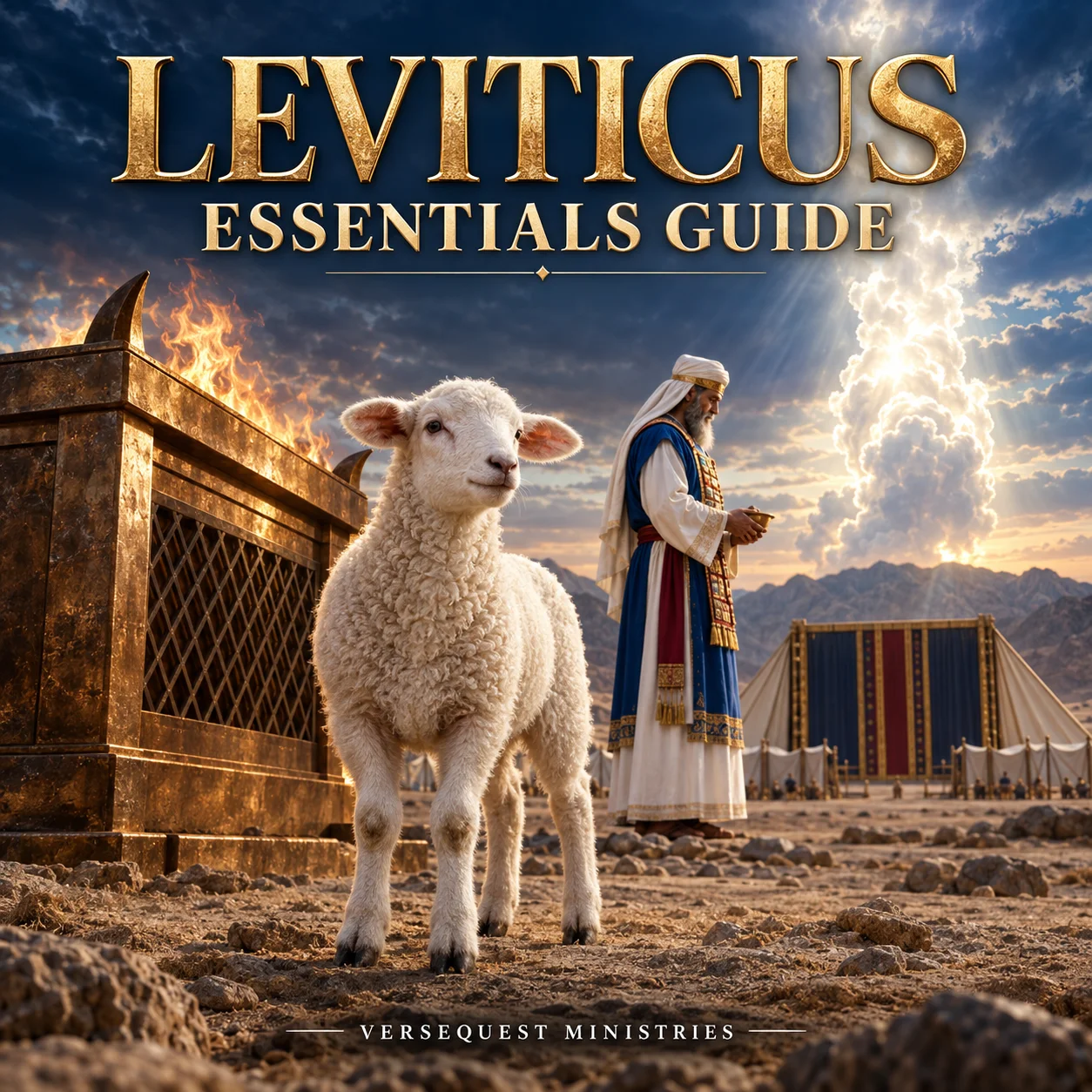
Leviticus Essentials Guide: A Beginner’s KJV Guide to Sacrifice, Priesthood, Atonement, and Holiness
The Leviticus Essentials Guide is a 68-page downloadable and printable KJV study designed to make one of the Bible’s most misunderstood books clear to beginners. It explains the five offerings, the Aaronic priesthood, clean and unclean distinctions, the Day of Atonement, holiness, the feasts of the LORD, the land, and the fulfillment of Levitical shadows in Jesus Christ.
Every numbered teaching passage is printed in full from the King James Bible. The guide also includes charts, doctrinal distinctions, review material, common errors, twelve essential truths, and a concluding gospel connection.
For $14.99, the buyer receives a concise foundational resource suitable for personal study, discipleship, family reading, Sunday school preparation, and ministry teaching.
$14.99
Description
Leviticus is sometimes treated as one of the most difficult books in the Bible, but its central message is both clear and essential: a holy God provides a way for sinful people to approach Him. The Leviticus Essentials Guide presents that message in a concise, understandable form designed especially for new believers, beginning Bible students, and readers who want the heart of Leviticus without working through a lengthy commentary.
This 68-page downloadable and printable PDF explains the structure and purpose of Leviticus while guiding the reader through its most important subjects. The study examines the five principal offerings, the Aaronic priesthood, clean and unclean distinctions, the Day of Atonement, holiness in daily life, the feasts of the LORD, the land, covenant responsibilities, and the prophetic pictures that point forward to Jesus Christ.
Special attention is given to the burnt offering, meat offering, peace offering, sin offering, and trespass offering. Readers will learn what distinguished these sacrifices, what they taught Israel, and how their shadows find their fulfillment in the finished work of Christ. The guide also explains why the blood was necessary, why the priesthood mattered, and why approaching God could never be handled casually or according to human preference.
The laws concerning clean and unclean things are explained within their proper biblical setting. Rather than presenting them as an assortment of disconnected regulations, the guide shows how they taught Israel separation, discernment, obedience, and the holiness of God. The Day of Atonement is presented as the great annual centerpiece of Leviticus, including the work of the high priest, the sacrificial blood, and the two goats.
The feasts of Leviticus 23 are introduced in their biblical order so readers can understand Israel’s appointed times and their larger prophetic importance. The guide also addresses the sabbatical year, the jubile, the redemption of property, covenant blessing and chastening, and the solemn responsibility of vows made unto the LORD.
Every numbered Bible reference used as a teaching passage is printed in full from the Authorized King James Version. Readers do not need to interrupt the study continually to look up the principal passages. Helpful charts, doctrinal distinctions, a seven-part map of Leviticus, review material, common errors, twelve essential truths, and a concluding gospel connection make the material easy to follow and remember.
The Leviticus Essentials Guide is not an exhaustive commentary or a formal workbook. It is an accessible foundational guide for personal study, discipleship, family reading, Sunday school preparation, ministry training, or anyone who wants to understand what Leviticus contributes to the complete revelation of Scripture.
The holiness of God — Leviticus reveals that God is holy and that everything associated with His presence must be treated according to His word. Approaching God upon His terms — Worship is not governed by sincerity alone. God determines how sinful man may approach Him. Sacrifice and substitution — An innocent sacrifice dies in the place of the guilty, establishing a foundational pattern that points to Christ. The necessity of blood atonement — The blood upon the altar demonstrates that sin brings death and that atonement requires a life to be given. The five principal offerings — The burnt, meat, peace, sin, and trespass offerings reveal distinct aspects of sacrifice, devotion, fellowship, guilt, and restoration. The Aaronic priesthood — The priests stood between the people and the sanctuary, teaching the necessity of mediation. The danger of strange fire — Nadab and Abihu demonstrate that God will not accept worship invented in defiance of His commandments. Clean and unclean distinctions — Israel’s ceremonial laws trained the nation to distinguish between what God accepted and what He prohibited. The Day of Atonement — Leviticus 16 provides the central picture of priestly mediation, sacrificial blood, cleansing, confession, and removed guilt. Holiness in ordinary life — Leviticus applies holiness to family, business, sexuality, justice, compassion, worship, and treatment of one’s neighbour. The feasts of the LORD — Israel’s appointed times commemorated God’s works and established a significant prophetic pattern. The sabbatical year and jubile — Rest, liberty, inheritance, redemption, and the return of property reveal God’s authority over Israel and the land. Covenant blessing and chastening — Israel’s national position under the law included promised blessings for obedience and chastening for rebellion. Christ in the shadows — The offerings, priesthood, blood, sanctuary, and appointed days anticipate the person and work of Jesus Christ. Law and grace rightly divided — The guide distinguishes God’s covenant with Israel from the believer’s present standing under grace. Obedience without presumption — Leviticus teaches that God’s exact instructions cannot be replaced by religious enthusiasm or human tradition.
- Leviticus begins where Exodus leaves Israel: redeemed from Egypt, gathered at Sinai, and instructed concerning worship and fellowship with God.
- Redemption brings a person out of bondage; Leviticus teaches how a redeemed people are to approach a holy God.
- The book is not merely a collection of ancient regulations. Its laws form an ordered revelation of sacrifice, priesthood, purity, worship, holiness, and covenant responsibility.
- The five offerings should not be collapsed into one indistinct ceremony. Each offering emphasizes a different aspect of man’s relationship with God.
- The repeated laying on of hands illustrates identification between the offerer and the appointed sacrifice.
- The blood was not a decorative religious symbol. It testified that sin results in death and that atonement required the giving of life.
- The priesthood demonstrates the need for a mediator, but the failures and mortality of the Levitical priests reveal the need for a better High Priest.
- Nadab and Abihu prove that unauthorized worship does not become acceptable merely because it is religious, emotional, or sincere.
- Clean and unclean laws belonged to Israel’s covenant life and must not be carelessly imposed upon the Church as requirements for salvation or justification.
- The Day of Atonement was repeated annually because animal sacrifices could not permanently take away sin.
- The slain goat and the scapegoat present complementary pictures: atonement is made by blood, and confessed guilt is carried away.
- Holiness in Leviticus reaches beyond ceremonies and includes honesty, justice, sexual conduct, family responsibilities, compassion, and reverence.
- The command to love one’s neighbour appears in Leviticus, proving that holiness and proper treatment of others were never opposing ideas.
- The feasts belong directly to Israel, yet they also contain patterns that contribute to the Bible’s larger prophetic revelation.
- The land was God’s possession. Israel’s inheritance, sabbatical years, and jubile were governed by His covenant authority.
- Leviticus 26 should be read nationally and covenantally. Its promises and warnings were addressed to Israel under the Mosaic covenant.
- Jesus Christ fulfils the shadows without becoming one more temporary offering. His sacrifice is complete, sufficient, and final.
- The Christian should learn from Leviticus without placing himself back under Israel’s ceremonial law.
- A memorable summary of Leviticus is: sacrifice provides approach, priesthood provides mediation, blood provides atonement, and holiness governs fellowship.
- Further study should compare each offering with the New Testament presentation of Christ, trace the feasts prophetically, and examine how Hebrews interprets the Levitical system.
For personal Bible study, the guide provides a manageable path through a book that many readers find intimidating. The full teaching passages allow readers to study the text without continually moving between several books or resources.
For new-believer discipleship, it introduces foundational truths concerning sin, sacrifice, blood atonement, holiness, priesthood, and the finished work of Christ. It can help a new Christian understand why so much New Testament language reaches back into Leviticus.
Pastors, preachers, and Sunday school teachers can use the guide to prepare introductory lessons on the offerings, the Day of Atonement, the feasts, the Levitical priesthood, and the difference between Israel under the law and the Church under grace.
Small groups and families can divide the major sections into short reading sessions. The charts, distinctions, review material, and final summary provide natural stopping points for discussion.
Bible institutes, Christian schools, and ministry-training classes can use the guide as a concise introductory reference before assigning a larger commentary or more advanced doctrinal study.
The guide can also serve as a witnessing or follow-up resource for someone who has questions about sacrifice, the blood of Christ, biblical holiness, or the relationship between the Old and New Testaments.
The Authorized King James Bible for reading Leviticus in its complete biblical setting.
A complete concordance for tracing sacrifice, blood, atonement, priest, holiness, clean, unclean, and redemption throughout Scripture.
A reliable Bible dictionary for understanding ancient materials, measurements, sacrifices, priestly garments, and ceremonial terms.
A cross-reference Bible for following the connections between Leviticus, the prophets, the Gospels, and Hebrews.
A clearly labeled diagram of the Tabernacle, its court, altar, laver, holy place, and most holy place.
Maps showing Mount Sinai, Israel’s wilderness encampments, and the land promised to Israel.
A biblical calendar or feast chart displaying the appointed feasts of Leviticus 23 in their proper order.
A comparison chart of the five principal offerings and their distinguishing features.
The VerseQuest Genesis Essentials Guide for the biblical foundation preceding Israel’s deliverance.
The VerseQuest Exodus Essentials Guide for the history of redemption, the giving of the law, and the construction of the Tabernacle.
The VerseQuest Dispensational Truth Essentials Guide for understanding the distinction between Israel under the law and the Church under grace.
A focused study of Hebrews 7–10 for the New Testament explanation of priesthood, sacrifice, the sanctuary, and Christ’s finished work.
Related products
-
Digital Bible Study Collections
-
-53%
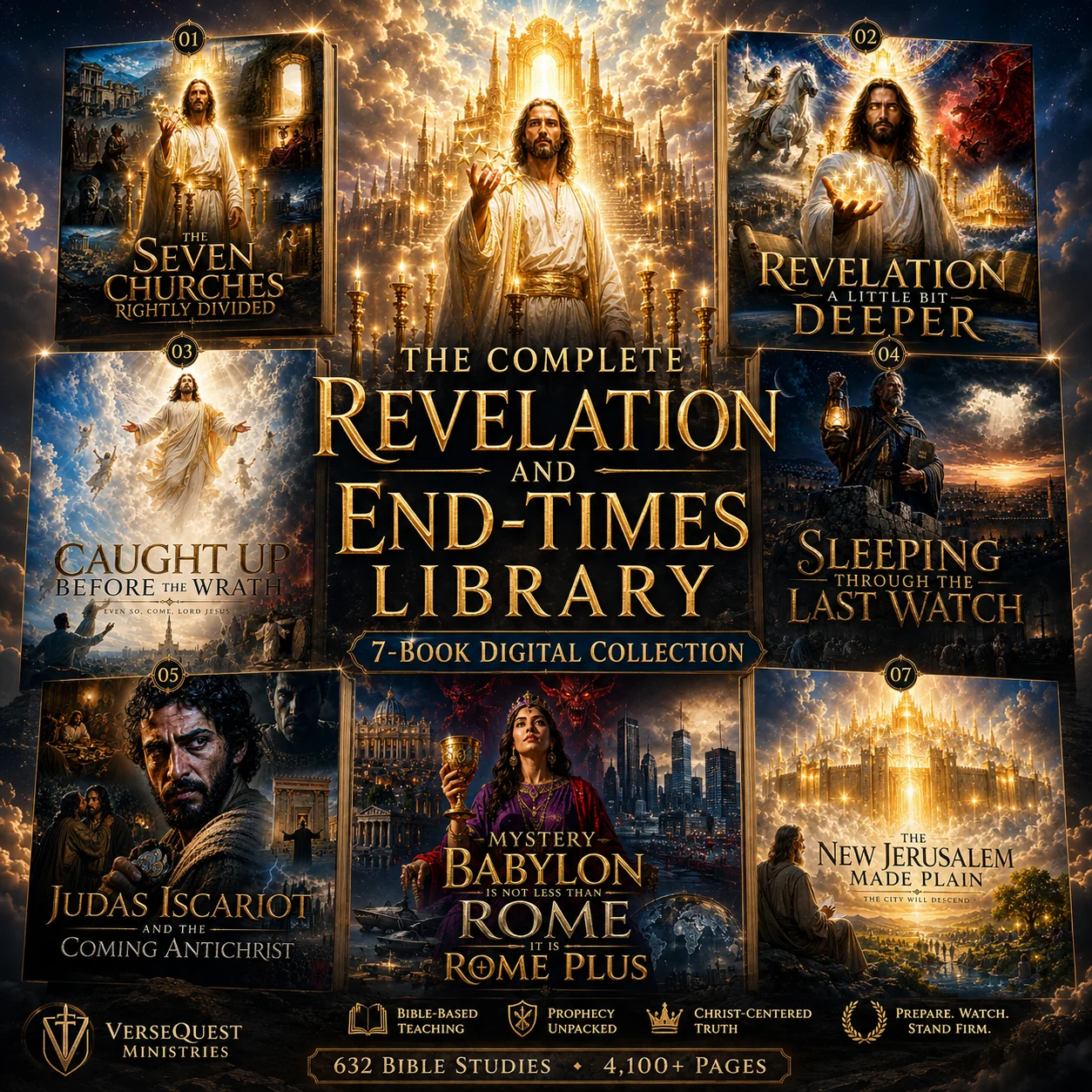
- The Complete Revelation and End-Times Library – 7-Book Digital Collection
- Seven complete KJV prophecy books in one premium digital collection—632 detailed Bible studies and more than 4,100 pages covering the seven churches, pre-Tribulation Rapture, last-days spiritual sleep, Judas and the…
- Original price was: $214.93.$99.99Current price is: $99.99.
- Add to cart
-
-53%
-
Doctrine
-
-50%
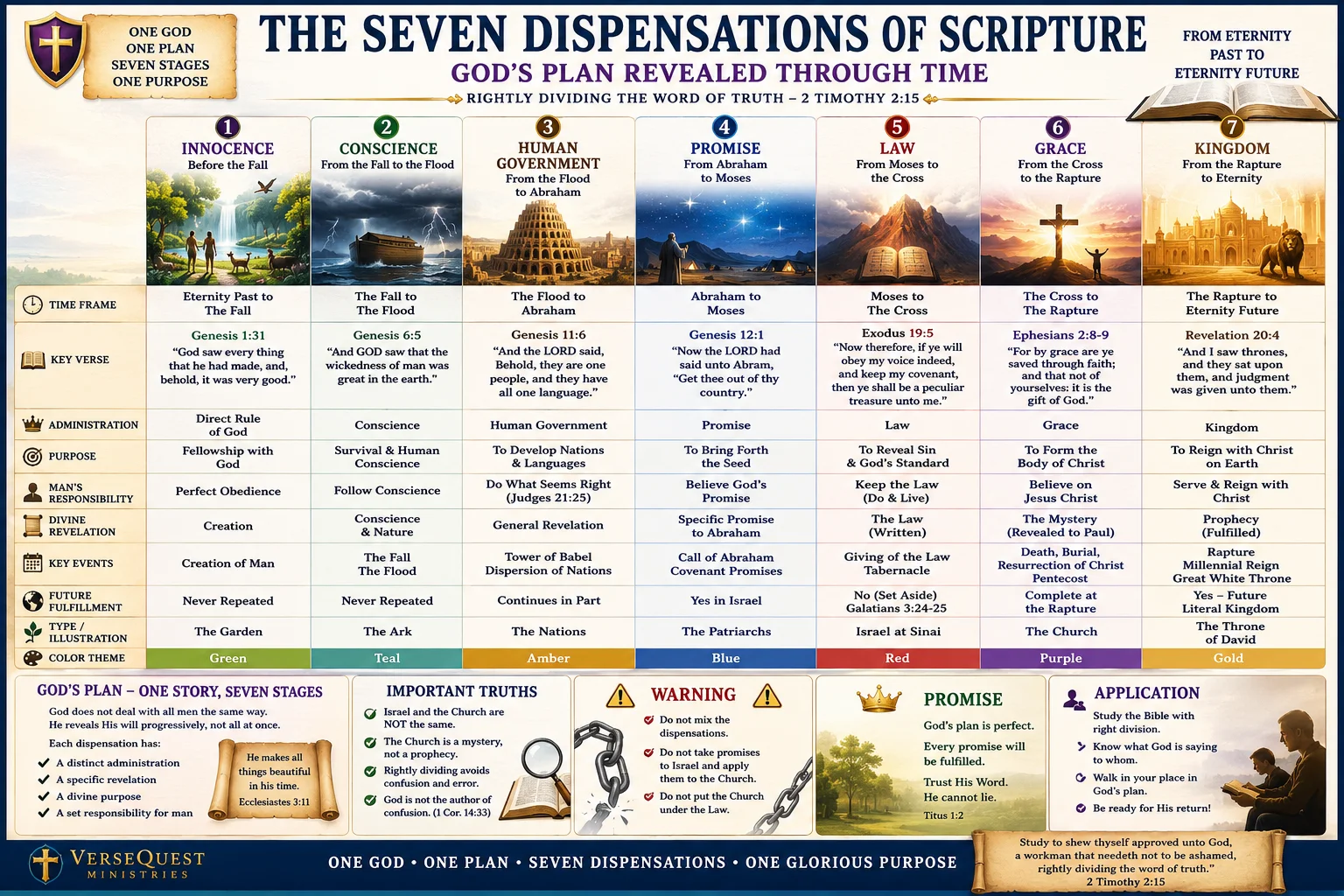
- The Seven Dispensations of Scripture Chart — KJV Rightly Divided
- Premium printable KJV Bible study chart explaining the seven dispensations of Scripture from Innocence to the Kingdom. Rightly divided, visually organized, and designed for teaching, printing, and personal study.
- Original price was: $10.00.$4.99Current price is: $4.99.
- Add to cart
-
-50%
-
Verse-by-Verse Bible Commentaries
-
-75%
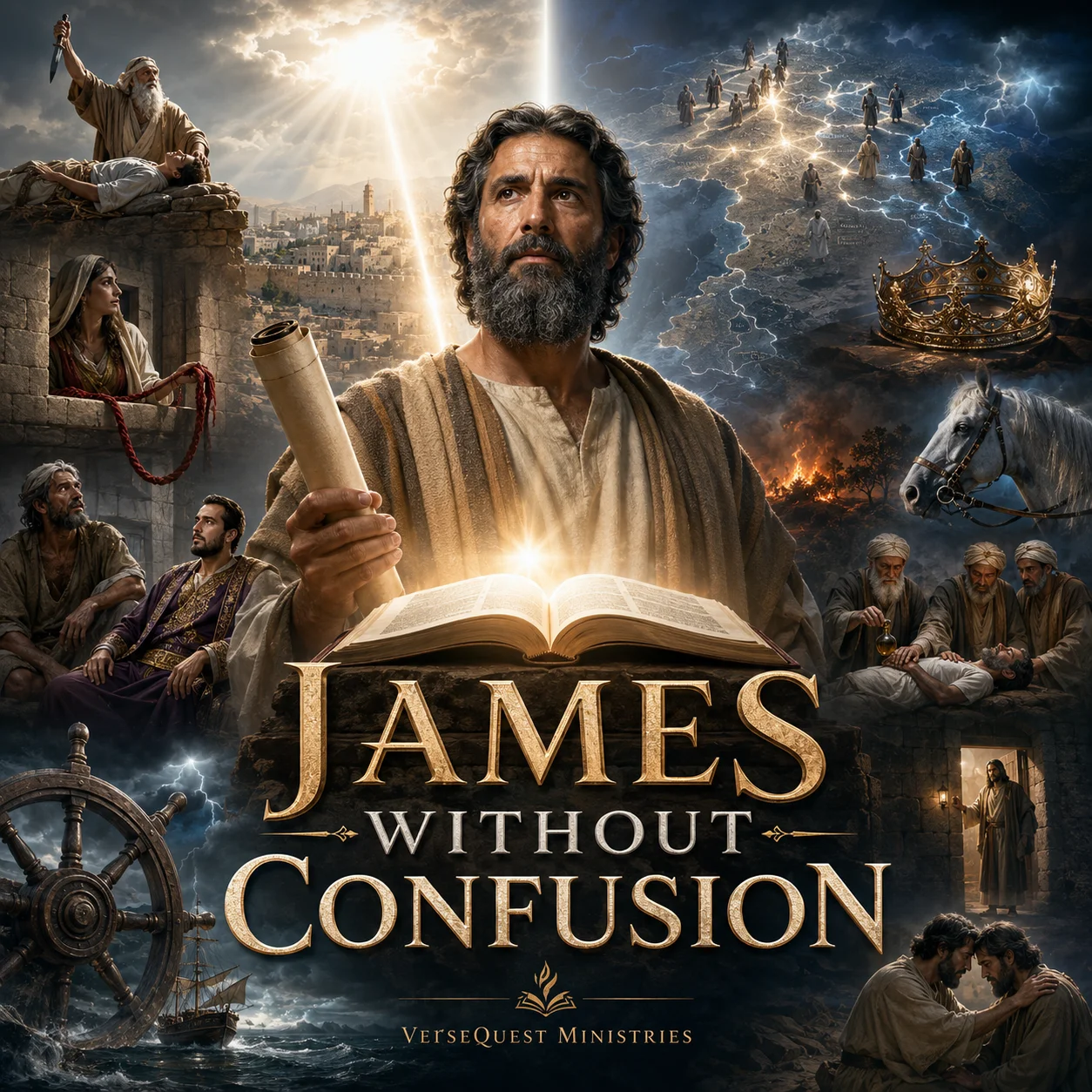
- James Without Confusion: A 120-Study KJV Commentary on Faith, Works, Law, Healing, and Right Division
- James has confused Bible readers, divided theologians, supplied ammunition to Rome, troubled Protestants, and been pushed aside by dispensationalists who did not know what to do with it. James Without…
- Original price was: $39.99.$9.99Current price is: $9.99.
- Add to cart
-
-75%
-
VerseQuest Premium Library
-
-67%
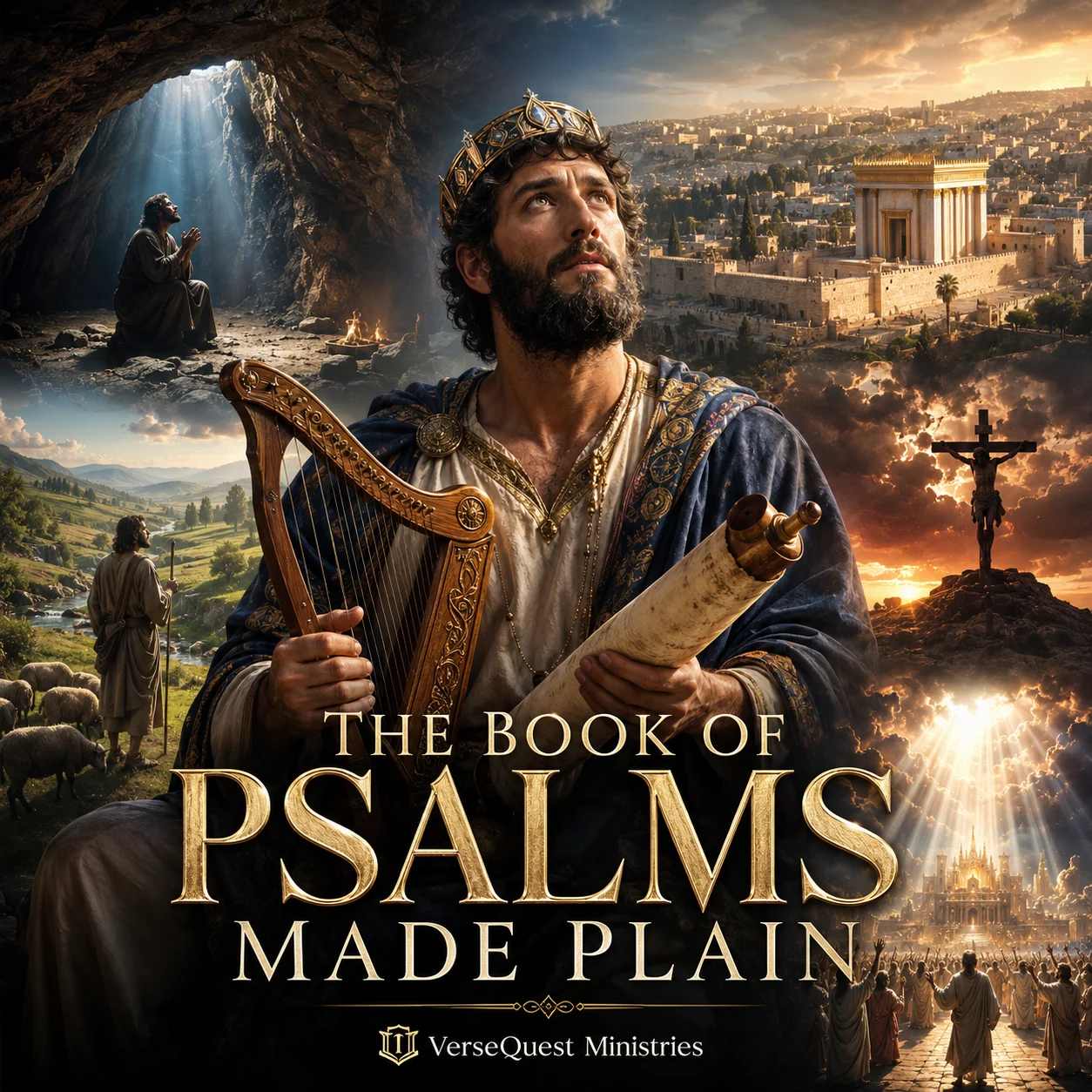
- The Book of Psalms Made Plain – 383-Page KJV Psalm Study
- The Book of Psalms Made Plain is a 383-page premium KJV Bible study featuring 54 detailed essays through the major themes, doctrines, prophecies, prayers, laments, and praises of the Psalms.…
- Original price was: $29.99.$9.99Current price is: $9.99.
- Add to cart
-
-67%
-
Bible Study Chart
-
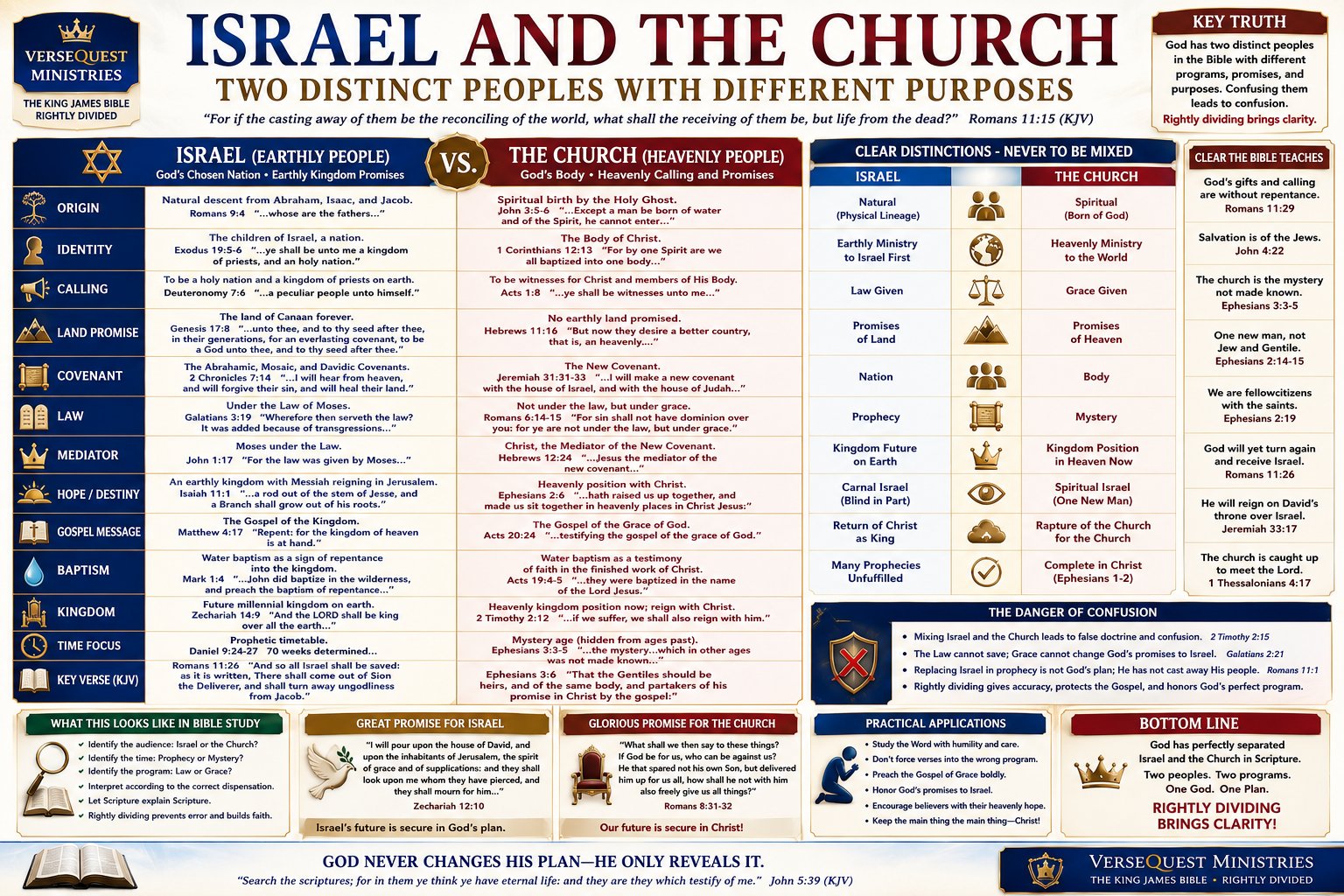
- Israel and the Church Bible Study Chart – Two Distinct Peoples with Different Purposes (KJV)
- Compare Israel and the Church with this detailed KJV Bible study chart covering their distinct origins, identities, covenants, callings, promises, gospel programs, and future destinies.
- $3.99
- Add to cart
-