
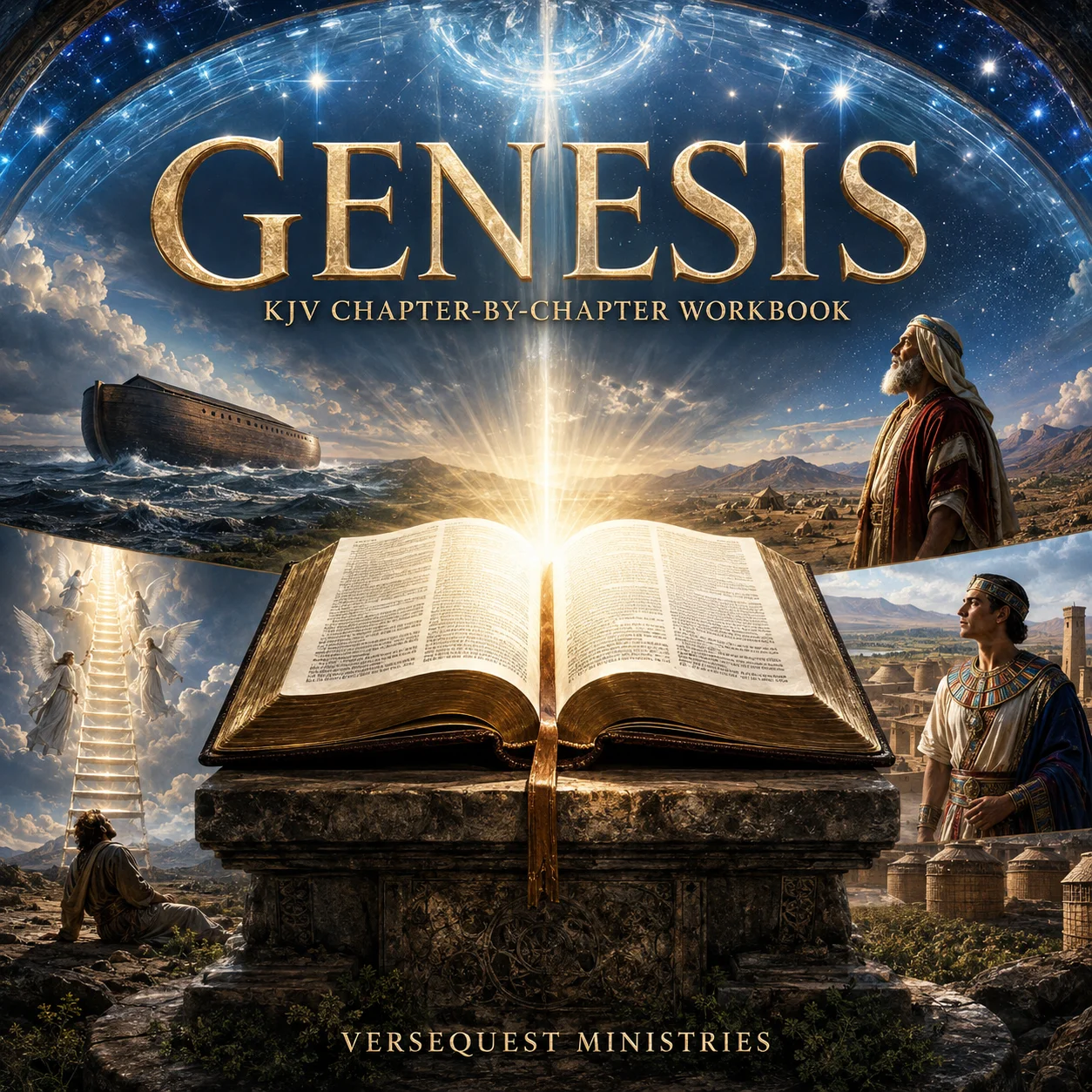
Genesis KJV Chapter-by-Chapter Workbook
The Genesis KJV Chapter-by-Chapter Workbook is a complete 653-page downloadable PDF covering all fifty chapters of Genesis from a King James Bible-believing, rightly divided, dispensational perspective.
Every chapter contains a structured twelve-page study unit with an overview, guided exposition, doctrinal distinctions, KJV vocabulary, cross-references, written exercises, history and chronology, types of Christ, error correction, review, teacher guidance, and suggested answers. Additional material includes cumulative reviews, a final examination, glossary, subject and Scripture indexes, reference studies, and a completion certificate.
Designed for homeschool families, Sunday schools, churches, Bible-study groups, classrooms, ministry training, and serious personal study, this workbook turns Genesis into an active course rather than a book that is merely read. The complete printable PDF is $59.99.
$59.99
Description
The Genesis KJV Chapter-by-Chapter Workbook is a complete 653-page downloadable and printable PDF curriculum designed to lead students carefully through all fifty chapters of the Book of Genesis. Rather than merely telling the reader what Genesis says, this workbook requires the student to read, observe, compare, define, answer, organize, explain, and teach the biblical text. Every lesson is built upon the words of the King James Bible and presented from a Bible-believing, rightly divided, dispensational perspective.
Genesis is the book of beginnings. It establishes the creation of the heaven and the earth, the ruined condition of the earth in Genesis 1:2, the six days of restoration and ordering, the firmament and waters above, the creation of man, marriage, the entrance of sin and death, the two seeds, blood sacrifice, the global Flood, human government, the division of nations, Babel, the Abrahamic covenant, the promised land, the chosen seed, the patriarchs, the formation of Israel’s twelve tribes, and the providential preservation of Jacob’s household through Joseph.
Each of the fifty chapters receives its own consistent twelve-page study unit. The student begins with a chapter overview and structural outline before proceeding through two pages of guided exposition. Each unit then examines major doctrines and necessary dispensational distinctions, important KJV words, cross-reference chains, written exercises, history, chronology, genealogy or geography, types of Christ, prophetic connections, common interpretive errors, chapter review, personal response, teacher guidance, and suggested answers.
The workbook approaches Genesis as inspired history rather than mythology, religious folklore, or an evolutionary account dressed in biblical language. It accepts the firmament, the waters above, the ordered heavenly lights, the global Flood, the Table of Nations, Babel, the patriarchs, and the covenant promises as real parts of God’s revealed record. It also examines the biblical evidence for a pre-Adamic world and judgment between Genesis 1:1 and 1:2 while distinguishing direct scriptural statements, conclusions established through cross-references, reasonable inferences, and unsupported speculation.
Particular attention is given to the promises God made to Abraham, Isaac, and Jacob. The workbook preserves the literal land, national, genealogical, and prophetic dimensions of those promises instead of transferring Israel’s inheritance to the Church. At the same time, it traces the promised Seed through Genesis and shows how Adam, Abel, Melchizedek, Isaac, Judah, Joseph, the sacrifices, the ark, and other people and events provide powerful biblical pictures of the Lord Jesus Christ.
Joseph’s history is studied in depth as one of the richest personal types of Christ in the Old Testament. The beloved son is sent by his father, hated by his brethren, stripped, cast into a pit, sold for silver, delivered into Gentile hands, falsely accused, numbered with prisoners, forgotten, raised to authority, given a Gentile bride, made the dispenser of bread, and finally revealed to the brethren who once rejected him. The workbook carefully establishes the literal history before drawing these Christological and prophetic connections.
In addition to the 600 pages devoted to the fifty chapter units, the book contains substantial course and reference material. This includes an introduction, instructions for using the twelve-page format, recommended pacing, a Genesis overview, the major divisions and generations of Genesis, a study of the promised Seed, dispensational and covenant distinctions, creation and restoration, biblical cosmology, genealogical and patriarchal timelines, types and shadows, Genesis–Revelation parallels, course-progress records, cumulative reviews, a final examination, answer guidance, a five-part glossary, covenant and genealogy references, a Table of Nations study, selected first mentions, subject and Scripture indexes, further-study guidance, and a completion certificate.
This resource is suitable for personal Bible study, homeschool instruction, Christian-school classes, Sunday schools, church Bible studies, youth and adult groups, family study, discipleship, Bible institutes, ministry training, and sermon or lesson preparation. Students may work at their own pace, follow the recommended schedule, or complete one chapter each week as an extended Genesis course.
The Genesis KJV Chapter-by-Chapter Workbook is not simply another commentary to read and place on a shelf. It is a complete Bible-study course intended to put the student into the text, make him search the Scriptures, and train him to explain what he has learned. The purchaser receives one 653-page downloadable PDF for $59.99.
Creation and Restoration — The original creation of the heaven and the earth, the ruined condition described in Genesis 1:2, and the six ordered days beginning with God’s command for light. Biblical Cosmology — The earth, the face of the deep, the firmament dome, the waters above and below, the appointed heavenly lights, the fixed created order, and the relationship between stars and the heavenly host. The Pre-Adamic World — The biblical evidence for a world and judgment preceding Adam, considered through Genesis 1, Isaiah 14, Isaiah 45, Jeremiah 4, Ezekiel 28, and 2 Peter 3. Created Kinds and Human Uniqueness — Plants and creatures reproducing after their kinds and man being made distinctly in the image and likeness of God. Adam and the Fall — Man’s responsibility, the serpent’s attack upon God’s word, disobedience, spiritual and physical death, the curse, sorrow, and expulsion from Eden. Marriage and the Household — The creation of the woman, the one-flesh union, family leadership, parental partiality, household disorder, and the consequences of departing from God’s established order. The Two Seeds — The conflict beginning in Genesis 3:15 and continuing through Cain and Abel, the godly and ungodly lines, the Flood, Babel, the patriarchs, and the promised Seed. Blood Sacrifice and Substitution — Abel’s accepted offering, Noah’s altar, Abraham’s sacrifices, the ram offered in Isaac’s stead, and the developing biblical doctrine of substitution. The Global Flood — Worldwide corruption, giants, the ark, the fountains of the deep, the windows of heaven, the destruction of the old world, Noah’s preservation, and the renewed earth. The Noahic Covenant and Human Government — The rainbow, continuing seasons, the sanctity of blood, capital punishment, national development, and post-Flood responsibility. Nations, Babel, and Babylon — The descendants of Noah, the Table of Nations, Nimrod, centralized rebellion, language division, scattering, and the prophetic development from Babel to Mystery Babylon. The Abrahamic Covenant — The land, physical seed, nation, great name, blessing, protection, and worldwide Messianic reach promised to Abraham. Justification by Faith — Abraham believing the LORD and righteousness being counted to him before circumcision and before the Mosaic law. Isaac and the Child of Promise — The distinction between Ishmael and Isaac, flesh and promise, the chosen covenant line, Moriah, and the bride obtained for the promised son. Jacob’s Discipline and Transformation — The blessing, Bethel, Laban’s household, the return to Canaan, the wrestling at Peniel, human weakness, and Jacob’s new name, Israel. The Formation of Israel — The births and development of Jacob’s twelve sons, the tribal structure, Joseph’s double portion, Judah’s royal line, and Levi’s later priestly service. Judah, Surety, and Kingship — Judah’s moral exposure, transformation, offer of substitution for Benjamin, the sceptre, Shiloh, and the Messianic royal line. Joseph as a Type of Christ — The beloved son, rejection by his brethren, sale for silver, humiliation, false accusation, imprisonment, exaltation, Gentile bride, worldwide provision, and eventual revelation to his brethren. Providence and Preservation — God overruling famine, family failure, hatred, deception, servitude, and political power to preserve the covenant household. Israel and the Church Distinguished — The literal national, territorial, genealogical, and prophetic promises belonging to Israel distinguished from the heavenly calling and doctrine of the Body of Christ. Pilgrimage, Burial, and Resurrection Hope — The patriarchs living as strangers, purchasing Machpelah, demanding burial in Canaan, and giving commands concerning bones because they believed God’s promises reached beyond death. Genesis and Revelation — Creation and new creation, serpent and Satan, curse and restoration, Babel and Babylon, lost and restored access to the tree of life, and death finally abolished.
- Central argument: Genesis reveals the beginning of God’s dealings with the created world and traces His redemptive and covenant purpose from Adam through the preservation of Israel’s household in Egypt.
- Controlling authority: The exact wording of the King James Bible governs every doctrinal conclusion, cross-reference, chart, type, and application.
- Book structure: Genesis moves from the history of the world in chapters 1–11 to the history of Abraham, Isaac, Jacob, and Joseph in chapters 12–50.
- Genesis 1 distinction: Genesis 1:1 records God’s original creation. Genesis 1:2 presents the earth without form, void, dark, and submerged. The ordered days begin with God’s command for light in verse 3.
- Firmament doctrine: The firmament is made by God, divides waters from waters, is called Heaven, contains the appointed lights, and stands within the Bible’s larger description of the created order.
- Fall doctrine: Sin and death enter Adam’s world through disobedience. The serpent attacks God’s word before attacking human conduct.
- First gospel promise: Genesis 3:15 announces the conflict between two seeds and points toward the victorious Seed who will bruise the serpent’s head.
- Sacrifice: Abel’s offering, Noah’s altar, Abraham’s covenant sacrifices, and the ram offered instead of Isaac prepare the Bible’s developing doctrine of blood and substitution.
- Flood doctrine: Genesis presents the Flood as a worldwide judgment, not a small regional disaster. Noah’s household is preserved through the ark while the old world perishes.
- National development: Genesis 10–11 explains the origin and division of nations, languages, territories, and the Babel system.
- Covenant distinction: The Abrahamic covenant contains literal promises concerning land, physical seed, nationhood, protection, and worldwide blessing. These promises are not erased by the formation of the Church.
- Faith and circumcision: Abraham is counted righteous by faith in Genesis 15 before receiving circumcision in Genesis 17.
- Isaac and Ishmael: Ishmael receives blessing and national multiplication, but Isaac is the appointed covenant son.
- Jacob and Esau: The prophecy concerns two brothers and two nations. God’s purpose does not justify Jacob’s deception, and Jacob’s fleshly methods bring years of discipline.
- Judah’s transformation: Judah moves from selling Joseph to becoming Benjamin’s surety and offering himself instead of his brother.
- Joseph’s history: God does not call the brothers’ evil good. Their intention remains evil, but God overrules the result to preserve much people alive.
- Tribal promises: Reuben’s birthright, Levi’s scattering, Judah’s rulership, Joseph’s double portion, and the distinct futures of the tribes must be kept in their proper places.
- Messianic prophecy: The sceptre and Shiloh promise of Genesis 49:10 centers royal authority and future gathering in Judah’s line.
- Resurrection hope: The patriarchs’ burial instructions and Joseph’s command concerning his bones demonstrate faith in the future fulfillment of God’s promises.
- Forward movement: Genesis ends with Joseph in a coffin in Egypt, but his final words look toward God’s visitation, the Exodus, and the promised land.
- Further-study questions: What existed before Genesis 1:2? How do the two seeds develop through Scripture? Which Abrahamic promises remain nationally unfulfilled? How does Joseph anticipate both Christ’s present Gentile association and His future revelation to Israel? How do the themes introduced in Genesis reach their conclusion in Revelation?
For personal Bible study, the workbook provides a complete structure for reading all fifty chapters of Genesis with purpose. The student can work at his own pace, complete the written exercises, follow the cross-reference chains, record observations, memorize selected passages, and use the reviews to determine what has genuinely been learned.
For homeschool and Christian-school instruction, the book may be used as an extended Genesis course. Each chapter contains student work, vocabulary, doctrinal instruction, research exercises, teacher guidance, suggested pacing, and answers. The consistent twelve-page format makes lesson planning predictable while allowing every chapter to retain its individual subject matter.
For Sunday schools and church Bible studies, teachers can divide each chapter into one or two lessons. The overview and exposition pages provide the lesson structure, while the doctrinal distinctions, cross-references, discussion questions, and teach-back assignments help move the class beyond a surface retelling of familiar stories.
For small groups and discipleship, participants can complete the student pages independently and then meet to compare answers, discuss difficult passages, defend interpretations from the KJV, and practice explaining the chapter to others.
For family Bible study, parents can adapt the material according to age. Younger students may concentrate on chapter movements, vocabulary, people, places, diagrams, and exact-answer questions. Older students and adults may complete the doctrinal distinctions, source filtering, cross-reference defenses, and written summaries.
For pastors, preachers, and teachers, the workbook can support sermon and lesson preparation by organizing each chapter’s principal movements, doctrinal themes, prophetic significance, types of Christ, historical setting, and common interpretive errors.
For Bible institutes and ministry training, the workbook may be used to train students in observation, interpretation, right division, cross-referencing, biblical theology, typology, oral presentation, and the proper use of secondary study resources.
A King James Bible with readable paragraphing and wide margins for personal notes.
A complete KJV concordance for locating repeated words, first mentions, names, places, and cross-reference connections.
A reliable Bible dictionary for ancient occupations, geography, weights, measurements, family relationships, and historical terminology.
A KJV cross-reference Bible for following the doctrinal and prophetic chains beginning in Genesis.
Maps of the ancient Near East, Mesopotamia, Canaan, Egypt, the patriarchal journeys, the cities of the plain, Mount Seir, and the land promised to Abraham.
Genealogical charts tracing Adam to Noah, Noah to Abraham, Abraham to Jacob, Jacob’s twelve sons, Ishmael’s princes, and Esau’s descendants.
A patriarchal timeline comparing the lives of Abraham, Isaac, Jacob, Joseph, and the descent into Egypt.
Studies of Genesis 1, the firmament, waters above, the gap between Genesis 1:1 and 1:2, Lucifer’s fall, and pre-Adamic judgment.
Studies of the Abrahamic covenant, Israel’s literal land promises, the promised Seed, and the distinction between Israel and the Body of Christ.
Studies of Melchizedek, Isaac on Moriah, Judah’s substitution, Joseph as a type of Christ, and the Messianic prophecy of Genesis 49:10.
Through the Bible with VerseQuest, the complete 66-book KJV Bible survey and rightly divided workbook.
Romans KJV Chapter-by-Chapter Workbook, for continued training in chapter analysis and Pauline doctrine.
Revelation KJV Chapter-by-Chapter Workbook, for studying the prophetic conclusion of the themes introduced in Genesis.
Related products
-
Heavenly Program
-
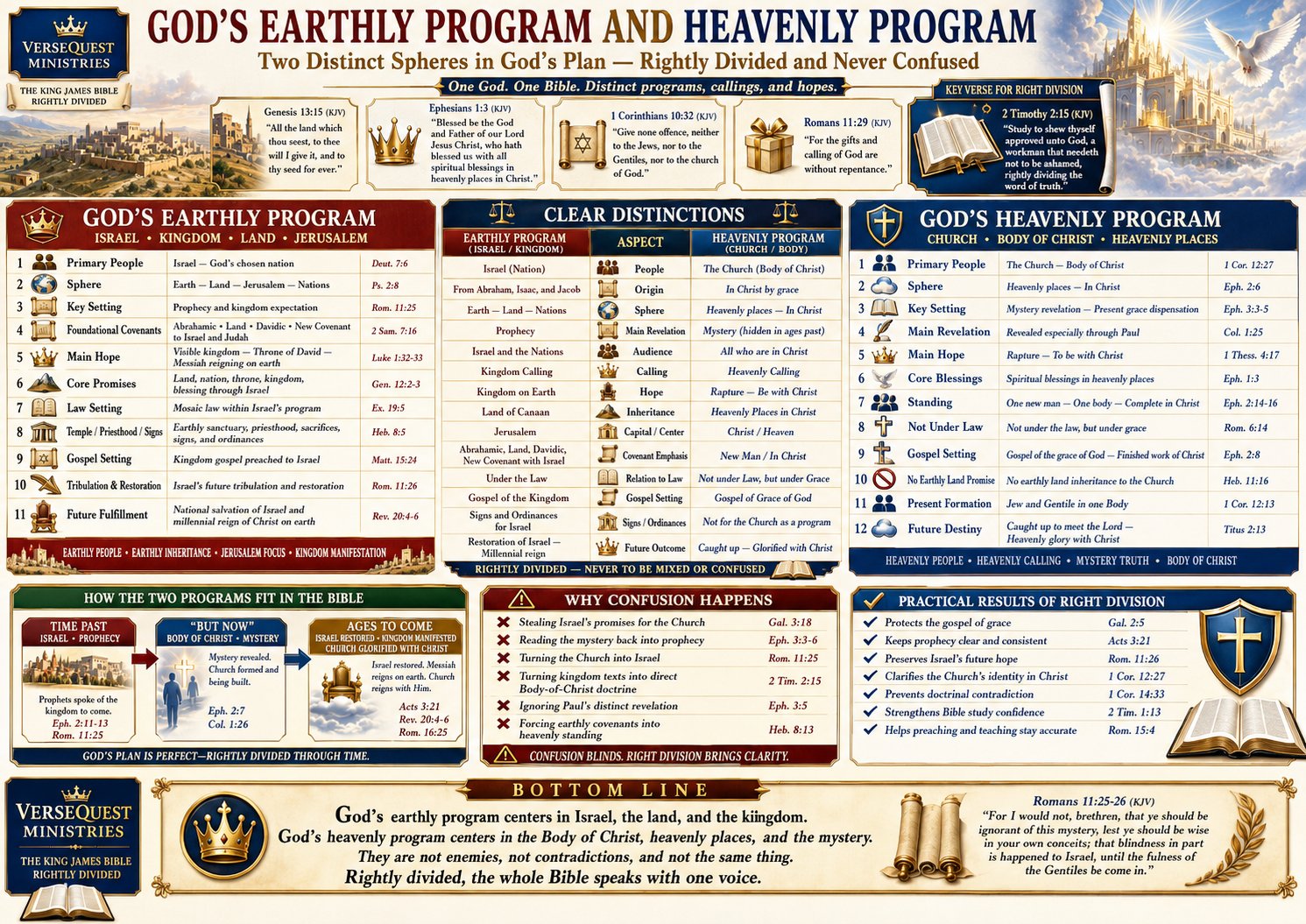
- Israel and the Church: Earthly and Heavenly Callings – KJV Bible Study Chart
- Printable digital KJV Bible study chart comparing Israel’s earthly promises and kingdom hope with the Church’s heavenly calling in Christ. Covers prophecy and mystery, biblical covenants, law and grace, the…
- $3.99
- Add to cart
-
-
Doctrine Series
-
-14%
- Judas Iscariot and the Coming Antichrist – Premium KJV Prophecy Study
- A massive 459-page premium KJV prophecy study tracing the biblical connection between Judas Iscariot, the son of perdition, and the coming Antichrist. This detailed VerseQuest Ministries PDF examines Judas’ betrayal,…
- Original price was: $34.99.$29.99Current price is: $29.99.
- Add to cart
-
-14%
-
Doctrine
-
-50%
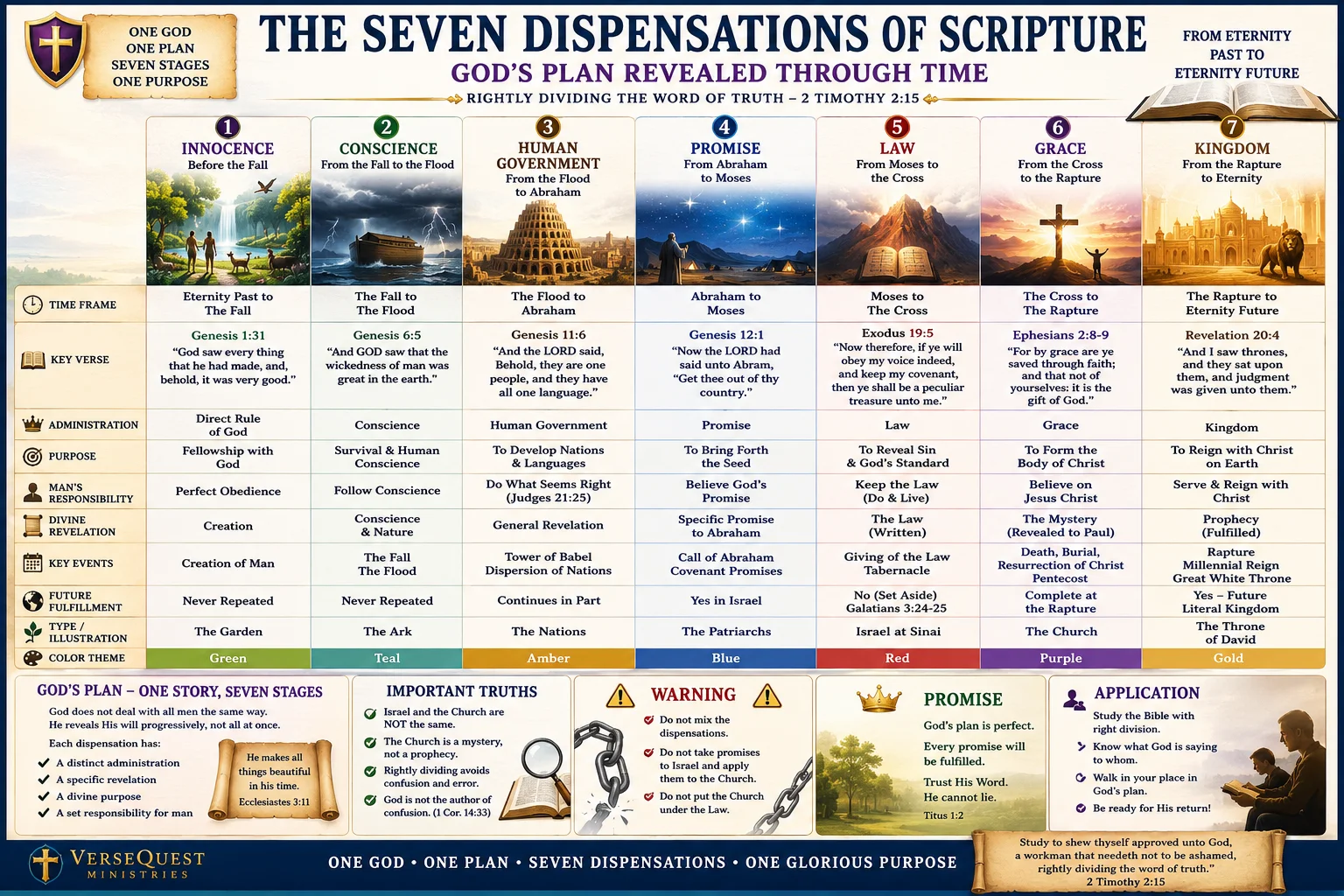
- The Seven Dispensations of Scripture Chart — KJV Rightly Divided
- Premium printable KJV Bible study chart explaining the seven dispensations of Scripture from Innocence to the Kingdom. Rightly divided, visually organized, and designed for teaching, printing, and personal study.
- Original price was: $10.00.$4.99Current price is: $4.99.
- Add to cart
-
-50%
-
Doctrine
-
-50%
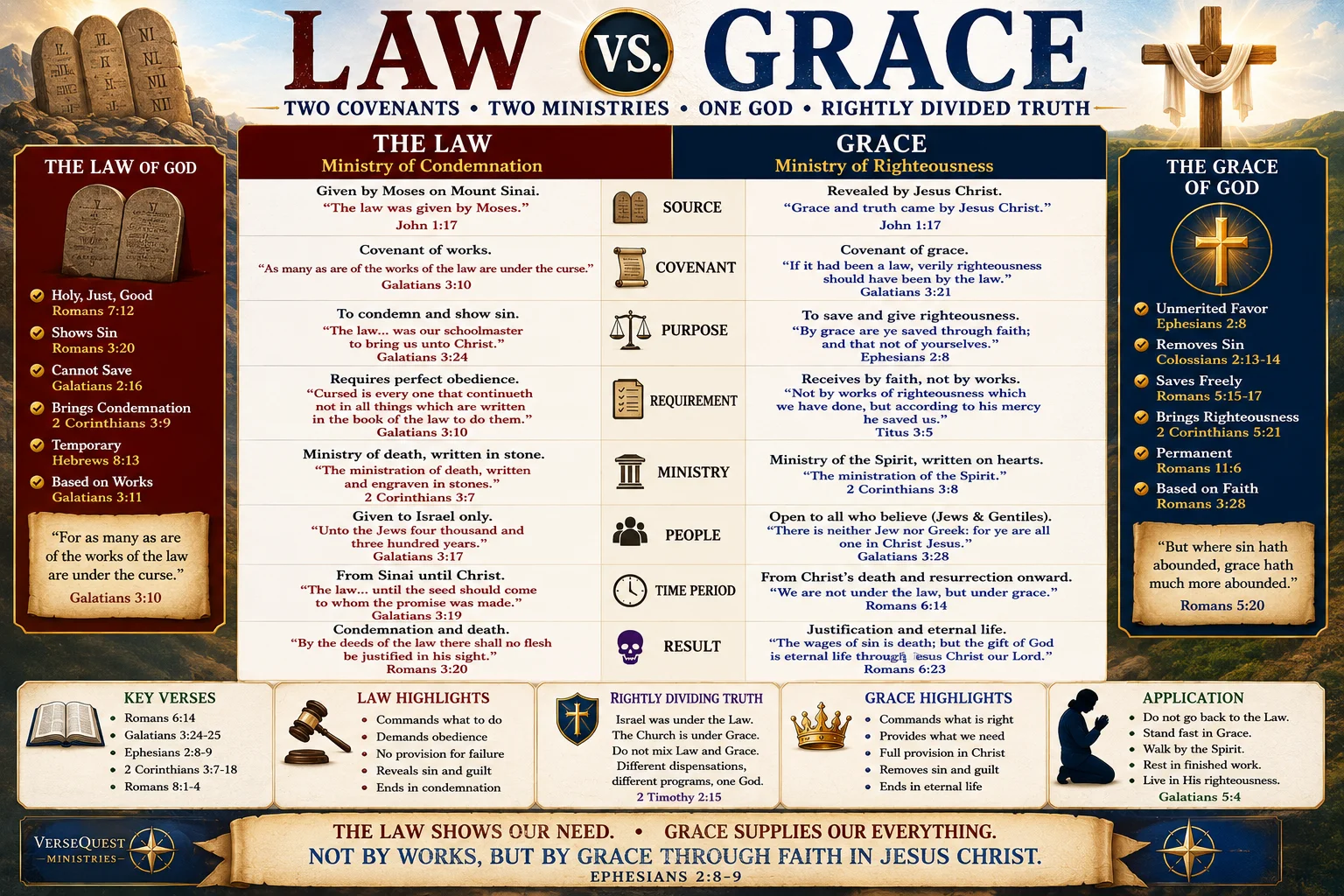
- Law vs. Grace Chart — KJV Rightly Divided
- Premium printable KJV Bible study chart comparing Law and Grace from a rightly divided perspective, showing works versus faith, condemnation versus righteousness, and Moses versus Christ.
- Original price was: $10.00.$4.99Current price is: $4.99.
- Add to cart
-
-50%
-
Bible Overview Series
-
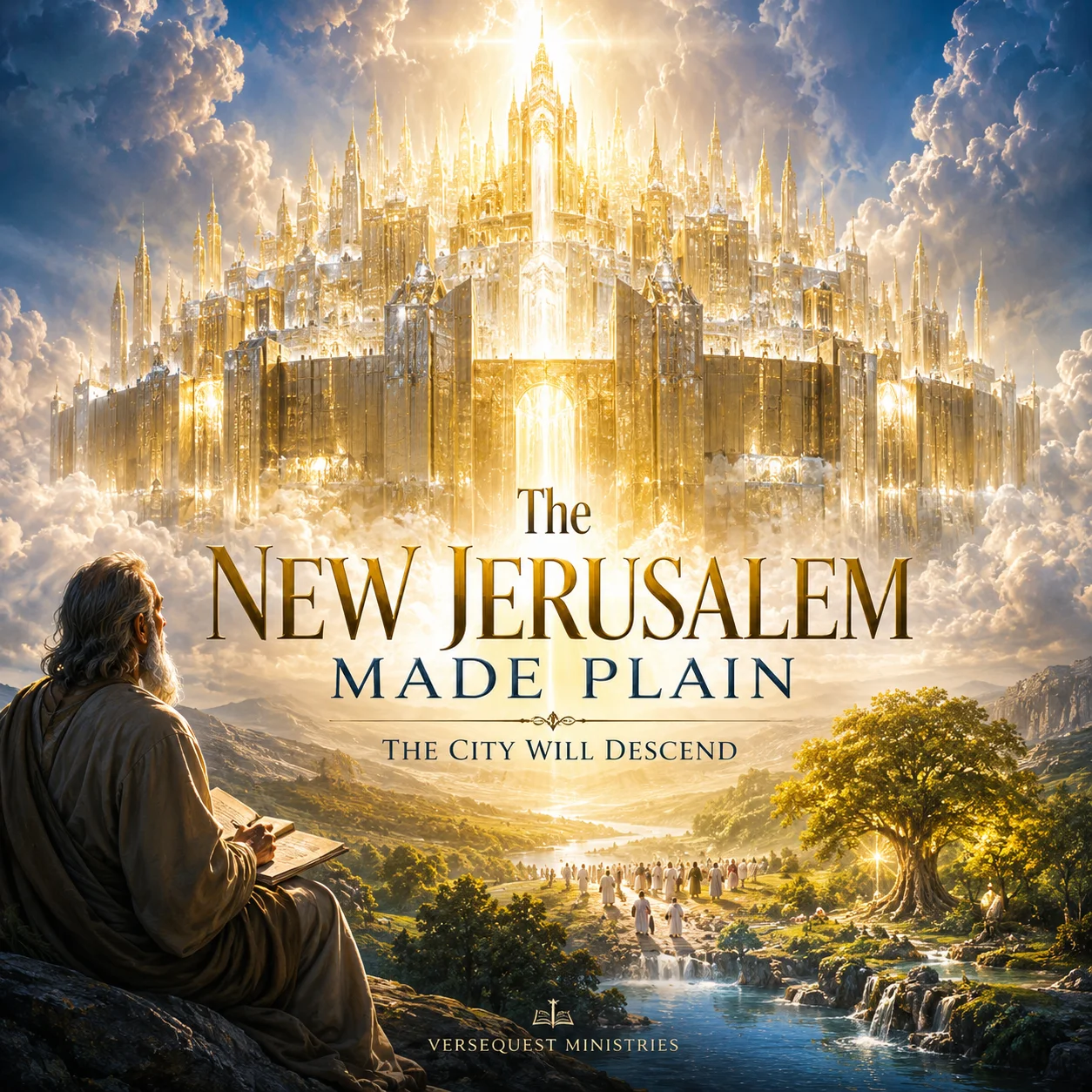
- The New Jerusalem Made Plain — 621-Page PDF Study
- The New Jerusalem Made Plain is a massive 621-page KJV/rightly divided PDF study on the literal holy city revealed in Revelation 21–22. This 100-essay book makes the New Jerusalem plain…
- $34.99
- Add to cart
-