
Genesis 7 – The LORD Shut Him In: Noah’s Ark, the Worldwide Flood, Forty Days of Rain, Eight Souls, and 150 Days of Prevailing Waters (KJV Bible Study Chart)
Explore Genesis 7 with this detailed KJV chart covering Noah’s entrance into the ark, clean and unclean animals, seven final days of warning, the fountains of the great deep, windows of heaven, forty days of rain, the worldwide covering of the earth, eight preserved souls, and 150 days of prevailing Flood waters.
$4.99
Description
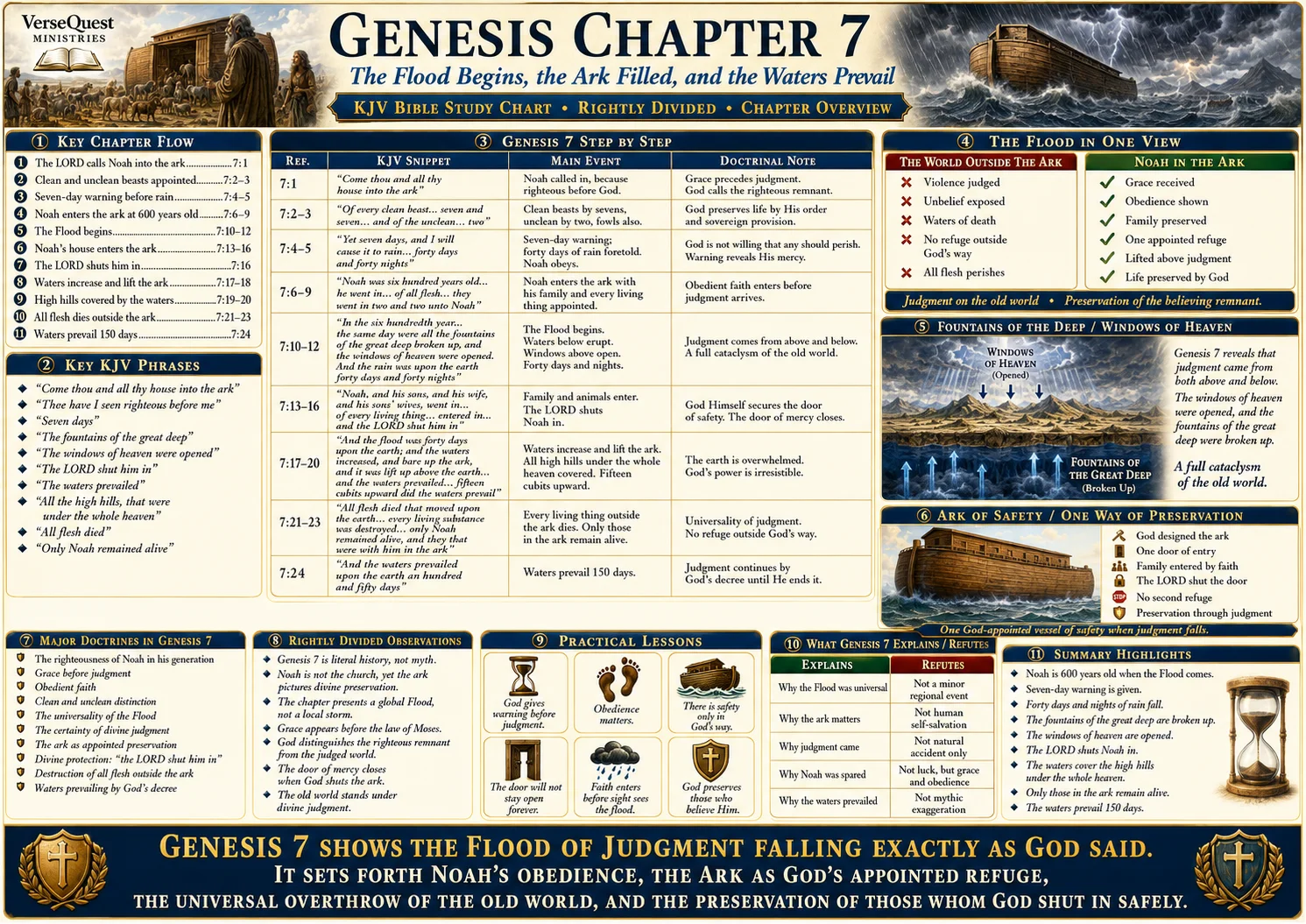
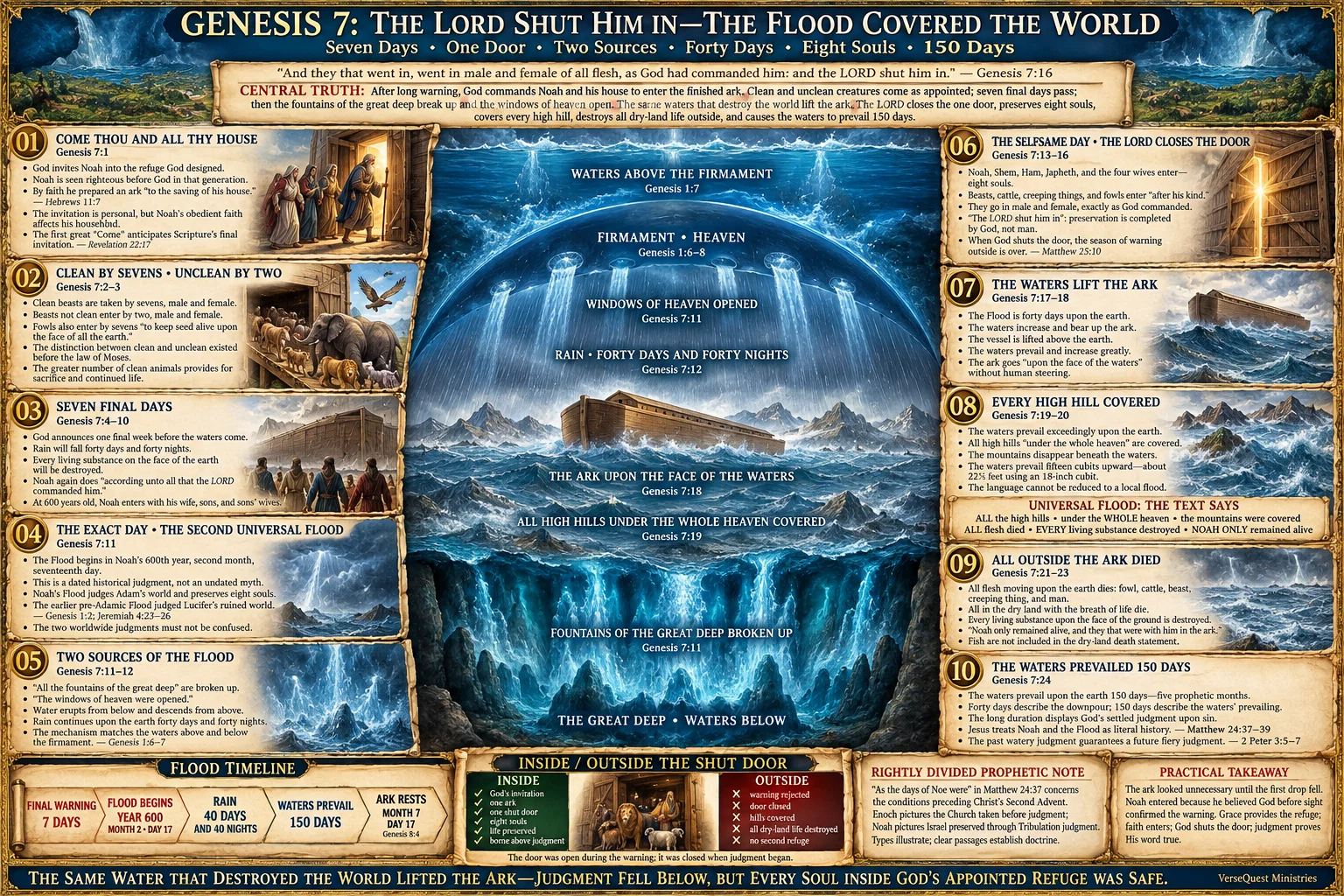
Genesis 7: The LORD Shut Him In — The Flood Covered the World is a detailed KJV Bible study chart tracing the opening and execution of Noah’s Flood from God’s final invitation into the ark through forty days and nights of rain, the breaking up of the fountains of the great deep, the opening of the windows of heaven, the destruction of life outside God’s appointed refuge, and the 150 days during which the waters prevailed upon the earth. The chapter transforms the warning of Genesis 6 into historical judgment and demonstrates that when God finally closes the door, the season of warning has ended.
Genesis 7 begins with the LORD telling Noah, “Come thou and all thy house into the ark; for thee have I seen righteous before me in this generation.” Noah’s safety rests in God’s appointed refuge, yet Hebrews 11:7 explains that faith moved him to prepare the ark and condemn the unbelieving world. His household enters because Noah takes God’s warning seriously before there is visible evidence of rain. Seven additional days are granted before the Flood begins, showing again that divine judgment is preceded by remarkable patience.
God commands clean animals to enter by sevens and unclean animals by two, preserving the distinction between clean and unclean before the Mosaic law. The greater number of clean animals also prepares for sacrifice after the Flood. Noah, his wife, his sons, their wives, and the appointed creatures enter exactly as God commanded. Genesis then records the decisive words: “and the LORD shut him in.” Noah does not close the final door himself. God seals the appointed refuge.
The Flood begins on a precise date: the seventeenth day of the second month of Noah’s six hundredth year. “All the fountains of the great deep” are broken up and “the windows of heaven were opened.” The chart connects these two sources with the waters below and above the firmament described in Genesis 1. Rain falls for forty days and forty nights while waters also rise from the great deep. The ark is lifted above the earth and borne upon the face of the waters without Noah steering toward any humanly selected destination.
Genesis repeatedly emphasizes the global extent of the judgment. “All the high hills, that were under the whole heaven, were covered.” The waters prevail fifteen cubits upward above the covered elevations, and every land-dwelling creature possessing the breath of life outside the ark dies. The language cannot naturally be reduced to a minor regional flood while preserving the repeated expressions “all,” “every,” and “under the whole heaven.”
The waters prevail for 150 days. Genesis later places the ark’s resting on the seventeenth day of the seventh month, exactly five months after the Flood began, providing the chronological basis for understanding those five months as 150 days. Judgment is therefore not a brief storm but a sustained overthrow of the pre-Flood world.
Yet the same waters that destroy the world beneath the ark lift God’s appointed refuge above judgment. Eight souls remain safe inside because they entered where God told them to enter. The door is one, the refuge is God-designed, and preservation depends upon being inside before judgment falls. Genesis 7 therefore stands as both historical judgment and enduring warning: grace provides the refuge, faith enters it, God shuts the door, and His Word proves true.
Genesis 7, Noah’s Flood, LORD shut him in, Noah’s ark, worldwide Flood, universal Flood, forty days and forty nights, fountains of the great deep, windows of heaven, waters above the firmament, eight souls, clean animals by sevens, unclean animals by two, one door of the ark, seven final days, 150 days of prevailing waters, every high hill covered, days of Noah, judgment and refuge, Genesis Flood chronology
Genesis 7 records the actual arrival of the judgment God announced in Genesis 6. Noah and his household enter the completed ark according to God’s command, and seven final days pass before the waters arrive. Noah’s righteousness is connected with his faith and walk before God, while Hebrews 11:7 explains that his faith becomes visible through obedient preparation before the judgment can be seen.
Clean animals enter by sevens while unclean animals enter by two. This proves that the clean-and-unclean distinction existed before Sinai and therefore did not originate with the Mosaic covenant. The additional clean animals also provide sufficient creatures for sacrifice and continued propagation after the Flood.
The Flood begins on the seventeenth day of the second month in Noah’s six hundredth year. Scripture gives an exact historical date rather than presenting the account as timeless mythology. Within the chart’s ruin-and-restoration framework, Noah’s Flood is distinguished from the earlier water-covered condition of Genesis 1:2, though Genesis 7 itself simply records Noah’s catastrophic Flood and does not number it as a “second” flood.
Two sources contribute to the Flood: the fountains of the great deep are broken up and the windows of heaven are opened. The chart interprets these in relation to the waters below and the waters above the firmament in Genesis 1. Rain continues for forty days and forty nights while subterranean waters also participate in the judgment.
Genesis 7:16 contains the decisive statement “the LORD shut him in.” God Himself closes the ark after Noah, his household, and the appointed creatures enter. The shut door marks the transition from warning to judgment. Once the LORD closes it, those outside cannot create a second refuge.
The ark rises as the waters increase. It is not presented as a ship navigating toward a human destination but as a divinely designed vessel of preservation borne upon the waters. The same judgment destroying the world outside lifts the refuge containing Noah’s family.
Genesis repeatedly uses universal language: all the high hills under the whole heaven are covered, the mountains are covered, all flesh outside the ark dies, and every living substance upon the face of the ground is destroyed. Within the chart’s interpretation, this language requires a worldwide Flood rather than a local Mesopotamian event.
The waters prevail fifteen cubits upward over the covered elevations. Using an approximately eighteen-inch cubit gives about twenty-two and one-half feet. The precise ancient cubit length can vary, but the biblical point is that the water rises sufficiently above the highest elevations for the ark to float freely.
The waters prevail for 150 days. Genesis 8 places the ark’s resting on the seventeenth day of the seventh month, exactly five months after the Flood began on the seventeenth day of the second month. This chronology provides strong internal evidence for thirty-day months in this portion of the Flood record.
Within a dispensational prophetic comparison, Enoch’s prior translation offers a picture of removal before judgment, Noah represents preservation through judgment, and the unbelieving pre-Flood world illustrates those overtaken when judgment comes. These are typological parallels; the actual doctrines of the Rapture, Tribulation, and Israel’s preservation must be established from their direct prophetic passages.
Genesis 7 ultimately teaches that grace does not eliminate judgment and warning does not continue forever. God provided one ark, one open door during the period of invitation, and complete safety for those inside. When the LORD shut the door, every word He had spoken concerning the Flood began to be fulfilled.
Genesis 7 Bible studies, Noah’s Flood teaching, worldwide-Flood apologetics, ark studies, fountains-of-the-deep studies, firmament teaching, biblical chronology, forty-days studies, clean-and-unclean animal studies, days-of-Noah prophecy, judgment and grace lessons, faith and obedience studies, Hebrews 11 teaching, pre-Tribulation typology, homeschool Bible curriculum, Sunday school lessons, Christian school teaching, Bible institute classes, pastoral training, sermon preparation
King James Bible, Strong’s Concordance, Thompson Chain-Reference Bible, Treasury of Scripture Knowledge, Nave’s Topical Bible, Genesis 6–9 study notes, Noah and Flood timelines, ark-dimension charts, global-Flood Scripture studies, fountains-of-the-deep resources, biblical firmament studies, Flood chronology worksheets, Hebrews 11 faith studies, Matthew 24 days-of-Noah studies, First Peter 3 commentary notes, Second Peter 3 Flood studies, VerseQuest Genesis and Flood charts
Related products
-
Jesus Christ
-
-67%

- The Millennium Made Plain – 416-Page KJV Study on Christ’s Future Reign
- A premium 416-page KJV, rightly divided Bible study on the literal future Millennial reign of Jesus Christ. The Millennium Made Plain explains Revelation 19–20, Israel’s restoration, Satan’s binding, the Kingdom…
- Original price was: $29.99.$9.99Current price is: $9.99.
- Add to cart
-
-67%
-
Premium Studies
-
-25%
- The Doctrine of Hell — Premium Essay Series PDF
- A 383-page premium VerseQuest PDF study book containing 54 KJV essays on hell, fire, darkness, judgment, the lake of fire, the second death, and Jesus Christ as the only escape.
- Original price was: $39.99.$29.99Current price is: $29.99.
- Add to cart
-
-25%
-
The Rapture
-
- The Rapture and the Departure Before the Dragon Descends – Printable Bible Study Chart
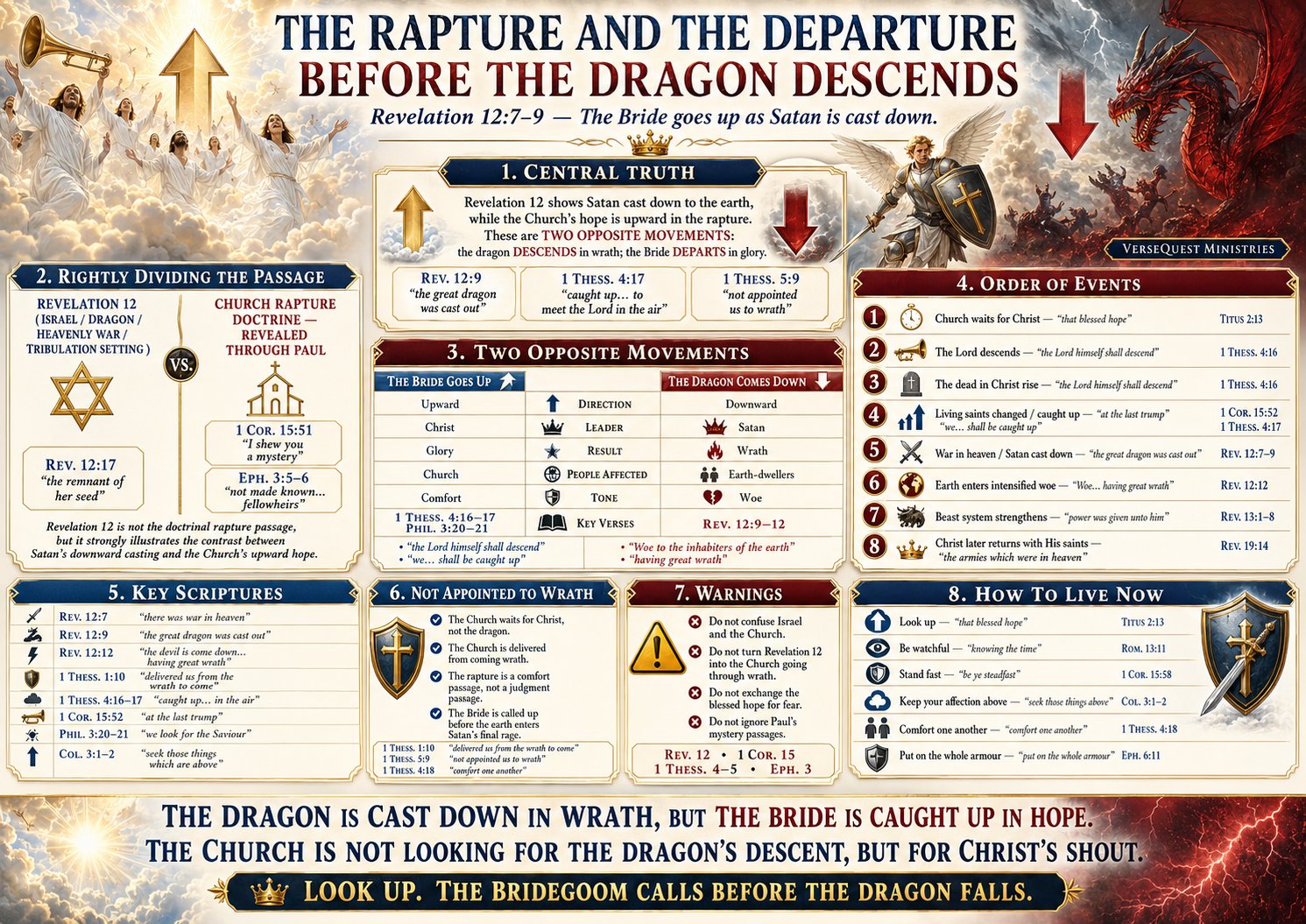
- Printable KJV Bible study chart on The Rapture and the Departure Before the Dragon Descends, showing the Bride caught up before Satan is cast down in wrath. This premium VerseQuest…
- $4.99
- Add to cart
-
-
Names of Christ
-
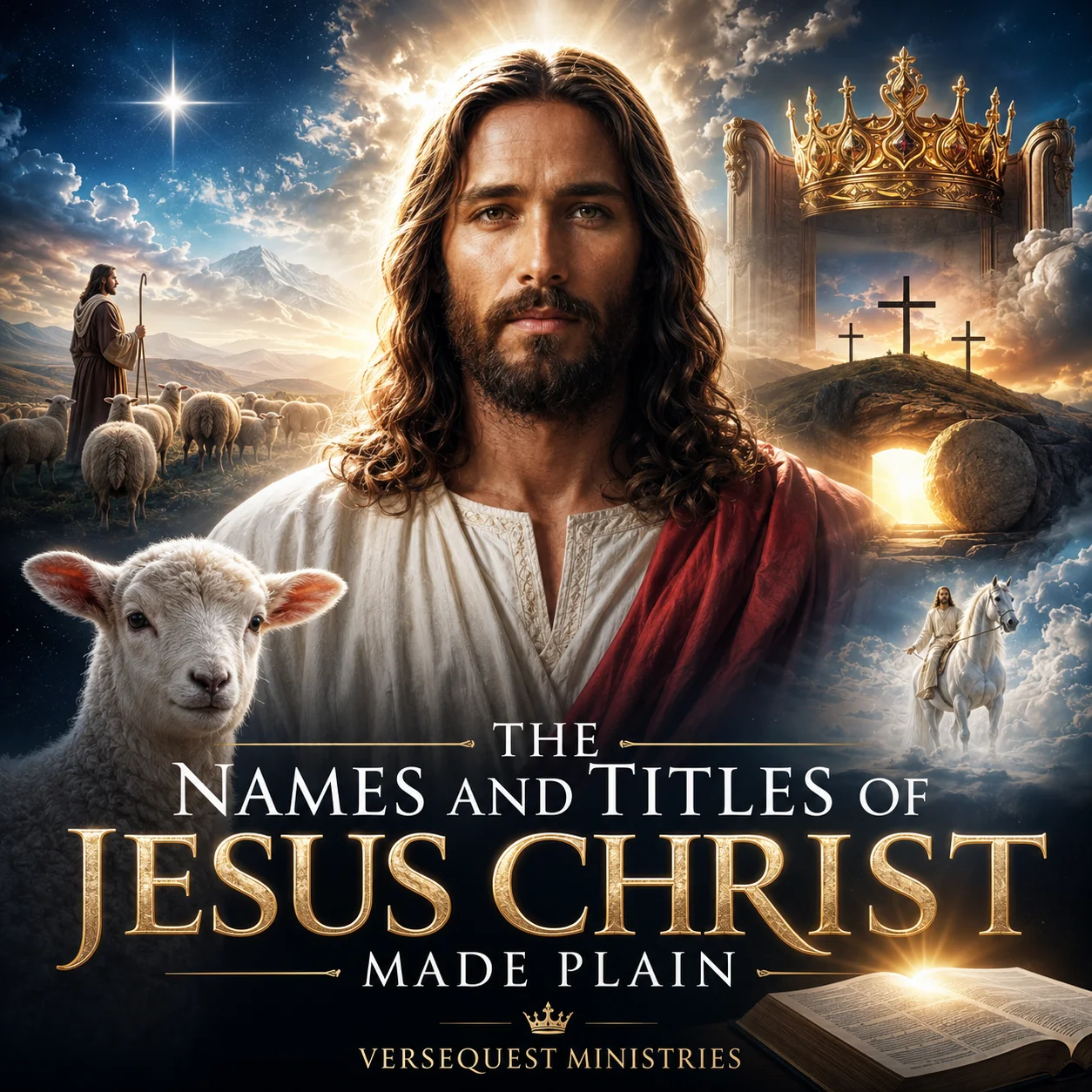
- The Names and Titles of Jesus Christ Made Plain
- A complete 100-essay KJV Bible study on the names and titles of the Lord Jesus Christ, showing His deity, humanity, blood atonement, resurrection, priesthood, headship over the Church, shepherd care,…
- $29.99
- Add to cart
-
-
Jesus Christ / Christology
-
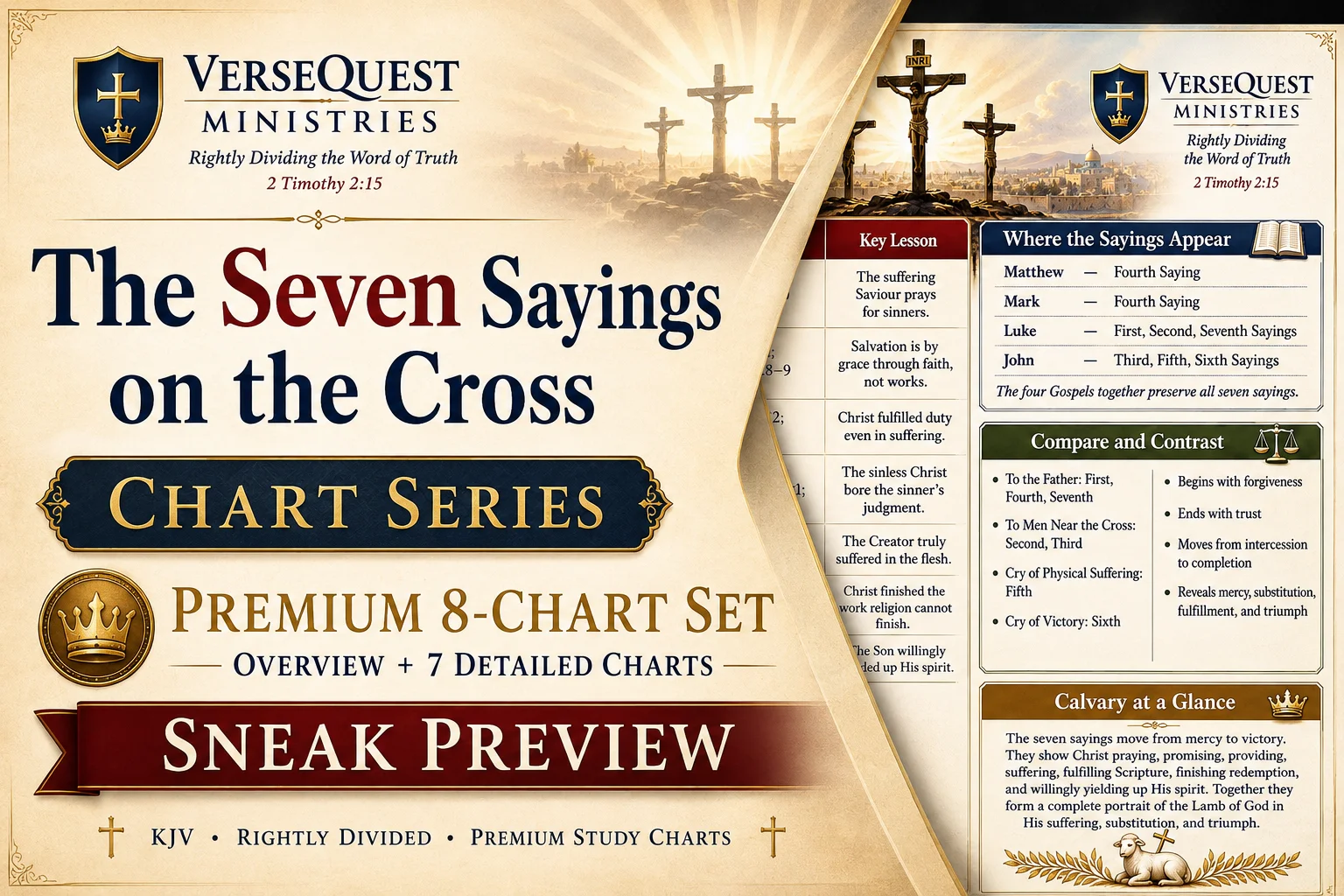
- The Seven Sayings on the Cross – Premium 8-Chart KJV Study Set
- A premium VerseQuest Ministries digital PDF study set on The Seven Sayings on the Cross, featuring an overview chart plus seven detailed KJV Bible study charts. This resource examines Calvary,…
- $12.99
- Add to cart
-