
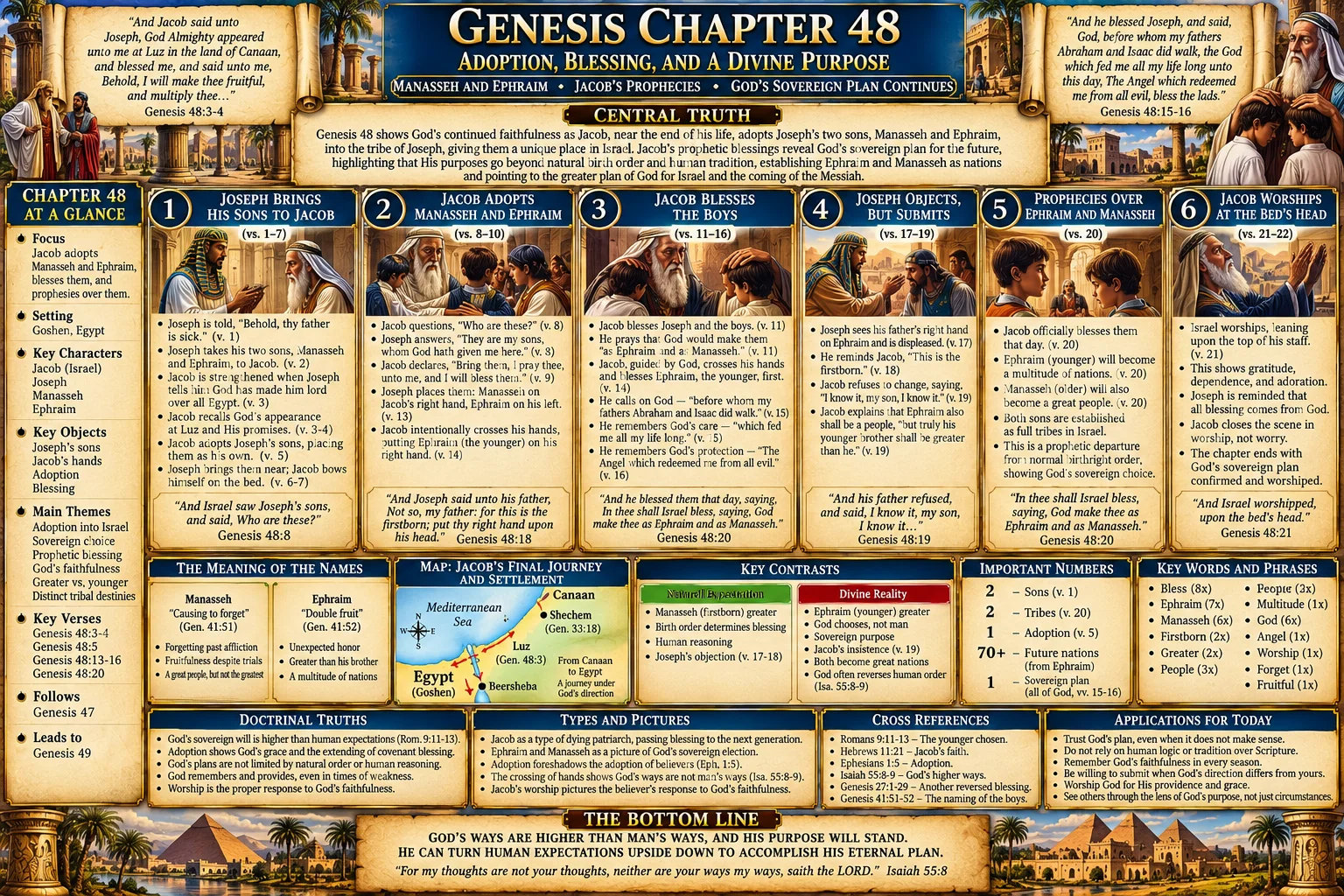
Genesis 48 – Jacob Blesses Ephraim and Manasseh: Joseph’s Sons Given Tribal Standing, the Crossed Hands, and God’s Sovereign Choice (KJV Bible Study Chart)
Explore Genesis 48 with this detailed KJV Bible study chart tracing Jacob’s final blessing upon Joseph’s sons, Ephraim and Manasseh. See Jacob recall God Almighty’s promises at Luz, receive Joseph’s two sons as his own, deliberately cross his hands, and place the greater blessing upon younger Ephraim rather than firstborn Manasseh. The chart also examines Jacob’s testimony concerning “the God which fed me all my life long” and “the Angel which redeemed me from all evil,” the future tribal significance of Ephraim and Manasseh, and Jacob’s assurance that God will bring his descendants again to the land of their fathers. Ideal for Bible study, Sunday school, homeschool, sermon preparation, tribal studies, covenant teaching, family discipleship, and studies of God’s sovereign purpose.
$4.99
Description
Genesis 48: Adoption, Blessing, and a Divine Purpose is a detailed KJV Bible study chart examining Jacob’s final blessing upon Joseph’s sons, Ephraim and Manasseh, shortly before Jacob’s death. The chapter reaches backward to God’s promises at Luz, looks forward to the development of Israel’s tribes, and demonstrates that divine purpose is not controlled by normal human expectations concerning birth order or inheritance.
Joseph receives word that his father is sick and brings Manasseh and Ephraim to him. Though Jacob’s physical strength is failing and his eyesight is dim, his spiritual understanding remains active. Jacob recalls how God Almighty appeared to him at Luz in Canaan, blessed him, and promised fruitfulness, multiplied descendants, and the land as an everlasting possession.
Jacob then makes a remarkable declaration concerning Joseph’s two sons: “Ephraim and Manasseh… are mine; as Reuben and Simeon, they shall be mine.” By receiving them in this manner, Jacob gives the two sons a distinct place among Israel’s tribal inheritance. Joseph therefore receives an extraordinary double portion through his sons.
When Jacob prepares to bless the boys, Joseph carefully places Manasseh, the firstborn, toward Jacob’s right hand and Ephraim toward his left. Jacob deliberately crosses his hands, however, placing his right hand upon the younger Ephraim and his left upon Manasseh.
Jacob invokes “God, before whom my fathers Abraham and Isaac did walk,” “the God which fed me all my life long unto this day,” and “the Angel which redeemed me from all evil.” His words look across an entire lifetime of divine preservation and acknowledge that the same God who guided him will bless the next generation.
Joseph believes his father has made a mistake and attempts to move Jacob’s hands. Jacob refuses, saying, “I know it, my son, I know it.” Manasseh will become a great people, but Ephraim will become greater, and his seed will become “a multitude of nations.” God’s choice deliberately overturns the expected order.
Jacob then declares that Israel will bless by saying, “God make thee as Ephraim and as Manasseh.” He also assures Joseph that although Jacob is dying, God will remain with the family and bring them again to the land of their fathers.
Genesis 48 therefore joins covenant memory, generational blessing, sovereign choice, and future hope. Jacob’s body is failing, but God’s promises are not. The aged patriarch passes forward what he has learned: God feeds, preserves, redeems, chooses, and remains faithful across generations.
Genesis 48, Jacob, Israel, Joseph, Ephraim, Manasseh, Joseph’s sons, Jacob blesses Ephraim and Manasseh, crossed hands, younger over elder, firstborn blessing, tribal standing, double portion, God Almighty, Luz, Bethel, land promise, the God who fed Jacob, Angel who redeemed Jacob, sovereign choice, generational blessing, covenant promise, Israel’s tribes, future inheritance
Genesis 48 takes place near the end of Jacob’s life. Joseph learns that his father is sick and brings Manasseh and Ephraim before him. Though Jacob’s eyesight and physical strength are failing, the chapter presents him as spiritually alert and deeply conscious of God’s covenant promises.
Jacob begins by remembering God’s appearance at Luz, later called Bethel. He recalls that God Almighty promised to make him fruitful, multiply him, produce a multitude from him, and give the land to his seed for an everlasting possession. His final blessings therefore rest not on sentiment but upon revelation already received from God.
Jacob then tells Joseph concerning Ephraim and Manasseh, “they are mine; as Reuben and Simeon, they shall be mine.” The word adoption does not appear in the verse, but it accurately describes Jacob’s action in giving Joseph’s sons direct standing among his own sons. This produces Joseph’s distinctive double tribal portion in Israel.
Joseph arranges Manasseh, the firstborn, toward Jacob’s right hand and Ephraim toward his left. Jacob intentionally crosses his hands and places the right hand upon Ephraim. The action is deliberate rather than the mistake of an elderly man.
Jacob’s blessing contains a beautiful summary of his lifelong experience with God. He speaks of the God before whom Abraham and Isaac walked, “the God which fed me all my life long unto this day,” and “the Angel which redeemed me from all evil.” Jacob has known deception, exile, family conflict, bereavement, famine, and fear, yet at the end he testifies to divine provision and preservation.
Joseph objects to the crossed hands and attempts to correct his father. Jacob responds, “I know it, my son, I know it.” Manasseh will indeed become great, but Ephraim will become greater. Once again in Genesis, God’s purpose does not automatically follow natural birth order. Isaac rather than Ishmael, Jacob rather than Esau, and now Ephraim rather than Manasseh demonstrate that covenant history advances according to God’s sovereign purpose.
Jacob then establishes Ephraim and Manasseh as a future blessing formula within Israel: “God make thee as Ephraim and as Manasseh.” The chapter looks beyond the individual boys toward the tribes that will descend from them.
Genesis 48:21–22 does not record Jacob worshipping at the bed’s head. Jacob instead tells Joseph, “Behold, I die: but God shall be with you, and bring you again unto the land of your fathers,” and grants him one portion above his brethren. Hebrews 11:21 separately remembers Jacob worshipping “upon the top of his staff.”
Genesis 48 therefore closes with confidence beyond death. Jacob is passing away, but the covenant God remains. The patriarch dies looking toward the land, the tribes, and promises that extend far beyond his own lifetime.
Genesis 48 is useful for teaching God’s faithfulness across generations, the importance of passing spiritual truth to children and grandchildren, the difference between human expectation and divine sovereignty, and confidence in God when physical strength is failing. Jacob’s testimony concerning the God who fed him throughout his life provides a powerful model of looking backward with gratitude while speaking forward in faith. The chapter is especially useful for personal Bible study, Sunday school, homeschool instruction, Bible institutes, sermon preparation, family discipleship, generational-faith studies, tribal studies, covenant teaching, and lessons on blessing, inheritance, providence, and God’s sovereign purposes.
King James Bible, Strong’s Concordance, Thompson Chain-Reference Bible, Treasury of Scripture Knowledge, Nave’s Topical Bible, Genesis 41–50 study notes, Jacob life timeline, Joseph genealogy charts, Ephraim and Manasseh tribal studies, twelve tribes of Israel charts, Abrahamic covenant resources, Deuteronomy 33 tribal blessing studies, Joshua 16–17 maps, Hebrews 11 studies, Romans 9 sovereignty studies, firstborn and inheritance studies, VerseQuest Genesis charts
Related products
-
Heaven
-
- The Doctrine of Heaven Made Plain — 599-Page KJV Bible Study PDF
- A massive 599-page KJV, rightly divided study on heaven, covering the present heaven, resurrection body, Rapture, Millennium, New Jerusalem, eternal state, hard questions, funeral lies, and cult errors.
- $34.99
- Add to cart
-
-
Doctrine Series
-
- The Lost Tribes Myth Exposed (213-Page Premium Study)
- A 213-page premium KJV study exposing the Lost Tribes myth, tribal identity errors, prophecy abuse, race theories, and false Israel claims through 35 detailed essays.
- $24.99
- Add to cart
-
-
Bible Overview Series
-
- The New Jerusalem Made Plain — 621-Page PDF Study
- The New Jerusalem Made Plain is a massive 621-page KJV/rightly divided PDF study on the literal holy city revealed in Revelation 21–22. This 100-essay book makes the New Jerusalem plain…
- $34.99
- Add to cart
-
-
Bible Prophecy Charts
-
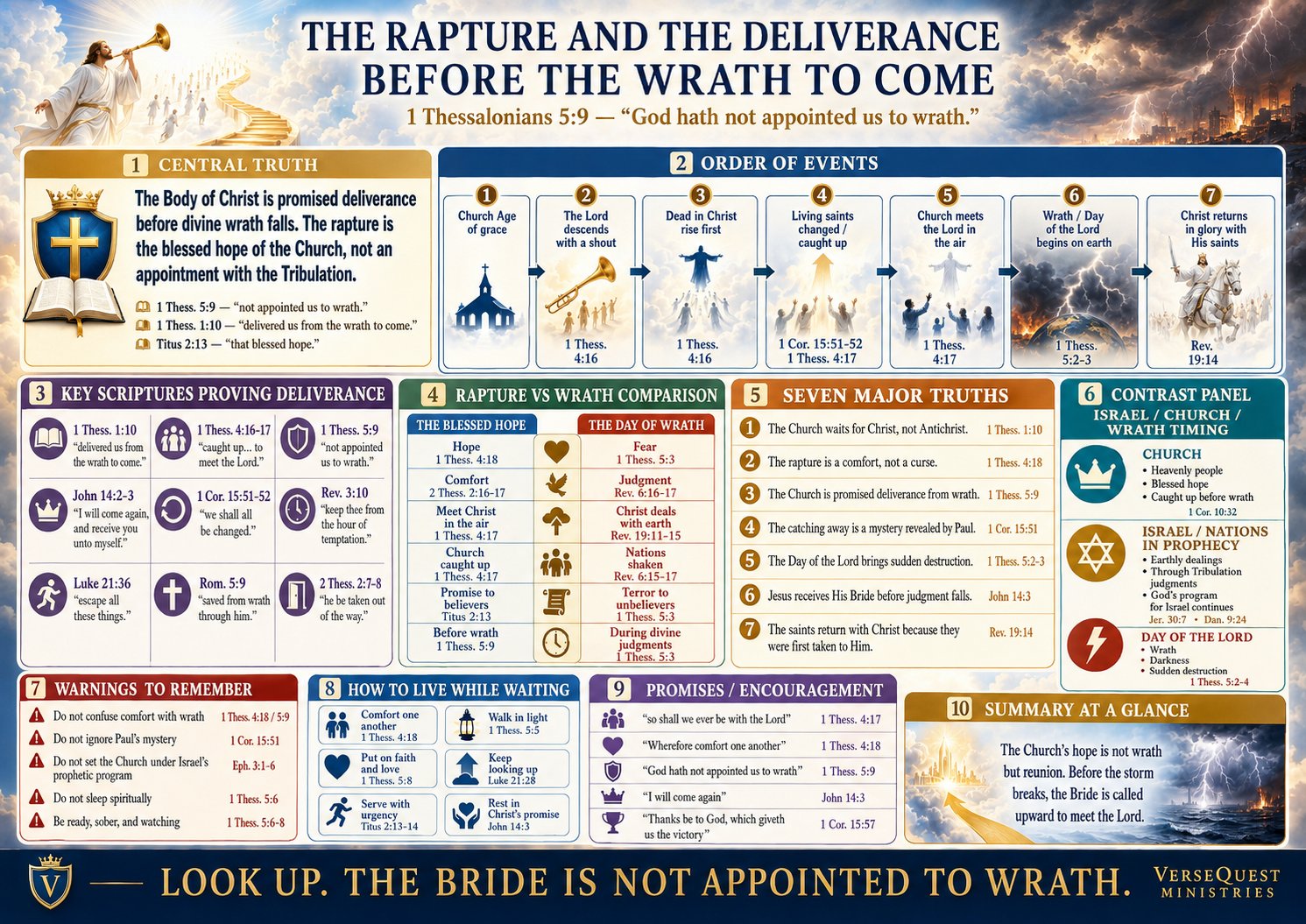
- The Rapture and the Deliverance Before the Wrath to Come – Printable Bible Study Chart
- Printable KJV Bible study chart on The Rapture and the Deliverance Before the Wrath to Come, showing from 1 Thessalonians 5:9 that the Church is not appointed to wrath. This…
- $4.99
- Add to cart
-
-
Doctrine Series
-
-14%
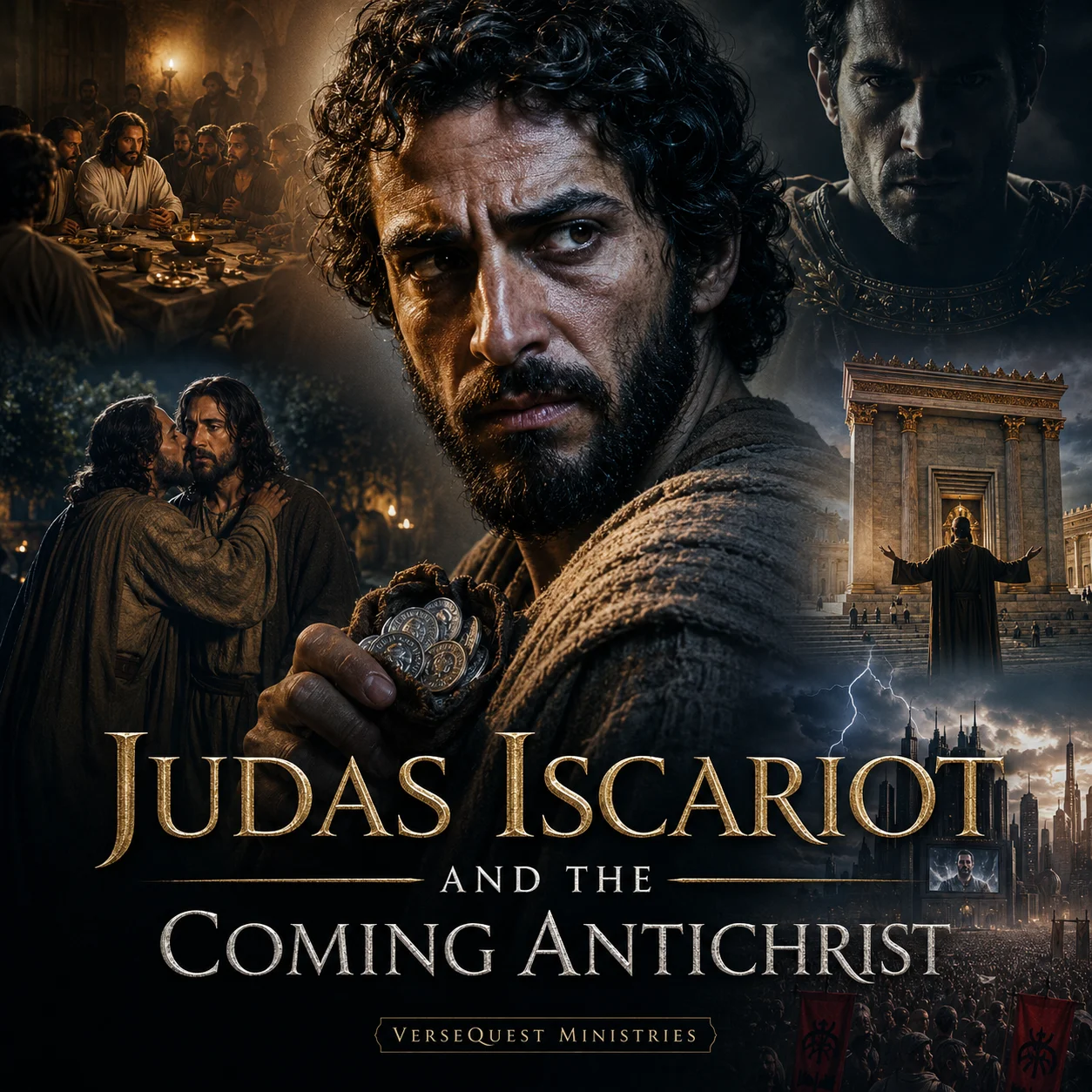
- Judas Iscariot and the Coming Antichrist – Premium KJV Prophecy Study
- A massive 459-page premium KJV prophecy study tracing the biblical connection between Judas Iscariot, the son of perdition, and the coming Antichrist. This detailed VerseQuest Ministries PDF examines Judas’ betrayal,…
- Original price was: $34.99.$29.99Current price is: $29.99.
- Add to cart
-
-14%