
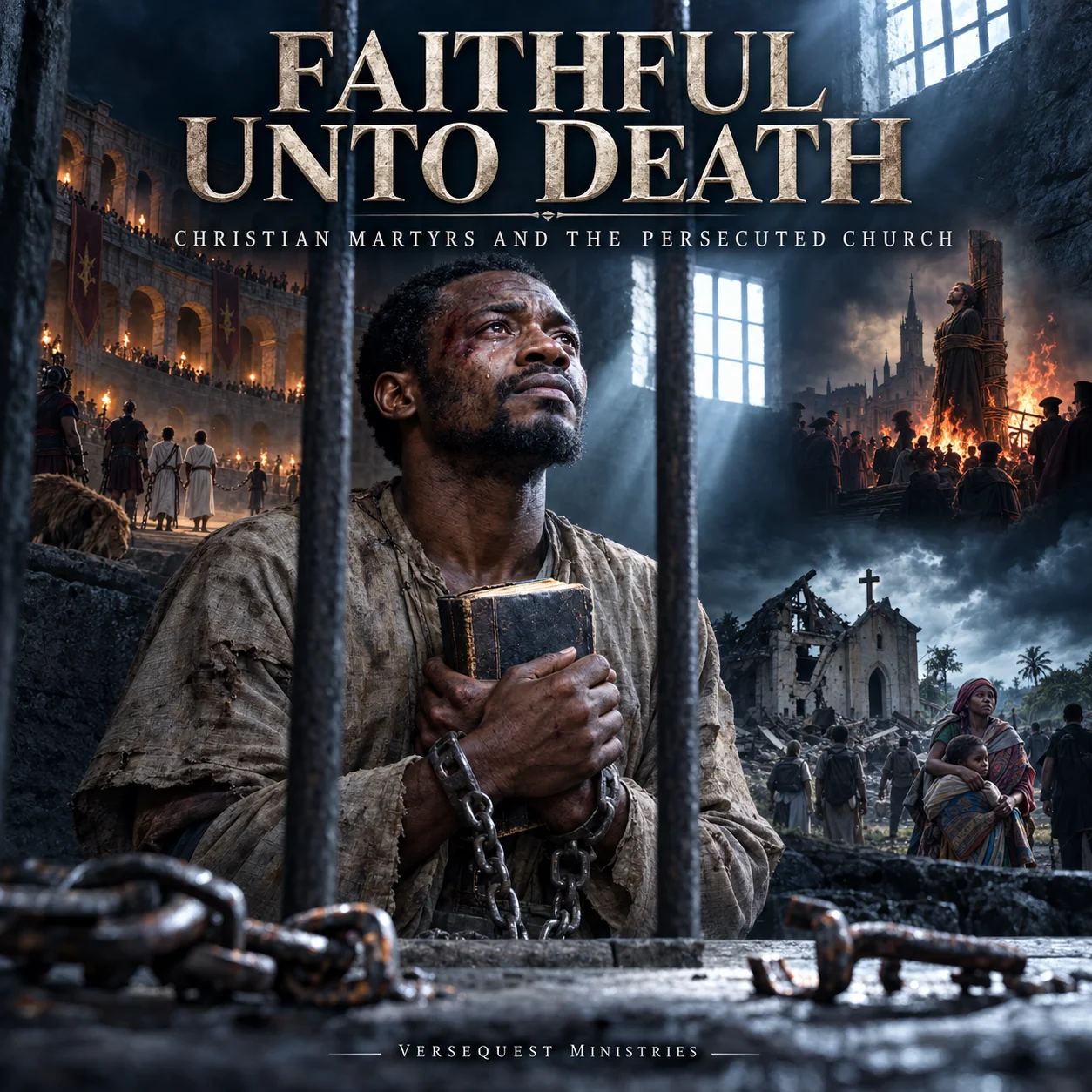
Faithful Unto Death: Christian Martyrs and the Persecuted Church — 519-Page PDF Book
Faithful Unto Death: Christian Martyrs and the Persecuted Church is a 519-page downloadable PDF book containing an introduction, 60 substantial essays, a thorough conclusion, and a detailed study chart. It examines the biblical definition of martyrdom, the persecution of believers throughout Church history, and the continuing suffering of Christians around the world.
Beginning with Stephen and the apostles, the book moves through Roman persecution, the medieval period, the Reformation, Anabaptist suffering, Communist oppression, and modern persecution in Africa, Asia, and the Middle East. It carefully distinguishes Christian martyrdom from political casualty, suffering for Christ from payment for sin, and Church-Age persecution from the future Great Tribulation.
Written from a Bible-believing, KJV-centered, dispensational perspective, this resource is designed for serious Bible students, pastors, teachers, preachers, families, Church-history readers, and believers who desire to remember those in bonds. The complete 519-page PDF is available for $29.99.
$29.99
Description
Faithful Unto Death: Christian Martyrs and the Persecuted Church is a comprehensive 519-page downloadable PDF book examining the biblical meaning, historical record, doctrinal significance, and continuing reality of Christian martyrdom and persecution. Across 60 substantial essays, this study travels from the blood of Stephen in the book of Acts to believers suffering beneath religious extremism, political tyranny, Communist surveillance, and hostile governments in the modern world. It is not merely a collection of tragic stories. It is a Bible-centered examination of why the world hateth the saints, what distinguishes a true Christian martyr from other casualties, and how believers should remember those who suffer for the name of Jesus Christ.
The book begins by establishing a careful biblical definition of martyrdom. Not every religious person who dies tragically is a Christian martyr, and not every courageous political reformer killed by an enemy died for the testimony of Jesus Christ. The opening studies distinguish the murdered martyr, the suffering confessor who survives, and the casualty whose death cannot clearly be attributed to his Christian faith. Stephen serves as the controlling Church-Age example: a Spirit-filled believer whose testimony concerning Jesus Christ and the word of God brought him before hostile religious authorities and ultimately cost him his life.
Special attention is given to the absolute uniqueness of the Lord Jesus Christ. He was more than a martyr, moral teacher, political victim, or example of courageous sacrifice. He was the sinless Son of God and Lamb of God who deliberately laid down His life as the substitutionary sacrifice for sinners. His blood did not merely inspire men; it purchased redemption. His death, burial, and bodily resurrection constitute the finished work of salvation. The sufferings of Christians may glorify the Saviour and bring reward for faithful service, but no martyr’s blood can add merit to the blood of Christ, pay for sin, or purchase eternal life.
The biblical foundation continues through the persecution of the apostles, the marks borne by Paul, Christ’s message to the suffering church at Smyrna, and the command to remember believers in bonds. The book carefully distinguishes Church-Age persecution from the future Great Tribulation. Christians have suffered tribulation at the hands of wicked men since the first century, but those afflictions do not place the Body of Christ inside Daniel’s seventieth week or the time of Jacob’s trouble. The Church is promised persecution from the world, but it is not appointed to the prophetic wrath that God will pour upon a Christ-rejecting world.
The historical studies follow Christian witnesses through the Roman Empire, the medieval period, the Reformation, the Anabaptist struggles, colonial religious establishments, modern Communist regimes, and contemporary persecution. Readers will encounter James killed with the sword, Nero’s terror, the martyrs of Lyons and Vienne, Perpetua and Felicitas, Polycarp, Ignatius, Justin Martyr, the Decian crisis, and Diocletian’s war against the Scriptures. The book then considers the Waldenses, Albigenses, Inquisition, John Wycliffe, John Huss, Jerome of Prague, William Tyndale, the fires of Smithfield, the Huguenots, and numerous believers imprisoned, drowned, burned, banished, or dispossessed for refusing to place religious institutions above Scripture.
The Reformation-era studies do not turn historical figures into stained-glass saints or accept every inherited tradition without examination. The bravery of a persecuted individual does not make every doctrine he held correct. The Waldenses, Anabaptists, Reformers, Baptists, Quakers, and other religious dissenters are considered honestly beneath the final authority of the King James Bible. The book also confronts the terrible historical cycle in which persecuted movements acquired political power and began persecuting others. Whenever a church reaches for Caesar’s sword to enforce spiritual conformity, it confesses that its religious machinery cannot accomplish what the Holy Ghost does through the word of God.
The modern portion of the book examines the Soviet war against God, Richard Wurmbrand’s years of Communist torture, Brother Yun’s testimony from China, and the hidden existence of believers in North Korea. It considers China’s digital surveillance of independent churches, deadly attacks against Christian communities in Nigeria, advancing jihad across the Sahel, civil war and religious pressure in Sudan, authoritarian imprisonment in Eritrea, the dangers facing converts in Somalia, anti-conversion laws in India, and blasphemy accusations and state pressure in Pakistan and Iran. Particular attention is given to the frequently hidden suffering of Christian women and children, including widowhood, orphanhood, abduction, forced marriage, sexual violence, family rejection, and economic exclusion.
This book does not romanticize pain, encourage believers to seek persecution, or teach that suffering keeps anyone saved. Salvation is the free gift of God, received by grace through faith in the finished work of Jesus Christ. Faithfulness in suffering belongs to discipleship and service, not justification. The believer may receive reward for faithful endurance at the Judgment Seat of Christ, but imprisonment, torture, and martyrdom can never become additional payments for sin.
The concluding appeal returns to Hebrews 13:3: “Remember them that are in bonds, as bound with them.” Persecuted believers must not become dramatic stories that comfortable Christians admire momentarily before returning unchanged to ordinary life. Their testimony should produce prayer, humility, doctrinal courage, sacrificial assistance, evangelistic urgency, and practical remembrance. The book concludes with a detailed illustrated study chart summarizing the biblical definition of martyrdom, the reasons Christians are persecuted, the distinction between persecution and the Great Tribulation, major periods of martyrdom, and the responsibilities of believers today.
For $29.99, the purchaser receives the complete 519-page downloadable PDF book, containing the introduction, all 60 essays, the series conclusion, and the detailed study chart. It is designed for pastors, preachers, Bible teachers, Sunday school instructors, ministry leaders, families, students of Church history, and serious Christians who want to understand both the price believers have paid throughout history and the responsibility the free Church bears toward those still suffering today.
state could manufacture Christians. Courage, Failure, Repentance, and Restoration: The book honestly examines witnesses who stood immediately and others who recanted under pressure before recovering their testimony. The Persecuted Becoming Persecutors: Historical examples warn that yesterday’s victim may employ the same machinery of coercion after gaining power. Communism and Atheistic State Control: Soviet, Romanian, Chinese, and North Korean persecution illustrates the attempt to replace loyalty to God with total loyalty to the state. Contemporary Persecution: Modern chapters examine Nigeria, the Sahel, Sudan, Eritrea, Somalia, India, Pakistan, Iran, China, and North Korea. The Hidden Suffering of Women and Children: The book recognizes family separation, widowhood, orphanhood, sexual violence, forced marriage, abduction, and economic punishment. Historical Discernment: Courage under persecution is honored without treating every martyr tradition, supernatural claim, doctrine, or denominational interpretation as infallible. The Responsibility of the Free Church: Believers are called to informed prayer, sacrificial support, careful advocacy, discretion, spiritual solidarity, and faithful remembrance.
Central Argument: Christian martyrdom must be defined by the Bible before it is interpreted through tradition, politics, denominational loyalty, or sentimental history. A Christian martyr is a believer whose life is taken because of his testimony to Jesus Christ, the gospel, or the word of God. Violent death alone does not establish martyrdom. A person may die courageously for a political cause, humanitarian mission, national interest, religious institution, or social reform without meeting the biblical definition developed in this study.
Christ Stands Alone: Jesus Christ must never be reduced to the first Christian martyr. He was the sinless Lamb of God who willingly laid down His life for sinners. His death was substitutionary, redemptive, and sufficient. He was buried and rose bodily from the dead. Christian martyrs testify to His finished work; they do not repeat, supplement, or improve it. The blood of a martyr may seal a testimony, but only the blood of Jesus Christ cleanses from sin.
Stephen Establishes the Pattern: Acts 6 and 7 demonstrate that martyrdom grows out of faithful testimony. Stephen was full of faith, power, wisdom, and the Holy Ghost. His enemies could not answer his preaching, so they manufactured accusations, stirred the people, and used violence where argument had failed. He died calling upon the Lord Jesus and praying for his murderers. His death also stood in the background of Saul’s later conversion and ministry.
Death and Deliverance Are Both Under God’s Hand: Acts 12 records James being killed and Peter being delivered. The difference does not prove that James possessed less faith or that Peter deserved more protection. Divine faithfulness cannot be measured solely by whether a believer escapes earthly suffering. God may deliver His servant from death, through death, or by resurrection after death. In every case, the persecutor’s authority remains temporary.
Salvation Must Be Distinguished From Service: A believer does not remain saved by enduring persecution. Justification rests upon the finished work of Christ and is received by grace through faith. Martyrdom may be connected with reward, testimony, and faithful service, but it cannot purchase salvation. Failure under pressure may bring shame, loss, or damaged testimony, but human courage is not the foundation of eternal security.
Tribulation Is Not Always the Great Tribulation: Christians have experienced tribulation throughout the Church Age, but persecution from men must not be confused with the future wrath of God. The Great Tribulation belongs to Israel’s prophetic program and includes the man of sin, the Beast, the Mark, supernatural judgments, and the time of Jacob’s trouble. Newspaper reports of suffering do not possess authority to rewrite dispensational distinctions.
Civil Authority Has Limits: Christians are commanded to respect lawful authority, pray for rulers, pay tribute, and live peaceably. Those commands do not require worshiping Caesar, denying Christ, surrendering Scripture, or obeying laws that forbid the gospel. “We ought to obey God rather than men” establishes the boundary. Government may control property, movement, employment, and even the body, but it possesses no rightful throne over the conscience.
Persecution Often Begins With Words: Before prisons fill, language changes. Believers are described as enemies of society, haters of humanity, criminals, extremists, traitors, corrupters of youth, or obstacles to progress. Rome used accusations before it used arenas. Medieval authorities used the word “heretic” before confiscating property and lighting fires. Communist states used political labels before opening labor camps. Propaganda prepares ordinary people to tolerate extraordinary cruelty.
Possessing Scripture Threatens Religious Monopoly: Diocletian’s attack upon Christian books, Rome’s opposition to vernacular Scripture, and the execution of translators such as William Tyndale demonstrate that persecutors understand the power of the written word. A chained Bible produces a manageable population. An open Bible gives ordinary people a standard by which to judge priests, rulers, councils, customs, and religious claims.
Religious Institutions Can Become Persecutors: The end of Roman persecution did not eliminate coercion. Imperial favor brought opportunities for churches to use state power against dissenters. Catholic authorities persecuted those labeled heretics, but Protestant authorities also punished Anabaptists, Baptists, Quakers, and theological opponents. Changing the sign over the building does not sanctify the prison beneath it.
Persecution Does Not Prove Every Doctrine: Suffering can authenticate the sincerity of a person’s conviction, but it cannot make that conviction scriptural. Martyrs and confessors must be honored honestly without accepting every sacramental, ecclesiastical, mystical, philosophical, charismatic, pacifist, or denominational conclusion associated with them. Scars prove that a person suffered. Scripture determines what a Christian should believe.
Failure Is Not Always the Final Chapter: Some believers stood immediately; others collapsed beneath fear, torture, isolation, or threats against their families. Peter denied Christ and was restored. Jerome of Prague and Thomas Cranmer recanted before later repudiating their recantations. These accounts neither excuse compromise nor deny grace. They reveal that Christian courage is not natural fearlessness but dependence upon God in the face of genuine weakness.
Modern Persecution Takes Different Forms: Persecution may arrive through execution, torture, imprisonment, forced labor, church destruction, displacement, confiscation, surveillance, registration laws, digital monitoring, mob violence, family pressure, anti-conversion laws, or blasphemy accusations. The machinery differs from country to country, but the objective remains familiar: silence Christian testimony, control the conscience, or force believers to submit to another authority.
Women and Children Often Bear Hidden Wounds: Statistics concerning arrests and deaths may conceal the suffering that follows an attack. A murdered pastor leaves a widow and children. An imprisoned convert may leave a family without income. Girls may face abduction, forced marriage, coerced conversion, or sexual violence. Children may be denied education, separated from parents, or punished for a family member’s faith. Remembering persecuted Christians requires seeing the entire household, not merely the most visible victim.
The Free Church Has Responsibilities: Hebrews 13:3 does not permit detached sympathy. Believers should seek accurate information, pray intelligently, support trustworthy ministries, protect sensitive identities, assist displaced families when possible, and refuse to forget suffering members of Christ’s Body. Advocacy must be careful rather than sensational. Help that exposes an underground believer’s identity can become another instrument in the persecutor’s hand.
Important Questions for Further Study: What biblical evidence distinguishes a martyr from another casualty? How should Christians respond when government commands disobedience to God? What is the difference between persecution, ordinary tribulation, and the future Great Tribulation? How should the Church honor courageous historical figures without endorsing their doctrinal errors? When does public advocacy help endangered believers, and when can it place them in greater danger? How can free Christians cultivate faithfulness before severe persecution arrives? What practical steps can a local church take to remember believers in bonds?
Memorable Teaching Point: The persecutor may confiscate a Bible, close a building, chain a preacher, scatter a congregation, and bury a martyr, but he cannot put handcuffs on the word of God. Empires have built prisons for Christians and eventually become exhibits in museums. The Book they tried to burn remains open.
This book can serve as a substantial resource for personal Bible study by helping readers trace the doctrine of persecution through the King James Bible while connecting those passages with real events from Church history. Each essay addresses a distinct person, period, doctrinal question, or geographical region, allowing the reader to study the book consecutively or select individual topics for focused examination.
Pastors and preachers can use the material to prepare sermons concerning Christian courage, suffering, faithfulness, civil authority, religious liberty, the cost of discipleship, the sufficiency of Christ’s atonement, and the believer’s responsibility toward suffering brethren. The historical illustrations can support biblical preaching without replacing Scripture as the final authority.
Sunday school teachers and small-group leaders can organize lessons around the 60 essays, using one study at a time or grouping related chapters into units. Possible units include New Testament martyrdom, Roman persecution, medieval persecution, Reformation-era conflict, Anabaptist suffering, Communist oppression, and present-day persecution.
Families can use selected portions to teach older children and teenagers about the price Christians have paid for possessing the Bible, preaching the gospel, refusing idolatry, practicing believer’s baptism, and maintaining liberty of conscience. Because some accounts involve torture, execution, sexual violence, and severe cruelty, adults should select material appropriate to the maturity of younger readers.
Bible colleges, ministry-training programs, and Church-history classes can use the book as a broad survey of martyrdom while emphasizing the need to test all historical traditions beneath Scripture. It provides opportunities to discuss the difference between historical admiration and doctrinal endorsement, as well as the danger of forcing complicated events into simplistic denominational narratives.
The contemporary chapters can guide prayer meetings and persecuted-Church studies. Churches may assign specific nations or regions for prayer while taking care not to expose endangered believers or repeat unverifiable claims. The concluding chart offers a visual review for teaching, classroom presentation, personal reference, and summary discussion.
A King James Bible with wide margins for recording cross-references and historical notes.
Strong’s Exhaustive Concordance for tracing words related to persecution, tribulation, witness, testimony, suffering, bonds, affliction, endurance, and martyrdom.
A reliable Bible dictionary for historical background concerning Roman government, imprisonment, crucifixion, idolatry, synagogues, Asia Minor, and the cities addressed in Revelation.
A Bible atlas showing the Roman Empire, Paul’s missionary journeys, Asia Minor, medieval Europe, Reformation territories, Africa, China, India, and the Middle East.
A chronological Church-history timeline for placing major persecutions, rulers, councils, movements, and witnesses within their proper periods.
Cross-reference tools for comparing passages concerning persecution without confusing Israel’s prophetic program, the Church Age, and the future Great Tribulation.
Foxe’s Book of Martyrs, consulted with historical and doctrinal discernment.
Martyrs Mirror, especially for Anabaptist accounts, prison letters, confessions, and testimonies.
By Their Blood: Christian Martyrs from the Twentieth Century and Beyond for accounts of modern Christian suffering.
Richard Wurmbrand’s Tortured for Christ as a firsthand testimony concerning Communist imprisonment and underground ministry.
Brother Yun’s The Heavenly Man, read with appreciation for his suffering but with all doctrinal and supernatural claims tested by Scripture.
Historical studies of the Roman persecutions, Waldenses, Inquisition, Reformation, Anabaptists, Huguenots, Soviet religious policy, and the modern persecuted Church.
The detailed study chart included at the end of this PDF for reviewing the book’s biblical definitions, historical periods, doctrinal distinctions, and practical applications.
Related products
-
Rightly Divided
-
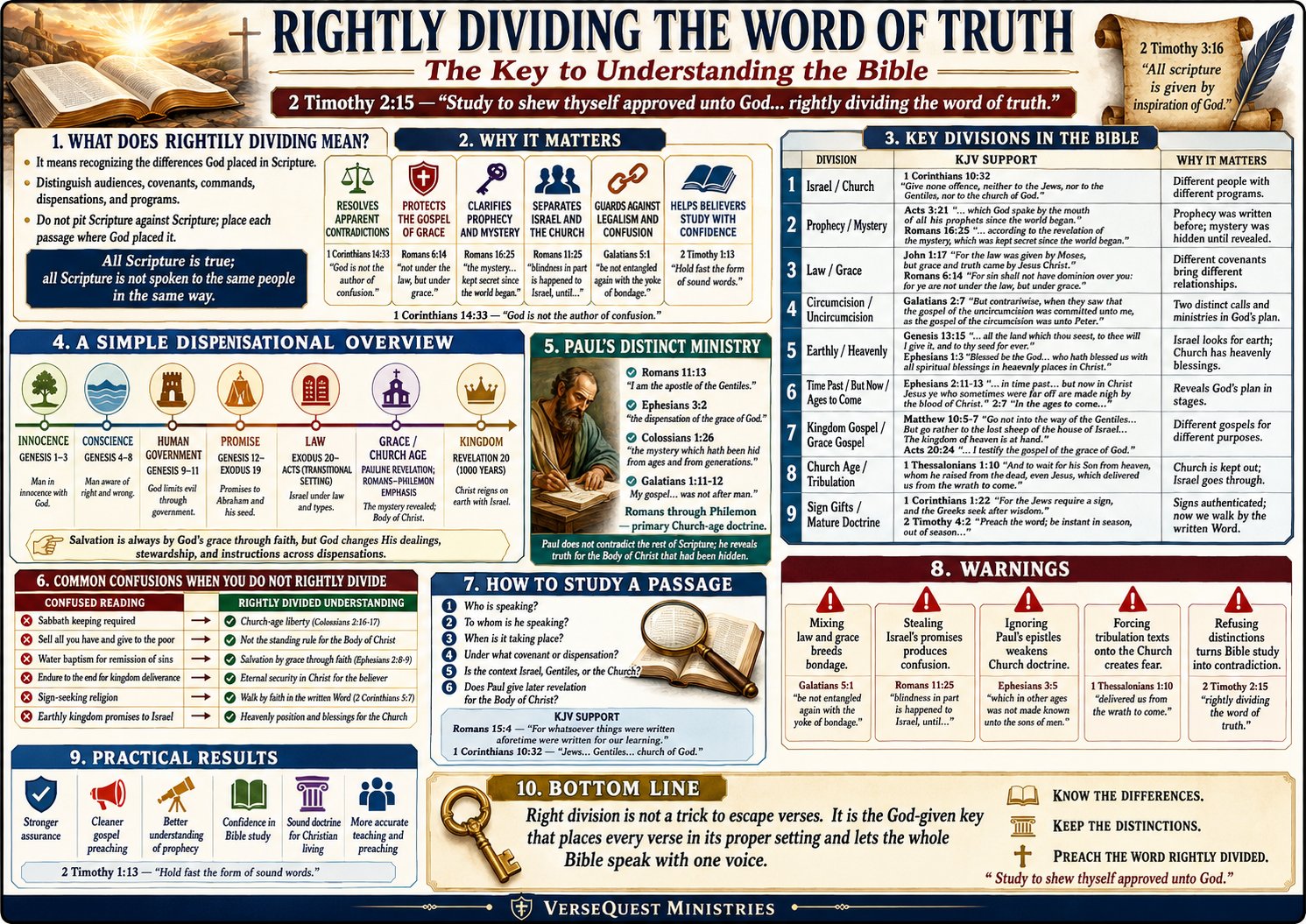
- Rightly Dividing the Word of Truth – KJV Bible Study Chart
- A premium KJV Bible study chart explaining how to rightly divide the word of truth, distinguish key biblical divisions, and study Scripture with clarity and confidence.
- $3.99
- Add to cart
-
-
Doctrine
-
-50%
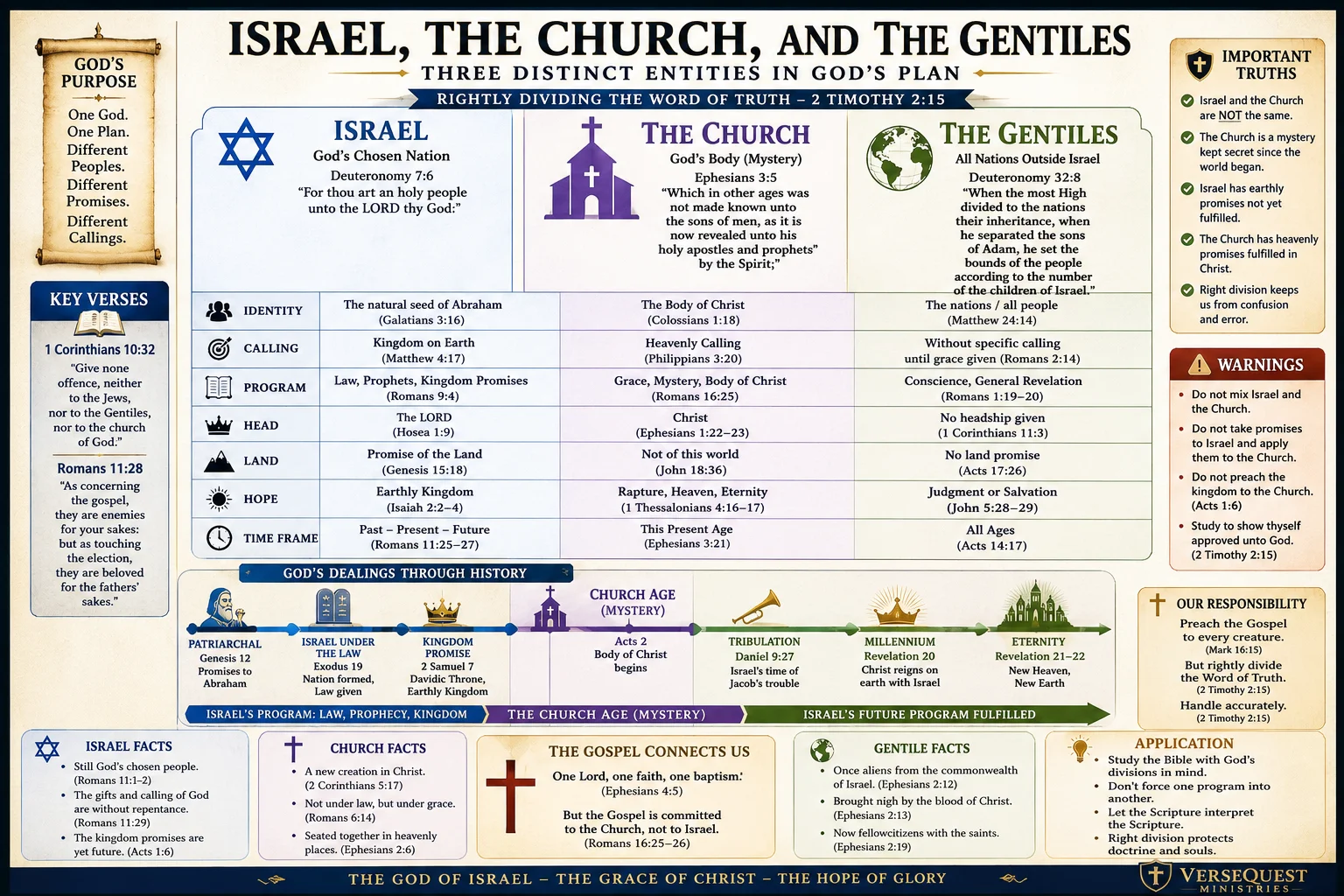
- Israel, the Church, and the Gentiles Chart — KJV Rightly Divided
- Premium printable KJV Bible study chart comparing Israel, the Church, and the Gentiles as three distinct entities in God’s plan. Rightly divided, visually organized, and designed for teaching and personal…
- Original price was: $10.00.$4.99Current price is: $4.99.
- Add to cart
-
-50%
-
Verse-by-Verse Bible Commentaries
-
-75%
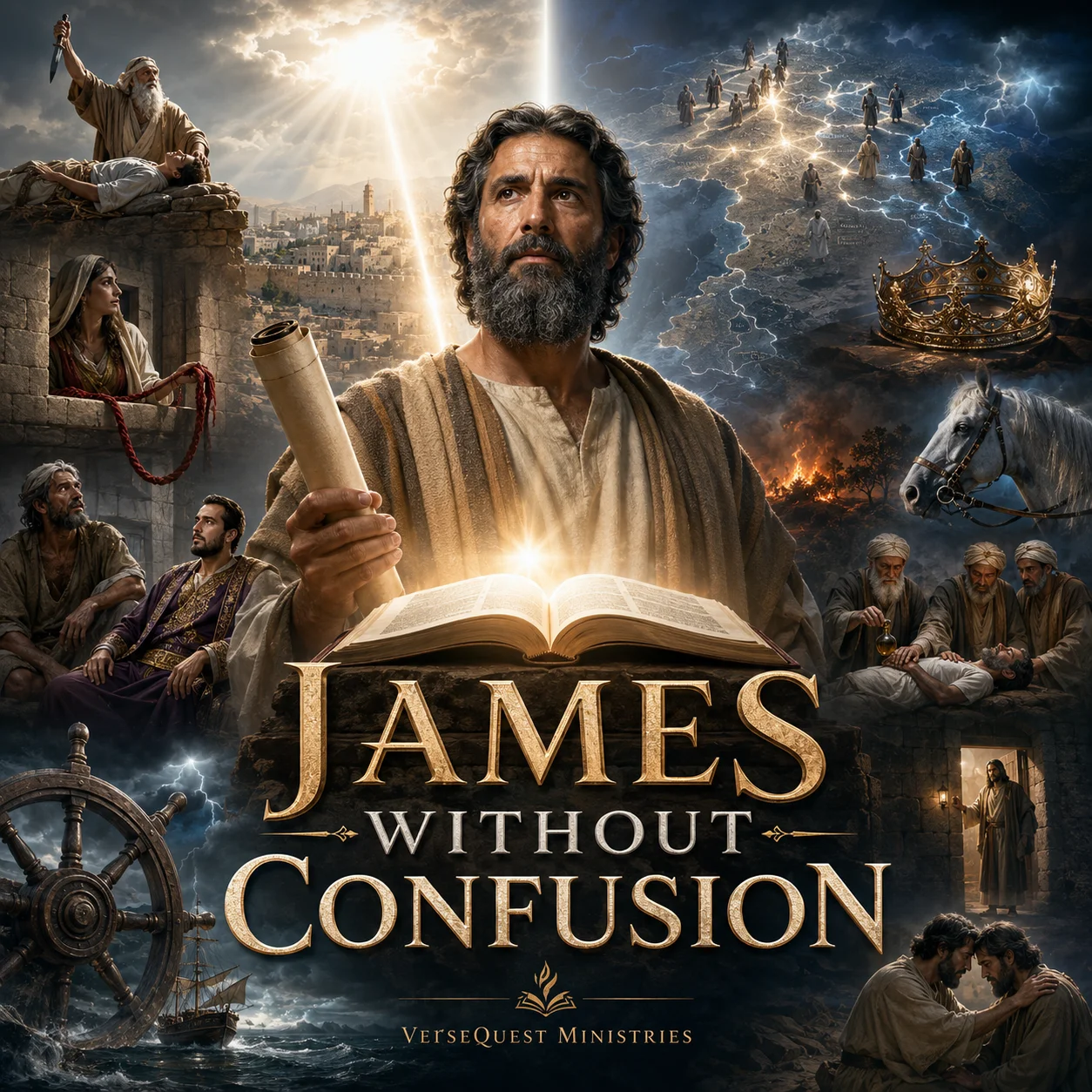
- James Without Confusion: A 120-Study KJV Commentary on Faith, Works, Law, Healing, and Right Division
- James has confused Bible readers, divided theologians, supplied ammunition to Rome, troubled Protestants, and been pushed aside by dispensationalists who did not know what to do with it. James Without…
- Original price was: $39.99.$9.99Current price is: $9.99.
- Add to cart
-
-75%
-
Doctrine
-
-50%
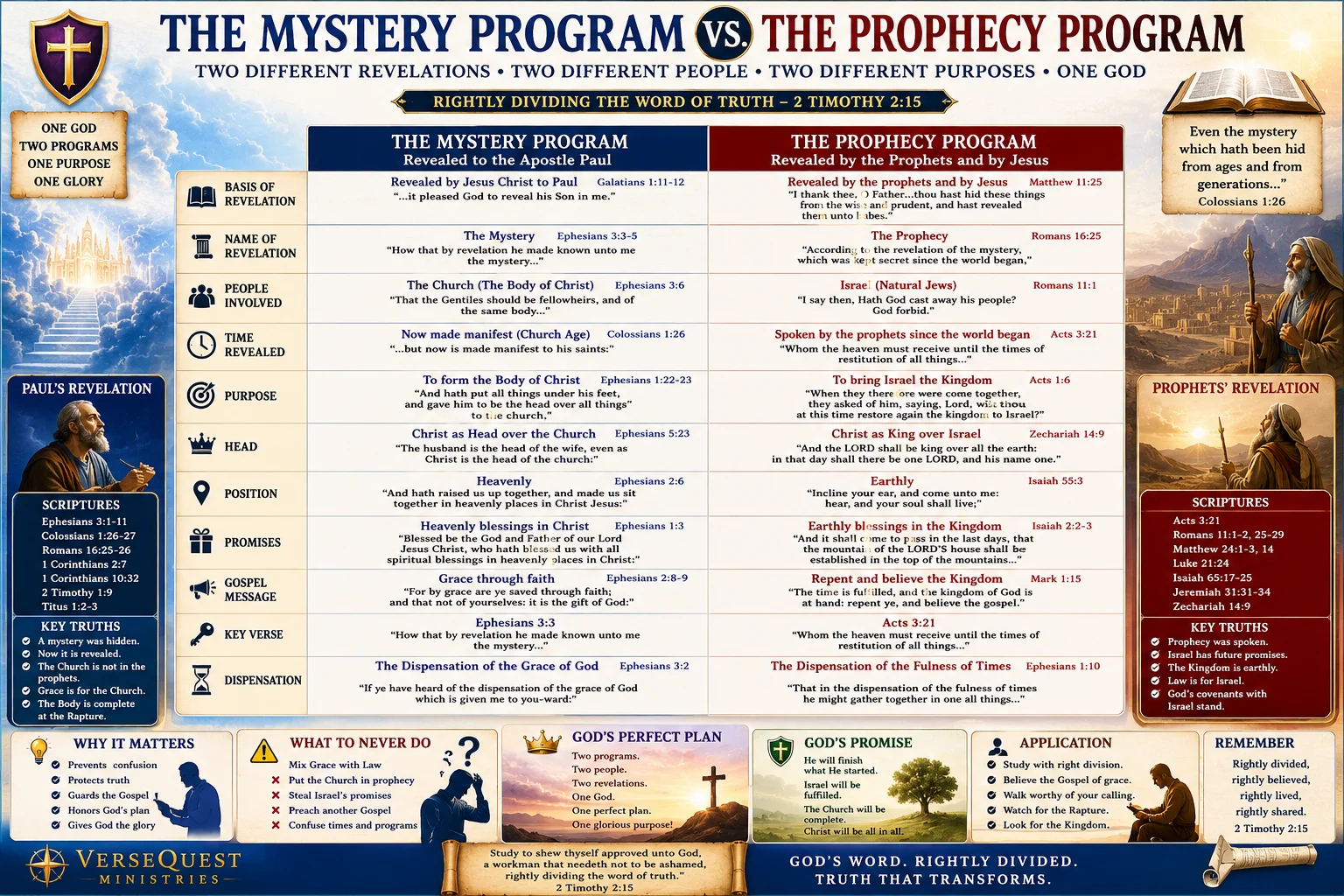
- The Mystery Program vs. Prophecy Program Chart — KJV Rightly Divided
- Premium printable KJV Bible study chart comparing the mystery program revealed through Paul with the prophecy program spoken by the prophets. Rightly divided and designed for teaching and personal study.
- Original price was: $10.00.$4.99Current price is: $4.99.
- Add to cart
-
-50%
-
Bible Prophecy Charts
-
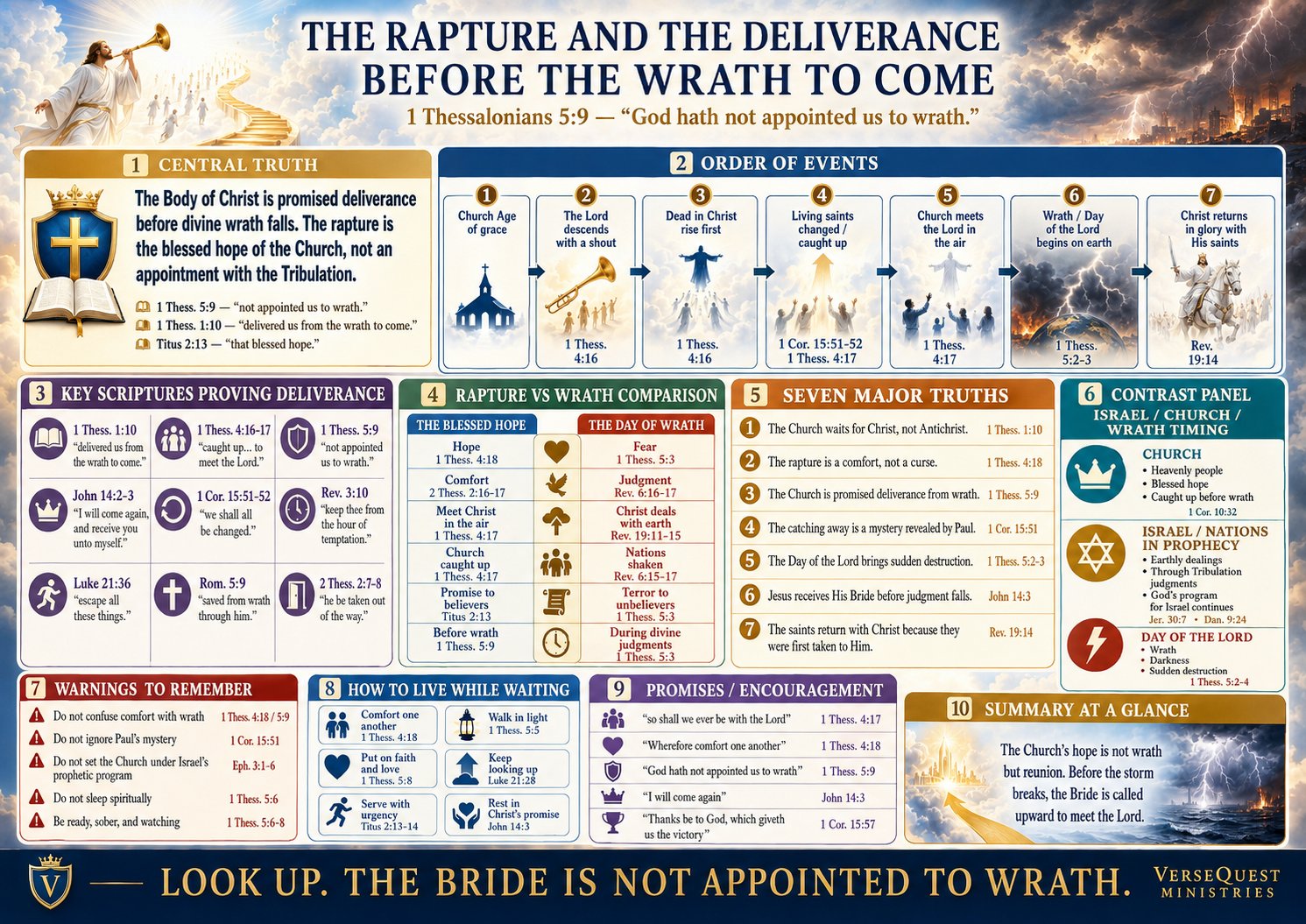
- The Rapture and the Deliverance Before the Wrath to Come – Printable Bible Study Chart
- Printable KJV Bible study chart on The Rapture and the Deliverance Before the Wrath to Come, showing from 1 Thessalonians 5:9 that the Church is not appointed to wrath. This…
- $4.99
- Add to cart
-