
Can a Christian Be Demon-Possessed? (381-Page KJV Bible Study PDF)
Can a Christian be demon-possessed? This comprehensive 381-page VerseQuest Bible study examines every major biblical passage on demon possession, oppression, spiritual warfare, deliverance ministries, the believer’s security, the Holy Spirit, mental illness, the flesh, and satanic attack—all from a King James Bible, rightly divided perspective.
Original price was: $19.99.$9.99Current price is: $9.99.
Description
For decades, Christians have debated one of the most controversial questions in modern theology:
Can a born-again Christian be demon-possessed?
This is not another sensational deliverance manual filled with dramatic stories, speculation, or modern theories. It is a thorough, Scripture-saturated investigation that allows the King James Bible to answer the question.
Across 381 pages, this book carefully examines:
- Every major demon possession account in Scripture
- The strongest arguments both for and against Christian possession
- The indwelling and sealing of the Holy Spirit
- The believer as the temple of God
- Spiritual warfare in the Church Age
- The world, the flesh, and the devil
- Satanic temptation, oppression, deception, hindrance, and accusation
- Deliverance ministries examined biblically
- “Legal rights,” generational curses, soul ties, and open doors
- Mental illness versus genuine spiritual warfare
- Intrusive thoughts, addiction, trauma, and sleep paralysis
- The whole armour of God
- Prayer, fasting, confession, and biblical resistance
- A detailed doctrinal study chart summarizing the entire subject
Rather than relying on experience, emotional stories, or modern ministry trends, every chapter returns to the authority of the King James Bible and rightly divided doctrine.
Whether you are a pastor, Bible teacher, student, missionary, or serious Christian wanting biblical answers, this study provides a careful, balanced, and comprehensive examination of one of the most misunderstood subjects in Christianity today.
Demon possession versus oppression; the indwelling Holy Ghost; the believer as the temple of God; sealing unto the day of redemption; eternal security; spiritual warfare; the world, the flesh, and the devil; temptation, accusation, hindrance, sifting, buffeting, and captivity; the new birth and new creation; spiritual circumcision; divine ownership through the blood of Christ; the whole armour of God; rightly dividing Gospel possession accounts from Church Age doctrine; false deliverance teachings; legal rights, open doors, generational curses, soul ties, haunted objects, and demon interviews; mental illness versus possession; pastoral discernment; personal responsibility; mortification of the flesh; prayer, fasting, confession, forgiveness, resistance, and biblical separation from occult practices.
Can a Christian Be Demon-Possessed? is a 381-page, 50-study examination of demon possession, spiritual warfare, deliverance teaching, and the believer’s security in Christ. The central conclusion is that a genuinely born-again member of the body of Christ cannot be internally inhabited or possessed by a devil because he is indwelt by the Holy Ghost, sealed unto the day of redemption, purchased by Christ’s blood, spiritually joined to the Lord, translated from the power of darkness, and made the temple of God.
The study does not deny the reality of devils, unclean spirits, possession, satanic attack, or spiritual warfare. It examines major biblical possession accounts including the man in the synagogue, Legion, the afflicted child, Mary Magdalene, the woman with the spirit of infirmity, Judas, the damsel with the spirit of divination, and the sons of Sceva. These accounts are compared with Church Age doctrine to distinguish genuine possession from temptation, oppression, buffeting, hindrance, accusation, doctrinal deception, captivity, bodily affliction, and divine chastening.
Special attention is given to disputed passages often used to argue that a Christian can be possessed. These include “Satan filled thine heart” in Acts 5:3, “give place to the devil” in Ephesians 4:27, Christ calling Peter “Satan,” the Corinthian delivered unto Satan for the destruction of the flesh, and those taken captive by the devil at his will. Each passage is examined in context to determine whether it teaches internal habitation or another form of satanic influence, opportunity, judgment, deception, or captivity.
The book also compares the strongest arguments on both sides of the debate. It examines the claim that spiritual circumcision protects the soul while leaving the body open to demonic occupation, and answers that bodily vulnerability is not the same as bodily inhabitation. The believer’s body remains mortal, weak, and capable of suffering, sin, chastening, and destruction, but it is still called the temple of the Holy Ghost and a member of Christ.
A major section evaluates common teachings within modern deliverance ministries, including demonic legal rights, open doors, generational curses, soul ties, haunted objects, hidden spiritual compartments, demon interviews, manifestation-driven ministry, repeated exorcisms, and dependence upon deliverance specialists. These claims are tested by the King James Bible rather than by testimonies, alleged conversations with demons, or dramatic reactions.
The study carefully distinguishes the world, the flesh, and the devil. The world pressures believers through values, approval, entertainment, ambition, and fear. The flesh produces lust, pride, wrath, envy, uncleanness, selfishness, and rebellion. The devil lies, tempts, accuses, deceives, hinders, and exploits both. Correctly identifying the enemy is essential because the biblical remedies differ: the world must be refused, the flesh must be mortified, and the devil must be resisted.
Pastoral discernment is another major theme. The book warns against automatically labelling mental illness, psychosis, depression, anxiety, dissociation, epilepsy, trauma responses, addiction, sleep paralysis, intrusive thoughts, or unusual bodily reactions as demonic possession. A medical or psychological explanation does not disprove the devil, but strange behaviour alone does not prove possession. Pastors should pray, discern, counsel, protect vulnerable people, encourage responsible evaluation where needed, and avoid sensational or reckless diagnoses.
The believer’s biblical response to spiritual warfare is thoroughly developed through Ephesians 6 and related passages. Christians are commanded to stand in truth, righteousness, gospel peace, faith, salvation, the word of God, prayer, watchfulness, and perseverance. They are also instructed to resist the devil, flee sinful lusts, mortify the flesh, renew the mind, confess sin, forgive others, remove occult practices, hold sound doctrine, and remain sober and vigilant.
Prayer, fasting, confession, and calling upon the Lord are presented as legitimate biblical practices, but not as magic formulas. The blood of Christ is the ground of redemption, not a verbal charm. The name of Jesus represents the authority of the risen Lord, not a spell. Fasting humbles appetite but does not purchase spiritual authority. Confession restores fellowship but does not repeatedly resave the believer.
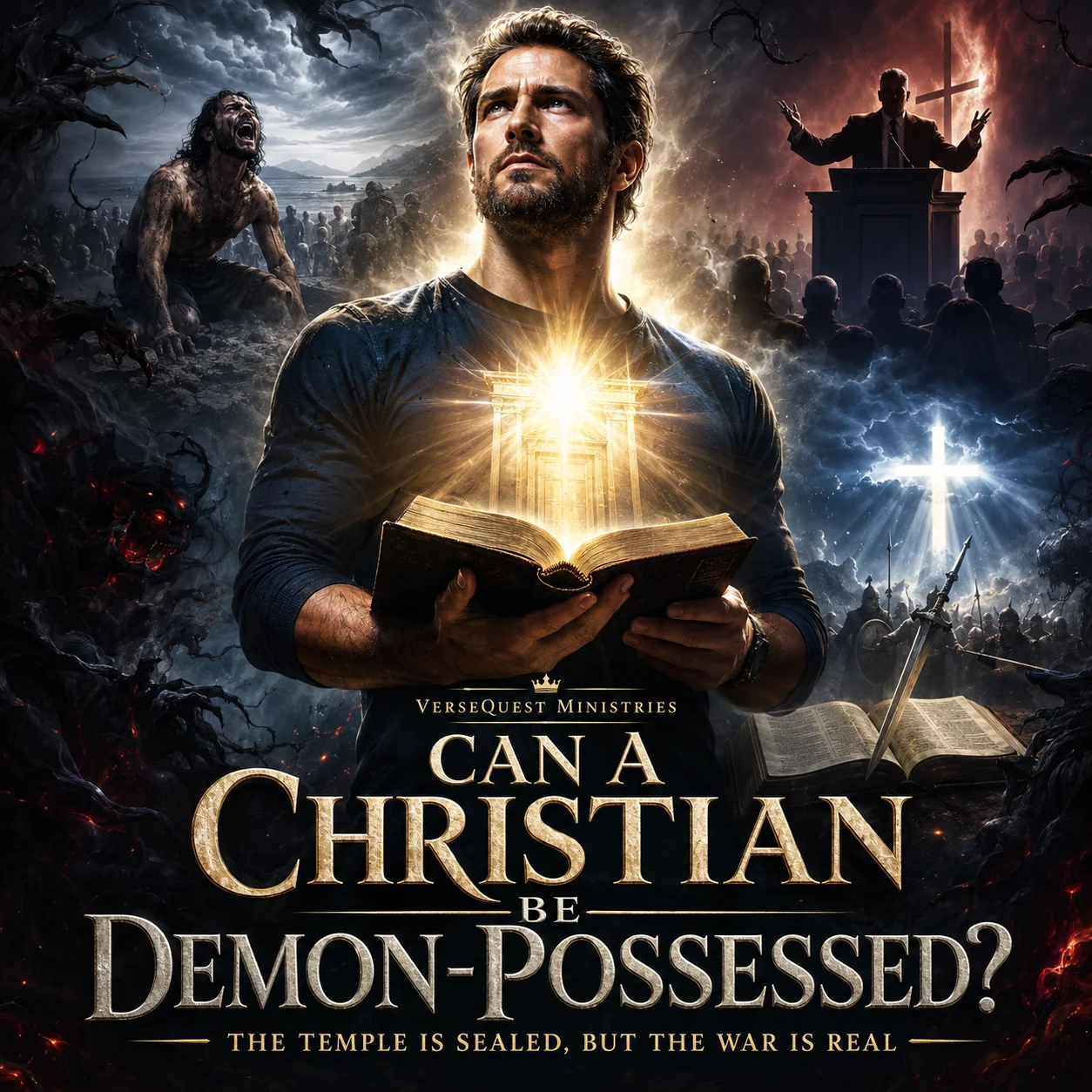
The final doctrinal balance is stated throughout the study: the temple is sealed, but the war is real. A Christian cannot be possessed internally by a devil, but he can be seriously attacked, deceived, hindered, sifted, buffeted, accused, tempted, doctrinally seduced, bodily afflicted, taken captive in conduct, and chastened severely. Eternal security settles the believer’s ownership and destination, but it does not guarantee an easy pilgrimage, spotless testimony, uninterrupted joy, automatic discernment, or immunity from bodily consequences.
This book is designed for pastors, Bible teachers, Bible institutes, churches, homeschool families, Christian schools, small groups, and individual believers who want a detailed KJV, rightly divided examination of demon possession and spiritual warfare. It may be used for personal study, classroom instruction, sermon preparation, doctrinal comparison, pastoral counselling, group discussion, and apologetic reference.
Main Teaching Truth:
A born-again Christian belongs to Jesus Christ. He is indwelt, sealed, purchased, and secure. The believer must still remain sober, vigilant, prayerful, doctrinally grounded, morally clean, and fully armed because spiritual warfare continues until the day of redemption.
Use this study to teach believers the difference between genuine biblical possession and the many forms of satanic attack described in the epistles. Emphasize that a born-again Christian is indwelt by the Holy Ghost, bought with Christ’s blood, sealed unto the day of redemption, joined unto the Lord, and translated from the power of darkness.
Help students distinguish temptation from consent, oppression from inhabitation, bodily affliction from possession, doctrinal deception from internal occupation, and the works of the flesh from the activity of devils. Teach believers to identify the world, the flesh, and the devil correctly so they apply the proper biblical remedy.
Use the chart to correct fear-based deliverance teachings concerning demonic legal rights, inherited spirits, soul ties, haunted objects, repeated exorcisms, hidden spiritual compartments, and manifestation-driven ministry. Encourage students to test every testimony, practice, and spiritual claim by the King James Bible rather than by emotion, experience, or alleged demon testimony.
Apply the material pastorally by encouraging prayer, sound doctrine, repentance, forgiveness, accountability, renewed thinking, separation from occult practices, and the whole armour of God. Remind teachers and pastors not to label every seizure, hallucination, intrusive thought, trauma response, addiction, or unusual behaviour as possession. Spiritual claims should be taken seriously while appropriate medical, neurological, psychological, and pastoral care are also considered.
The main teaching application is confidence without carelessness: the believer is secure in Christ, but he must remain sober, vigilant, prayerful, doctrinally grounded, morally clean, and fully armed for spiritual warfare.
Can a Christian Be Demon-Possessed? The Temple Is Sealed, but the War Is Real — Paul Tackett, VerseQuest Ministries. A 381-page KJV, rightly divided examination of biblical possession, spiritual warfare, deliverance ministries, pastoral discernment, and the security of the Church Age believer.
Can a Christian Be Demon-Possessed? A KJV Rightly Divided Bible Study Chart — VerseQuest Ministries. A detailed visual summary comparing possession, oppression, temptation, satanic attack, salvation doctrine, disputed proof texts, pastoral discernment, and the believer’s biblical response.
The King James Bible — Primary authority for all doctrine, terminology, comparisons, and conclusions presented in this study.
Ephesians 6:10–18 Study — A focused study of the whole armour of God, including truth, righteousness, the gospel of peace, faith, salvation, the word of God, prayer, watchfulness, and perseverance.
Romans 6–8 Study — For understanding the believer’s identification with Christ, the conflict with the flesh, freedom from sin’s dominion, the indwelling Spirit, and eternal security.
Colossians 1–3 Study — For the believer’s translation from darkness, completeness in Christ, spiritual circumcision, Christ’s triumph over principalities and powers, and practical mortification of the flesh.
First Corinthians 5–6 Study — For church discipline, destruction of the flesh, bodily ownership, fornication, and the believer’s body as the temple of the Holy Ghost.
Related products
-
Christian Living
-
-50%
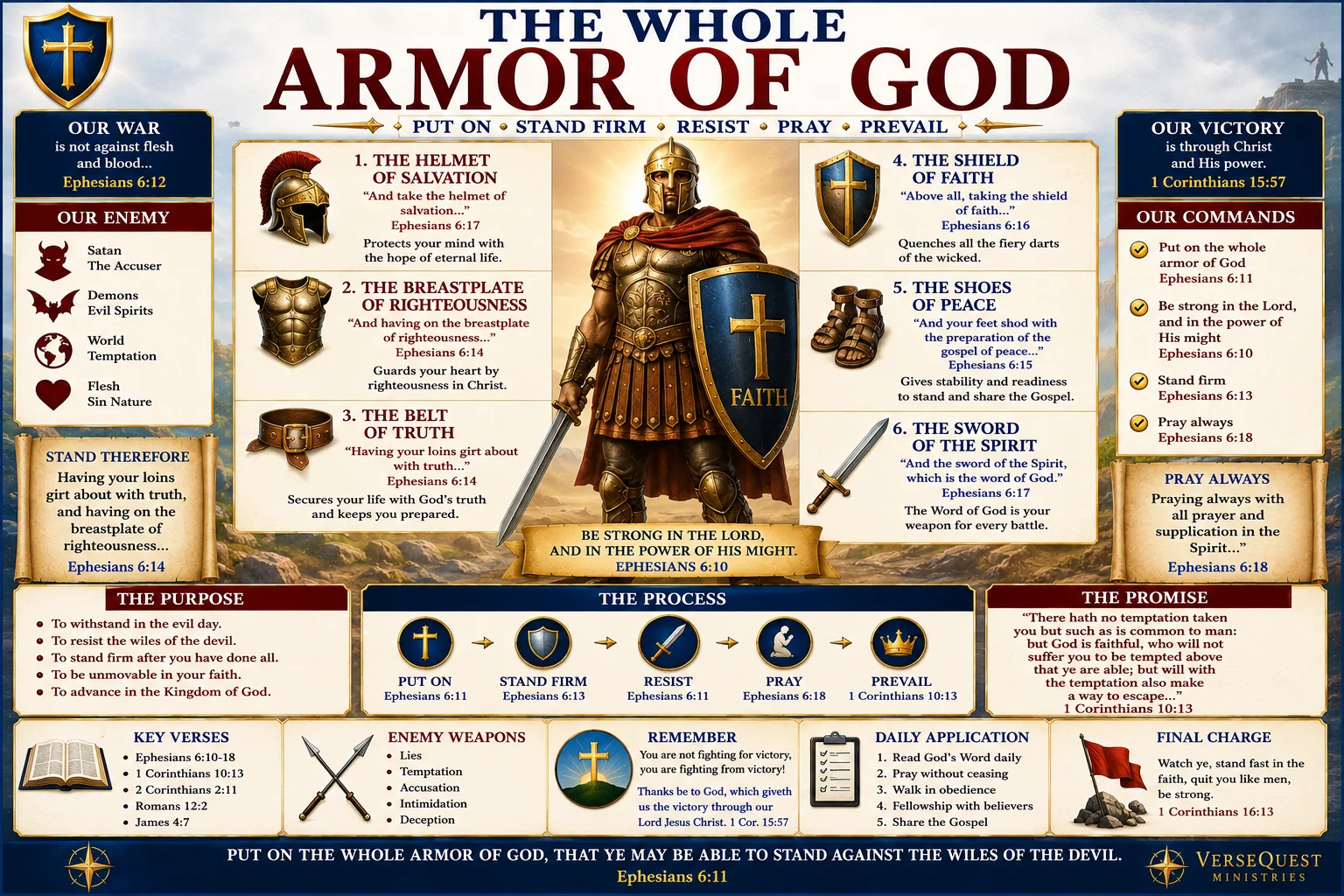
- The Whole Armor of God Chart — KJV Bible Study
- Premium printable KJV Bible study chart explaining the whole armor of God from Ephesians 6, including the helmet, breastplate, belt, shield, shoes, sword, prayer, and spiritual victory in Christ.
- Original price was: $10.00.$4.99Current price is: $4.99.
- Add to cart
-
-50%
-
Bible Prophecy Charts
-
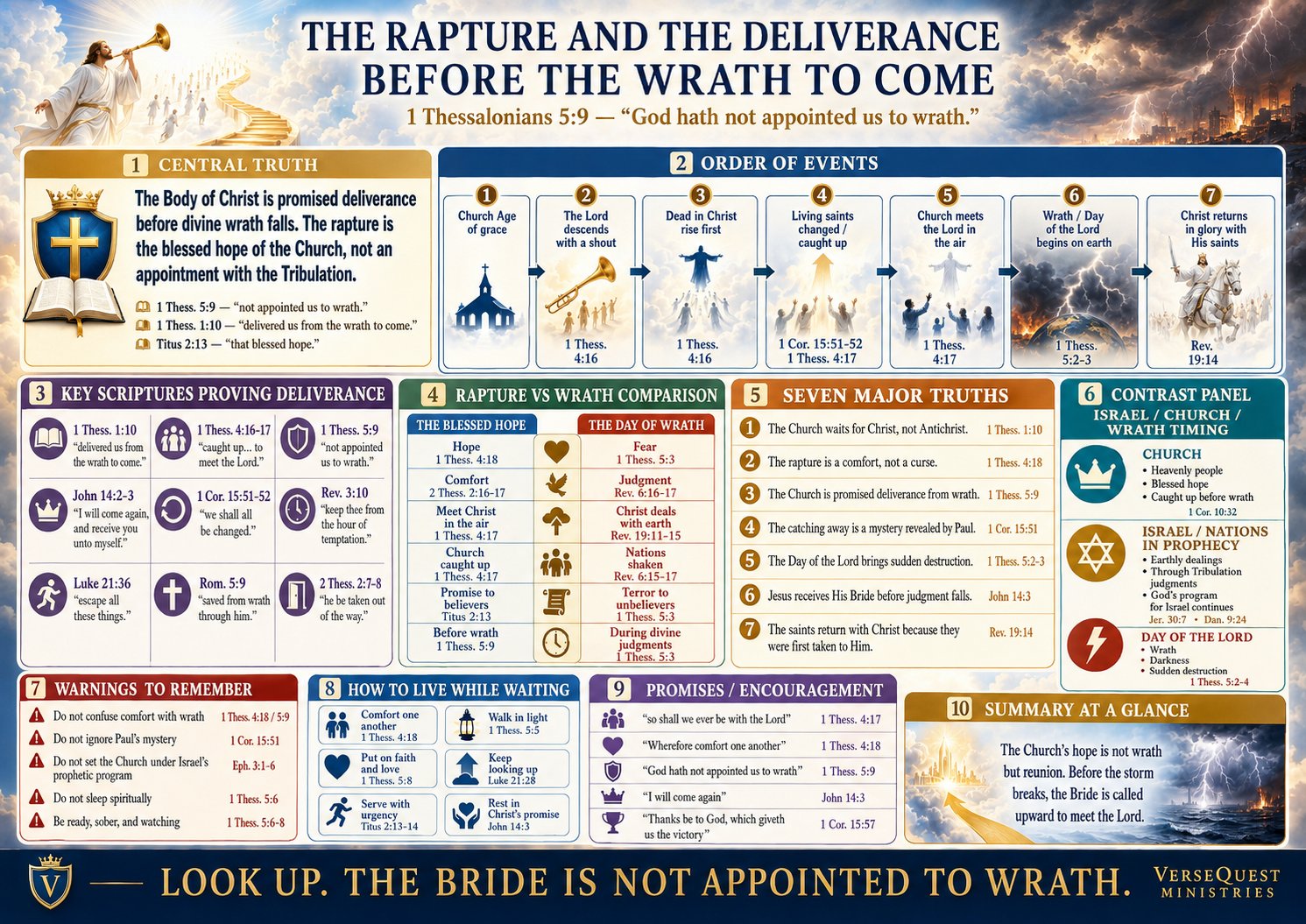
- The Rapture and the Deliverance Before the Wrath to Come – Printable Bible Study Chart
- Printable KJV Bible study chart on The Rapture and the Deliverance Before the Wrath to Come, showing from 1 Thessalonians 5:9 that the Church is not appointed to wrath. This…
- $4.99
- Add to cart
-
-
KJV Daily Devotional
-
- VerseQuest Daily — March 2027: Holiness, Temptation, and Spiritual Warfare
- VerseQuest Daily — March 2027 is a 67-page downloadable devotional PDF containing thirty-one KJV studies on holiness, temptation, the flesh, the whole armour of God, spiritual deception, and unseen conflict.…
- $6.99
- Add to cart
-
-
guarding your thoughts
-
- The Guarded Mind – 50 KJV Biblical Studies on Fear, Anxiety, Lies, and Spiritual Strongholds
- Guard your heart and mind with fifty thorough, Scripture-filled studies confronting fear, anxiety, accusation, temptation, bitterness, distraction, comparison, false guidance, and spiritual strongholds. This 351-page digital PDF uses the King…
- $9.99
- Add to cart
-
-
The Church Age vs The Tribulation
-
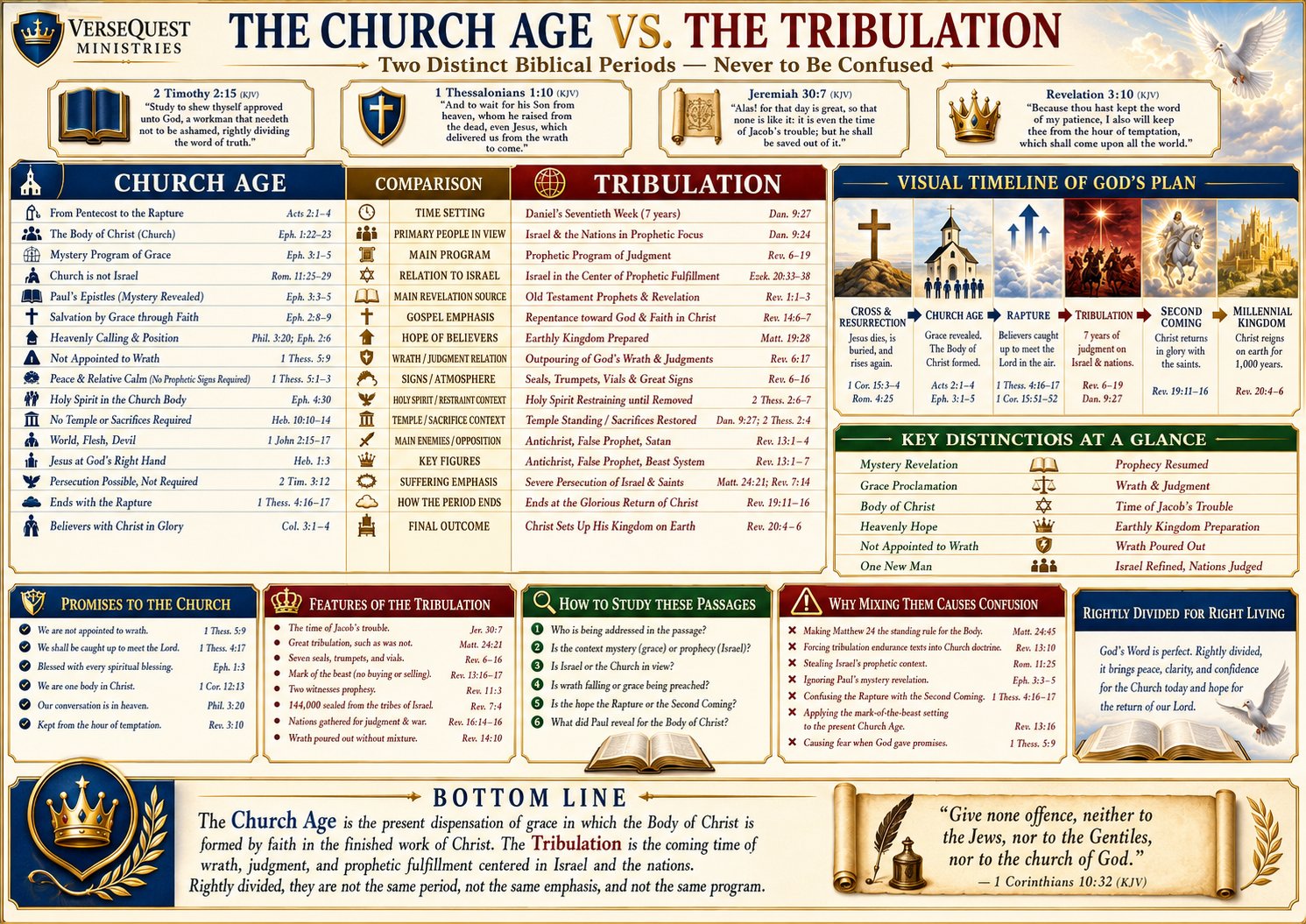
- The Church Age vs. the Tribulation – Two Distinct Biblical Periods KJV Bible Study Chart
- Compare the Church Age and the Tribulation with this detailed KJV chart covering the Body of Christ, Israel, grace, wrath, the Rapture, Antichrist, the Second Coming, and the millennial Kingdom.
- $3.99
- Add to cart
-