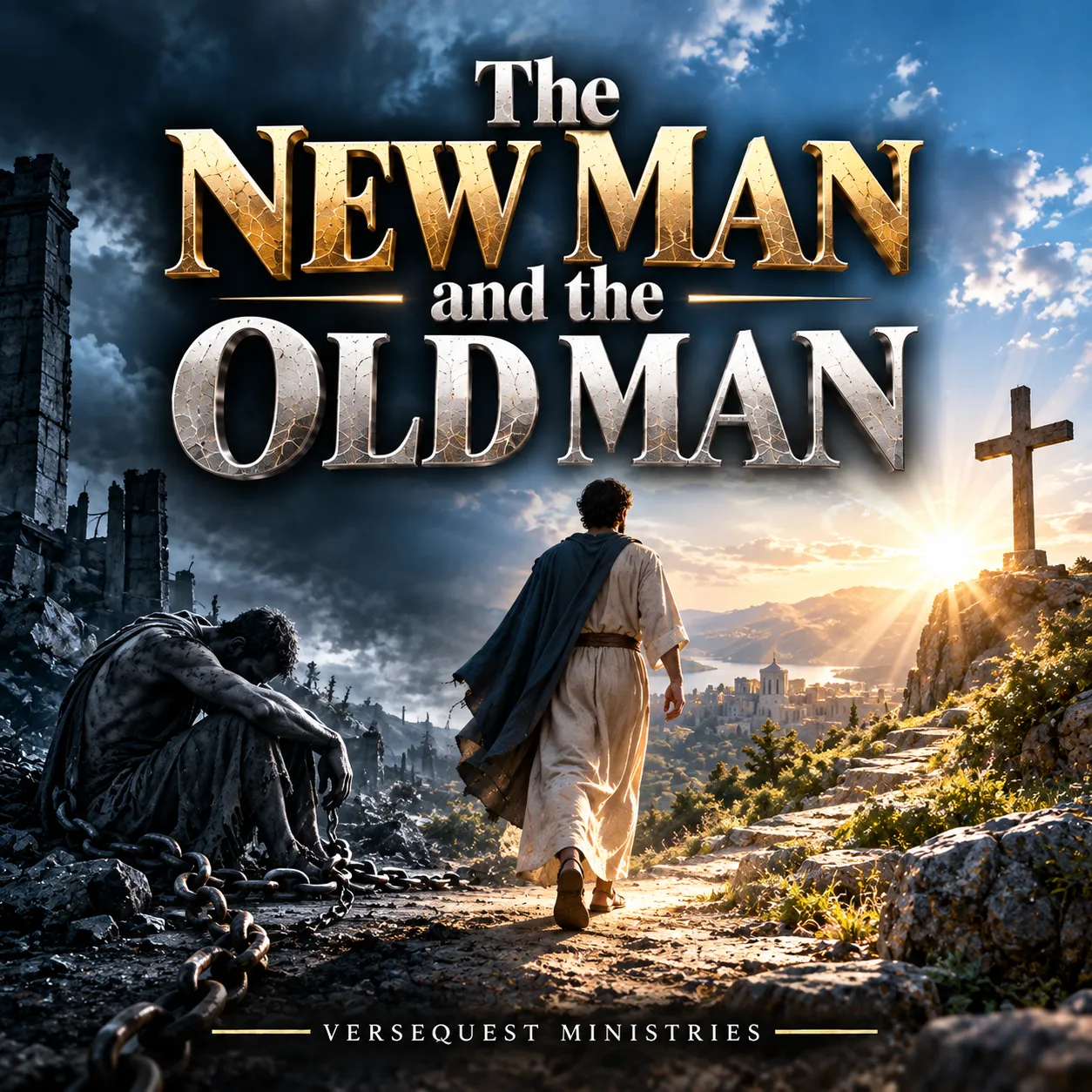
Sermon Title:
The New Man and the Old Man
Key Passage:
Ephesians 4:22–24
“That ye put off concerning the former conversation the old man, which is corrupt according to the deceitful lusts; And be renewed in the spirit of your mind; And that ye put on the new man, which after God is created in righteousness and true holiness.” (Ephesians 4:22–24)
Series:
The Book God Gave
Topic:
The Believer’s Conflict Between the Old Man and the New Man and the Practical Walk That Should Follow Salvation
Book:
Ephesians
Speaker:
Paul Tackett
Suggested Sermon Text:
Ephesians 2:1–10, 15; Ephesians 4:17–32; Romans 6:1–14; Romans 7:15–25; Romans 8:1–13; Romans 12:1–2; 1 Corinthians 6:9–11; 2 Corinthians 5:17; Galatians 2:20; Galatians 5:16–25; Colossians 3:1–17; 2 Timothy 2:15; Titus 2:11–14; 1 Peter 2:1–3
Short Sermon Description:
Ephesians 4:22–24 draws a sharp distinction between “the old man,” corrupted by deceitful lusts, and “the new man,” created after God “in righteousness and true holiness.” This sermon examines that distinction in its proper Church Age setting and shows why salvation does not rehabilitate Adam’s fallen nature but gives the believer a new position, new identity, and new life in Christ. The message distinguishes the believer’s secure standing from his daily responsibility to put off the former manner of life, renew his mind through truth, and put on conduct consistent with the new man. It addresses the continuing presence of the flesh, the danger of confusing practical failure with loss of salvation, the impossibility of reforming the old nature into holiness, and the necessity of walking in the Spirit rather than feeding the flesh. It also connects Ephesians 4 with Romans 6, Romans 7, Galatians 5, and Colossians 3 to show how sound doctrine should produce visible change in speech, anger, work, forgiveness, purity, and Christian conduct. Preachers, teachers, and Bible students will gain a detailed, sermon-ready framework for teaching the old man, the new man, positional truth, practical sanctification, renewed thinking, and victory over the flesh. Sermon Outline Prompt – VerseQu…
THE NEW MAN AND THE OLD MAN
Introduction
The saved man has a problem the lost man does not understand. Before salvation there is only Adam’s ruined nature operating without spiritual life from God. After salvation the believer belongs to Jesus Christ, possesses eternal life, is sealed with the Holy Spirit, and stands in an entirely new relationship to God, yet he discovers that the flesh did not disappear when he got saved. The old habits still knock. The old temper still knows the address. The old lusts did not attend their own funeral. Ephesians 4 explains why the Christian life involves a real conflict. Paul speaks of an “old man” and a “new man.” One is corrupt according to deceitful lusts. The other is created after God in righteousness and true holiness.
That distinction protects the gospel from two opposite errors. One crowd teaches that the Christian must gradually reform the old nature until he becomes acceptable enough for God to keep him saved. Another crowd hears salvation by grace and concludes that conduct no longer matters. Both miss Paul. God does not save the sinner by improving Adam. Salvation places the believer in Christ. Yet the believer who possesses that new standing is commanded to live in a manner consistent with it. Position should affect practice. Grace does not teach the old man how to behave better. Grace teaches the believer to stop letting the old man run the house.
The passage therefore moves through three clear ideas. Put off the old man. Be renewed in the spirit of your mind. Put on the new man. That is not a formula for earning eternal life. Paul is writing to people who are already saved. The command concerns their walk. The Christian life is not God asking the flesh to become spiritual. It is the saved believer learning to reckon with what God has already done in Christ, refuse the demands of the flesh, renew his thinking through truth, and live according to the new life God has supplied.
I. THE OLD MAN BELONGS TO ADAM’S FALLEN ORDER
Key Text: Ephesians 4:22
Supporting Texts: Romans 5:12–19; Romans 6:6; 1 Corinthians 15:22; Colossians 3:9
Paul calls him “the old man.” That expression reaches beyond a collection of bad habits. It describes the fallen identity connected with Adam and the sinful nature operating through the flesh.
Romans 5 traces sin and death back to Adam. “By one man sin entered into the world, and death by sin.” Humanity did not inherit a harmless nature requiring minor adjustment. It inherited corruption.
Romans 6:6 says, “Knowing this, that our old man is crucified with him.” God’s answer to the old man was not education, rehabilitation, therapy, culture, or religious polish. It was crucifixion with Christ.
That tells you what God thinks of the flesh. Men spend fortunes trying to renovate what God sentenced to the cross.
Religious flesh may dress better than drunken flesh, but flesh remains flesh. The old man can sit in a church pew, carry a Bible, memorize terminology, and still be old Adam wearing Sunday clothes.
Main Truth: The old man is the believer’s former Adamic identity connected with a fallen nature God did not reform but judged at the cross.
II. THE OLD MAN IS CORRUPT ACCORDING TO DECEITFUL LUSTS
Key Text: Ephesians 4:22
Supporting Texts: Jeremiah 17:9; Romans 7:18; James 1:14–16; Galatians 5:19–21
Paul says the old man “is corrupt according to the deceitful lusts.”
Notice the tense. He does not say the old man is gradually becoming corrupt. Corruption already characterizes him.
Romans 7:18 says, “For I know that in me (that is, in my flesh,) dwelleth no good thing.” Paul does not say the flesh contains some good material that merely needs encouragement. He refuses to flatter it.
The lusts are also called deceitful. Sin advertises one product and delivers another. Lust promises satisfaction and produces bondage. Pride promises elevation and produces humiliation. Bitterness promises justice and chains the bitter man to the person he hates. Covetousness promises contentment and guarantees that enough will never be enough.
The flesh is not merely weak. It lies.
That is why Christians who attempt to negotiate with the old man keep discovering that the negotiation table was crooked before they sat down.
Main Truth: The old nature is inherently corrupt and operates through desires that deceive the believer concerning sin’s promises and consequences.
III. THE OLD MAN WAS CRUCIFIED WITH CHRIST, NOT IMPROVED BY RELIGION
Key Text: Romans 6:6
Supporting Texts: Galatians 2:20; Romans 6:1–14; Colossians 2:20; Galatians 6:14
Romans 6:6 says, “our old man is crucified with him.”
The cross is God’s verdict upon the old man.
Christianity is therefore not a divine self-improvement program. God did not send His Son to Calvary so Adam’s fallen nature could receive motivational advice.
Galatians 2:20 says, “I am crucified with Christ: nevertheless I live; yet not I, but Christ liveth in me.” The believer’s life now rests in union with Christ.
Romans 6 repeatedly tells the Christian to reckon according to what God has accomplished. “Reckon ye also yourselves to be dead indeed unto sin, but alive unto God through Jesus Christ our Lord.”
Reckoning does not create the truth. It believes the truth already established.
The flesh says, “I am still in charge.” Scripture says, “You were crucified.”
Faith takes God’s side in the argument.
Main Truth: God dealt judicially with the old man at Calvary, and the believer is called to reckon upon that finished truth rather than attempting to sanctify the flesh.
IV. “PUT OFF” DESCRIBES THE BELIEVER’S PRACTICAL RESPONSIBILITY
Key Text: Ephesians 4:22
Supporting Texts: Colossians 3:5–9; Romans 6:12–13; Galatians 5:16; 1 Peter 2:1
Paul tells saved people to “put off concerning the former conversation the old man.”
“Conversation” in the King James Bible often refers to manner of life. Paul is dealing with behavior that belongs to what the believer used to be.
Colossians 3 becomes very specific: anger, wrath, malice, blasphemy, filthy communication, lying. Paul does not leave sanctification floating in religious fog. He names things.
Romans 6 says, “Let not sin therefore reign in your mortal body.” Sin may remain present, but it does not have the right to reign.
That distinction matters. The presence of temptation does not prove the absence of salvation. The believer may experience conflict precisely because something new now opposes the flesh.
Before salvation the flesh had no civil war. After salvation there is opposition.
Putting off means refusing to give the old life the practical expression it once enjoyed.
Main Truth: The saved believer must deliberately refuse the behaviors, desires, attitudes, and habits that belong to his former life.
V. THE BATTLEFIELD IS THE MIND
Key Text: Ephesians 4:23
Supporting Texts: Romans 12:2; Colossians 3:10; Philippians 4:8; 2 Corinthians 10:5
Between putting off the old man and putting on the new man stands one crucial command: “be renewed in the spirit of your mind.”
That placement is important.
Conduct changes as thinking changes.
Romans 12:2 says, “be ye transformed by the renewing of your mind.” The believer who continues thinking according to the world will eventually continue behaving according to the world.
The old man thrives on lies. The new walk requires truth.
The world tells you happiness comes from satisfying every desire. Scripture says deceitful lusts corrupt.
The world says revenge is strength. Scripture says forgive.
The world says identity comes from feeling. Scripture says the believer’s identity is in Christ.
The mind therefore needs continual exposure to Scripture.
You cannot feed your mind twelve hours of the world and five minutes of Bible and then act surprised when the world wins the argument.
Main Truth: Practical Christian transformation requires continual renewal of the mind through biblical truth.
VI. THE NEW MAN IS CREATED AFTER GOD
Key Text: Ephesians 4:24
Supporting Texts: 2 Corinthians 5:17; Colossians 3:10; Ephesians 2:10; 2 Corinthians 4:16
Paul says the new man “after God is created.”
That language is entirely different from rehabilitation.
Creation means something genuinely new has entered the picture.
Second Corinthians 5:17 says, “if any man be in Christ, he is a new creature.” Salvation is not Adam cleaned up. It is the believer placed in Christ with new spiritual life.
Colossians 3:10 says the new man is “renewed in knowledge after the image of him that created him.”
Notice the direction. The old man is corrupt according to deceitful lusts. The new man reflects the One who created him.
The Christian therefore does not find his new identity by looking inward at the flesh. The flesh will supply enough contradictory evidence to keep him confused all week.
He looks to what God says is true in Christ.
Main Truth: The new man is God’s creation in the believer and represents a genuinely new spiritual identity rather than a repaired version of fallen Adam.
VII. THE NEW MAN IS CREATED IN RIGHTEOUSNESS AND TRUE HOLINESS
Key Text: Ephesians 4:24
Supporting Texts: 1 Corinthians 1:30; 2 Corinthians 5:21; Titus 2:11–14; Philippians 1:11
Paul describes the new man as created “in righteousness and true holiness.”
That tells us the direction of genuine Christian growth.
The new man does not lead toward deeper carnality. Grace does not create appetite for sin. The flesh does.
Christ is made unto the believer “righteousness” (1 Corinthians 1:30), and the saved man possesses perfect acceptance in Him.
But positional righteousness should increasingly produce righteous practice.
Titus 2 says grace teaches believers to deny ungodliness and worldly lusts.
Notice Paul says “true holiness.” Religion has produced plenty of counterfeit holiness. Long faces, special vocabulary, external rules, and public performance can create an impressive costume while pride sits underneath wearing the whole outfit.
True holiness comes from truth operating in the life.
Main Truth: The new man reflects God’s righteousness and holiness, and practical Christian conduct should increasingly correspond to that new identity.
VIII. THE OLD MAN AND NEW MAN EXPLAIN THE CHRISTIAN’S INNER CONFLICT
Key Text: Romans 7:22–23
Supporting Texts: Romans 7:15–25; Galatians 5:16–17; Romans 8:5–13; Galatians 2:20
Romans 7 describes a conflict every honest believer recognizes.
Paul says, “For I delight in the law of God after the inward man,” yet he sees another law operating in his members.
Galatians 5 says, “the flesh lusteth against the Spirit, and the Spirit against the flesh: and these are contrary the one to the other.”
That is war language.
The existence of battle should not automatically terrify the believer into doubting salvation. Dead men do not fight spiritual battles.
The real danger comes when Christians misunderstand the conflict and either excuse the flesh or attempt to achieve sinless perfection in it.
The flesh never graduates.
You may become mature. Your flesh does not.
A ninety-year-old Christian still needs to walk in the Spirit.
Main Truth: The believer experiences continuing conflict because the flesh remains present while the indwelling Spirit and new life oppose its desires.
IX. PUTTING ON THE NEW MAN BECOMES VISIBLE IN DAILY CHRISTIAN CONDUCT
Key Text: Ephesians 4:24–32
Supporting Texts: Colossians 3:12–17; Galatians 5:22–25; Romans 12:9–21; Ephesians 5:1–2
Paul does not leave the new man as abstract theology.
Immediately after Ephesians 4:24 he gets painfully practical.
“Putting away lying, speak every man truth.”
“Let not the sun go down upon your wrath.”
“Let him that stole steal no more.”
“Let no corrupt communication proceed out of your mouth.”
“Be ye kind one to another, tenderhearted, forgiving one another.”
There is your theology wearing work clothes.
A man who understands the two natures but lies, steals, curses, nurses bitterness, and refuses forgiveness has learned vocabulary without learning obedience.
Sound doctrine should eventually show up at home.
It should affect the way a husband talks, how a parent handles anger, how an employee works, how a Christian treats enemies, and what comes out of his mouth.
The new man is not demonstrated by how loudly you explain him. He is demonstrated when biblical truth governs ordinary life.
Main Truth: Putting on the new man becomes practical when the believer’s speech, work, relationships, attitudes, forgiveness, and conduct reflect his identity in Christ.
Conclusion
Ephesians 4:22–24 gives the believer a clear framework for understanding Christian growth. There is an old man connected with corruption, deceitful lusts, and the former manner of life. There is a new man created after God in righteousness and true holiness. Between them stands the renewed mind, where biblical truth changes the way the believer thinks and therefore changes the way he walks.
This doctrine protects both grace and holiness. The old man cannot become righteous enough to earn salvation. God dealt with him at the cross. The new man is God’s creation, not man’s achievement. Yet the believer is commanded to put off the old conduct and put on what corresponds to his new identity. That is not works salvation. It is saved people learning to live like saved people.
So stop trying to negotiate peace between the old man and the new man. They are contrary. Feed one and the other suffers. Walk in the Spirit and you will not fulfil the lust of the flesh. Renew your mind with the King James Bible. Reckon yourself dead to sin and alive unto God. Put away the things that belong to the graveyard of Adam and live according to the life you possess in Jesus Christ.
Final Call
If you are lost, you do not need the old man improved. You need new life. Jesus Christ “died for our sins according to the scriptures; And that he was buried, and that he rose again the third day according to the scriptures” (1 Corinthians 15:3–4). Salvation is not earned by cleaning up the flesh, joining a church, being baptized, living morally, or performing religious works. Believe on the Lord Jesus Christ and trust His finished work.
If you are saved, stop giving the old man what belongs to the new man. Your body, mind, speech, time, relationships, and choices belong to the Lord who bought you. Study the Book. Rightly divide it. Renew your mind. Walk in the Spirit. Put off the conduct that belongs to Adam’s ruin and put on the conduct that belongs to your new life in Christ.
Closing Verse:
“Likewise reckon ye also yourselves to be dead indeed unto sin, but alive unto God through Jesus Christ our Lord.” (Romans 6:11)
Closing Statement:
God did not save you to make the old man respectable. He saved you so the life of the new man could be seen where the old man used to rule.