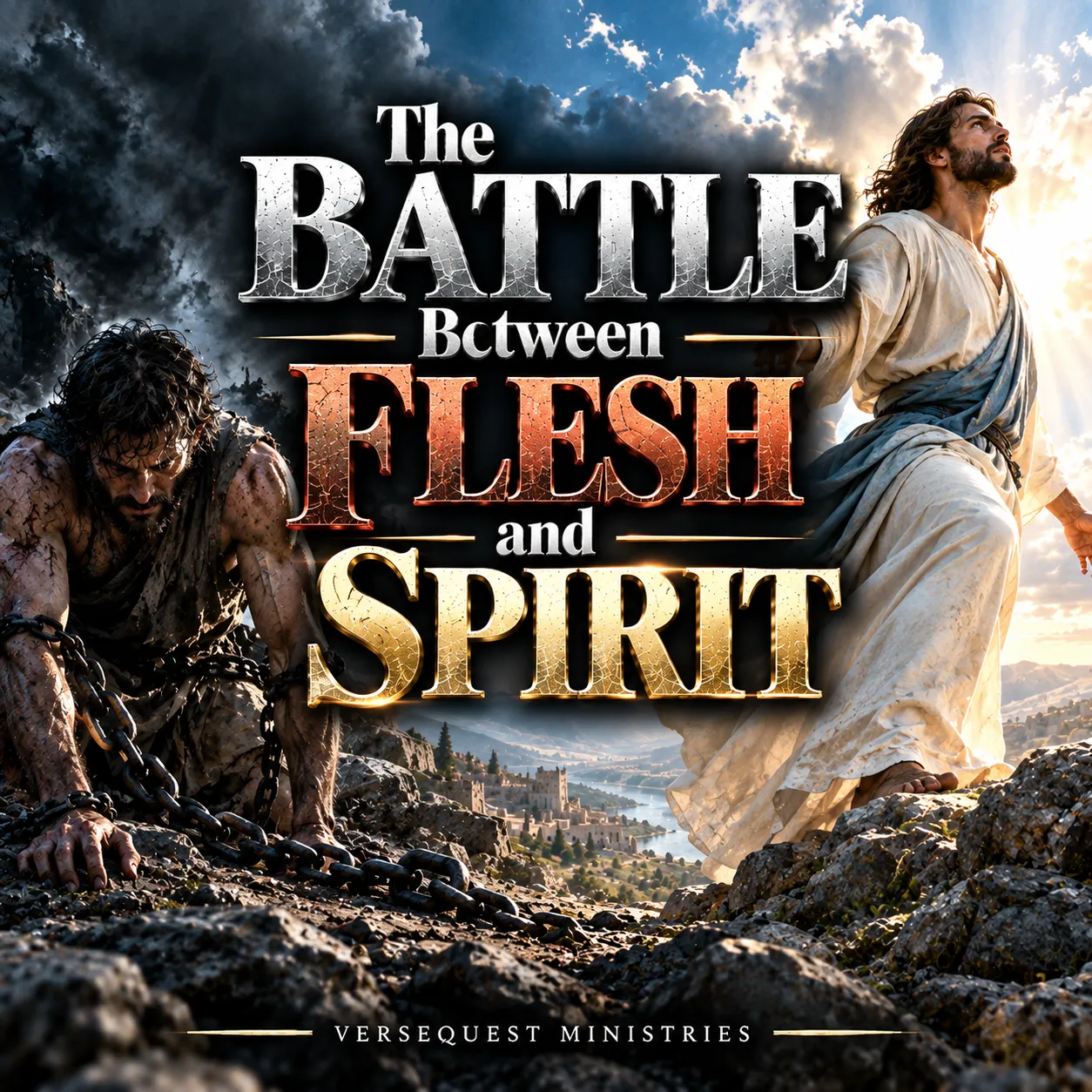
Sermon Title:
The Battle Between Flesh and Spirit
Key Passage:
Galatians 5:17
“For the flesh lusteth against the Spirit, and the Spirit against the flesh: and these are contrary the one to the other: so that ye cannot do the things that ye would.” (Galatians 5:17)
Series:
The Book God Gave
Topic:
The Believer’s Daily Conflict Between the Flesh and the Holy Spirit and the Biblical Way to Walk in Victory
Book:
Galatians
Speaker:
Paul Tackett
Suggested Sermon Text:
Galatians 2:16–21; Galatians 3:1–14; Galatians 5:1–26; Galatians 6:7–9; Romans 6:1–14; Romans 7:14–25; Romans 8:1–14; Romans 12:1–2; 1 Corinthians 6:12–20; 1 Corinthians 9:24–27; Ephesians 4:17–32; Ephesians 5:15–21; Philippians 3:3; Colossians 3:1–17; 1 Thessalonians 4:1–8; 2 Timothy 2:15, 20–22; Titus 2:11–14; 1 Peter 2:11
Short Sermon Description:
Galatians 5:17 exposes one of the most important realities of the Christian life: “the flesh lusteth against the Spirit, and the Spirit against the flesh: and these are contrary the one to the other.” This sermon examines the internal warfare experienced by the saved believer, carefully distinguishing the indwelling Holy Spirit from the unchanged character of the flesh and showing why salvation does not make the old nature holy, sinless, or trustworthy. It explains why the existence of spiritual conflict is not evidence that salvation has failed, how walking in the Spirit differs from trying to conquer sin through law, religious willpower, or self-reformation, and why feeding the flesh strengthens the very enemy the believer is commanded to deny. The message contrasts the works of the flesh with the fruit of the Spirit, connects Galatians 5 with Romans 6–8 and Ephesians 4, and shows how Scripture, right thinking, obedience, separation, prayer, and dependence upon the Holy Spirit affect the daily battle. Preachers, teachers, and Bible students will gain a detailed, sermon-ready framework for teaching the believer’s twofold conflict, grace, sanctification, Christian liberty, spiritual fruit, and practical victory over the flesh. The supplied VerseQuest standard calls for a KJV-only, rightly divided, detailed treatment suitable for preaching and teaching. Sermon Outline Prompt – VerseQu…
THE BATTLE BETWEEN FLESH AND SPIRIT
Introduction
There is a battle raging inside every saved believer that the lost man cannot understand properly because he does not possess the Holy Spirit of God dwelling within him. The Christian may wake up loving the Bible and discover before breakfast that his flesh still knows how to complain. He may sincerely desire holiness and discover that an old appetite has not forgotten his telephone number. He may rejoice in Christ on Sunday morning and find himself wrestling with anger, pride, lust, envy, laziness, bitterness, or selfishness before Monday afternoon. Galatians 5:17 explains the battlefield plainly: “the flesh lusteth against the Spirit, and the Spirit against the flesh.” That conflict is not imaginary, psychological, symbolic, or evidence that Christianity did not work. It is a real warfare between two contrary principles operating in the life of a saved man.
That doctrine protects the believer from two opposite errors. One error says that if a Christian still experiences temptation, inner conflict, or failure, he must never have been genuinely saved. The other error says that because salvation is by grace and the flesh remains corrupt anyway, conduct no longer matters. Paul rejects both. He does not tell the Galatians that the flesh disappeared when they trusted Christ, and he certainly does not give them permission to obey it. He tells them, “Walk in the Spirit, and ye shall not fulfil the lust of the flesh” (Galatians 5:16). The presence of the flesh explains the battle. The presence of the Spirit explains why the believer no longer has to surrender every time the flesh demands tribute.
The great mistake many Christians make is trying to sanctify the flesh instead of learning to deny it. The flesh cannot be educated into spirituality. It cannot be frightened into holiness, baptized into usefulness, polished into righteousness, or disciplined until it becomes trustworthy. Romans 7:18 says, “For I know that in me (that is, in my flesh,) dwelleth no good thing.” God did not save the Christian by reforming the flesh. He gave the believer His Spirit and commanded him to walk accordingly. The Christian life is therefore not a peace treaty between flesh and Spirit. Paul says they are “contrary the one to the other.” Stop trying to make them friends. They are at war.
I. THE FLESH DID NOT BECOME HOLY WHEN YOU GOT SAVED
Key Text: Galatians 5:17
Supporting Texts: Romans 7:18; Romans 8:7–8; Galatians 5:19–21; John 3:6
Paul speaks of “the flesh” as something actively opposing the Spirit. Salvation did not convert flesh into Spirit. Jesus said, “That which is born of the flesh is flesh; and that which is born of the Spirit is spirit” (John 3:6). Those categories do not merge after salvation.
Romans 7:18 contains one of the clearest confessions in Scripture: “For I know that in me (that is, in my flesh,) dwelleth no good thing.” Paul does not say that before salvation his flesh contained nothing good but afterward it became rehabilitated. He speaks as a saved apostle and identifies the flesh as utterly untrustworthy.
Romans 8 goes further: “the carnal mind is enmity against God.” It “is not subject to the law of God, neither indeed can be.” That last phrase should bury a great deal of religious self-improvement theology. Neither indeed can be. The flesh does not need another chance. It needs to be denied.
That explains why spiritual maturity does not make temptation impossible. The Christian may mature; the flesh does not. A believer may know more Scripture at seventy than he did at twenty, but seventy-year-old flesh is still flesh.
Main Truth: Salvation gives the believer new spiritual life but does not make the flesh holy, trustworthy, or capable of pleasing God.
II. THE HOLY SPIRIT CREATES A NEW OPPOSITION TO THE FLESH
Key Text: Galatians 5:17
Supporting Texts: Romans 8:9–14; 1 Corinthians 6:19; Galatians 4:6; Ephesians 1:13–14
The second side of Galatians 5:17 is just as important: “the Spirit against the flesh.”
The Holy Spirit does not move into the believer and negotiate shared custody with the old nature. He opposes what the flesh desires.
Romans 8 says saved people possess the Spirit of Christ. First Corinthians 6 says the believer’s body is “the temple of the Holy Ghost.” Ephesians says believers are sealed with that Spirit unto the day of redemption.
That indwelling changes the Christian’s internal experience.
Before salvation, the flesh may have experienced conscience, fear of consequences, cultural restraint, or moral conviction, but there was no indwelling Holy Spirit producing a new spiritual appetite and opposing the flesh from within.
Now the believer may desire what he once hated and hate what he once loved.
The battle itself therefore can be evidence of life. Dead soldiers do not complain about warfare.
The believer should not interpret every struggle as proof that God abandoned him. Sometimes the struggle exists because God is present and the flesh finally has an enemy in the house.
Main Truth: The indwelling Holy Spirit produces a genuine spiritual opposition to the flesh that did not exist before salvation.
III. FLESH AND SPIRIT ARE CONTRARY—THERE IS NO NEUTRAL ZONE
Key Text: Galatians 5:17
Supporting Texts: Romans 8:5–8; James 4:4; Matthew 6:24; Galatians 6:7–8
Paul says plainly, “these are contrary the one to the other.”
Contrary means opposed.
The flesh does not want a slightly less spiritual version of what the Spirit wants. Their directions are fundamentally different.
Romans 8 contrasts those who mind the things of the flesh with those who mind the things of the Spirit. Galatians 6 similarly says the man who sows to his flesh reaps corruption, while the man who sows to the Spirit reaps life everlasting in its practical fruit.
Christians sometimes imagine they can feed both sides equally and maintain balance. Read three chapters of Scripture and then feed the flesh six hours of filth. Pray in the morning and nurse bitterness all afternoon. Sing hymns while coveting what everybody else owns.
That is not balance. That is ammunition supply.
The believer is always sowing somewhere.
A garden does not care that you intended to grow corn if you spent all spring planting weeds.
Main Truth: Flesh and Spirit operate in opposing directions, so the believer cannot continually nourish both and expect spiritual neutrality.
IV. THE COMMAND IS TO WALK IN THE SPIRIT, NOT TO REFORM THE FLESH
Key Text: Galatians 5:16
Supporting Texts: Romans 8:4; Galatians 5:18, 25; Ephesians 5:18; Colossians 3:1–5
Paul gives the remedy before fully describing the conflict: “Walk in the Spirit, and ye shall not fulfil the lust of the flesh.”
Notice what he does not say.
He does not say, “Improve the flesh.”
He does not say, “Negotiate with the flesh.”
He does not say, “Give the flesh stricter religious regulations until it behaves.”
He says walk in the Spirit.
Walking describes continual conduct. It is not a one-time emotional experience at an altar. It is the daily direction of life.
Galatians 5:25 says, “If we live in the Spirit, let us also walk in the Spirit.” Spiritual life is already possessed. Spiritual walking is the practical expression of that life.
The difference matters.
A believer does not walk in the Spirit to become saved. He walks because he already possesses spiritual life.
The flesh loves religious projects that allow it to take credit for defeating itself. Paul gives it no trophy.
Main Truth: Practical victory comes through walking in dependence upon the Holy Spirit rather than trying to rehabilitate the flesh through human effort.
V. LAW CANNOT PRODUCE SPIRITUAL VICTORY OVER THE FLESH
Key Text: Galatians 5:18
Supporting Texts: Galatians 3:1–3; Romans 6:14; Romans 7:7–13; Colossians 2:20–23
Paul says, “But if ye be led of the Spirit, ye are not under the law.”
The Galatians had begun in the Spirit and were being seduced into attempting perfection through the flesh. Paul asks, “Are ye so foolish? having begun in the Spirit, are ye now made perfect by the flesh?” (Galatians 3:3).
That question should be framed and hung in every legalist’s hallway.
Law can identify sin. It can condemn sin. It can expose sin. But it cannot make fallen flesh spiritual.
Romans 7 shows sin taking occasion by the commandment. Colossians 2 warns that religious regulations may have “a shew of wisdom” while being powerless against “the satisfying of the flesh.”
Rules can restrain behavior externally. They cannot regenerate Adam internally.
Romans 6:14 says plainly, “ye are not under the law, but under grace.”
Grace does not lower God’s holiness. Grace supplies a different operating principle.
Main Truth: The law exposes and condemns sin but cannot transform the flesh or produce the Spirit-led life God requires from the believer.
VI. THE WORKS OF THE FLESH REVEAL WHAT THE FLESH PRODUCES
Key Text: Galatians 5:19–21
Supporting Texts: Romans 1:28–32; Ephesians 4:17–32; Colossians 3:5–9; 1 Corinthians 6:9–11
Paul says, “Now the works of the flesh are manifest.”
Then he names them.
Adultery. Fornication. Uncleanness. Lasciviousness. Idolatry. Witchcraft. Hatred. Variance. Emulations. Wrath. Strife. Seditions. Heresies. Envyings. Murders. Drunkenness. Revellings.
The flesh has quite a résumé.
Notice that the list contains both socially scandalous sins and respectable religious sins. People may recoil at drunkenness while carrying hatred into church every Sunday. They condemn fornication while feeding envy. They denounce witchcraft and then split a church with strife.
Flesh does not become spiritual because it wears a tie.
Paul’s warning concerning those who “do such things” must be handled in its context and not turned into a denial of justification by faith. The repeated practice of fleshly wickedness characterizes the realm from which believers have been delivered and stands contrary to the kingdom of God.
First Corinthians 6 says of saved people, “such were some of you.”
Were.
Grace never says the works of the flesh are acceptable simply because salvation is secure.
Main Truth: The works of the flesh expose the corrupt nature of the flesh and show why believers must never treat its desires as harmless.
VII. THE FRUIT OF THE SPIRIT REVEALS WHAT GOD PRODUCES IN A YIELDED BELIEVER
Key Text: Galatians 5:22–23
Supporting Texts: John 15:4–5; Ephesians 5:9; Philippians 1:11; Colossians 1:10
Paul deliberately contrasts works of the flesh with fruit of the Spirit.
“Love, joy, peace, longsuffering, gentleness, goodness, faith, Meekness, temperance.”
Notice that Paul says fruit, singular.
This is not a spiritual produce aisle where the Christian selects love and joy while leaving temperance on the shelf.
The Spirit produces a unified character increasingly reflecting Christ.
Fruit also grows from life.
You can tie apples onto a dead tree, but nobody should call that fruitfulness. Religious imitation can manufacture outward appearances for a while. The Spirit produces something living from within.
Jesus said, “without me ye can do nothing.”
That statement bruises human pride but preserves spiritual reality.
The evidence of walking in the Spirit is not primarily dramatic claims, mystical experiences, ecstatic behavior, or religious spectacle. Paul points to character.
Anybody can shout for fifteen minutes. Longsuffering takes longer.
Main Truth: The Holy Spirit produces Christlike character in believers who walk in dependence upon Him rather than yielding to the flesh.
VIII. THE BELIEVER MUST STARVE WHAT HE DOES NOT WANT TO RULE HIM
Key Text: Galatians 5:24
Supporting Texts: Romans 6:11–13; Romans 13:14; Colossians 3:5; 1 Peter 2:11
Paul says, “they that are Christ’s have crucified the flesh with the affections and lusts.”
Romans 13 gives the practical command: “make not provision for the flesh, to fulfil the lusts thereof.”
Provision means supplying what something needs.
Many Christians pray desperately for victory over temptations they have spent all week feeding.
They ask God to conquer lust while continually consuming material designed to awaken it.
They ask for freedom from covetousness while marinating in comparison.
They ask for control of anger while replaying offenses every night before bed.
Do not set the table for the flesh and then act shocked when it arrives hungry.
Colossians 3 uses equally severe language: “Mortify therefore your members which are upon the earth.”
The Christian does not physically injure himself. He refuses to nourish sinful desires.
Victory frequently looks less spectacular than people imagine. Sometimes it means turning something off, walking away, closing the browser, refusing the conversation, leaving the bottle alone, changing companions, confessing sin, or getting into Scripture instead of entertaining temptation.
Main Truth: Practical victory requires denying the flesh the provisions, habits, environments, and thought patterns that strengthen its sinful appetites.
IX. THE BATTLE CONTINUES, BUT THE BELIEVER DOES NOT HAVE TO SURRENDER
Key Text: Galatians 5:16–17
Supporting Texts: Romans 7:24–25; Romans 8:1–4; 1 Corinthians 10:13; Philippians 4:13
Paul does not promise the Galatians that mature believers will eventually reach a point where the flesh quits fighting.
He tells them how to walk while the battle exists.
Romans 7 ends with Paul crying, “O wretched man that I am! who shall deliver me from the body of this death?” Then comes the answer: “I thank God through Jesus Christ our Lord.”
Romans 8 immediately declares, “There is therefore now no condemnation to them which are in Christ Jesus.”
The Christian’s failure does not cancel Christ’s finished work. Neither does Christ’s finished work make failure harmless.
Grace gives the believer a stable position from which to fight.
First Corinthians 10 says God provides a way to escape temptation. The believer may not control whether temptation knocks, but he does not have to hand it the keys.
The flesh can demand. The Spirit can lead.
And the Christian decides whom he will follow.
Main Truth: The conflict with the flesh continues throughout the Christian life, but the saved believer can walk in practical victory through dependence upon the Holy Spirit and obedience to God’s word.
Conclusion
Galatians 5:17 explains why the Christian life sometimes feels like a battlefield—because it is one. The flesh lusts against the Spirit. The Spirit opposes the flesh. They are contrary. God never promised to convert your flesh into something trustworthy. He gave you His Spirit and told you which side to follow.
That truth protects assurance without excusing sin. The presence of conflict does not automatically prove you are lost. Yet neither should grace become a white flag handed to the flesh. The believer is secure in Christ, but he is commanded to walk in the Spirit, deny the flesh, reject its works, cultivate spiritual fruit, and refuse to make provision for sin.
So stop trying to make peace with what God calls contrary. Feed the Spirit-led life with Scripture. Rightly divide the Book. Pray. Obey truth promptly. Guard your mind. Remove provisions for the flesh. Recognize temptation before it becomes action. The flesh will not become your friend because you have been saved a long time. Keep walking in the Spirit until the day God removes you from the battlefield entirely.
Final Call
If you are lost, this battle cannot be won through self-discipline because you need spiritual life before you can walk in the Spirit. Jesus Christ “died for our sins according to the scriptures; And that he was buried, and that he rose again the third day according to the scriptures” (1 Corinthians 15:3–4). Believe on the Lord Jesus Christ and trust His finished work rather than religion, baptism, morality, church membership, or your own efforts.
If you are saved, quit being surprised that the flesh is flesh. Stop expecting Adam to volunteer for holiness. Walk in the Spirit. Believe the Book. Make no provision for the flesh. Sow to the Spirit. Let the word renew your mind. And when the old nature begins shouting orders, remember that noise is not authority. You belong to Jesus Christ.
Closing Verse:
“This I say then, Walk in the Spirit, and ye shall not fulfil the lust of the flesh.” (Galatians 5:16)
Closing Statement:
The flesh may still live in the house, but it no longer owns the deed—the believer belongs to Jesus Christ, and the Spirit of God gives him power to stop taking orders from an old tenant.