Topic: biblical spiritual warfare
-
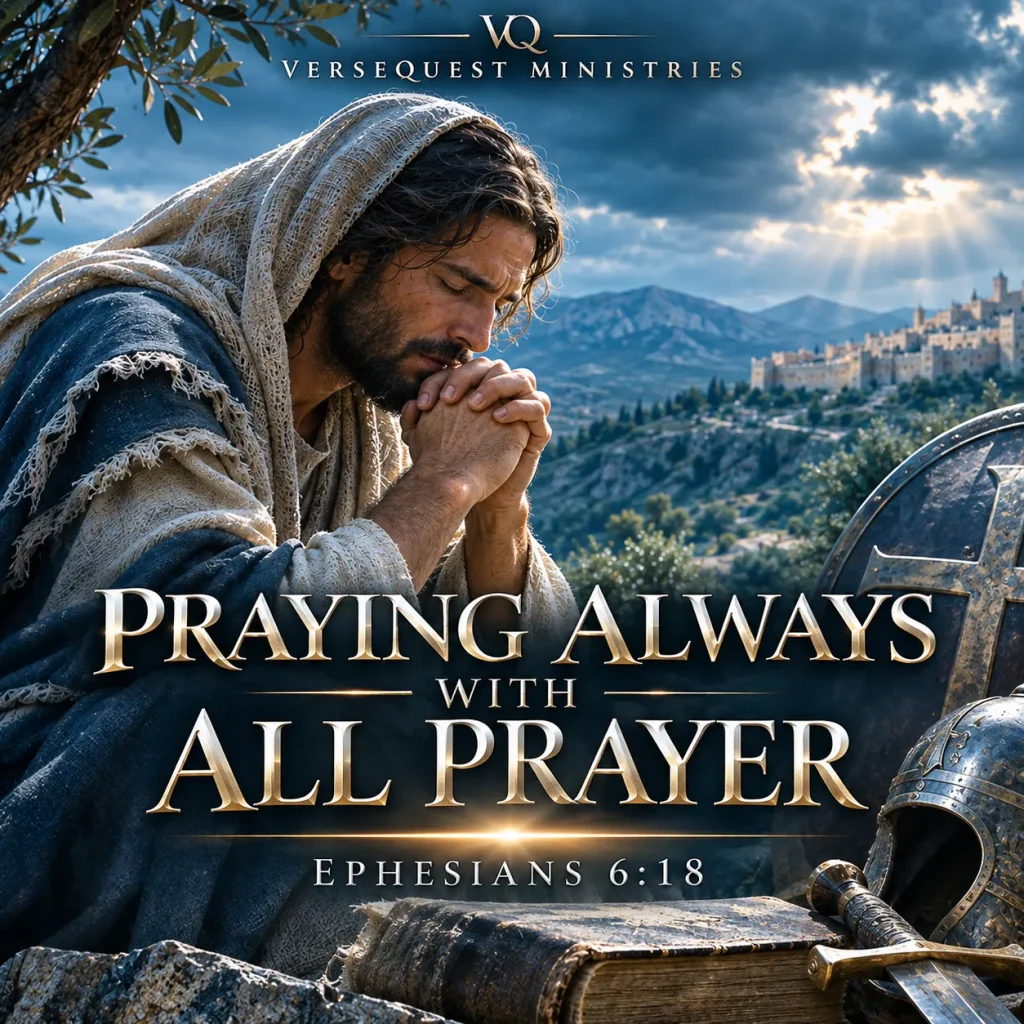
November 8, 2026
Speaker: Paul Tackett
Topic: access to the Father through Christ, biblical spiritual warfare, boldness in gospel preaching, Christian prayer life, Ephesians 6 sermon outline, Ephesians 6:18, Holy Spirit and prayer, intercession for all saints, KJV Sermon Outline, Paul ambassador in bonds, perseverance in prayer, prayer and supplication, prayer for fellow believers, praying always in the Spirit, Praying Always With All Prayer, praying without ceasing, rightly divided Bible study, salvation by grace through faith, spiritual watchfulness, whole armour of God
Book: Ephesians
This detailed sermon outline examines Ephesians 6:18 and the Apostle Paul’s command, “Praying always with all prayer and supplication in the Spirit, and watching thereunto with all perseverance and supplication for all saints,” revealing the believer’s responsibility to maintain continual dependence upon God while standing faithfully in the whole armour of God. The message carefully establishes the passage’s immediate context within Ephesians 6:10–20, where Paul instructs saved believers to be strong in the Lord, stand against the wiles of the devil, and put on the spiritual armour provided through truth, righteousness, the gospel of peace, faith, salvation, and the word of God. It explains why prayer is inseparable from biblical spiritual warfare and why sound doctrine, religious activity, natural determination, and knowledge of Scripture must never become substitutes for dependence upon the Lord. Special attention is given to the expressions “praying always,” “all prayer and supplication,” “in the Spirit,” “watching thereunto,” “all perseverance,” and “supplication for all saints,” demonstrating how each contributes to a faithful Christian prayer life. The sermon examines the importance of praying without ceasing, distinguishing earnest supplication from mechanical religious repetition, remaining spiritually alert against temptation and doctrinal deception, and persevering when answers do not arrive according to human expectations. Drawing upon Romans 8, Philippians 4, Colossians 4, 1 Thessalonians 5, 1 Timothy 2, and other Pauline passages, the outline explains the Holy Spirit’s ministry in prayer, the believer’s access to the Father through Jesus Christ, and the necessity of submitting personal requests to God’s revealed will. It carefully distinguishes praying in the Spirit from claims concerning unintelligible ecstatic utterances, while rejecting the idea that persistence gives believers authority to manipulate God or demand earthly prosperity. The message also develops the responsibility to intercede for fellow Christians, pastors, missionaries, gospel workers, and suffering believers rather than limiting prayer to personal concerns. Special consideration is given to Ephesians 6:19–20, where Paul requests prayer for boldness to proclaim the mystery of the gospel while serving as an ambassador in bonds. Finally, the outline distinguishes salvation by grace through faith from the saved believer’s continuing responsibility to pray, remain watchful, and serve faithfully. Preachers, pastors, teachers, and Bible students will gain a comprehensive, KJV-based, rightly divided, sermon-ready framework for teaching Christian prayer, spiritual warfare, intercession, perseverance, doctrinal discernment, gospel boldness, and continual dependence upon Jesus Christ.
-

November 6, 2026
Series: 1 John 5:4, Victory Over the World
Speaker: Paul Tackett
Topic: 1 John 2:15–17, 1 John 5 sermon outline, 1 John 5:4, biblical spiritual warfare, Christ has overcome the world, Christian Perseverance, Christian victory over sin, eternal security in Christ, faith that overcomes the world, Jesus Christ the Son of God, KJV Sermon Outline, new birth in Christ, overcoming the world by faith, rightly divided Bible study, salvation by grace through faith, sound doctrine and discernment, Victory Over the World, Walking in the Spirit, whatsoever is born of God, worldly lusts and pride
Book: 1 John
This detailed sermon outline examines 1 John 5:4 and the Apostle John’s remarkable declaration, “For whatsoever is born of God overcometh the world: and this is the victory that overcometh the world, even our faith,” revealing the spiritual victory possessed by those who have been born of God through faith in Jesus Christ. The message establishes the passage’s immediate context within 1 John 5:1–5, where the new birth, faith in Jesus as the Christ and Son of God, love for fellow believers, obedience to God’s commandments, and overcoming the world are inseparably connected. It explains why biblical victory does not originate in human determination, religious performance, moral improvement, or the reforming of fallen flesh, but rests upon the saving work of Jesus Christ and the new spiritual life received through faith in Him. Special attention is given to 1 John 2:15–17, where believers are commanded not to love the world, and to the distinction between the physical creation, the lost people whom God desires to save, and the present fallen system characterized by the lust of the flesh, the lust of the eyes, and the pride of life. The sermon examines how worldly values, personal ambition, covetousness, false doctrine, fleshly desires, and the pursuit of human approval can hinder practical Christian faithfulness. Drawing upon Romans 6–8, Galatians 5, Ephesians 6, Colossians 3, and other Pauline passages, the outline explains why believers must walk in the Spirit, renew their minds through Scripture, refuse provision for the flesh, maintain sound doctrine, and exercise biblical discernment. It also examines why genuine spiritual victory should produce love, obedience, holiness, and perseverance without confusing those works with the requirements for obtaining or maintaining eternal salvation. The message further explores John 16:33, where Jesus Christ declares that He has overcome the world, demonstrating why biblical victory does not promise freedom from tribulation, suffering, persecution, or physical death. Finally, the outline emphasizes the assurance of eternal life in 1 John 5:11–13, the believer’s future bodily redemption, and the eternal significance of faithful Christian service. Preachers, pastors, teachers, and Bible students will gain a comprehensive, KJV-based, rightly divided, sermon-ready framework for teaching the new birth, saving faith, victory over worldly influences, practical sanctification, spiritual discernment, eternal security, Christian perseverance, and the everlasting triumph believers possess through the Lord Jesus Christ.