Topic: biblical prayer and supplication
-
November 15, 2026
Speaker: Paul Tackett
Topic: be careful for nothing, biblical prayer and supplication, Christian contentment, Christian giving and generosity, Christian gratitude, freedom from anxious worry, KJV Sermon Outline, Paul's imprisonment, Peace of God, Peace With God, Philippians 4 sermon outline, Philippians 4:13, Philippians 4:6, Philippians 4:7, prayer with thanksgiving, rejoicing in the Lord, rightly divided Bible teaching, salvation by grace through faith, The Prayer of Thanksgiving, trusting God through hardship
Book: Philippians
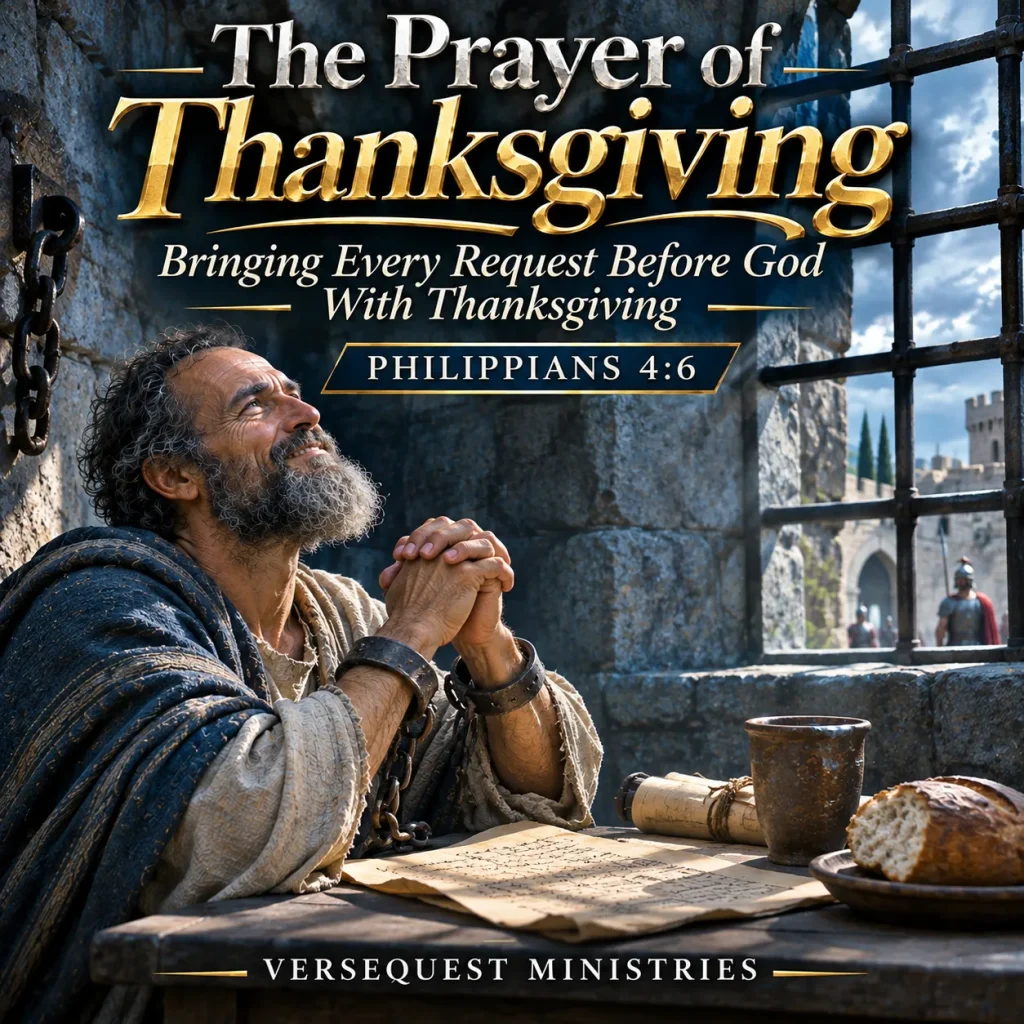
This detailed sermon outline examines Philippians 4:6 and the Apostle Paul’s instruction, “Be careful for nothing; but in every thing by prayer and supplication with thanksgiving let your requests be made known unto God,” revealing the importance of approaching the Father with gratitude, spiritual dependence, and confidence in the sufficiency of Jesus Christ. The message carefully establishes the historical and doctrinal setting of Philippians, where Paul, writing amid imprisonment and opposition, encourages saved believers to rejoice in the Lord, remain faithful through adversity, practice Christian unity, and bring their requests before God with thanksgiving. Special attention is given to the expressions “Be careful for nothing,” “in every thing,” “by prayer and supplication,” “with thanksgiving,” and “let your requests be made known unto God,” explaining why biblical prayer should be characterized by gratitude rather than anxious preoccupation, religious performance, or attempts to manipulate divine decisions. The sermon distinguishes consuming anxiety from legitimate concern, prudent planning, responsible stewardship, and appropriate responses to suffering, while emphasizing why Christians should not allow uncertainty about tomorrow to control their thinking today. Drawing upon Philippians 4:4–9, Romans 5 and 8, Ephesians 2–3, Colossians 3–4, and 1 Thessalonians 5, the outline explains the relationship between rejoicing, prayer, thanksgiving, and the peace of God that passes all understanding and guards believers’ hearts and minds through Jesus Christ. It carefully distinguishes the believer’s peace with God through justification by faith from the practical peace of God experienced through prayerful dependence upon the Lord. The message also examines Philippians 4:8–9, demonstrating why thankful prayer must be accompanied by disciplined biblical thinking, sound doctrine, and faithful obedience rather than continually feeding the mind with fear, bitterness, speculation, and worldly influences. Special consideration is given to Paul’s testimony of contentment in abundance and need, the proper interpretation of Philippians 4:13, and the importance of rejecting prosperity teaching that misuses biblical promises to guarantee earthly wealth, physical healing, or the fulfillment of every personal ambition. The outline further explores the Philippians’ financial support of Paul’s ministry, biblical generosity, cheerful giving, and the proper interpretation of God’s provision in Philippians 4:19. Throughout the message, salvation by grace through faith in the finished work of Jesus Christ is distinguished from the saved believer’s continuing responsibilities concerning prayer, gratitude, holiness, intercession, stewardship, and spiritual perseverance. Preachers, pastors, teachers, and Bible students will gain a comprehensive, KJV-based, rightly divided, sermon-ready framework for teaching the prayer of thanksgiving, freedom from consuming anxiety, divine peace, Christian contentment, biblical generosity, spiritual maturity, and the importance of remaining grateful and faithful to Jesus Christ even when earthly circumstances remain difficult.
-

November 9, 2026
Series: Hebrews 4:16, The Throne of Grace
Speaker: Paul Tackett
Topic: 2 Corinthians 12:9, access to God through Christ, believer's eternal security, biblical prayer and supplication, Christ's heavenly priesthood, come boldly unto the throne of grace, grace sufficient for weakness, Hebrews 4 sermon outline, Hebrews 4:14–16, Hebrews 4:16, help in time of need, Jesus our great High Priest, Jesus the one Mediator, KJV Sermon Outline, mercy and grace, mercy through Jesus Christ, Once for All Sacrifice, rightly divided Bible study, salvation by grace through faith, The Throne of Grace
Book: Hebrews
This detailed sermon outline examines Hebrews 4:16 and the remarkable biblical invitation, “Let us therefore come boldly unto the throne of grace, that we may obtain mercy, and find grace to help in time of need,” revealing the believer’s privilege of approaching Almighty God through Jesus Christ, our great High Priest. The message carefully establishes the passage’s immediate context within Hebrews 4:12–16, where the writer describes the penetrating authority of God’s word, the impossibility of concealing anything from His sight, and the glorious provision of Jesus the Son of God, who has passed into the heavens. It explains why the throne of grace represents divine holiness, sovereign authority, mercy, and gracious access rather than a religious mechanism through which believers may demand whatever earthly benefits they desire. Special attention is given to Hebrews 4:14–15, which identifies Jesus Christ as the great High Priest who can be touched with the feeling of our infirmities and who was tempted in all points like as we are, yet without sin. The sermon explores the superiority of Christ’s eternal priesthood over the former Levitical priesthood, the significance of His once-for-all sacrifice, His entrance into the heavenly sanctuary, and His continuing intercession for those who come unto God through Him. Drawing upon Hebrews 4–10, Romans 5 and 8, Ephesians 2–3, Philippians 4, and 2 Corinthians 12, the outline distinguishes salvation through Christ’s finished work from the saved believer’s continuing responsibility to pray, walk in holiness, and depend upon divine strength. It examines the importance of coming boldly without becoming presumptuous, the distinction between obtaining mercy and finding grace, and why God’s help in time of need does not guarantee the immediate removal of suffering, sickness, persecution, or difficult earthly circumstances. Paul’s testimony concerning his thorn in the flesh receives particular attention, demonstrating why the sufficiency of divine grace may be revealed through continued weakness rather than instant deliverance. The message also explains the believer’s access to the Father through Jesus Christ by the Holy Spirit, the unique mediatorial office of the Saviour, and the importance of approaching God with reverence, thanksgiving, intercession, perseverance, and submission to His revealed will. Preachers, pastors, teachers, and Bible students will gain a comprehensive, KJV-based, rightly divided, sermon-ready framework for teaching the throne of grace, Christ’s heavenly priesthood, redemption through His blood, biblical prayer, divine mercy, sufficient grace, spiritual perseverance, and the believer’s continuing dependence upon the Lord Jesus Christ.