
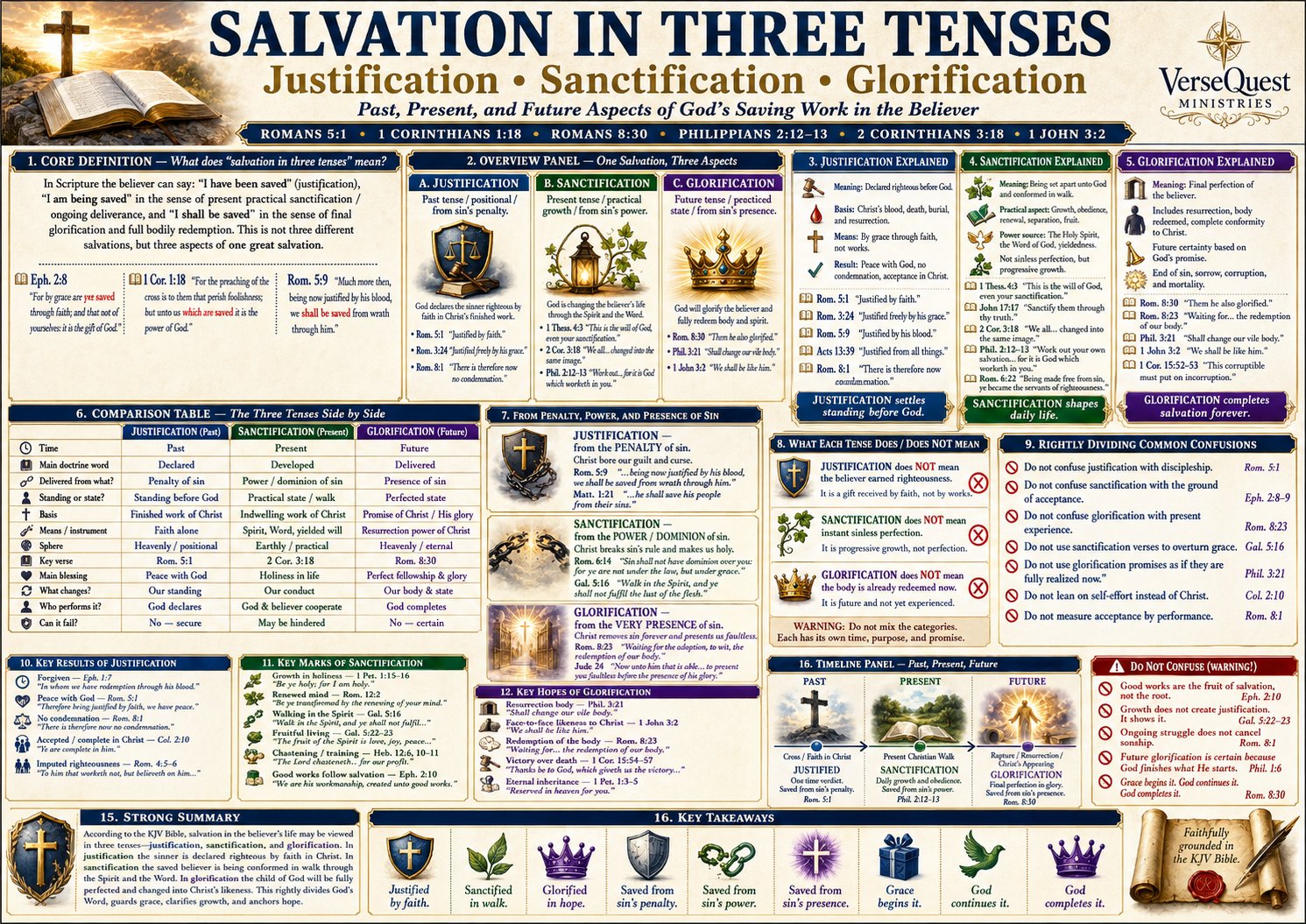
Salvation in Three Tenses – Justification, Sanctification, and Glorification KJV Bible Study Chart
Understand salvation’s past, present, and future aspects with this detailed KJV chart covering justification, sanctification, glorification, eternal security, Christian growth, resurrection, and the redemption of the body.
$3.99
Description
Salvation in Three Tenses: Justification, Sanctification, and Glorification is a detailed KJV Bible study chart explaining the past, present, and future aspects of God’s saving work in the believer. It shows how a Christian can biblically say, “I have been saved,” “I am being saved,” and “I shall be saved” without teaching three different salvations or weakening the finished work of Jesus Christ.
Built around Romans 5:1, 1 Corinthians 1:18, Romans 8:30, Philippians 2:12–13, 2 Corinthians 3:18, and 1 John 3:2, this chart separates three truths that are frequently confused: the believer’s completed justification, his present sanctification, and his certain future glorification.
There is only one salvation in Jesus Christ, but that salvation includes several glorious aspects. Justification settles the believer’s standing before God. Sanctification concerns his present growth and practical walk. Glorification completes God’s saving purpose by delivering the believer from the presence of sin and conforming him fully to the image of Jesus Christ.
Justification is the past or positional aspect of salvation. The moment a sinner believes the gospel, God declares him righteous on the basis of Christ’s finished work. The believer is forgiven, accepted, reconciled, redeemed, and delivered from eternal condemnation.
Romans 5:1 declares, “Therefore being justified by faith, we have peace with God through our Lord Jesus Christ.” Justification is not a gradual moral improvement or a reward for successful discipleship. It is a judicial declaration made by God when the sinner trusts Jesus Christ.
The basis of justification is the death, burial, and resurrection of Christ. Jesus bore the sinner’s guilt, shed His blood, satisfied divine justice, and rose again. The sinner contributes no righteousness of his own but receives the righteousness God provides in Christ.
Justification is entirely by grace through faith and not by works. Church membership, water baptism, religious rituals, law-keeping, moral reform, and personal merit cannot improve the believer’s legal standing before God.
The justified believer possesses peace with God and no eternal condemnation. Romans 8:1 declares that there is now no condemnation to those who are in Christ Jesus. God does not place the believer on spiritual probation and wait to see whether he performs well enough to remain justified.
The believer’s standing is complete because Christ’s work is complete. Colossians 2:10 states, “And ye are complete in him.” The Christian may still require extensive growth, correction, and maturity, but he cannot become more accepted than he already is in Jesus Christ.
The second aspect is sanctification, referring in this framework primarily to the believer’s present, practical growth. Sanctification concerns being set apart unto God and increasingly conformed to the character and conduct of Jesus Christ.
Every believer is positionally sanctified in Christ at salvation, but Scripture also describes an ongoing practical work in which the Christian grows, obeys, learns, changes, and becomes more useful to the Lord. The chart focuses especially upon this progressive aspect.
First Thessalonians 4:3 states, “For this is the will of God, even your sanctification.” God does not merely save the believer from hell and leave him unchanged in daily life. He works through His Spirit and His Word to develop holiness, charity, obedience, wisdom, humility, and spiritual fruit.
Practical sanctification does not create or preserve justification. The believer does not become accepted by growing successfully. He grows because he has already been accepted in Christ.
The principal power of sanctification is the indwelling Holy Spirit working through the written Word of God. Jesus prayed, “Sanctify them through thy truth: thy word is truth.” Scripture renews the mind, exposes sin, corrects error, strengthens faith, and teaches the believer how to walk.
Second Corinthians 3:18 describes believers being changed into the same image from glory to glory by the Spirit of the Lord. Sanctification is therefore transformation rather than mere outward religious performance.
The believer also has responsibility within this process. Philippians 2:12–13 commands Christians to work out their salvation while immediately explaining that God works in them both to will and to do of His good pleasure.
To work out salvation does not mean to work for salvation. The believer expresses outwardly the life God has already placed within him. Divine power and human obedience operate together without turning sanctification into self-salvation.
Sanctification includes Bible study, prayer, confession of sin, obedience, fellowship, separation from evil, walking in the Spirit, resisting temptation, Christian service, enduring chastening, and producing the fruit of the Spirit.
Unlike justification, practical sanctification may be resisted or hindered. A believer can grieve the Holy Spirit, neglect Scripture, tolerate sin, become carnal, lose fellowship, damage his testimony, and forfeit reward.
This possibility does not mean salvation has failed. It means the believer’s condition and conduct may fall far below his permanent standing in Christ. Justification remains secure while sanctification affects fellowship, usefulness, spiritual health, testimony, and reward.
The third aspect is glorification, the future and perfected completion of salvation. Glorification occurs when God fully redeems the believer’s body, removes him forever from the presence of sin, and conforms him completely to Jesus Christ.
Romans 8:30 speaks of glorification with such certainty that it is presented as already accomplished within God’s purpose: “whom he justified, them he also glorified.” What God has promised is so secure that its future fulfillment cannot fail.
Glorification includes resurrection, bodily transformation, incorruption, immortality, and complete conformity to Christ. Philippians 3:21 teaches that Jesus Christ will change the believer’s vile body and fashion it like His glorious body.
First Corinthians 15 explains that corruption must put on incorruption and mortality must put on immortality. The redeemed body will no longer age, weaken, decay, suffer, or die.
First John 3:2 declares, “when he shall appear, we shall be like him; for we shall see him as he is.” The believer will not become deity, but he will be perfected morally and bodily, completely free from sin and fitted for eternal fellowship with Christ.
Glorification is not merely the soul entering heaven. God’s saving purpose includes the redemption of the body. The Christian hope is resurrection and transformation, not permanent disembodiment.
The chart compares the three aspects side by side. Justification is past, declared, and positional. Sanctification is present, developing, and practical. Glorification is future, delivered, and perfected.
Justification saves from the penalty of sin. Sanctification progressively delivers from the power or dominion of sin. Glorification removes the believer forever from the presence of sin.
The basis of justification is Christ’s finished work. The practical power of sanctification is the indwelling Spirit working through Scripture and a yielded believer. The certainty of glorification rests upon God’s promise and Christ’s resurrection power.
The believer’s heavenly standing is changed through justification. His earthly conduct is shaped through sanctification. His body and final condition are perfected through glorification.
Justification cannot fail because God declares it and Christ has completed the payment. Sanctification may be hindered in practical experience because believers may resist God’s working. Glorification cannot fail because God Himself will complete it.
The chart also guards against several common doctrinal confusions. Justification must not be confused with discipleship. A weak or immature believer is not therefore unjustified.
Sanctification must not be turned into the ground of acceptance. The believer’s progress may vary, but his standing rests in Christ rather than upon the success of his daily walk.
Glorification should not be confused with a present emotional experience. The Christian may enjoy spiritual victory and transformation now, but his body remains mortal and the world remains affected by sin.
Future glorification promises must not be claimed as though every physical effect of the fall has already been removed. Christians still experience weakness, sickness, aging, suffering, and death while awaiting bodily redemption.
The chart rejects the misuse of sanctification passages to overthrow salvation by grace. Commands concerning holiness, growth, endurance, and obedience describe the believer’s walk and responsibility; they do not turn justification into a reward for successful performance.
Neither should a believer lean upon self-effort instead of Jesus Christ. Sanctification requires discipline and obedience, but spiritual growth remains dependent upon grace, Scripture, prayer, and the power of the Holy Spirit.
The results of justification include forgiveness, peace with God, no condemnation, acceptance in Christ, imputed righteousness, reconciliation, redemption, and eternal security.
The marks of sanctification include spiritual growth, a renewed mind, increasing obedience, walking in the Spirit, Christian fruit, chastening and correction, good works, separation from sin, and greater conformity to Christ.
The hopes of glorification include the resurrection body, the Rapture of the Church, seeing Jesus Christ face to face, complete likeness to Him, deliverance from death, victory over the grave, eternal inheritance, and everlasting fellowship with the Lord.
The timeline is simple and powerful. At salvation, the sinner believes the gospel and is justified. During his Christian life, the believer is being practically sanctified. At the Rapture or resurrection, the believer will be fully glorified.
Grace begins the work, God continues the work, and God completes the work. The believer’s salvation is not held together by human determination but by the faithfulness of the One who began the good work.
This truth gives the Christian both assurance and responsibility. Assurance comes from knowing that justification is complete and glorification is certain. Responsibility comes from knowing that present sanctification matters deeply.
A believer should never use eternal security as permission for carelessness. Although sin cannot undo Christ’s finished work, it can damage fellowship, joy, testimony, service, health, relationships, and eternal reward.
Neither should the Christian allow present struggles to convince him that God has abandoned him. Ongoing conflict with the flesh does not automatically prove the absence of salvation. It reveals the need to walk in the Spirit, believe the Word, confess sin, and continue growing.
The chart’s strong summary is that salvation may be viewed in three tenses without being divided into three different salvations. In justification, the sinner is declared righteous by faith in Christ. In sanctification, the saved believer is progressively transformed through Scripture and the Holy Spirit. In glorification, God completes His work by redeeming the believer’s body and conforming him fully to Jesus Christ.
This resource is ideal for personal Bible study, salvation and sanctification classes, eternal-security teaching, new-believer discipleship, Christian-growth studies, Rapture and resurrection teaching, pastoral counseling, Sunday school, homeschool Bible curriculum, Bible institutes, sermon preparation, and anyone seeking a clear visual explanation of God’s complete saving work.
Salvation in three tenses, justification, sanctification, glorification, past present and future salvation, saved from sin’s penalty, saved from sin’s power, saved from sin’s presence, justification by faith, practical sanctification, positional sanctification, progressive Christian growth, resurrection body, Rapture of the Church, conformity to Christ, eternal security, no condemnation, indwelling Holy Spirit, redemption of the body, assurance of salvation, God completes salvation
Salvation in three tenses describes three aspects of one salvation, not three independent methods of being saved.
Justification is the believer’s settled legal standing before God. It occurs when the sinner believes on Jesus Christ and is declared righteous through faith.
The basis of justification is entirely outside the believer. It rests upon Christ’s blood, death, burial, resurrection, and imputed righteousness.
Justification cannot be increased through Christian growth. A mature believer is not more justified than a newly saved believer.
Romans 5:1 presents justification as completed: “being justified by faith, we have peace with God.”
Romans 8:1 presents the justified believer as free from eternal condemnation. This standing rests in Christ rather than daily performance.
Sanctification has both positional and practical uses in Scripture. Every believer is set apart in Christ at salvation, while practical sanctification describes continuing growth in holiness.
In the three-tenses framework, sanctification usually refers primarily to the believer’s present walk and progressive transformation.
Practical sanctification does not maintain justification. It affects fellowship, maturity, usefulness, testimony, joy, chastening, and reward.
The Holy Spirit is the power of Christian sanctification. The flesh cannot produce lasting spiritual holiness through self-discipline alone.
The Word of God is central to sanctification. God’s truth renews the mind, exposes error, corrects conduct, and reveals the character of Christ.
Philippians 2:12 does not tell believers to work for salvation. It commands them to express outwardly the salvation God is already working within them.
Philippians 2:13 guards against self-reliance by stating that God works in believers both to will and to do of His good pleasure.
Sanctification is progressive rather than instantaneous perfection. Believers still possess the flesh and must continue walking in the Spirit.
A Christian may resist practical sanctification. Scripture warns against grieving the Spirit, quenching the Spirit, tolerating sin, and remaining carnal.
Failure in sanctification does not make justification temporary. The believer may require chastening and restoration without becoming eternally condemned.
Glorification is God’s final transformation of the believer. It includes bodily resurrection, immortality, incorruption, and complete freedom from sin.
Romans 8:30 presents glorification as certain because God’s purpose cannot fail.
Philippians 3:21 promises that Christ will transform the believer’s body to be fashioned like His glorious body.
First John 3:2 teaches that believers will be like Christ when they see Him. This concerns moral and bodily conformity, not becoming equal with God.
Glorification delivers the believer from the presence of sin. No temptation, corruption, sorrow, weakness, sickness, or death will remain.
Present spiritual victory should not be confused with complete glorification. Christians continue waiting for the redemption of the body.
Justification changes standing. Sanctification changes conduct. Glorification changes the believer’s final bodily and perfected condition.
God declares the believer justified. God works with the yielded believer in practical sanctification. God sovereignly completes glorification.
Grace begins salvation, sustains growth, and guarantees completion. The glory belongs to God at every stage.
The proper Christian response is assurance concerning justification, obedience in sanctification, and confident hope concerning glorification.
Salvation-doctrine studies, justification-by-faith teaching, practical sanctification classes, eternal-security instruction, Christian-growth studies, explaining Romans 8, teaching Philippians 2:12–13, Rapture and resurrection lessons, new-believer discipleship, assurance counseling, overcoming confusion about works, distinguishing standing from walk, Sunday school lessons, homeschool Bible curriculum, Christian school instruction, Bible institute classes, pastoral training, sermon preparation
King James Bible, Strong’s Concordance, Thompson Chain-Reference Bible, Treasury of Scripture Knowledge, Nave’s Topical Bible, Romans 3–8 study notes, 1 Corinthians 15 resurrection materials, Philippians 2–3 commentary notes, sanctification worksheets, justification-by-faith resources, eternal-security studies, Rapture and glorification charts, salvation-assurance materials, Christian-growth workbooks, Pauline epistle outlines, VerseQuest salvation and doctrine charts
Related products
-
Jesus Christ
-
-67%

- The Millennium Made Plain – 416-Page KJV Study on Christ’s Future Reign
- A premium 416-page KJV, rightly divided Bible study on the literal future Millennial reign of Jesus Christ. The Millennium Made Plain explains Revelation 19–20, Israel’s restoration, Satan’s binding, the Kingdom…
- Original price was: $29.99.$9.99Current price is: $9.99.
- Add to cart
-
-67%
-
Heaven
-
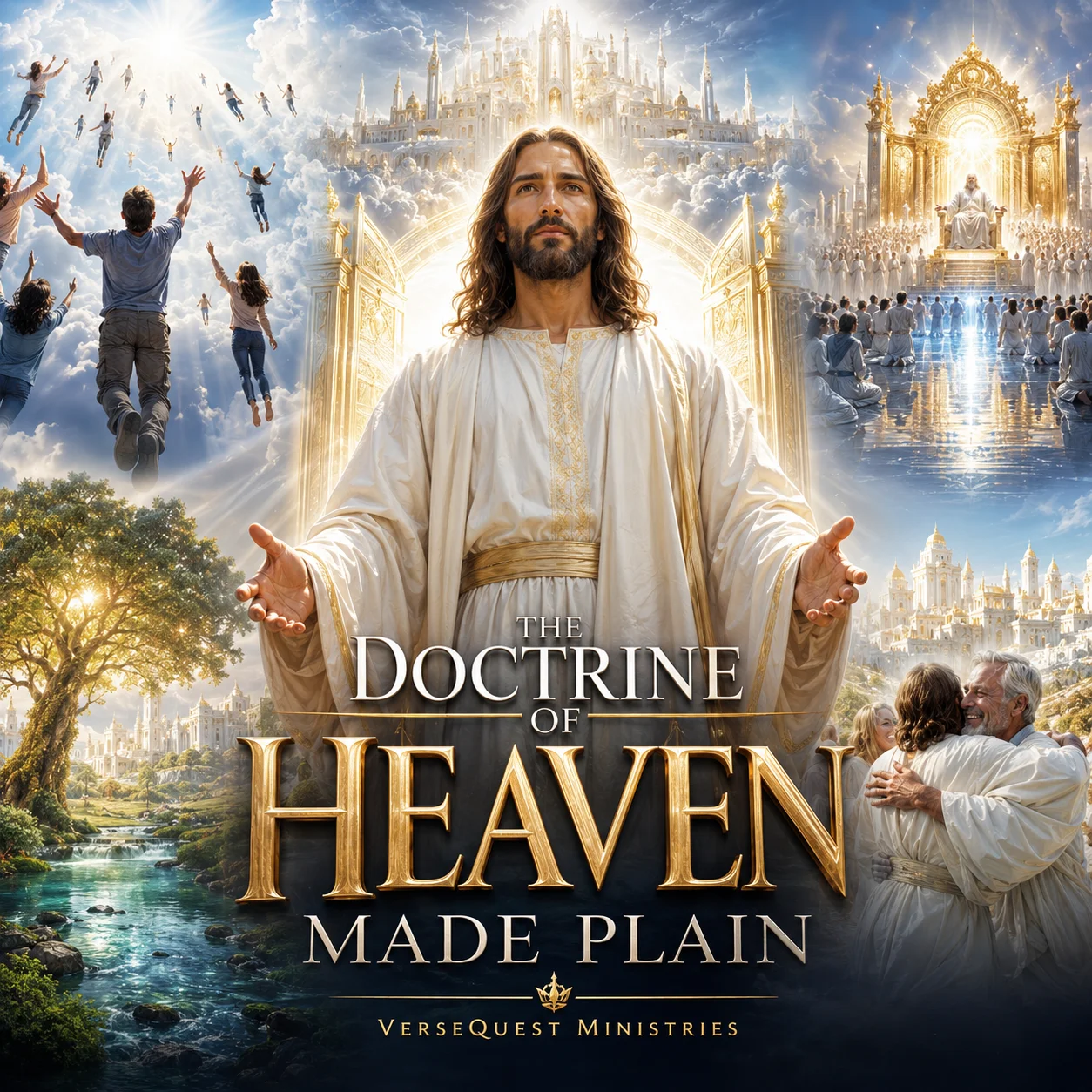
- The Doctrine of Heaven Made Plain — 599-Page KJV Bible Study PDF
- A massive 599-page KJV, rightly divided study on heaven, covering the present heaven, resurrection body, Rapture, Millennium, New Jerusalem, eternal state, hard questions, funeral lies, and cult errors.
- $34.99
- Add to cart
-
-
Bible Overview Series
-
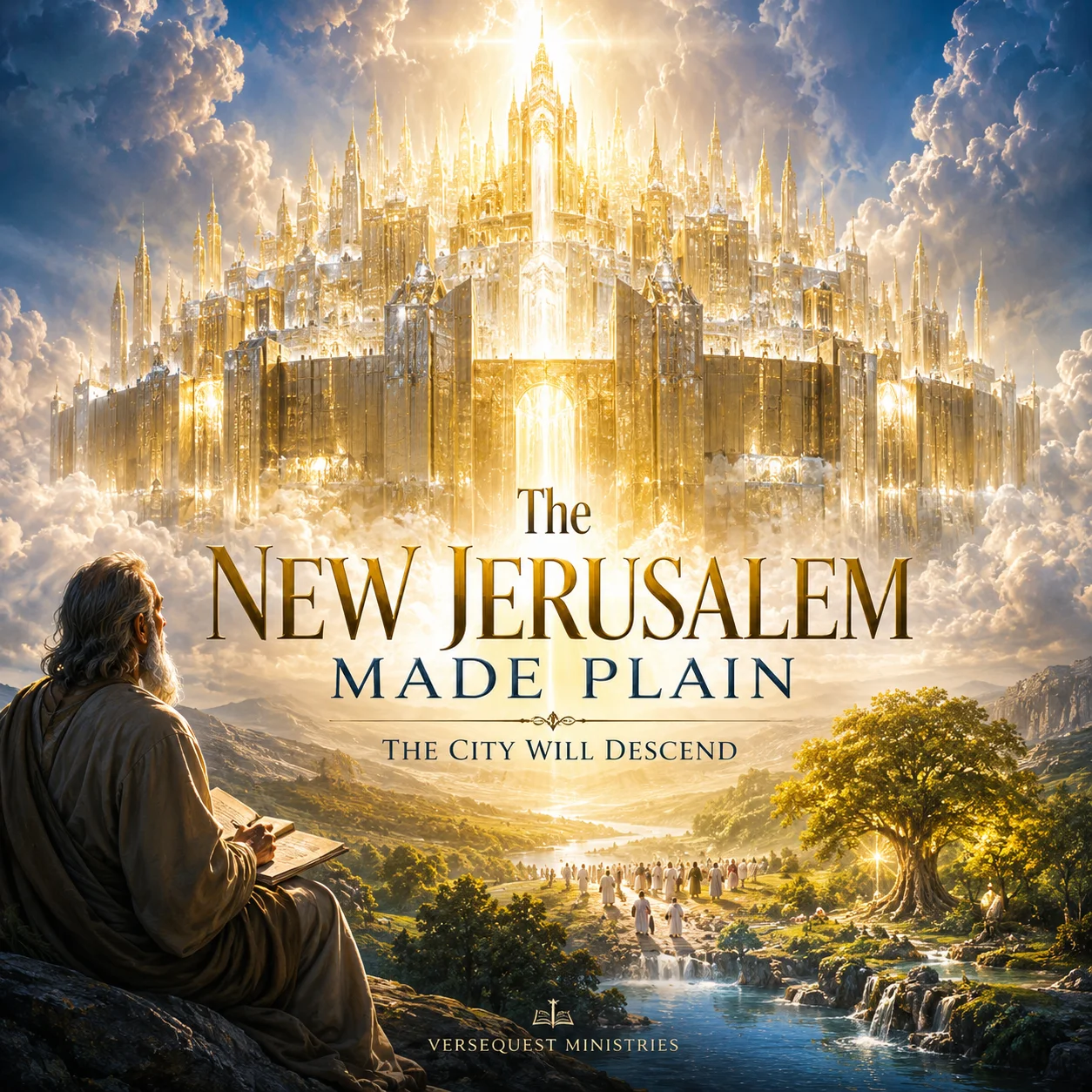
- The New Jerusalem Made Plain — 621-Page PDF Study
- The New Jerusalem Made Plain is a massive 621-page KJV/rightly divided PDF study on the literal holy city revealed in Revelation 21–22. This 100-essay book makes the New Jerusalem plain…
- $34.99
- Add to cart
-
-
Jesus Christ
-
-10%
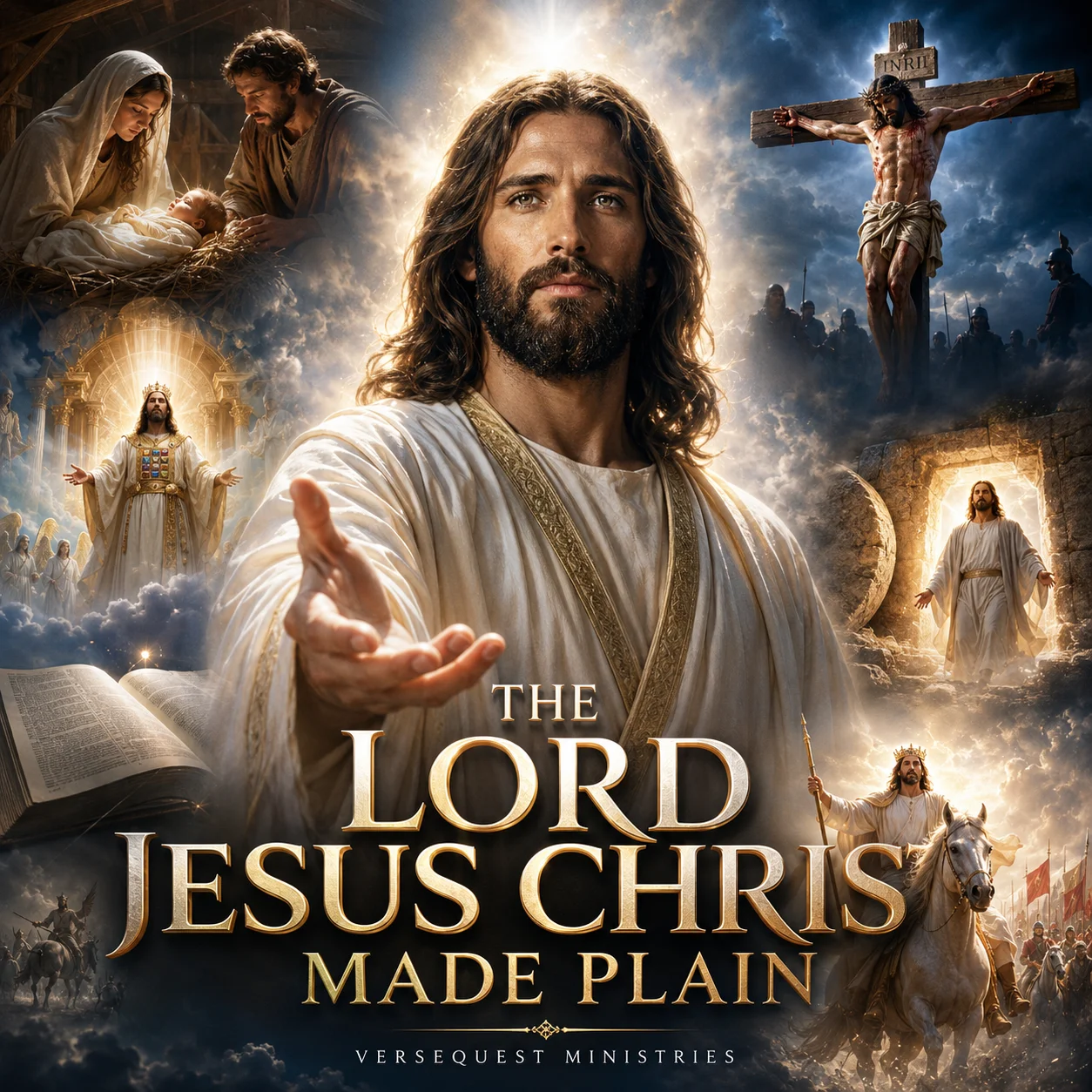
- The Lord Jesus Christ Made Plain – 637-Page KJV Bible Study
- A massive 637-page, 100-part KJV Bible study on the Person and work of the Lord Jesus Christ. This premium VerseQuest resource covers His deity, incarnation, blood, cross, resurrection, present ministry,…
- Original price was: $39.00.$34.99Current price is: $34.99.
- Add to cart
-
-10%
-
Jesus Christ Studies
-
-67%
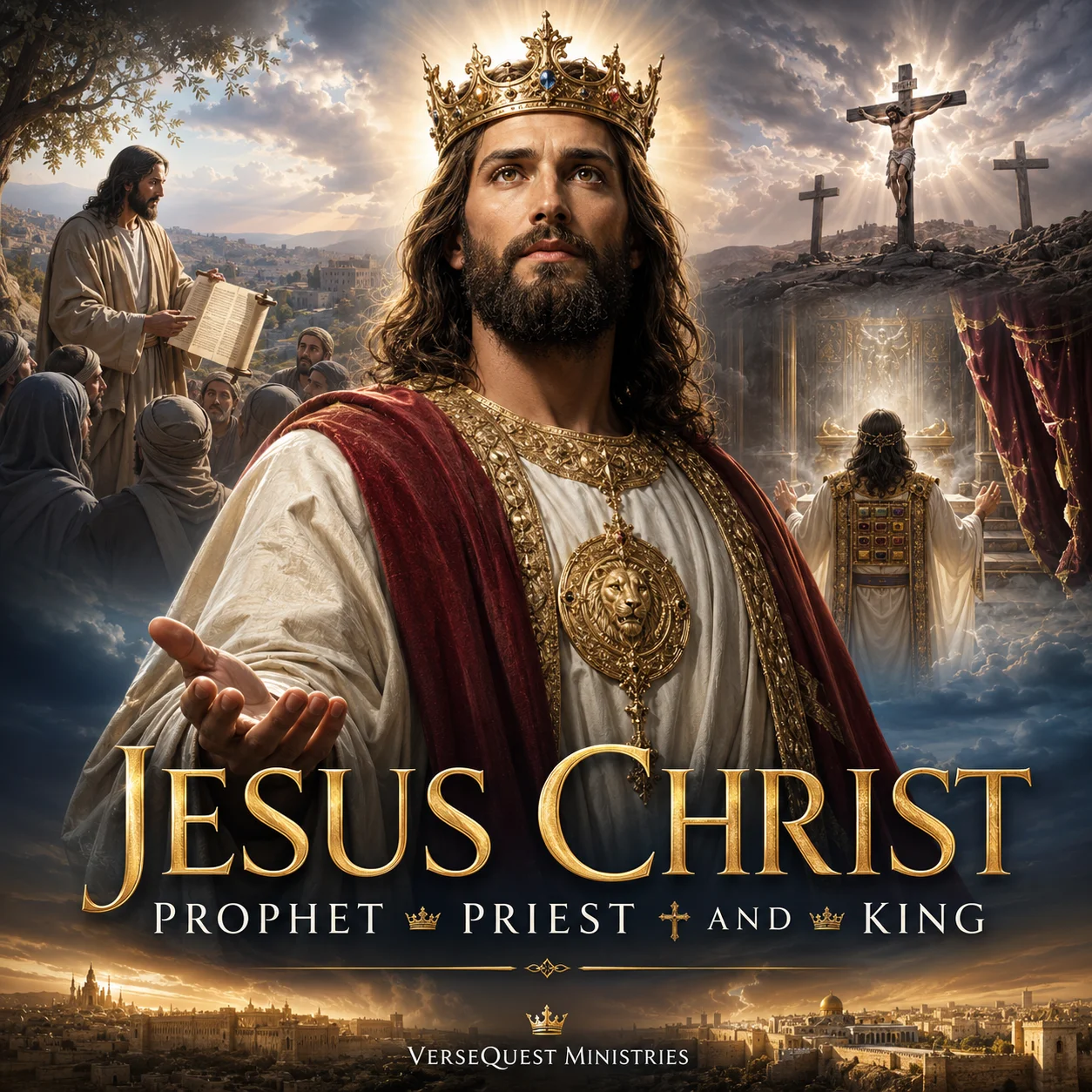
- Jesus Christ Prophet Priest and King – 441-Page PDF Study
- A 441-page premium KJV PDF study on Jesus Christ as Prophet, Priest, and King. This detailed VerseQuest book covers Christ’s prophetic ministry to Israel, His finished sacrifice and present intercession…
- Original price was: $29.99.$9.99Current price is: $9.99.
- Add to cart
-
-67%