
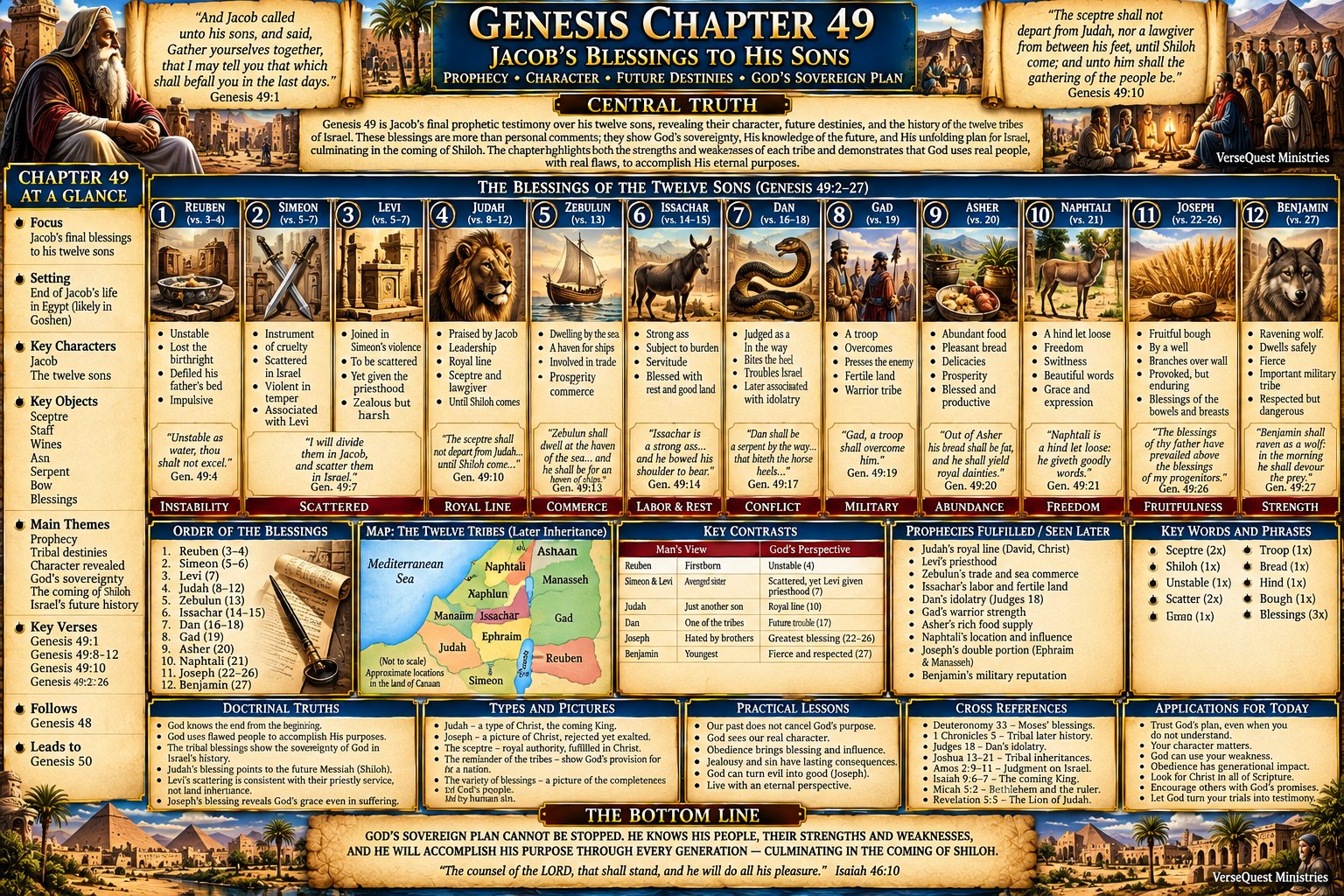
Genesis 49 – Jacob’s Blessings to His Sons: The Twelve Tribes, Judah and Shiloh, Joseph’s Fruitfulness, and Israel’s Prophetic Future (KJV Bible Study Chart)
Explore Genesis 49 with this detailed KJV Bible study chart examining Jacob’s final prophetic blessings over his twelve sons and the tribes that descend from them. Follow the words concerning Reuben’s lost preeminence, Simeon and Levi’s scattering, Judah’s royal line and the coming of Shiloh, Zebulun’s maritime associations, Issachar’s burden, Dan’s judgment, Gad’s warfare, Asher’s abundance, Naphtali’s freedom, Joseph’s extraordinary fruitfulness, and Benjamin’s strength. The chart also connects Jacob’s prophecies with later tribal history, Israel’s inheritance, Levi’s priesthood, Judah’s kingship, Ephraim and Manasseh, and the Messianic line culminating in the Lion of the tribe of Juda. Ideal for Bible study, prophecy teaching, homeschool, Sunday school, sermon preparation, and twelve-tribes studies.
$4.99
Description
Genesis 49: Jacob’s Blessings to His Sons is a detailed KJV Bible study chart examining Jacob’s final prophetic words over his twelve sons and the future tribes that would descend from them. Near the end of his life, Jacob gathers his sons and declares, “Gather yourselves together, that I may tell you that which shall befall you in the last days.” The chapter combines family history, character assessment, tribal destiny, prophecy, judgment, blessing, and God’s sovereign plan for Israel.
Reuben, Jacob’s firstborn, is described as unstable as water and loses the preeminence normally associated with the birthright because of his earlier sin. Simeon and Levi are remembered for their violent anger at Shechem, and Jacob declares that they will be divided and scattered in Israel. Later biblical history shows Simeon dispersed within Israel and Levi scattered throughout the land, though God graciously gives Levi priestly service.
Judah receives one of the chapter’s most important prophetic blessings. His brethren will praise him, his hand will be upon the neck of his enemies, and he is compared to a lion. Jacob then declares, “The sceptre shall not depart from Judah, nor a lawgiver from between his feet, until Shiloh come.” This prophecy establishes Judah’s royal significance and forms a major part of the biblical expectation that ultimately points toward the Messiah, the Lion of the tribe of Juda.
Zebulun is associated with maritime trade, while Issachar is pictured as a strong ass bearing burdens in a pleasant land. Dan is associated with judgment but also compared to a serpent by the way. Gad is portrayed as a warrior tribe overcoming troops, Asher with rich food and royal dainties, and Naphtali as a hind let loose giving goodly words.
Joseph receives an especially rich blessing. He is described as “a fruitful bough” whose branches run over the wall. Though archers have grieved and hated him, his bow remains strong through “the mighty God of Jacob.” Blessings from heaven, the deep, the breasts, and the womb are pronounced upon him, fitting the later prominence of Ephraim and Manasseh.
Benjamin closes the tribal blessings as “a ravening wolf,” anticipating the fierce military reputation later associated with his descendants.
Genesis 49 is therefore far more than a dying father’s personal farewell. Jacob’s words reach into Israel’s future and demonstrate that God knew the histories, strengths, failures, territories, and destinies of the tribes before those histories unfolded. The chapter especially highlights Judah’s royal line and Joseph’s extraordinary blessing while showing that God advances His purposes through real families marked by both faith and failure.
Genesis 49, Jacob’s blessings, twelve sons of Jacob, twelve tribes of Israel, Reuben, Simeon, Levi, Judah, Zebulun, Issachar, Dan, Gad, Asher, Naphtali, Joseph, Benjamin, Shiloh, sceptre of Judah, Lion of Judah, tribal prophecy, last days, Joseph fruitful bough, birthright, priesthood, royal line, Messianic prophecy
Genesis 49 records Jacob’s final prophetic testimony concerning his sons. He gathers them and announces that he will tell them “that which shall befall you in the last days.” The chapter therefore moves beyond immediate family observations into the future histories of the tribes descending from these men. Character, past actions, geography, national destiny, and prophecy are woven together.
Reuben is firstborn and possesses natural claims to preeminence, yet Jacob calls him “unstable as water.” His sin with Bilhah cost him the excellence of the birthright, a fact later explained in 1 Chronicles 5:1–2. Simeon and Levi are condemned for their cruelty at Shechem. Jacob declares that they will be divided and scattered in Israel. Later history fulfills this differently for each tribe: Simeon receives territory within Judah, while Levi is dispersed among cities throughout Israel and later receives priestly responsibility by God’s grace.
Judah receives the great royal prophecy. His brothers will praise him, he will exercise victory over enemies, and he is pictured as a lion. The sceptre and lawgiver are connected with Judah “until Shiloh come; and unto him shall the gathering of the people be.” Interpreting Shiloh as pointing to the Messiah is a historic Messianic reading supported by Judah’s later royal line, Davidic kingship, Hebrews 7:14, and Revelation 5:5, though Genesis 49 itself does not explicitly define the term.
Zebulun’s blessing anticipates maritime and commercial associations. Issachar is pictured as strong yet willing to bear burdens in a pleasant land. Dan will judge his people but is also compared to a serpent, imagery later readers often connect with the tribe’s troubled association with idolatry. Gad is portrayed as initially overcome by a troop yet finally overcoming. Asher receives abundance, and Naphtali is depicted as a hind let loose giving goodly words.
Joseph’s blessing is among the richest. He is “a fruitful bough” whose branches extend beyond their boundaries. Though hated and attacked, his strength remains through “the mighty God of Jacob.” Jacob pronounces blessings of heaven, the deep, fertility, and enduring favor. Later tribal history through Ephraim and Manasseh reflects Joseph’s extraordinary prominence.
Benjamin is described as a ravening wolf, fitting the fierce military character seen among Benjamites in later Scripture.
Genesis 49 must be read as literal patriarchal prophecy concerning Israel’s tribal future. Applications to believers may be drawn, but the Church does not replace the twelve tribes or inherit their territorial identities. The chapter demonstrates that God knows the end from the beginning and sovereignly advances His plan through imperfect men, ultimately directing attention toward Judah’s royal line and the coming Messiah.
Genesis 49 is useful for teaching the long-term consequences of character, the sovereignty of God over generations, the historical development of Israel’s tribes, and the way divine prophecy can reach far beyond the immediate lives of the people who first receive it. The chapter also provides essential background for studying Judah’s kingship, Levi’s priestly role, Joseph’s double portion through Ephraim and Manasseh, Benjamin’s later military reputation, and the Messianic significance of Judah’s royal line. It is ideal for personal Bible study, Sunday school, homeschool instruction, Bible institutes, sermon preparation, prophecy studies, twelve-tribes teaching, Messianic studies, biblical genealogy, and Old Testament survey courses.
King James Bible, Strong’s Concordance, Thompson Chain-Reference Bible, Treasury of Scripture Knowledge, Nave’s Topical Bible, Genesis 29–50 study notes, twelve tribes of Israel charts, Deuteronomy 33 tribal blessing studies, Joshua tribal inheritance maps, Jacob family genealogy charts, Judah and Messianic-line studies, Levi and priesthood studies, Joseph Ephraim and Manasseh charts, Revelation 5 Lion of Judah studies, Revelation 7 tribes studies, VerseQuest Genesis charts
Related products
-
Chart Collections
-
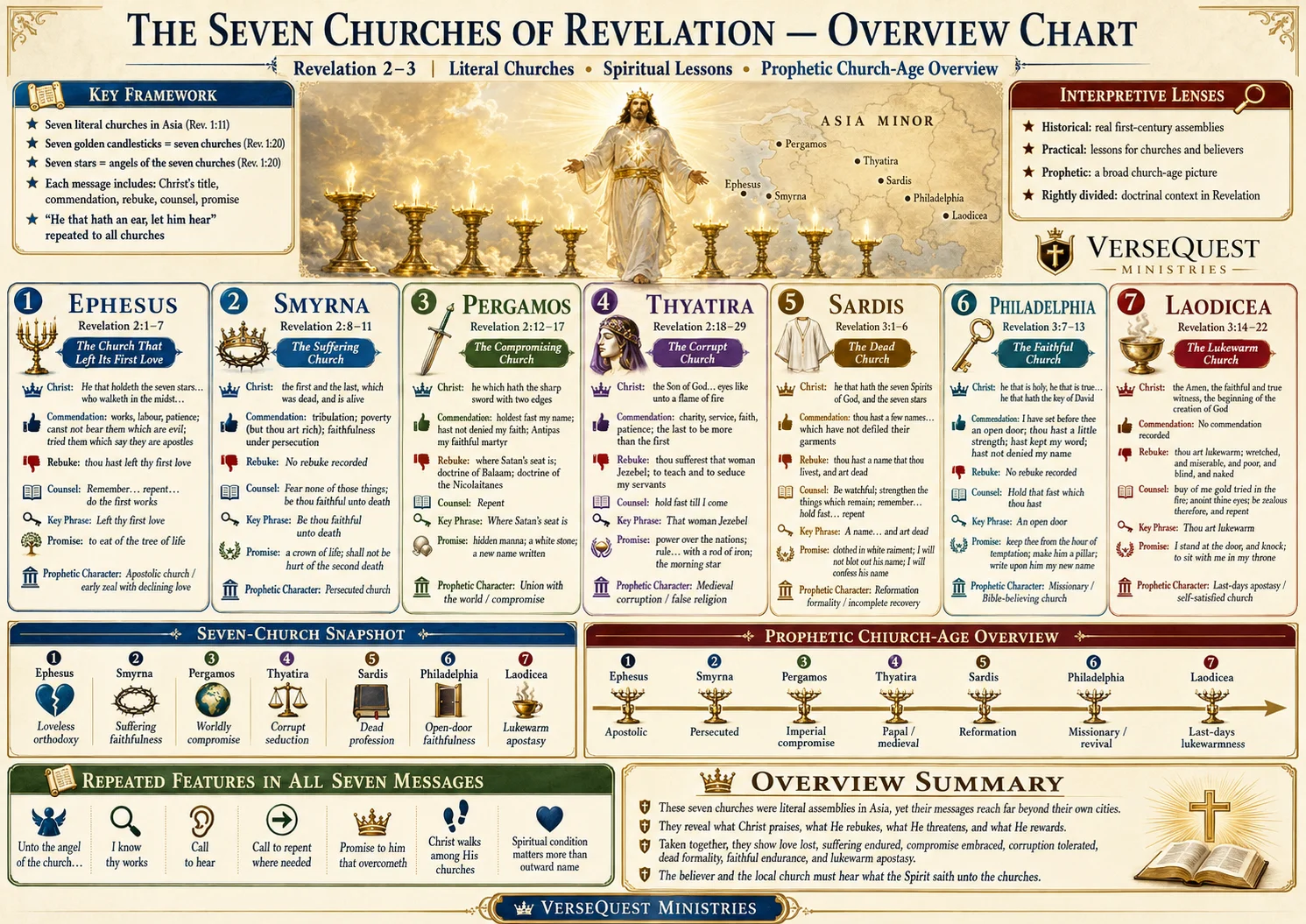
- The Seven Churches of Revelation Chart Collection – Christ Walking Among the Candlesticks
- A premium VerseQuest Ministries™ PDF chart collection covering the Seven Churches of Revelation in Revelation 2–3. Includes one overview chart plus individual KJV Bible study charts for Ephesus, Smyrna, Pergamos,…
- $12.99
- Add to cart
-
-
The Rapture
-
-67%
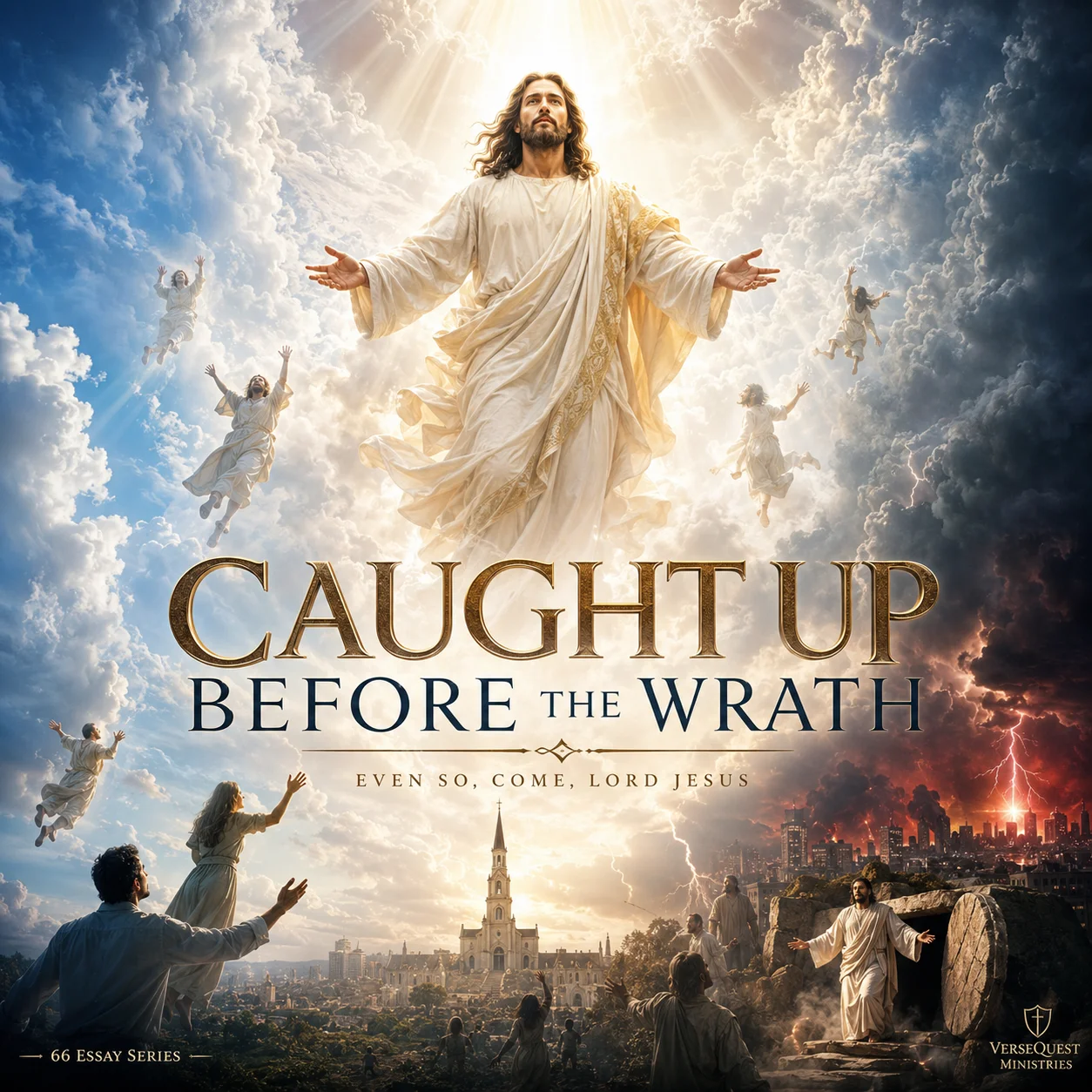
- Caught Up Before the Wrath – 66-Essay KJV Rapture Study
- Caught Up Before the Wrath is a 430-page premium KJV Bible study defending the pre-tribulation Rapture of the Church from a rightly divided, dispensational perspective. This 66-essay VerseQuest Ministries book…
- Original price was: $29.99.$9.99Current price is: $9.99.
- Add to cart
-
-67%
-
Heaven
-
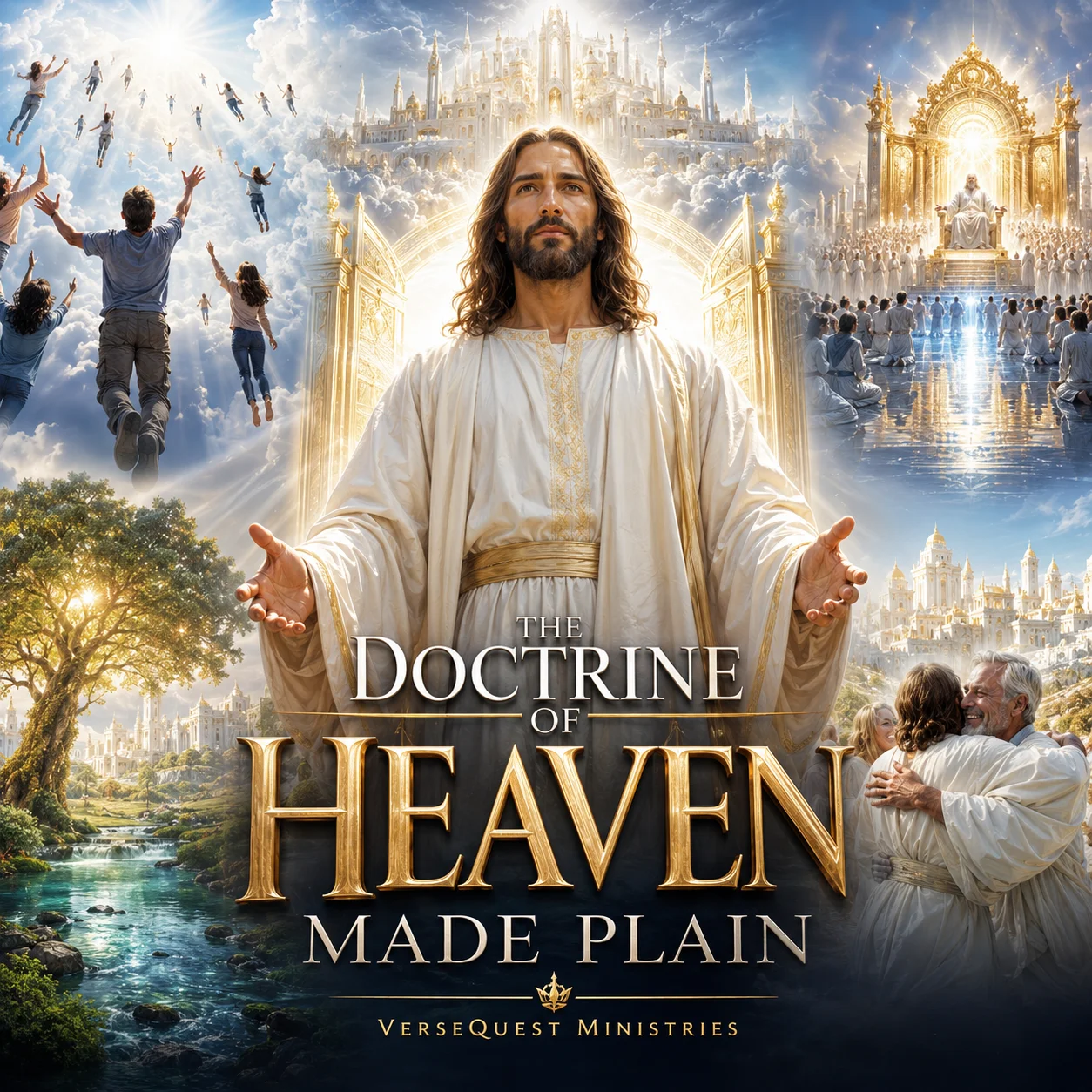
- The Doctrine of Heaven Made Plain — 599-Page KJV Bible Study PDF
- A massive 599-page KJV, rightly divided study on heaven, covering the present heaven, resurrection body, Rapture, Millennium, New Jerusalem, eternal state, hard questions, funeral lies, and cult errors.
- $34.99
- Add to cart
-
-
Doctrine Series
-
-14%
- Judas Iscariot and the Coming Antichrist – Premium KJV Prophecy Study
- A massive 459-page premium KJV prophecy study tracing the biblical connection between Judas Iscariot, the son of perdition, and the coming Antichrist. This detailed VerseQuest Ministries PDF examines Judas’ betrayal,…
- Original price was: $34.99.$29.99Current price is: $29.99.
- Add to cart
-
-14%
-
Jesus Christ Studies
-
-67%
- Jesus Christ Prophet Priest and King – 441-Page PDF Study
- A 441-page premium KJV PDF study on Jesus Christ as Prophet, Priest, and King. This detailed VerseQuest book covers Christ’s prophetic ministry to Israel, His finished sacrifice and present intercession…
- Original price was: $29.99.$9.99Current price is: $9.99.
- Add to cart
-
-67%