
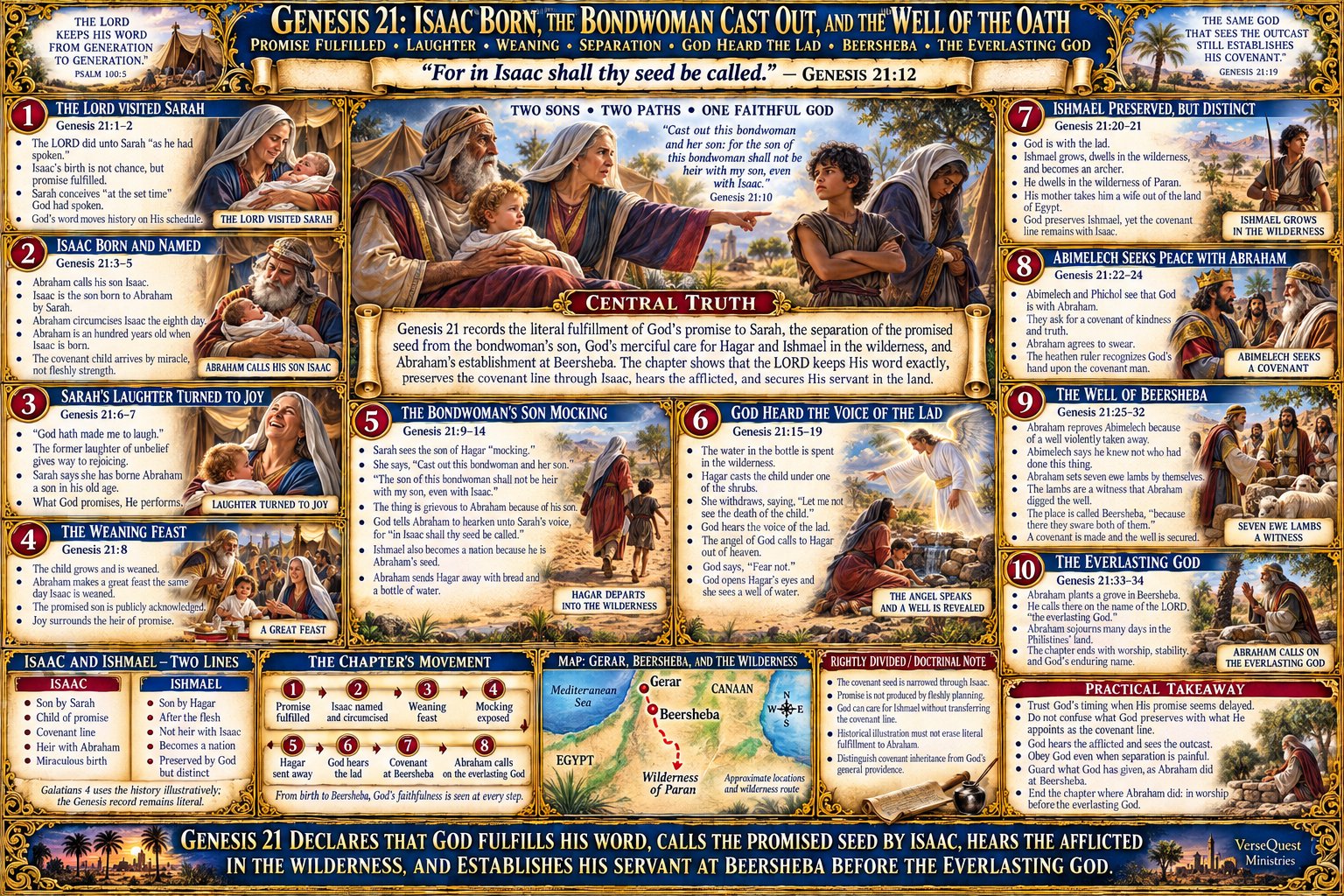
Genesis 21 – Isaac Born, the Bondwoman Cast Out, and the Well of the Oath: Promise Fulfilled, Ishmael Preserved, and Beersheba Established (KJV Bible Study Chart)
Explore Genesis 21 with this detailed KJV Bible study chart tracing the miraculous birth of Isaac, Sarah’s laughter turned to joy, the weaning feast, Ishmael’s mocking, and God’s declaration, “In Isaac shall thy seed be called.” Follow Hagar and Ishmael into the wilderness, where God hears the lad, reveals a well of water, and preserves Ishmael while maintaining the distinct covenant line through Isaac. The chart also examines Abimelech’s covenant with Abraham, the dispute over the well, seven ewe lambs as witness, the naming of Beersheba, and Abraham’s worship of “the everlasting God.” Ideal for Bible study, sermon preparation, Sunday school, homeschool, dispensational teaching, and studies of Isaac, Ishmael, Galatians 4, and the Abrahamic covenant.
$4.99
Description
Genesis 21: Isaac Born, the Bondwoman Cast Out, and the Well of the Oath is a detailed KJV Bible study chart tracing the long-awaited fulfillment of God’s promise to Abraham and Sarah, the separation of Ishmael from the covenant household, God’s merciful care for Hagar and her son in the wilderness, and Abraham’s establishment at Beersheba before “the everlasting God.”
The chapter opens with one of Scripture’s great statements of divine faithfulness: “And the LORD visited Sarah as he had said, and the LORD did unto Sarah as he had spoken.” Isaac is not produced through human policy, natural strength, or Abraham’s attempt to help the promise along. He arrives at God’s appointed time. Abraham is one hundred years old when Sarah bears the promised son, and Isaac is circumcised on the eighth day exactly as God commanded.
Sarah’s earlier laughter of unbelief becomes laughter of joy. She declares, “God hath made me to laugh,” as the impossible promise becomes visible reality. Abraham later makes a great feast when Isaac is weaned, publicly celebrating the heir through whom God has declared the covenant line will continue.
Conflict soon follows. Sarah sees Ishmael, the son of Hagar, mocking and demands, “Cast out this bondwoman and her son.” The matter grieves Abraham because Ishmael is his son, but God confirms Sarah’s central covenant point: “for in Isaac shall thy seed be called.” Ishmael is truly Abraham’s descendant and will receive divine blessing, but he is not the son through whom the covenant line is reckoned.
Hagar and Ishmael depart into the wilderness of Beersheba. When their water is exhausted, Hagar expects the lad to die, but God hears Ishmael’s voice. The angel of God calls to Hagar, tells her “Fear not,” and God opens her eyes to see a well of water. Ishmael survives, grows in the wilderness, becomes an archer, dwells in Paran, and later receives an Egyptian wife. Divine care for Ishmael does not transfer Isaac’s covenant position to him.
The chapter then turns to Abimelech and Phichol, who recognize that “God is with thee in all that thou doest.” Abraham and Abimelech make a covenant, and a dispute concerning a well is formally settled. Seven ewe lambs are set apart as witness that Abraham dug the well, and the place is called Beersheba, associated with both oath and seven.
Genesis 21 closes with Abraham planting a grove at Beersheba and calling upon “the name of the LORD, the everlasting God.” Promise has become fulfillment, the covenant line has been clearly identified through Isaac, Ishmael has been preserved without confusing the two lines, and Abraham is established in the land worshipping the God whose promises survive every delay.
Genesis 21, Isaac born, promised son, Sarah’s laughter, promise fulfilled, Abraham, Sarah, Hagar, Ishmael, bondwoman cast out, in Isaac shall thy seed be called, covenant line, flesh versus promise, God heard the lad, wilderness of Beersheba, wilderness of Paran, Ishmael preserved, Abimelech, Phichol, covenant at Beersheba, well of the oath, seven ewe lambs, everlasting God, El Olam, Abrahamic covenant
Genesis 21 begins by emphasizing exact fulfillment: “the LORD visited Sarah as he had said” and acted “as he had spoken.” Sarah conceives and bears Isaac at the appointed time, when Abraham is one hundred years old. The miracle demonstrates that the covenant heir comes through divine promise rather than human strength. Abraham circumcises Isaac on the eighth day in obedience to Genesis 17, publicly marking the promised son within the covenant household.
Sarah’s laughter has also changed. In Genesis 18 she laughed when the promise appeared impossible; now she declares, “God hath made me to laugh.” What once seemed beyond natural possibility has become historical reality. The chapter therefore gives a powerful demonstration that delay does not equal failure when God has spoken.
After Isaac is weaned, Abraham makes a great feast. Sarah then sees Ishmael “mocking.” She demands that Hagar and her son be cast out because Ishmael is not to inherit with Isaac. Abraham is grieved because Ishmael is his son, but God tells him to hearken unto Sarah and declares, “for in Isaac shall thy seed be called.” This statement becomes important in Romans 9, where Paul distinguishes physical descent from the specific line of promise.
God does not abandon Ishmael. He promises to make a nation of him because he is Abraham’s seed. Hagar and Ishmael enter the wilderness of Beersheba, their water is exhausted, and Hagar expects her son to die. God hears “the voice of the lad,” calls to Hagar, and opens her eyes to a well. Ishmael grows, becomes an archer, dwells in Paran, and receives a wife from Egypt. Divine preservation and covenant succession must therefore remain distinct: God blesses Ishmael while the covenant line continues through Isaac.
Galatians 4 later uses Sarah, Hagar, Isaac, and Ishmael allegorically in contrasting promise and bondage. That inspired application builds upon literal history rather than replacing it. Genesis 21 first records real people and real events; Paul later draws doctrinal significance from them.
The latter portion of the chapter concerns Abimelech and Phichol. They recognize that God is with Abraham and seek an oath of peaceful dealing. Abraham also reproves Abimelech concerning a well seized by his servants. Seven ewe lambs are set apart as witness that Abraham dug the well, and the place is called Beersheba. The name carries associations with both seven and oath, fitting the covenant scene.
Abraham plants a grove at Beersheba and calls upon “the LORD, the everlasting God.” The chapter that began with fulfilled promise ends with worship. God has given Isaac, preserved Ishmael, established Abraham, and proven again that His covenant purpose advances according to His Word rather than human timing.
Genesis 21 is useful for teaching patience with God’s timing, confidence in divine promises, the distinction between natural descent and the covenant line, God’s compassion toward the afflicted, and obedience even when separation is painful. It also provides essential background for Romans 9 and Galatians 4, where Isaac and Ishmael are used doctrinally to contrast promise and flesh. The chapter is excellent for personal Bible study, Sunday school, homeschool instruction, Bible institutes, sermon preparation, Abrahamic covenant studies, dispensational teaching, family studies, and lessons on God’s providence, faithfulness, separation, worship, and fulfilled promise.
King James Bible, Strong’s Concordance, Thompson Chain-Reference Bible, Treasury of Scripture Knowledge, Nave’s Topical Bible, Genesis 16–22 study notes, Abrahamic covenant charts, Isaac and Ishmael comparison studies, Hagar Scripture studies, Romans 9 studies, Galatians 4 studies, Hebrews 11 studies, patriarchal timelines, maps of Beersheba and the wilderness of Paran, biblical wells and covenant studies, names of God studies, VerseQuest Genesis charts
Related products
-
Angels
-
-67%
- The Doctrine of Angels Made Plain – 620-Page KJV Bible Study PDF
- The Doctrine of Angels Made Plain is a 620-page KJV Bible study that traces angels from Genesis to Revelation. This premium VerseQuest PDF explains holy angels, Christ’s supremacy over angels,…
- Original price was: $29.99.$9.99Current price is: $9.99.
- Add to cart
-
-67%
-
Doctrine Series
-
-14%
- Judas Iscariot and the Coming Antichrist – Premium KJV Prophecy Study
- A massive 459-page premium KJV prophecy study tracing the biblical connection between Judas Iscariot, the son of perdition, and the coming Antichrist. This detailed VerseQuest Ministries PDF examines Judas’ betrayal,…
- Original price was: $34.99.$29.99Current price is: $29.99.
- Add to cart
-
-14%
-
Christology Studies
-
- The Deity of Christ Defended — 66 KJV Studies Proving Jesus Christ Is God Manifest in the Flesh
- he Deity of Christ Defended is a 444-page premium KJV Bible study defending the full deity of the Lord Jesus Christ. This 66-study book proves from Scripture that Jesus is…
- $29.99
- Add to cart
-
-
Study Books (PDF)
-
-25%
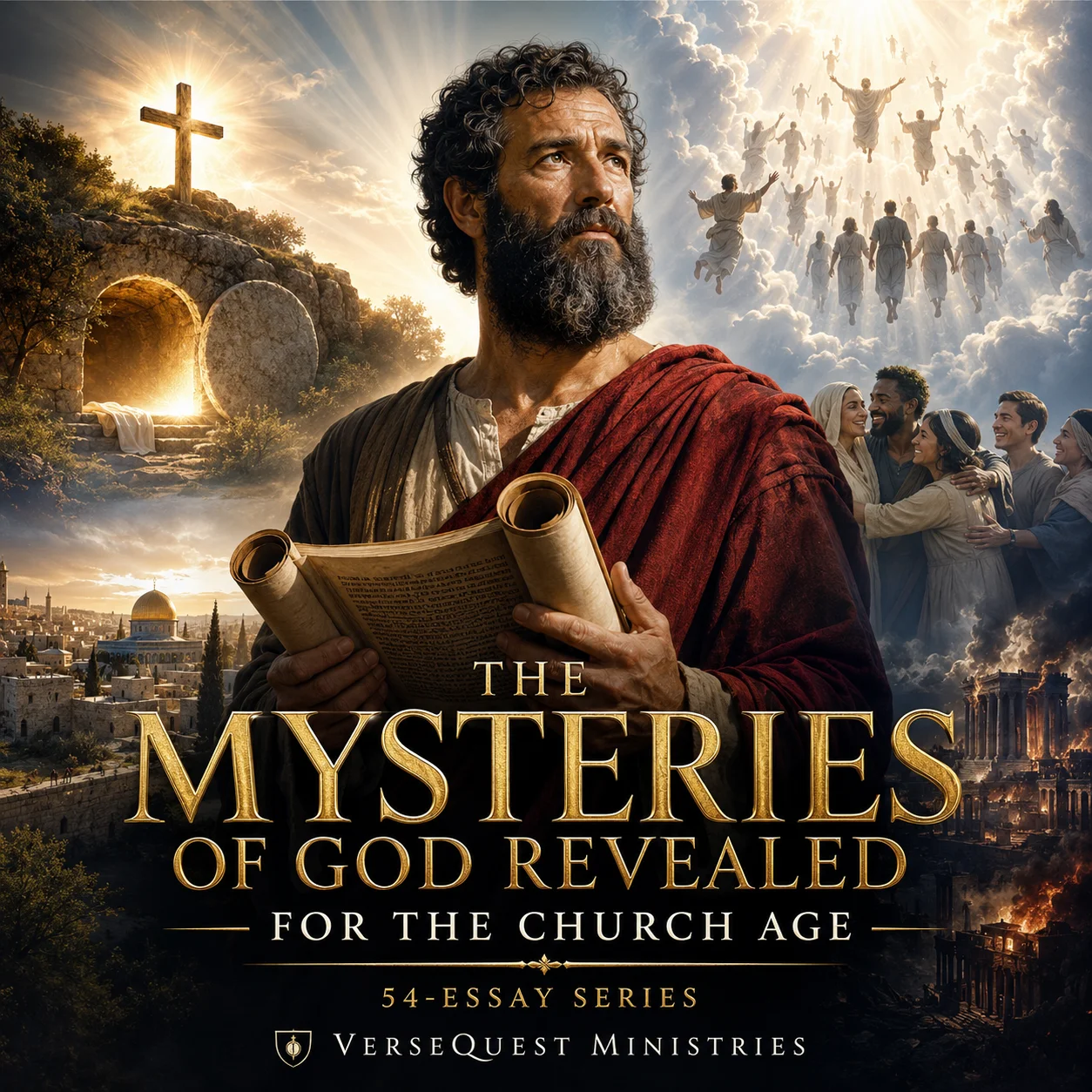
- The Mysteries of God Revealed for the Church Age – Premium Essay Series PDF
- A premium 404-page VerseQuest Ministries digital PDF study book featuring 54 detailed KJV-only essays on the mysteries of God revealed for the Church Age. This rightly divided study covers the…
- Original price was: $39.99.$29.99Current price is: $29.99.
- Add to cart
-
-25%
-
Bible Prophecy Charts
-
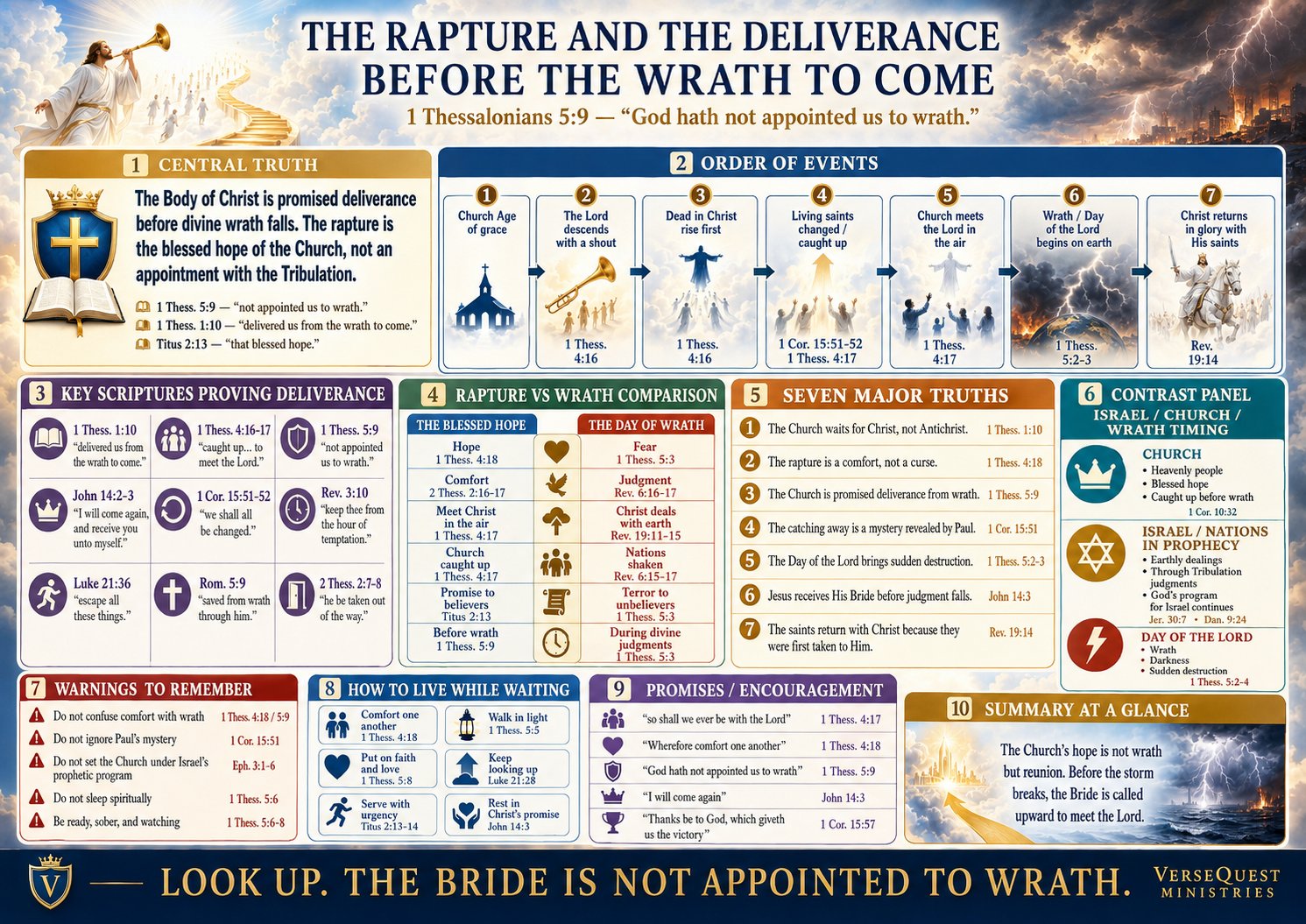
- The Rapture and the Deliverance Before the Wrath to Come – Printable Bible Study Chart
- Printable KJV Bible study chart on The Rapture and the Deliverance Before the Wrath to Come, showing from 1 Thessalonians 5:9 that the Church is not appointed to wrath. This…
- $4.99
- Add to cart
-