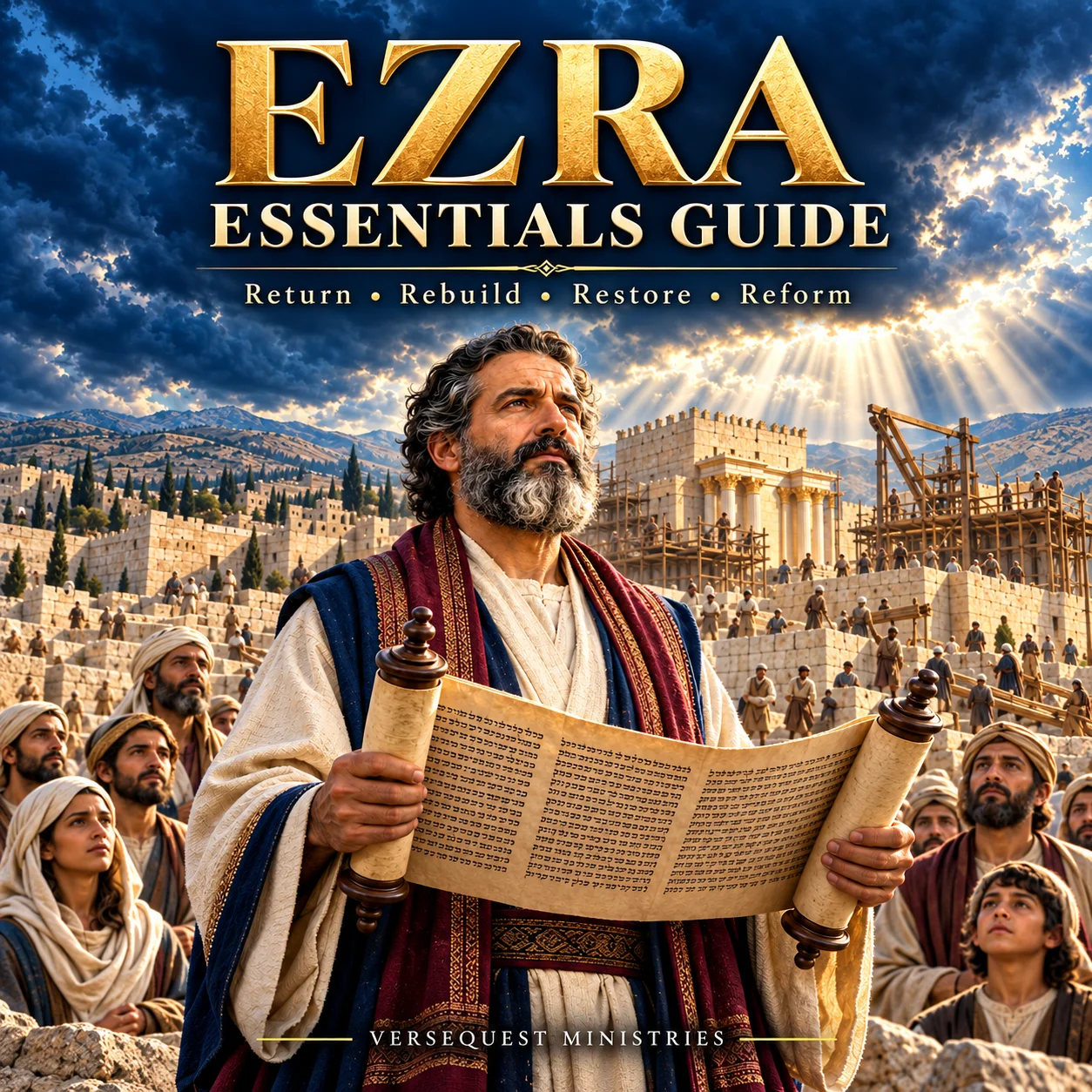
Ezra Essentials Guide — KJV Bible Study PDF
The Ezra Essentials Guide is a 96-page downloadable KJV Bible study PDF that explains the return from Babylon, Cyrus’s decree, the restored altar, the rebuilding of the temple, the opposition against the work, the ministries of Haggai and Zechariah, Ezra’s second return, and the final crisis of covenant compromise.
Its 52 Scripture-centered studies include selected King James Bible passages written in full, explanations, important observations, cross-references, questions, and note space. Timelines, chapter maps, Persian-decree comparisons, difficult-passage guidance, teaching plans, sermon starters, indexes, and final review tools make it valuable for beginners, experienced Bible readers, families, teachers, pastors, and ministry students.
Digital PDF download. 96 pages. 52 studies. Price: $14.99.
$14.99
Description
The Ezra Essentials Guide is a comprehensive 96-page downloadable PDF created to give readers a clear, organized, and substantial understanding of the entire book of Ezra. Through 52 Scripture-centered studies, it presents the essential history, principal people, Persian decrees, prophetic connections, doctrinal distinctions, spiritual lessons, difficult questions, and practical applications found throughout Ezra’s ten chapters.
Ezra records one of the most important turning points in Israel’s history. Jerusalem had been destroyed, the temple burned, its sacred vessels carried into Babylon, and many of Judah’s people taken into captivity. Yet the judgment of captivity did not cancel God’s covenant purposes. When the appointed time arrived, the LORD stirred the spirit of Cyrus king of Persia and opened the way for a remnant to return to Jerusalem.
The guide traces the first return under Zerubbabel and Jeshua, the restoration of the altar, the observance of the appointed feasts, and the laying of the temple foundation. Readers will examine the mingled praise and weeping that accompanied the foundation, the importance of worship before ideal conditions existed, and the orderly restoration of priests, Levites, singers, porters, vessels, sacrifices, and temple service.
Special attention is given to the opposition recorded in Ezra 4–6. The adversaries first offered compromised cooperation, then employed discouragement, fear, political influence, accusation, and force. The work stopped for a prolonged period, but God had not abandoned His purpose. Through the preaching of Haggai and Zechariah, Zerubbabel, Jeshua, and the returned remnant resumed the work. A royal investigation ultimately uncovered Cyrus’s original decree, and Darius ordered the temple project to be protected, funded, and completed.
The second half of Ezra introduces the priest and ready scribe whose name the book bears. The guide examines Ezra’s prepared heart, his commitment to seek the law of the LORD, his determination to obey it personally, and his responsibility to teach its statutes and judgments in Israel. His example joins biblical knowledge with character, prayer, administration, courage, careful stewardship, and public instruction.
Readers follow Ezra’s second return from Babylon, the gathering at the river Ahava, the search for qualified Levites, the proclaimed fast, the prayer for divine protection, the weighing of the temple treasures, and the company’s safe arrival at Jerusalem. These chapters demonstrate that confidence in the good hand of God does not remove the need for planning, qualified servants, transparent records, accurate weights, and accountable delivery.
The closing chapters confront the serious internal crisis that threatened the restored community. External enemies had hindered the building, but covenant compromise now existed among the returned people themselves. Ezra’s grief, confession, prayer, leadership, and response are examined carefully within Israel’s historical and Mosaic setting. The guide explains why these passages concern covenant disobedience and idolatrous influence, why they must not be converted into racial ideology, and why Israel’s national corrective action should not be transferred carelessly into New Testament church practice.
The orientation pages establish Ezra’s place in the biblical canon, its relationship to Second Chronicles, Nehemiah, Esther, Haggai, and Zechariah, and the historical setting of the Persian period. Readers receive a book-at-a-glance summary, a four-movement outline, an exile-and-return timeline, comparisons of the Persian rulers and decrees, a study of the two returns, chapter maps, profiles of principal people and places, key terms, major themes, and interpretation principles.
The 52 core studies cover selected passages from every chapter of Ezra. Each study prints its selected King James Bible passage in full and provides a central truth, clear explanation, three important observations, a focused Bible-study lens, cross-references, questions, and purposeful writing space.
The concluding Reference Treasury supplies unit reviews, an analysis of opposition, an altar-foundation-temple chart, studies of Haggai and Zechariah, prophecy and Cyrus, genealogies and the remnant, Ezra’s Aramaic sections, the temple vessels, leadership profiles, comparisons of the Persian decrees, difficult-passage guidance, teaching plans, sermon and lesson starters, final review material, memorable truths, indexes, and a structured personal study record.
This guide preserves the literal historical setting of Judah, Jerusalem, the temple, the priesthood, the law, and the Persian period. It maintains the biblical distinction between Israel and the Church while drawing responsible applications concerning obedience, worship, prayer, stewardship, leadership, separation, perseverance, and submission to the written Word of God.
The Ezra Essentials Guide is suitable for new Bible students who need a dependable foundation and for experienced readers who want an organized reference resource. It can be read digitally or printed for personal Bible study, discipleship, family study, Sunday school, small groups, classroom instruction, sermon preparation, ministry training, or rapid review before beginning a larger commentary.
The fulfillment of God’s written Word — Ezra opens by declaring that the LORD fulfilled the word spoken through Jeremiah. Divine sovereignty over Gentile rulers — God uses Cyrus, Darius, and Artaxerxes without confusing Persia with Israel or surrendering His authority to an empire. The preserved remnant — A known and counted portion of Israel returns after judgment, demonstrating both divine mercy and historical continuity. The restoration of the temple vessels — Sacred objects removed by Babylon are preserved and returned to their appointed service. Genealogies and qualification — Family records establish identity, continuity, lawful service, and priestly qualification. The altar before the completed temple — Sacrifice and appointed worship resume before construction reaches completion. Worship amid unfinished conditions — The remnant obeys the written law even while living among ruins and opposition. Praise mingled with remembrance — The temple foundation produces both rejoicing and weeping among different generations. Compromised cooperation — The offered assistance of adversaries reveals that not every religious partnership serves God’s work. The changing tactics of opposition — Infiltration, discouragement, fear, influence, accusation, and force are used against the restoration. Delay and neglected responsibility — External resistance is real, but Haggai reveals that misplaced priorities also contributed to the delay. Prophetic preaching and renewed obedience — Haggai and Zechariah move leaders and people from inactivity back to the assigned work. Providence through official records — A royal archive, earlier decree, and governmental inquiry become instruments for confirming the truth. The completion and dedication of the temple — The restored house becomes the center of sacrifice, priestly order, passover, and joy. Ezra’s prepared heart — The ready scribe seeks the law, obeys it personally, and teaches it faithfully. The good hand of God — Divine favor explains Ezra’s authorization, courage, protection, provision, and successful journey. Prayer joined with preparation — Fasting and dependence upon God operate alongside planning, delegation, records, and safeguards. Stewardship and accountability — Vessels and treasures are numbered, weighed, entrusted, delivered, and verified. Holiness after restoration — Rebuilt structures cannot substitute for a people living under the authority of God’s Word. Confession and responsible correction — Ezra identifies sin honestly while leading the community through an orderly process rather than vague emotion. Israel and the Church distinguished — The guide preserves Israel’s land, temple, priesthood, covenant, and national responsibilities before making Christian applications. Partial return and future restoration — Ezra records a genuine return without exhausting every prophetic promise concerning Israel’s final restoration.
Ezra’s central argument is that the LORD remains faithful to His Word and covenant purposes even after severe national judgment. Judah’s captivity was neither accidental nor evidence that Babylon’s gods had defeated the God of Israel. The destruction of Jerusalem and the temple fulfilled the warnings already given in the law and prophets. In the same manner, the return fulfilled God’s earlier promise. The book therefore begins with divine initiative: the LORD fulfills Jeremiah’s word and stirs Cyrus to proclaim the return.
The restoration develops in stages. First comes the decree, then the awakening of willing hearts, the return of the temple vessels, the identification of the remnant, the restoration of the altar, the laying of the foundation, the resumption of construction, the completion of the temple, the arrival of Ezra, the strengthening of instruction, and finally the correction of conduct. Restoration involves more than returning to a location. Worship, leadership, teaching, stewardship, and personal obedience must also be brought under the written Word.
Ezra 2 demonstrates why biblical lists matter. The names connect the returned community with the people who had gone into captivity. The records identify families, recognize lawful servants, protect the priesthood from unsupported claims, and provide accountable totals. Scripture treats identity, qualification, organization, and stewardship as essential parts of restoration.
The altar was rebuilt before the temple was completed. This teaches that obedience need not wait for ideal surroundings. The remnant lived amid ruins, feared surrounding peoples, and lacked the former glory of Solomon’s day, yet they offered sacrifices according to the law. At the same time, the altar did not make the temple unnecessary. One act of restored obedience did not eliminate the remaining work.
The temple foundation produced both praise and weeping. Younger participants celebrated what God was beginning, while older men remembered what had been lost. The scene allows gratitude and grief to exist together. Restoration does not require pretending that judgment caused no damage, but memory must not become an excuse for despising present obedience.
Opposition changed tactics throughout Ezra 4. The adversaries first attempted to gain influence through apparent cooperation. When that failed, they weakened hands, troubled builders, hired counsellors, used selective history, accused Jerusalem politically, and enforced a royal stop order. The chapter teaches that opposition may wear a friendly face before revealing open hostility.
The work resumed when Haggai and Zechariah preached the Word of God. Their ministry did not replace labor; it restored labor. Zerubbabel, Jeshua, and the people rose and began building again, while the prophets continued helping them. Biblical preaching should move hearers toward informed obedience rather than passive admiration.
Persian decrees must be distinguished carefully. Cyrus authorized return and temple rebuilding. The hostile order in Ezra 4 concerned work upon Jerusalem. Darius confirmed Cyrus’s temple decree. Artaxerxes later commissioned Ezra’s return, teaching, worship, judges, and administration. Nehemiah subsequently received authority connected with Jerusalem’s walls. These authorizations served related purposes, but they were not identical.
Ezra’s preparation provides one of the book’s most memorable patterns. He prepared his heart to seek the law of the LORD, to do it, and to teach it. Knowledge, obedience, and instruction belonged together. Ezra did not treat scholarship as a substitute for submission or teaching as a performance detached from personal conduct.
The journey in Ezra 8 joins faith and accountability. Ezra proclaimed a fast and sought protection from God, yet he also selected qualified men, divided responsibilities, weighed the treasure, recorded what was entrusted, and verified everything upon arrival. Prayer did not excuse carelessness, and administration did not replace dependence upon God.
The final crisis proves that rebuilt structures cannot guarantee a holy people. The altar had been restored, the temple completed, the sacrifices resumed, and the law taught, yet serious compromise remained possible. Ezra’s response included grief, confession, public responsibility, investigation, courage, and orderly action.
The marriages addressed in Ezra 9–10 concerned covenant disobedience and association with idolatrous abominations. The passage does not teach racial superiority. It also must not be copied directly as a program for the local church, which possesses neither Israel’s national covenant nor authority to reproduce its civil tribunal. The enduring principles concern obedience, spiritual separation, honest confession, responsible leadership, evidence, and correction under proper biblical authority.
A worthy subject for further study is the relationship between Ezra’s genuine restoration and Israel’s still-future prophetic promises. The returned remnant proves God’s faithfulness, but it does not exhaust everything promised concerning Israel’s final national restoration. Another important study is the relationship between Ezra, Nehemiah, Esther, Haggai, Zechariah, and the Persian rulers whose reigns connect these books.
The whole book may be remembered in one sentence: The LORD restores a remnant by His Word, preserves the work through opposition, supplies ready servants, and requires the restored people to remain under the authority of what He has written.
For personal Bible study, readers may move through the 52 core studies one lesson at a time. Each study contains the selected KJV passage, central truth, explanation, observations, cross-references, questions, and writing space needed for structured daily or weekly study.
For sermon preparation, pastors and preachers can use the chapter maps, lesson themes, doctrinal distinctions, cross-references, memorable truths, and sermon starters as foundations for messages about restoration, worship, opposition, perseverance, leadership, Scripture, prayer, stewardship, confession, and separation.
For Sunday school and small groups, the guide can be taught as a four-session survey, a ten-session chapter study, a thirteen-session quarter, or a fifty-two-week lesson series. The review questions and integrated note areas support discussion without requiring a separate workbook.
For discipleship, Ezra provides a strong framework for teaching new and growing believers about obedience to the written Word, the consequences of compromise, the importance of qualified service, perseverance under opposition, responsible leadership, and integrity in handling entrusted resources.
For family study, parents may read the printed passages aloud and use the explanations and questions to help developing Bible readers follow the return from Babylon, the rebuilding of the temple, Ezra’s ministry, and the book’s central spiritual lessons.
For classroom instruction and ministry training, the historical setting, timelines, Persian rulers, decree comparisons, chapter maps, people, places, key terms, Aramaic sections, difficult passages, and leadership profiles provide a dependable teaching framework.
For topical teaching, the guide supports focused studies on Cyrus, biblical prophecy, the remnant, the Second Temple, Haggai and Zechariah, religious opposition, prayer and fasting, transparent stewardship, the authority of Scripture, covenant separation, and the distinction between Israel and the Church.
The primary companion to this guide should be a King James Bible so readers can examine the complete chapters surrounding every selected passage. The guide prints its principal Ezra passages in full, but repeated reading of all ten chapters will strengthen the reader’s understanding of the complete narrative.
The Second Chronicles Essentials Guide is a natural companion because Second Chronicles closes with Jerusalem’s destruction, the captivity, and Cyrus’s proclamation—the historical doorway through which Ezra begins.
A Strong’s or Cruden’s concordance can help trace words and expressions such as remnant, house of God, law of Moses, decree, hand of God, separation, children of the captivity, and as it is written.
A reliable Bible dictionary can provide additional background on Babylon, Persia, Jerusalem, Judah, Achmetha, Ahava, Joppa, Zerubbabel, Jeshua, Cyrus, Darius, Artaxerxes, Haggai, Zechariah, and Ezra. A Bible atlas can help readers follow the geographical movement from Babylon to Jerusalem and understand the Persian imperial setting.
Cross-reference tools are particularly helpful for comparing Ezra with Second Chronicles, Nehemiah, Esther, Isaiah, Jeremiah, Daniel, Haggai, and Zechariah. A chronological chart of the Persian period can help distinguish the rulers, letters, decrees, temple work, Ezra’s return, and Nehemiah’s later commission.
For deeper study, readers may consult detailed KJV commentaries, studies of the post-exilic prophets, resources concerning the Second Temple period, and careful examinations of the chronological questions surrounding the Persian kings and decrees.
Related products
-
Jesus Christ
-
-10%
- The Lord Jesus Christ Made Plain – 637-Page KJV Bible Study
- A massive 637-page, 100-part KJV Bible study on the Person and work of the Lord Jesus Christ. This premium VerseQuest resource covers His deity, incarnation, blood, cross, resurrection, present ministry,…
- Original price was: $39.00.$34.99Current price is: $34.99.
- Add to cart
-
-10%
-
Revelation
-
-71%
- Moses and Elijah: The Two Witnesses Made Plain
- Moses and Elijah: The Two Witnesses Made Plain is a 636-page premium VerseQuest PDF study proving from Scripture that the Two Witnesses of Revelation 11 are Moses and Elijah. This…
- Original price was: $34.99.$9.99Current price is: $9.99.
- Add to cart
-
-71%
-
The Rapture
-
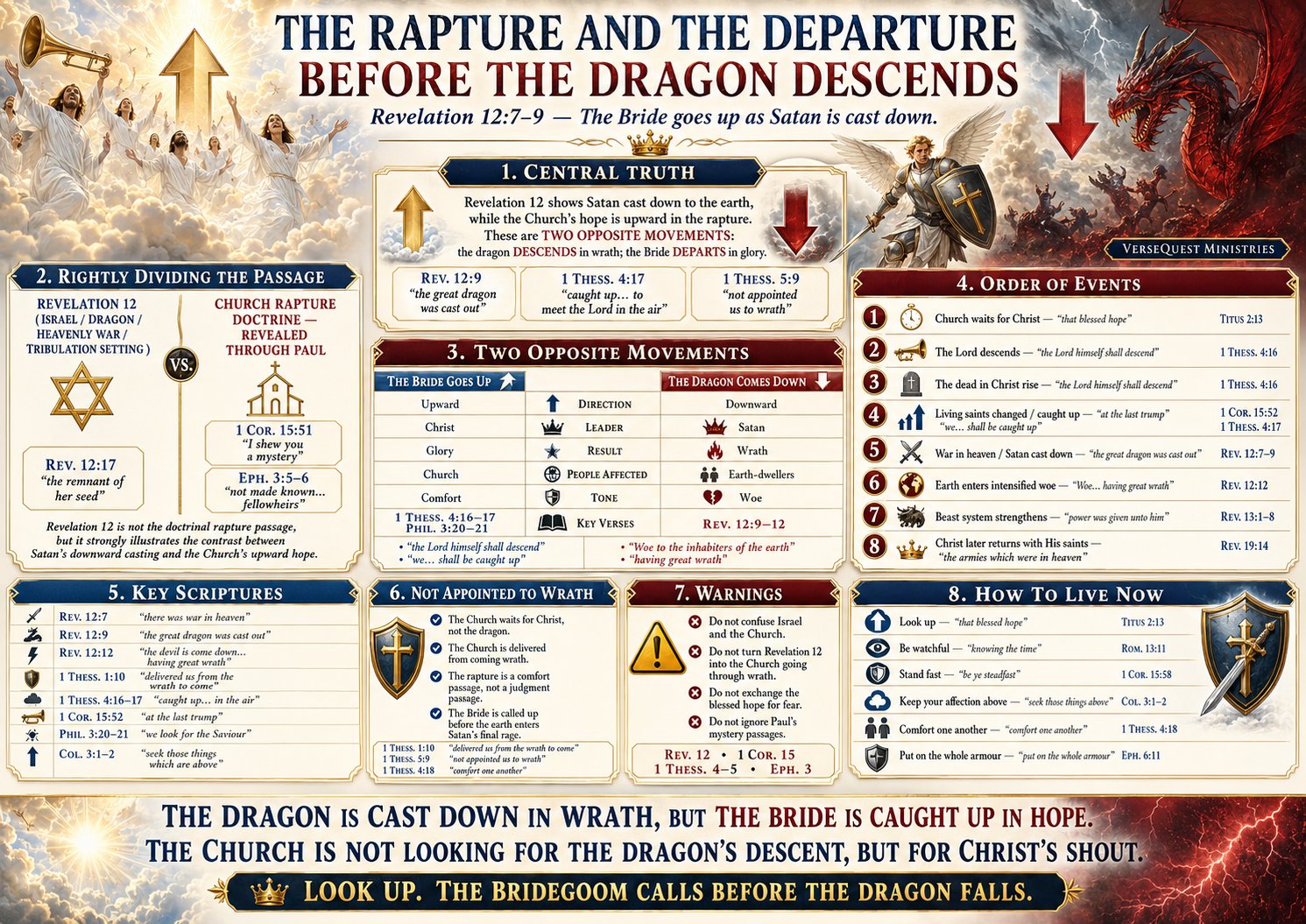
- The Rapture and the Departure Before the Dragon Descends – Printable Bible Study Chart
- Printable KJV Bible study chart on The Rapture and the Departure Before the Dragon Descends, showing the Bride caught up before Satan is cast down in wrath. This premium VerseQuest…
- $4.99
- Add to cart
-
-
Prophecy Studies
-
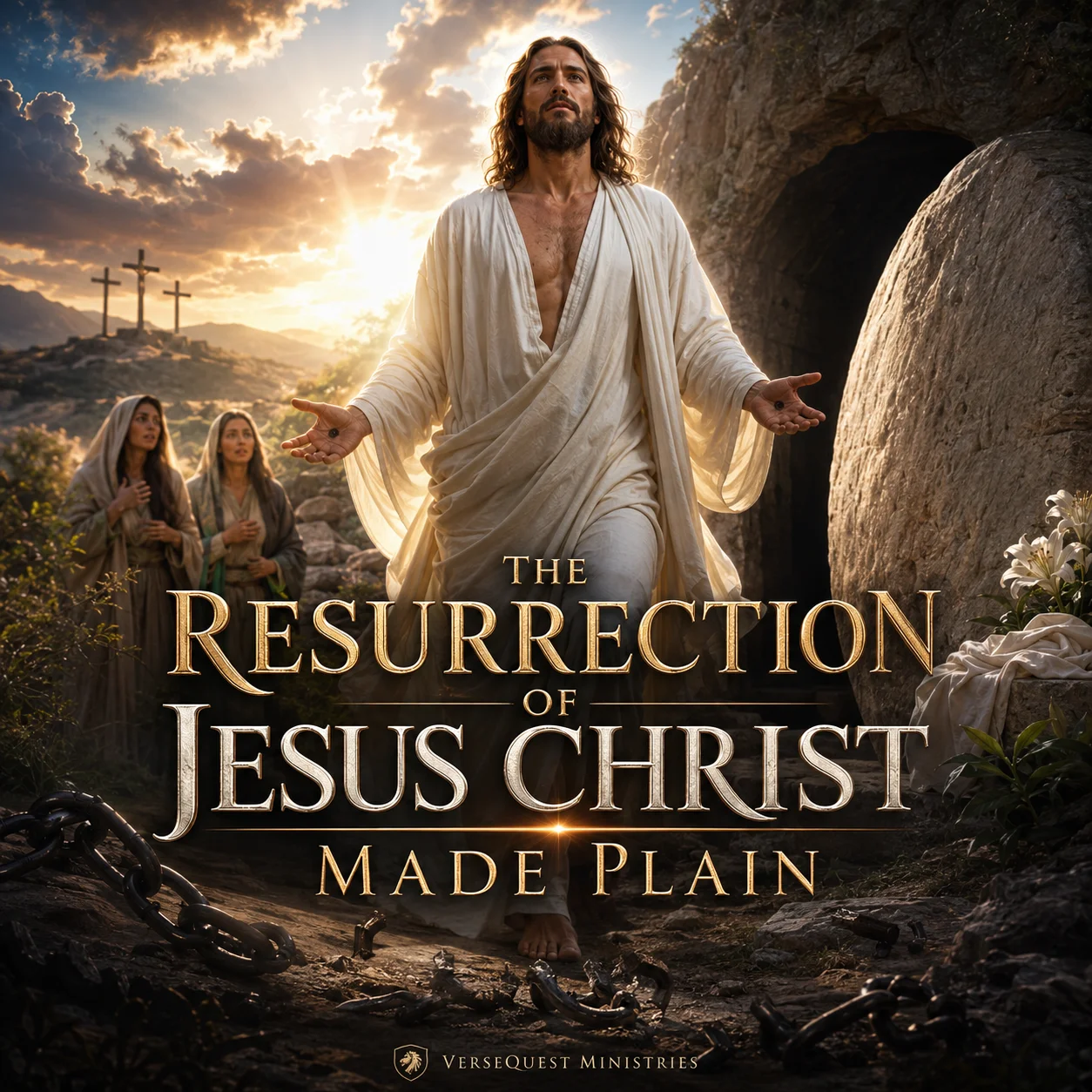
- The Resurrection of Jesus Christ Made Plain – 501-Page KJV Bible Study
- A massive 501-page VerseQuest Ministries PDF Bible study defending and explaining the bodily resurrection of Jesus Christ from a KJV, rightly divided perspective. This 80-essay study covers the empty tomb,…
- $34.99
- Add to cart
-
-
Doctrine Series