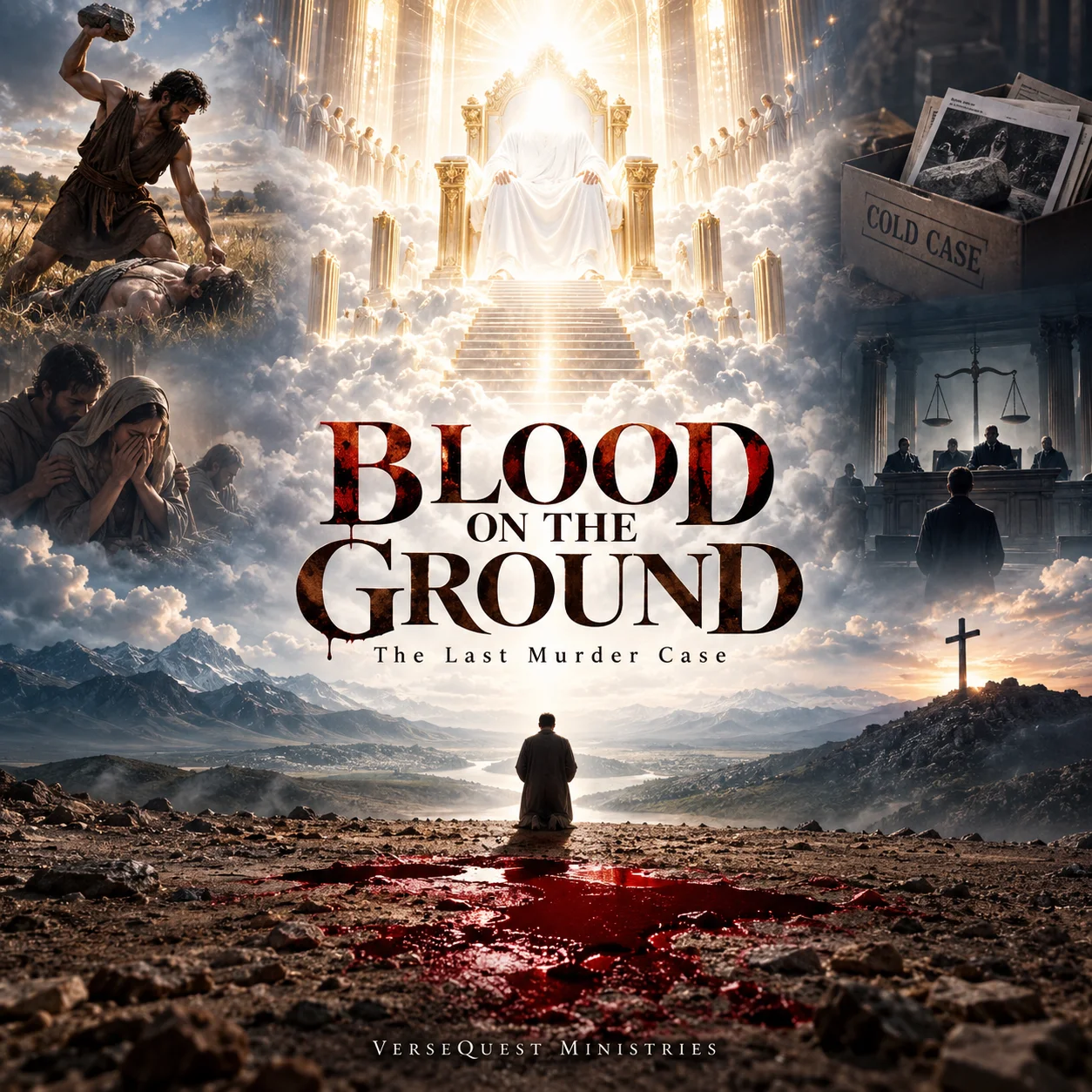
Blood on the Ground: What the Bible Says About Murder, Violence, Vengeance, Justice, and Innocent Blood
Blood on the Ground is a monumental 624-page KJV Bible study examining murder, violence, vengeance, innocent blood, criminal responsibility, victims, forensic evidence, criminology, justice, grace, and final judgment across 100 detailed studies.
Beginning with Cain and Abel and ending at the Great White Throne, this downloadable PDF follows the biblical doctrine of bloodguilt through major murder cases in Scripture while also confronting modern questions involving serial killers, mass murder, victimology, true crime, murder culture, forensic science, cold cases, civil authority, capital punishment, self-defense, and personal vengeance.
The book includes a full introduction, all 100 studies, a comprehensive conclusion, and a detailed Bible-study chart. It is designed for serious Bible students, pastors, teachers, preachers, Sunday school instructors, families, and ministry leaders who want a thorough King James Bible-centered study of one of Scripture’s most serious subjects.
624-page downloadable PDF — $24.99
$24.99
Description
Blood on the Ground is a massive 624-page VerseQuest digital Bible study book examining murder from Genesis to Revelation through the authority of the King James Bible. Built around 100 detailed studies, the book begins with Cain and Abel, follows the biblical doctrine of innocent blood through Scripture, examines the moral and legal distinctions surrounding killing, and ultimately reaches Calvary and the final judgment before God. This is not a sensational true-crime collection. It is a serious biblical examination of why human life matters, what murder reveals about the fallen heart, how Scripture defines justice and vengeance, how victims should be remembered, and why no hidden act escapes the judgment of God.
The study begins where Scripture begins the subject: “the voice of thy brother’s blood crieth unto me from the ground” (Genesis 4:10). From there, the book establishes foundational doctrines concerning man being made in the image of God, innocent blood, bloodguilt, the defilement caused by murder, hatred and anger as roots of violence, covetousness, jealousy, revenge, power, money, and the moral responsibility of the individual sinner. Major biblical cases include Cain, Lamech, Moses, Simeon and Levi, Abimelech, Saul, David and Nabal, David and Uriah, Joab, Absalom and Amnon, Ahab and Jezebel, Athaliah, Herod, Judas, the crucifixion of Christ, Stephen, and Saul of Tarsus.
The book also develops careful biblical distinctions that are often blurred in modern discussion. It examines murder versus manslaughter, premeditation, accidental killing, the cities of refuge, false witnesses, self-defense, personal vengeance, civil authority, capital punishment, warfare, murder-suicide, assassination, mob violence, murder by proxy, witness elimination, ideological violence, and religious violence. Romans 12 and Romans 13 are treated as complementary truths: private vengeance belongs to God, while lawful government bears the sword in its proper sphere.
A substantial portion of Blood on the Ground turns toward modern criminology and murder culture. The studies examine mass murder, serial murder, the question of whether killers are made or born, the myth of the serial-killer template, psychopathy, lack of remorse, attention-seeking offenders, power and thrill motives, anger-driven killing, murder for profit, healthcare killers, team killers, male and female offenders, and the murder of especially vulnerable victims. Throughout these subjects, psychological or criminological descriptions are never allowed to replace biblical moral responsibility. Influence may explain part of the road, but it does not erase the person who chose to walk it.
Victimology receives equally serious attention. The book addresses murdered children, elderly victims, marginalized and transient victims, prostitutes, runaways, missing persons, unidentified victims, and the families who continue carrying the consequences long after the offender leaves the headlines. One of the central convictions of the entire series is that the murderer should never become more important than the person murdered. Modern culture often gives the killer a biography while giving the victim a number. Scripture begins by asking, “Where is Abel thy brother?”
The cultural section examines true crime, Hollywood portrayals of killers, vigilante entertainment, violence presented as empowerment, murder tourism, crime-scene photography, graphic death on social media, serial-killer fandom, murder memorabilia, sensational news coverage, and prison interviews in which offenders may still attempt to control the narrative. These studies do not condemn legitimate historical study, journalism, investigation, or documentary work. Instead, they ask the harder biblical question: when does understanding evil turn into fascination with evil, and when does fascination become pleasure in those who do it?
Later studies examine excuses from offenders, the emotional weight carried by investigators, the moral purpose of forensic science, cold cases, delayed justice, and the limits of human courts. DNA, fingerprints, pathology, digital records, databases, and physical evidence may help earthly courts reconstruct what happened, but the book repeatedly returns to one unchanging truth: God requires no laboratory, witness lineup, confession, or search warrant to know the facts.
The final movement brings the subject beneath the Cross. Moses killed. David carried bloodguilt. Saul consented to persecution and death. Yet the gospel demonstrates that murder is not greater than the blood of Jesus Christ. Forgiveness does not rewrite the crime scene, erase the victim, cancel lawful punishment, or turn murder into something less serious. It declares that Christ’s sacrifice is sufficient for the sinner who believes. “The blood of Jesus Christ his Son cleanseth us from all sin” (1 John 1:7).
The series closes at the Great White Throne of Revelation 20, where every hidden work, forgotten victim, unsolved murder, corrupt verdict, concealed grave, and unrepentant murderer ultimately reaches perfect judgment. The first murder left blood crying from the ground. The final judgment answers that cry.
This 624-page downloadable PDF digital book includes the full 100-study series, a detailed introduction, a comprehensive conclusion, and a richly illustrated Bible-study chart at the end. It is designed for serious Bible students, pastors, preachers, teachers, Sunday school instructors, families, ministry leaders, and readers seeking a thorough KJV-centered biblical study of murder, justice, vengeance, innocent blood, criminology, victimology, and final judgment.
Digital PDF — 624 pages — $24.99
The voice of innocent blood from Genesis through Revelation. Man made in the image of God as the foundation for the sacredness of human life. Murder as a moral and theological offense before it becomes a criminal statistic. Bloodguilt and the biblical significance of shedding innocent blood. Anger, hatred, envy, jealousy, covetousness, pride, revenge, and power as roots of violence. The difference between influence, temptation, explanation, and personal responsibility. Cain as Scripture’s first murderer and prototype of concealment, lying, and self-concern after violence. Biblical case studies involving Moses, Saul, David, Joab, Absalom, Jezebel, Herod, Judas, Stephen, and Paul. Murder versus accidental killing and manslaughter. Premeditation, intent, lying in wait, and moral culpability. The cities of refuge and the relationship between mercy and justice. False witnesses and corrupted courts. Self-defense versus personal vengeance. Romans 12 and Romans 13: private vengeance versus civil authority. Capital punishment and the image of God. Warfare versus murder. Political assassination, regicide, mob violence, and murder by proxy. Ideological and religious violence. Mass murder and serial murder. Myths surrounding serial killers and criminal profiling. Psychopathy, lack of remorse, manipulation, and offender choice. Power, thrill, anger, and financial gain as criminal motives. Healthcare killers and betrayal of entrusted care. Team killers and the multiplication of evil through companionship. Male and female offenders without stereotyping or romanticization. The murder of children and other vulnerable victims. Elderly, marginalized, transient, homeless, runaway, and prostitution-related victims. Missing persons and unidentified victims. The lifelong burden carried by victims’ families. Murderer celebrity and the cultural erasure of victims. True crime as study versus entertainment. Hollywood glamorization of killers. Vigilantism and fictional “righteous murder.” Murder tourism and commercialized tragedy. Graphic death and murder footage on social media. Romans 1:32 and cultural pleasure in those who do evil. Serial-killer fandom and murder memorabilia. Journalism, sensationalism, and monetizing homicide coverage. Criminal interviews, manipulation, and the limits of offender testimony. Excuses from offenders and the distinction between influence and responsibility. The burden carried by detectives, forensic personnel, prosecutors, medical examiners, and victim advocates. The moral purpose of forensic evidence. DNA, fingerprints, pathology, digital evidence, and databases as servants of truth rather than substitutes for judgment. Cold cases and delayed earthly justice. The difference between earthly punishment and eternal salvation. Moses, David, Paul, repentance, remorse, and grace. The blood of Christ as the only sufficient answer to sin and bloodguilt. The Judgment Seat of Christ versus the Great White Throne. Final judgment of every secret work. The Book of Life and the eternal dividing line found in Christ. The final abolition of death in Revelation 21.
The controlling image of the entire study is Genesis 4:10: “the voice of thy brother’s blood crieth unto me from the ground.” Murder is therefore treated first as a matter before God rather than merely as a criminal category. Cain could conceal information from men, but he could not conceal Abel from God. This establishes the central truth that human investigation may fail while divine knowledge never does.
Genesis 9:6 supplies the theological foundation for the value of life: man was made in the image of God. Human dignity is therefore not created by government, social standing, usefulness, intelligence, health, wealth, age, or public sympathy. This becomes especially important when considering victims whom society may be slower to notice or easier to forget.
The book repeatedly distinguishes murder from every other taking of life. Exodus, Numbers, Deuteronomy, and Romans demonstrate that Scripture distinguishes deliberate murder, accidental killing, lawful civil authority, warfare, and personal vengeance. A serious biblical study cannot make “Thou shalt not kill” contradict the rest of the Bible surrounding it.
One of the major moral conclusions of the series is that murder frequently begins before the weapon appears. Cain’s anger, Saul’s jealousy, Ahab’s covetousness, David’s lust and concealment, Absalom’s revenge, and Herod’s pride all demonstrate that outward bloodshed often follows inward corruption. Mark 7:21 identifies murders as proceeding “from within.”
Influence must never be confused with innocence. Childhood abuse, social environment, addiction, pornography, rejection, intoxication, mental illness, relationships, and cultural influences may affect behavior and deserve honest examination. Yet Scripture continues asking the sinner what he chose to do. Explanation can increase understanding without eliminating responsibility.
The victims remain central. The series deliberately resists a murder culture that gives killers names, documentaries, interviews, memorabilia, and biographies while reducing victims to numbers. God asked Cain, “Where is Abel thy brother?” The biblical emphasis remains upon the person whose life was wrongfully taken.
Another major distinction is between justice and vengeance. Romans 12 forbids private retaliation: “Vengeance is mine; I will repay, saith the Lord.” Romans 13 then recognizes civil authority as bearing the sword against wrongdoing. The Bible does not require society to choose between vigilantism and lawlessness.
Forensic evidence is presented as a servant of truth rather than an infallible substitute for judgment. DNA, fingerprints, pathology, timelines, databases, digital evidence, and other methods may expose a murderer, identify a victim, or clear an innocent suspect. Their moral purpose is to bring human judgment closer to what actually happened.
Cold cases expose the limits of human justice. Witnesses die, investigators retire, evidence deteriorates, and offenders may never be identified. Yet Ecclesiastes 12:14 declares that every secret thing comes before God. A case can become cold in an evidence room without becoming cold before Heaven.
Cultural fascination with murder requires discernment. True crime can educate, preserve history, expose injustice, and remember victims. It can also sensationalize suffering, glorify murderers, commercialize tragedy, and create entertainment from human death. Romans 1:32 supplies an essential warning against moving from observing evil to having pleasure in those who do it.
Remorse must also be distinguished from salvation. Tears, regret, fear of punishment, and emotional confession are not the gospel. Judas expressed remorse. David confessed bloodguilt. Paul remembered his persecution. Salvation rests upon Christ’s finished work, not the emotional intensity of the sinner.
The final doctrinal movement is toward Calvary. Murder is not minimized in order to make grace possible. The sin remains serious enough to require the death of Christ. First John 1:7 declares, “the blood of Jesus Christ his Son cleanseth us from all sin.” Grace does not edit the crime scene; it provides a sufficient payment.
Earthly punishment and eternal salvation must remain distinct. A murderer may believe the gospel and become completely saved while still remaining properly subject to civil punishment. Salvation does not erase the victim, cancel lawful consequences, or require society to ignore public justice.
The series ends at Revelation 20 because every unresolved earthly question finally reaches a perfect Judge. The Great White Throne should not be confused with the Judgment Seat of Christ. Saved believers appear before Christ concerning service and reward; the lost dead at Revelation 20 face final judgment. No missing evidence, unknown murderer, corrupt verdict, or concealed grave survives omniscience.
The final teaching line of the entire series is simple: human courts may lose the case, history may forget the victim, and the murderer may die without confession—but God never loses the record.
Blood on the Ground can serve as a major topical reference for personal Bible study. Readers can work through the 100 studies consecutively or select individual subjects such as innocent blood, self-defense, vengeance, serial murder, victimology, forensic evidence, capital punishment, or final judgment for focused study.
Pastors and preachers can use the material to develop sermons or multi-week teaching series dealing with Cain and Abel, biblical justice, the value of life, hatred, revenge, criminal responsibility, government authority, grace, or judgment. The wide range of biblical case studies gives teachers multiple entry points into the subject without reducing the entire study to one passage.
Sunday school teachers and small-group leaders can use individual essays as discussion foundations. The book is especially suited for mature classes studying difficult biblical and cultural questions involving murder, violence, criminal justice, true crime, cultural fascination with killers, and the biblical response to vengeance.
Families with older students can use selected portions to discuss the value of life, personal responsibility, anger, media consumption, violence online, entertainment choices, and the difference between studying evil and celebrating it.
Bible institutes, ministry training environments, apologetics classes, and Christian education settings can use the volume as a topical study resource connecting biblical theology with modern questions surrounding criminology, victimology, forensic evidence, media culture, and the administration of justice.
The final sections also provide a strong evangelistic and doctrinal teaching framework. The studies on Moses, David, Paul, remorse, punishment, Calvary, and the Great White Throne can be used to explain the seriousness of sin, the sufficiency of Christ’s blood, salvation by grace through faith, and the certainty of final judgment.
The primary companion resource for this study should remain the King James Bible, particularly Genesis 4, Genesis 9, Exodus 20–21, Numbers 35, Deuteronomy 19 and 21, 1 Samuel 18–26, 2 Samuel 11–12, 1 Kings 21, Psalm 51, Proverbs 6 and 18, Matthew 5 and 26–27, Acts 7–9, Romans 1, Romans 12–13, 1 Corinthians 15, 1 Timothy 1, Hebrews 9 and 12, James 1, 1 John 1 and 3, and Revelation 20–21.
A strong King James Bible concordance can help readers trace words and expressions including blood, innocent blood, murder, kill, wrath, vengeance, witness, judgment, violence, hatred, envy, sword, and bloodguiltiness.
A reliable Bible dictionary can assist with historical and cultural background surrounding the cities of refuge, Israel’s civil law, ancient courts, kingship, warfare, and biblical legal terminology.
Cross-reference Bible tools are especially useful for connecting passages on innocent blood, vengeance, judicial authority, false witnesses, and judgment across both Testaments.
Bible maps and historical timelines can help place major murder cases involving Israel’s kings, David, Ahab, Jezebel, Herod, the crucifixion, Stephen, and Saul of Tarsus into their geographical and historical settings.
The detailed Blood on the Ground Bible Study Chart included at the end of this volume can be used as a visual review of the series’ final doctrinal movement from Cain’s field to the Great White Throne.
Related products
-
Prophecy Studies
-
- The Resurrection of Jesus Christ Made Plain – 501-Page KJV Bible Study
- A massive 501-page VerseQuest Ministries PDF Bible study defending and explaining the bodily resurrection of Jesus Christ from a KJV, rightly divided perspective. This 80-essay study covers the empty tomb,…
- $34.99
- Add to cart
-
-
Jesus Christ Studies
-
-67%
- Jesus Christ Prophet Priest and King – 441-Page PDF Study
- A 441-page premium KJV PDF study on Jesus Christ as Prophet, Priest, and King. This detailed VerseQuest book covers Christ’s prophetic ministry to Israel, His finished sacrifice and present intercession…
- Original price was: $29.99.$9.99Current price is: $9.99.
- Add to cart
-
-67%
-
Premium Studies
-
-25%
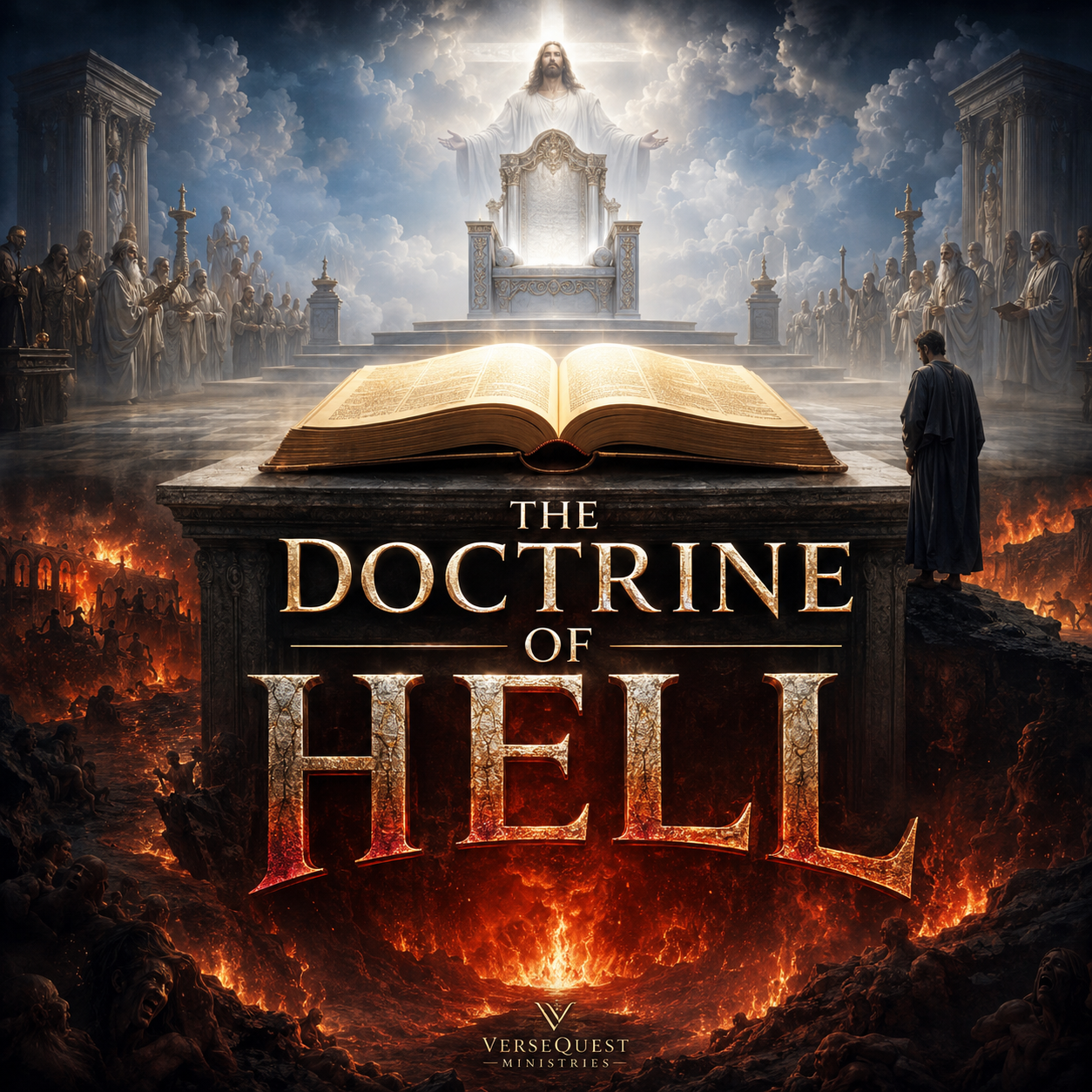
- The Doctrine of Hell — Premium Essay Series PDF
- A 383-page premium VerseQuest PDF study book containing 54 KJV essays on hell, fire, darkness, judgment, the lake of fire, the second death, and Jesus Christ as the only escape.
- Original price was: $39.99.$29.99Current price is: $29.99.
- Add to cart
-
-25%
-
Doctrine Series
-
Kingdom Hall
-
-71%
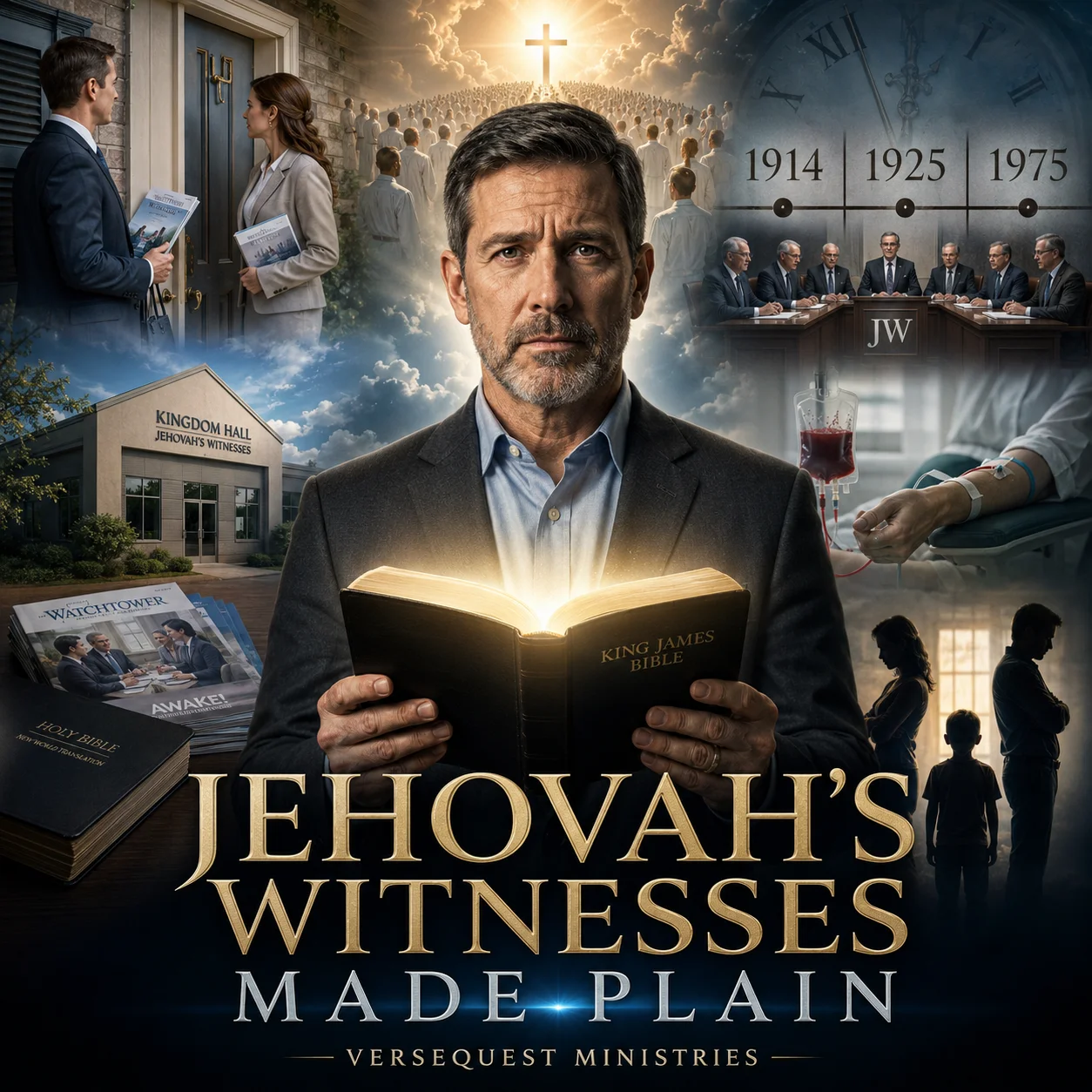
- Jehovah’s Witnesses Made Plain – 574-Page KJV Watchtower Study
- A massive 574-page VerseQuest study exposing the Watchtower system from the King James Bible. This detailed 100-essay book covers the false Christ, false gospel, New World Translation, failed prophecy, 144,000,…
- Original price was: $34.99.$9.99Current price is: $9.99.
- Add to cart
-
-71%