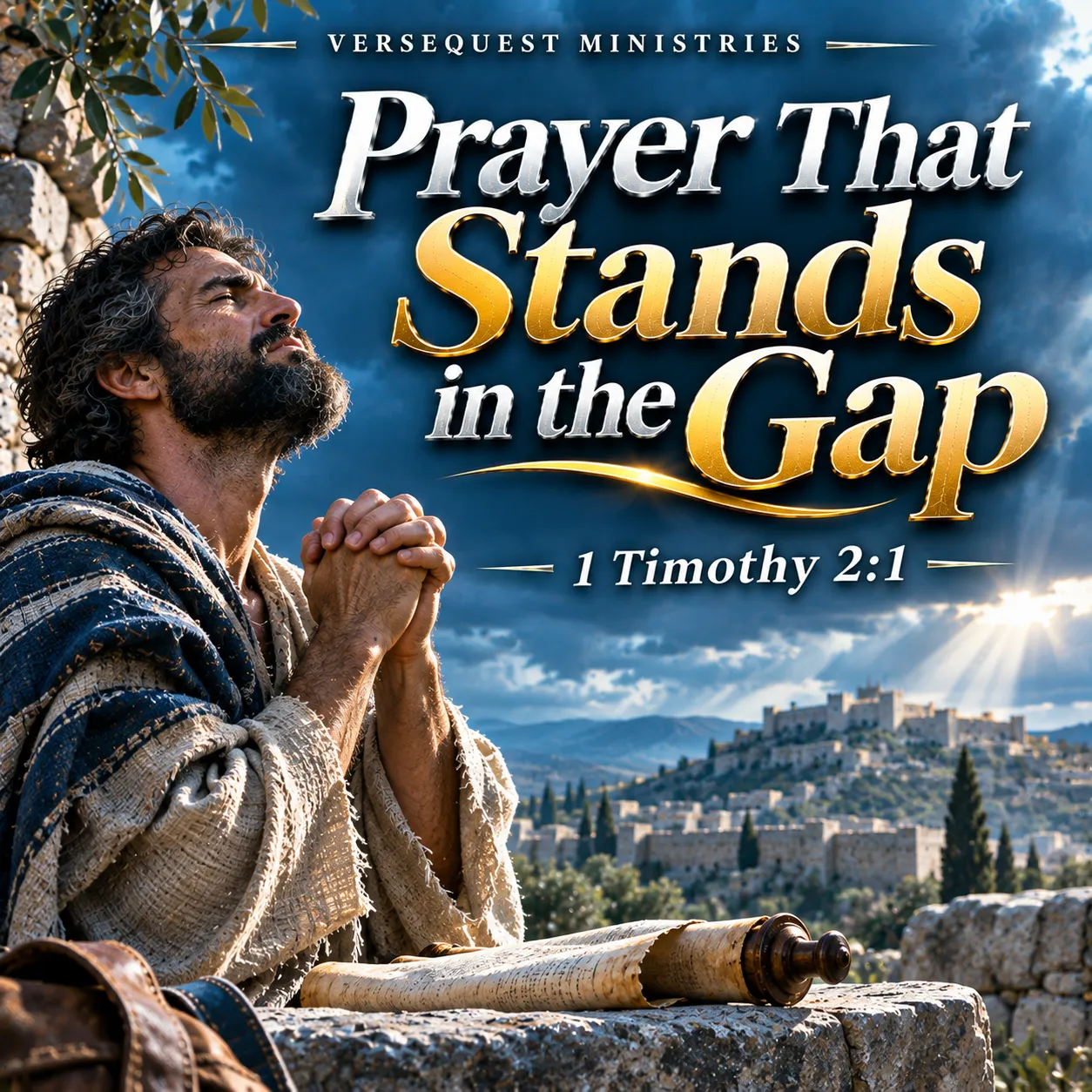
Sermon Title:
Prayer That Stands in the Gap
Key Passage:
1 Timothy 2:1
“I exhort therefore, that, first of all, supplications, prayers, intercessions, and giving of thanks, be made for all men;” (1 Timothy 2:1)
Series:
The Book God Gave
Topic:
The Believer’s Responsibility to Intercede for Others, Pray for Those in Authority, Seek the Salvation of the Lost, and Stand Faithfully Before God Through Jesus Christ, the One Mediator
Book:
1 Timothy
Speaker:
Paul Tackett
Suggested Sermon Text:
1 Timothy 1:3–20; 1 Timothy 2:1–8; 1 Timothy 3:14–16; 1 Timothy 4:6–16; 1 Timothy 6:11–16; Romans 8:26–34; Romans 10:1–17; Romans 12:9–21; Romans 13:1–7; Romans 15:30–33; 2 Corinthians 1:8–11; 2 Corinthians 5:18–21; Ephesians 2:8–18; Ephesians 3:12–21; Ephesians 6:10–20; Philippians 1:3–11; Philippians 4:6–7; Colossians 1:3–14; Colossians 4:2–6; 1 Thessalonians 5:16–25; 2 Thessalonians 3:1–5; 2 Timothy 1:3–7; Hebrews 4:14–16; Hebrews 7:25; James 5:13–18; Genesis 18:22–33; Exodus 32:9–14; Numbers 14:11–20; 1 Samuel 12:23; Job 42:7–10; Psalm 106:23; Jeremiah 29:7; Ezekiel 22:30; Daniel 9:3–19.
Short Sermon Description:
First Timothy 2:1 reveals the Apostle Paul’s urgent command that “supplications, prayers, intercessions, and giving of thanks” be made for all men. This sermon examines the believer’s responsibility to pray beyond his own circumstances and bring the spiritual and practical needs of others before God. It establishes the original context of Paul’s instructions to Timothy concerning the conduct of believers in the Church, the priority of prayer, the meaning of the four expressions Paul uses, and the biblical obligation to pray for those in authority, fellow Christians, the suffering, enemies, and especially those who need salvation through Jesus Christ. The message carefully distinguishes the biblical practice of intercessory prayer from the unique mediatorial work of Jesus Christ, whom 1 Timothy 2:5 identifies as the one Mediator between God and men. It also examines the expression “standing in the gap” from Ezekiel 22:30, preserving that passage’s original application to Israel while drawing a legitimate spiritual illustration concerning the willingness to intercede for others. Special attention is given to the relationship between prayer and God’s desire that all men be saved, the believer’s responsibility to combine intercession with gospel witness, the command to pray for rulers regardless of personal agreement, and the importance of maintaining holiness, faith, forgiveness, and thanksgiving in prayer. Drawing upon 1 Timothy 2:1–8, Romans 8, Ephesians 6, Colossians 4, and other biblical passages, the sermon maintains the distinction between prayer as the privilege and duty of the saved believer and salvation as the finished work of Jesus Christ alone. Preachers, teachers, and Bible students will gain a comprehensive, KJV-based, rightly divided, sermon-ready framework for teaching intercessory prayer, spiritual responsibility, Christian compassion, prayer for the lost, submission to God’s will, and faithful dependence upon the Lord.
PRAYER THAT STANDS IN THE GAP
Introduction
There is something terribly revealing about the way many Christians pray. A man can spend twenty minutes asking God to improve his finances, protect his possessions, relieve his discomfort, settle his problems, and make his personal circumstances more pleasant, yet never once mention the lost sinner living beside him, the missionary struggling on a foreign field, the pastor laboring under spiritual opposition, or the brother in Christ carrying a burden nobody else knows about. His entire prayer life may consist of presenting God with a daily inventory of personal requirements. Now there is nothing wrong with bringing personal needs before the throne of grace. Philippians 4:6 commands believers to make their requests known unto God. But Christianity becomes terribly small when the believer’s prayers never travel beyond the borders of his own interests. The Apostle Paul writes in 1 Timothy 2:1, “I exhort therefore, that, first of all, supplications, prayers, intercessions, and giving of thanks, be made for all men.” There is a remarkable breadth to that command. Paul does not tell Timothy merely to pray for himself, his family, his closest friends, or the Christians who happen to agree with him. He directs attention toward all men. The believer who has been saved by the grace of God should possess enough concern for other people to bring their needs before the very God who saved him. A Christian who never prays for anybody but himself has not necessarily stopped believing in prayer. He may simply have forgotten that the world contains other people who need it.
The passage also belongs to an important doctrinal setting. Paul is writing to Timothy concerning the ordering of the Church, the preservation of sound doctrine, and the responsibilities of believers under the present dispensation of grace. First Timothy 1 addresses false teaching, the proper use of the law, the glorious gospel of the blessed God, and Paul’s own testimony of mercy through Jesus Christ. Then chapter 2 opens with prayer. That order should attract our attention. The Church cannot fulfill its spiritual responsibility merely by becoming skilled at correcting everybody else’s errors while neglecting its own dependence upon God. Sound doctrine and prayer are not competitors. They belong together. Paul specifically mentions supplications, prayers, intercessions, and thanksgiving, then extends the command to kings and all those in authority. He connects that prayer with a quiet and peaceable life in godliness and honesty, declares that God our Saviour desires all men to be saved and come unto the knowledge of the truth, and identifies Jesus Christ as “one mediator between God and men.” This is not a disconnected devotional passage that can be reduced to the familiar instruction that Christians ought to pray more often. It is a doctrinally substantial passage connecting prayer, government, Christian conduct, evangelism, salvation, and the finished work of the Lord Jesus Christ.
The title of this sermon, Prayer That Stands in the Gap, draws upon a biblical expression found in Ezekiel 22:30, where the LORD says, “And I sought for a man among them, that should make up the hedge, and stand in the gap before me for the land, that I should not destroy it: but I found none.” That statement was spoken concerning the corruption of Israel and Jerusalem, and its original prophetic setting must not be erased. It is not a direct doctrinal definition of the Church’s prayer ministry, nor does it make the Christian another redeemer or mediator of salvation. Nevertheless, the image provides a powerful illustration of someone willing to stand before God concerning the needs of others. That is what intercessory prayer involves in practical application. The believer approaches God through Jesus Christ and asks for mercy, wisdom, help, salvation, spiritual strength, or other needs concerning another person. He does not become the bridge between God and man in the redemptive sense, because Jesus Christ alone occupies that position. But he exercises the privilege of bringing others before the throne of grace. And that raises a searching question: when the Lord examines our prayers, will He find Christians whose hearts are occupied only with themselves, or believers who have learned to care enough about others to intercede? The Christian who knows how to approach the throne of grace should not spend his entire life approaching it with nobody’s name on his heart but his own.
I. “FIRST OF ALL” ESTABLISHES THE PRIORITY OF PRAYER IN THE CHURCH
Key Text: 1 Timothy 2:1
Supporting Texts: 1 Timothy 1:3–20; Ephesians 6:18; Colossians 4:2; Philippians 4:6–7; Acts 6:4; 1 Thessalonians 5:17
Paul begins his instruction with the words, “I exhort therefore, that, first of all.” Those are not empty introductory expressions. The apostle is urging Timothy to take prayer seriously as he carries out his responsibilities in the Church. The opening chapter has already addressed doctrinal error, the misuse of the law, the gospel committed to Paul’s trust, and the responsibility to maintain faith and a good conscience. Then Paul turns to prayer. The word “therefore” connects the instruction with the concerns already raised. Timothy cannot preserve sound doctrine, instruct believers, confront falsehood, and serve faithfully merely through the resources of his own personality. He needs the Lord. The Church needs the Lord. The same God who revealed the truth must be approached in dependence upon that truth. Prayer is not an ornamental religious practice included to make a ministry appear respectable. It is an essential expression of the believer’s dependence upon the God whose work he claims to be doing.
The expression “first of all” gives prayer a position of serious importance. It does not mean that no other Christian responsibility matters or that prayer automatically excuses the neglect of Scripture, evangelism, family duties, or practical service. Paul himself commands Timothy to preach the word, study Scripture, maintain sound doctrine, and fulfill his ministry. But prayer must not become the forgotten responsibility that receives attention only after every other activity has been completed. Churches can maintain impressive programs, beautiful buildings, carefully arranged schedules, and sophisticated methods of communication while becoming spiritually careless concerning prayer. A pastor may spend hours preparing sermons and planning activities while allowing his own prayer life to shrink into a few hurried sentences. A Bible teacher may become so confident in his knowledge that he gradually treats dependence upon God as unnecessary. Yet biblical ministry is not made spiritually effective simply because human preparation has become impressive. The servant of God must study faithfully and pray faithfully.
Colossians 4:2 commands, “Continue in prayer, and watch in the same with thanksgiving.” Ephesians 6:18 likewise instructs believers to pray always with all prayer and supplication in the Spirit. These commands establish prayer as an ongoing responsibility rather than an occasional emergency measure. The Christian should not wait until every human solution has failed before remembering that God welcomes His children before the throne of grace. He should approach the Lord throughout his ordinary walk, bringing personal needs, the burdens of others, gospel opportunities, and spiritual concerns before Him. Yet prayer must remain governed by Scripture rather than religious superstition. The believer is not manipulating God through repeated formulas or earning divine favor by accumulating enough minutes in prayer. He is communing with his heavenly Father through Jesus Christ. A Church that can explain every program on its calendar but cannot explain why it has neglected prayer has become very well organized around one of its greatest weaknesses.
Main Truth: Prayer must occupy a place of serious priority in the Christian life and ministry because faithful service requires continuing dependence upon God rather than confidence in human ability alone.
II. SUPPLICATIONS, PRAYERS, INTERCESSIONS, AND THANKSGIVING REVEAL THE BREADTH OF BIBLICAL PRAYER
Key Text: 1 Timothy 2:1
Supporting Texts: Ephesians 6:18; Philippians 4:6; Colossians 4:2; Romans 15:30; 2 Corinthians 1:11; 1 Thessalonians 5:16–18
Paul identifies four expressions associated with the believer’s prayer life: “supplications, prayers, intercessions, and giving of thanks.” The fact that Paul places these together should prevent us from reducing prayer to one narrow religious activity. Supplications emphasize requests made concerning needs. The Christian may approach God regarding spiritual weakness, affliction, difficult circumstances, the needs of fellow believers, and matters requiring divine help. The word “prayers” supplies the broader expression of addressing God. Intercessions direct particular attention toward requests made on behalf of others. Thanksgiving acknowledges God’s goodness, mercy, provision, and faithfulness. These expressions overlap in the actual practice of prayer and should not be turned into an artificial four-step ritual that must be performed in a rigid sequence before God will listen. Paul’s purpose is not to provide a mechanical formula. He is describing the breadth of prayer that ought to characterize the Church.
Philippians 4:6 provides a helpful comparison: “Be careful for nothing; but in every thing by prayer and supplication with thanksgiving let your requests be made known unto God.” The believer is invited to bring concerns before the Lord rather than surrendering his mind to anxiety. But notice that thanksgiving remains part of the instruction. A Christian who continually asks for more while never acknowledging what God has already provided has developed an unbalanced practice of prayer. He may be quick to remember every unanswered request while forgetting countless mercies previously received. The same God who saved him through Jesus Christ has provided forgiveness, eternal life, spiritual blessings in heavenly places, access through the Spirit, and promises that extend beyond the present world. Those blessings should produce gratitude even when legitimate earthly burdens remain unresolved. Thanksgiving does not require pretending that suffering is pleasant. It requires recognizing the goodness and faithfulness of God despite the presence of suffering.
Intercession gives this passage its particular force. The believer is called to carry the needs of others before God. That might mean praying for a family struggling through grief, a missionary laboring in difficult circumstances, a pastor facing discouragement, a believer who has fallen into doctrinal confusion, or a lost person who needs to hear and believe the gospel. The Old Testament provides examples of servants bringing the needs of others before the LORD. Moses interceded concerning Israel after the people’s rebellion. Samuel declared in 1 Samuel 12:23, “God forbid that I should sin against the LORD in ceasing to pray for you.” Those passages belong to their own historical and covenant settings, but they demonstrate that concern for others before God is not a modern religious invention. In the Church, believers have access to the Father through Jesus Christ and may exercise that privilege in behalf of others. Prayer becomes richer when the Christian stops treating the throne of grace as a private service counter and begins remembering the people whose burdens he has the privilege of bringing before God.
Main Truth: Biblical prayer includes requests, direct communion with God, intercession for others, and thanksgiving, all exercised through faith rather than mechanical religious formulas.
III. “FOR ALL MEN” EXTENDS THE BELIEVER’S CONCERN BEYOND HIS OWN CIRCLE
Key Text: 1 Timothy 2:1
Supporting Texts: 1 Timothy 2:3–6; Romans 10:1; Romans 12:14–21; Philippians 1:3–9; Colossians 1:3–14; Galatians 6:10
Paul ends the opening command with the words “be made for all men.” That expression destroys the idea that Christians should pray only for those who belong to their denomination, agree with every detail of their doctrine, support their ministry, or treat them kindly. Paul certainly does not mean that every believer must individually recite the name of every human being on earth. He is establishing the broad scope of intercessory prayer. The Christian’s concern should not be limited by personal preference, social status, nationality, ethnicity, wealth, influence, or whether the person being remembered has anything to offer in return. All men includes those who are easy to love and those who are difficult to love. It includes believers who need strengthening and unbelievers who need salvation. It includes people enjoying prosperity and people enduring hardship. The believer’s prayers should reflect the breadth of God’s concern rather than the narrowness of personal favoritism.
Romans 10:1 provides a particularly instructive example in Paul’s own life: “Brethren, my heart’s desire and prayer to God for Israel is, that they might be saved.” Paul did not cease caring about his fellow Israelites simply because many had rejected the gospel he preached. He continued desiring their salvation and praying accordingly. That is a remarkable testimony from a man who had experienced considerable opposition because of his ministry. The flesh would prefer to pray only for friends and perhaps spend its remaining attention wishing trouble upon enemies. But the Christian must learn to distinguish rightful opposition to false doctrine from personal hatred toward those who remain deceived. A man can correct error without desiring the destruction of everyone who believes it. He can expose dangerous teaching while praying that those involved will come to acknowledge the truth. The purpose of biblical correction should be faithfulness to God’s word and, wherever possible, the restoration of those entangled in error.
The command also challenges believers who have allowed their prayer lives to become almost entirely self-centered. A Christian may know every detail concerning his own difficulties while remaining strangely uninterested in the burdens of fellow believers. He may spend hours discussing the failures of other people without once praying that God would help them recognize and correct those failures. He may complain constantly about the spiritual darkness of society while rarely asking God to raise up faithful gospel witnesses among those living in that darkness. The word “all” should broaden his thinking. This does not mean every person is equally close to the believer or that every request receives identical time and attention. Scripture recognizes particular responsibilities toward family, the household of faith, and those placed directly within one’s care. But those responsibilities should not become an excuse for indifference toward everyone else. A Christian who can find something wrong with practically everybody ought to have no shortage of people for whom he can pray.
Main Truth: The believer’s intercessory responsibility extends beyond personal friendships and religious associations to include people of every condition, especially those in need of salvation, spiritual help, and mercy.
IV. PRAYING FOR KINGS AND ALL IN AUTHORITY IS A BIBLICAL COMMAND, NOT A POLITICAL ENDORSEMENT
Key Text: 1 Timothy 2:2
Supporting Texts: Romans 13:1–7; Jeremiah 29:7; Proverbs 21:1; Daniel 2:20–21; Acts 4:18–20; Acts 5:29
Paul specifically extends the command to “kings, and for all that are in authority.” That is a remarkable instruction when considered in the historical setting of the Roman world. The apostle was not writing in an environment where every governing authority respected Christianity, encouraged gospel preaching, and protected the servants of Jesus Christ from persecution. Roman political power could become a formidable source of opposition to Christians, and Paul himself knew what it meant to suffer under earthly authorities. Yet he commanded believers to pray for those who governed them. That immediately removes the possibility of limiting prayer to rulers we personally admire. A Christian does not need to agree with the policies, character, conduct, or religious convictions of a political leader in order to obey God’s instruction to pray for him. The command is grounded in Scripture rather than political loyalty. If a believer prays only when his preferred political party holds authority, he has allowed partisan affection to determine the boundaries of a biblical responsibility.
What should Christians ask concerning those in authority? They may pray for wisdom, justice, restraint from evil, protection of the innocent, honest administration of responsibility, and circumstances allowing the gospel to be proclaimed. They may ask God to bring rulers to a knowledge of the truth and to correct wickedness where correction is needed. They may pray that civil authorities fulfill their proper responsibilities rather than rewarding evil and punishing righteousness. Romans 13 describes civil authority in relation to the restraint of wrongdoing and the maintenance of order. That instruction must be read alongside the whole counsel of Scripture. When human rulers command what God forbids or forbid what God commands, believers must obey God rather than men, as Acts 5:29 declares. But biblical refusal to participate in disobedience does not eliminate the responsibility to pray. A Christian can oppose an ungodly policy, refuse an unlawful demand upon his conscience, and still pray earnestly for the official responsible for it.
Jeremiah 29:7 supplies an interesting historical comparison. The Jewish captives in Babylon were instructed to seek the peace of the city where God had caused them to be carried away and to pray unto the LORD for it. That passage concerns Israel during the Babylonian captivity and must not be transferred wholesale into Church doctrine. Nevertheless, the principle helps illustrate why prayer for those governing a difficult environment is entirely reasonable. The believer benefits when justice, peace, and public order are maintained, and the gospel may be proclaimed more freely under such conditions. But even when earthly government becomes hostile, Christian prayer remains appropriate. The Bible did not command believers to pray only for good rulers. It commanded them to pray for rulers, because even those who misuse earthly authority remain accountable to the God who possesses ultimate authority.
Main Truth: Christians are commanded to pray for governing authorities regardless of political agreement, seeking justice, wisdom, peace, and opportunities for godly living while maintaining obedience to God above men.
V. THE PURPOSE OF SUCH PRAYER INCLUDES A QUIET AND PEACEABLE LIFE IN GODLINESS
Key Text: 1 Timothy 2:2
Supporting Texts: Romans 12:17–21; Romans 13:1–7; 1 Thessalonians 4:11–12; Philippians 2:14–16; 1 Peter 2:11–17
Paul explains the practical objective of praying for those in authority: “that we may lead a quiet and peaceable life in all godliness and honesty.” Notice that the apostle does not merely ask for a political arrangement that allows Christians to accumulate wealth, dominate their neighbors, or enjoy an uninterrupted life of personal luxury. He connects peaceful circumstances with godliness and honesty. The desire is for conditions under which believers may fulfill their responsibilities faithfully, worship and serve the Lord, maintain an honorable testimony, care for their families, and proclaim the gospel without needless interference. Civil peace is desirable because it creates opportunities for orderly Christian living and service. Yet Paul does not imply that believers can never live godly unless their governments are friendly. He himself continued serving Christ under conditions that included opposition, imprisonment, and persecution. The command to pray for peace remains meaningful precisely because peaceful conditions are valuable rather than guaranteed.
The terms “godliness and honesty” deserve attention. Godliness concerns a life governed by reverence toward God, while honesty speaks to respectable and honorable conduct. The believer should not pray for public order merely so he can pursue worldly pleasures without interruption. He should desire an environment in which truth may be taught, families may fulfill legitimate duties, neighbors may live peaceably, and the Church may carry out its responsibilities without unnecessary hindrance. First Thessalonians 4:11 instructs believers to study to be quiet, do their own business, and work with their own hands. That does not mean Christians should remain silent when the gospel must be preached or injustice must be confronted. It means Christian conduct should not be dominated by needless disorder, continual meddling, or fleshly agitation. Some people seem incapable of living a quiet life because they continually create new arguments and then call the resulting turmoil persecution. Scripture offers a better way.
The believer must also avoid making political circumstances the final measure of spiritual possibility. An unfavorable government cannot cancel the truth of the gospel. Social hostility cannot erase the indwelling Holy Spirit. Restrictions may increase the cost of obedience, but they do not make Jesus Christ less worthy of faithfulness. Christians should pray for peaceful conditions and responsibly use the lawful freedoms available to them, yet they must not build their entire spiritual confidence upon earthly institutions. Paul prayed, preached, suffered, and continued because his hope rested in the risen Saviour. A quiet and peaceable life is not the Christian’s invitation to become spiritually lazy. It is an opportunity to practice godliness and honesty while the door for faithful service remains open.
Main Truth: Prayer for public peace seeks circumstances favorable to godly, honest, and faithful Christian living without making salvation or spiritual obedience dependent upon friendly earthly governments.
VI. GOD’S DESIRE FOR THE SALVATION OF ALL MEN GIVES INTERCESSORY PRAYER AN EVANGELISTIC PURPOSE
Key Text: 1 Timothy 2:3–4
Supporting Texts: 1 Timothy 2:5–7; Romans 10:1, 9–17; 2 Corinthians 5:18–21; 1 Corinthians 15:1–4; Colossians 4:2–6
Paul continues, “For this is good and acceptable in the sight of God our Saviour; Who will have all men to be saved, and to come unto the knowledge of the truth.” These verses reveal why the scope of prayer is so broad. God is not presented as interested only in one privileged category of people. The apostle has commanded prayer for all men, including rulers, and now identifies the saving concern of God. Salvation is not restricted to the wealthy, educated, politically influential, morally respectable, or socially admired. Jesus Christ came to save sinners. Paul himself was a testimony of the mercy and longsuffering of the Lord. He had once been a blasphemer, persecutor, and injurious man, yet obtained mercy through Jesus Christ. A man with that testimony should have no difficulty understanding why the Church ought to pray for people whom the surrounding world considers hopeless.
The wording of verse 4 must not be carelessly weakened. Paul says God “will have all men to be saved.” This expresses God’s saving desire without teaching that every person is automatically saved regardless of faith. The gospel must be believed. Neither should the word “all” simply be reduced to a secret list of people whom God alone permits to receive salvation, contrary to the breadth of Paul’s argument. First Timothy 2:6 will declare that Christ gave Himself “a ransom for all.” The point is that the salvation offered through Jesus Christ is genuinely available to sinners without distinction. Yet the person who rejects the gospel does not become saved merely because somebody prayed for him. Intercession is not regeneration. Prayer does not replace faith in Christ. The believer asks God to work through circumstances, conviction, understanding, gospel preaching, and the opportunities by which lost sinners may hear the truth. The actual saving work belongs to Jesus Christ.
This also means that the Church must not substitute prayer for the preaching of the gospel. Romans 10:14 asks, “and how shall they hear without a preacher?” The believer should certainly pray for lost friends, relatives, neighbors, strangers, and rulers, but he should also be ready to communicate the message by which sinners are saved. First Corinthians 15:3–4 declares that Christ died for our sins according to the Scriptures, was buried, and rose again the third day according to the Scriptures. That is the gospel. The sinner is not saved by a prayer meeting held somewhere else, by the religious sincerity of his family, or by the extraordinary dedication of an intercessor. He must believe on the Lord Jesus Christ. But the Christian who understands the seriousness of salvation should desire that unbelievers hear that gospel clearly. A believer who prays that lost people will be saved while refusing every reasonable opportunity to tell them how to be saved has separated two responsibilities God intended to work together.
Main Truth: Intercessory prayer should reflect God’s desire for the salvation of all men and accompany faithful gospel proclamation, while recognizing that sinners are saved only through faith in Jesus Christ.
VII. JESUS CHRIST IS THE ONE MEDIATOR—INTERCESSORY PRAYER NEVER REPLACES HIS FINISHED WORK
Key Text: 1 Timothy 2:5–6
Supporting Texts: Hebrews 4:14–16; Hebrews 7:25; Romans 8:26–34; Ephesians 2:13–18; John 14:6; 1 John 2:1–2
Paul establishes the doctrinal foundation that governs every prayer addressed to God: “For there is one God, and one mediator between God and men, the man Christ Jesus.” That statement is absolutely essential when preaching about standing in the gap. The Christian must never confuse his privilege of interceding for others with the unique mediatorial position of the Lord Jesus Christ. A mediator in the redemptive sense stands between the holy God and sinful man, and Scripture identifies only one who occupies that position: Jesus Christ. No preacher, priest, religious institution, departed saint, church officer, or unusually dedicated intercessor can replace Him. Christ alone possessed the sinless qualification to offer Himself as the sufficient sacrifice for sinners. Christ alone died for our sins and rose again victorious over death. Christ alone supplies the righteousness through which guilty sinners may be accepted before God. Human prayers may be sincere, frequent, and earnest, but they cannot purchase forgiveness or add anything to Calvary.
Paul immediately explains the basis of Christ’s mediation: “Who gave himself a ransom for all, to be testified in due time.” The price of redemption was not paid through human intercession. It was paid by Jesus Christ. The distinction should destroy the idea that a Christian possesses special saving power because he has developed a particularly impressive prayer life. A believer may pray fervently for the salvation of another person, but he does not become that person’s redeemer. A mother may pray for her lost child for many years, but her tears cannot substitute for the child’s need to believe the gospel. A pastor may intercede for his congregation, but he cannot confer righteousness upon anyone through his office. A faithful friend may plead with God concerning another person’s spiritual condition, but the saving work remains entirely Christ’s. That does not weaken the value of intercessory prayer. It establishes the proper foundation upon which intercession rests.
Hebrews 7:25 declares that Christ “ever liveth to make intercession” for those who come unto God by Him. Romans 8:34 identifies the risen Christ at the right hand of God, making intercession for us, while Romans 8:26 speaks of the Holy Spirit helping our infirmities in prayer. These passages reveal that Christian prayer is supported by divine provision rather than dependent upon the spiritual greatness of the person praying. The believer approaches the Father through Jesus Christ, not through personal merit. Hebrews 4:16 therefore invites us to “come boldly unto the throne of grace.” That boldness is not arrogance. It is confidence in the access Christ has provided. The Christian does not stand before God presenting himself as an additional mediator whose holiness must persuade the Father to cooperate. He comes as a redeemed sinner through the One Mediator who has already accomplished redemption. The believer may bring a thousand names before the throne of grace, but there is only one name through whom he has the right to approach that throne—Jesus Christ.
Main Truth: Jesus Christ alone mediates salvation between God and men, while believers exercise intercessory prayer through the access secured by His finished work and continuing ministry.
VIII. STANDING IN THE GAP MEANS CARING ENOUGH TO BRING THE BURDENS OF OTHERS BEFORE GOD
Key Text: 1 Timothy 2:1
Supporting Texts: Ezekiel 22:30; Genesis 18:22–33; Exodus 32:9–14; 1 Samuel 12:23; Romans 15:30–33; Ephesians 6:18–20; Colossians 4:2–4
The expression “standing in the gap” comes from Ezekiel 22:30, where the LORD speaks concerning the corruption of the land and says He sought a man who would stand before Him for the land, but found none. That prophetic passage specifically concerns Israel’s national wickedness and impending judgment, and the Christian must not pretend that every detail has been transferred doctrinally to the Church. Ezekiel is not teaching that New Testament believers become additional mediators of redemption, nor is he providing a guarantee that one person’s prayers can automatically overturn every divine judgment. Nevertheless, the passage supplies a solemn illustration of intercessory concern. There are circumstances in which people need someone willing to bring their condition before God. The Christian may not possess the power to change another person’s heart, remove every consequence of sin, or accomplish what only God can perform. But he possesses the privilege of prayer and should not become indifferent toward the spiritual needs of others.
The Old Testament provides remarkable examples of that concern. Abraham spoke before the LORD concerning the threatened judgment of Sodom. Moses pleaded concerning Israel after the people’s rebellion. Samuel declared that he would not sin against the LORD by ceasing to pray for the people. Each of these passages belongs to its own historical and covenant setting, and their particular circumstances should not be forced into the Church as though every intercessor were another Moses standing before Sinai. Yet the pattern of concern is instructive. These servants did not look upon the condition of others with complete indifference. They recognized the seriousness of sin, the authority of God, and the value of bringing matters before Him. The believer today should exercise the same concern in the manner appropriate to his standing in Jesus Christ. He may pray for those who are suffering, those who are confused, those who have fallen into sin, and those who remain lost. The purpose is not to display unusual spiritual power but to seek the mercy, help, truth, and grace of God on behalf of people who need Him.
The Pauline epistles reveal how practical this intercession should become within the Church. In Ephesians 6:18–20, Paul connects prayer with the spiritual warfare of believers and requests prayer that utterance may be given unto him so that he might speak boldly concerning the mystery of the gospel. In Colossians 4:3 he asks believers to pray that God would open a door of utterance. The great Apostle Paul did not consider himself beyond needing the prayers of ordinary Christians. He requested them. That should encourage believers who imagine that their prayers possess little value because they lack public recognition or formal ministry credentials. A Christian who cannot travel to a foreign mission field may pray for those laboring there. A believer who cannot preach before a congregation may pray for the man preparing to preach. A church member who cannot remove another person’s hardship may ask God to provide strength, wisdom, and comfort. Prayer should also move us toward practical help whenever Scripture gives us the opportunity and responsibility to provide it. Standing in the gap does not mean pretending you can do God’s work for Him. It means refusing to become indifferent when you have the privilege of bringing another person’s need before Him.
Main Truth: The biblical image of standing in the gap illustrates the believer’s responsibility to intercede earnestly for others while respecting the original setting of Ezekiel 22:30 and the unique mediatorial work of Jesus Christ.
IX. EFFECTIVE CHRISTIAN INTERCESSION MUST BE GOVERNED BY HOLINESS, FAITH, AND PERSEVERANCE
Key Text: 1 Timothy 2:8
Supporting Texts: Romans 12:9–21; Ephesians 4:25–32; Philippians 4:6–7; Colossians 4:2; 1 Thessalonians 5:17–18; James 5:16–18
Paul concludes this portion of his instruction by declaring, “I will therefore that men pray every where, lifting up holy hands, without wrath and doubting.” That statement brings the responsibility of prayer directly into the believer’s conduct. Paul does not merely tell Christians to multiply religious words while leaving their attitudes and behavior untouched. He connects prayer with holiness, the rejection of wrath, and freedom from doubting. The expression concerning holy hands directs attention toward a life suitable for approaching God, not a magical physical posture that guarantees an answer. A man may raise his hands in the most dramatic religious manner imaginable while allowing bitterness, pride, dishonesty, and unrepented sin to govern his conduct. An impressive posture cannot make an impure motive holy. Scripture calls believers to live consistently with the Lord before whom they pray. The Christian does not earn the right to approach God through flawless behavior; that access rests upon Jesus Christ. But the same Lord who grants access commands His people to practice holiness.
The warning concerning “wrath and doubting” is particularly searching. A Christian may spend the day insulting others, stirring up quarrels, nourishing resentment, and pursuing revenge, then attempt to conduct his prayer life as though none of those attitudes matters. But Paul commands the rejection of wrath. The servant of God must not allow fleshly anger to become the governing spirit of his ministry. He may rightly oppose false doctrine, confront sin, and defend biblical truth, but the objective must remain obedience to Christ rather than the gratification of personal hostility. Romans 12:14 commands believers to bless those who persecute them, and verse 19 warns against personal vengeance. That spirit should also affect intercession. The Christian may ask God to restrain evil and establish justice without turning prayer into a religious way of wishing personal destruction upon everyone who has offended him. Likewise, doubting must not be answered through the invention of emotional techniques designed to force certainty. Faith rests upon what God has revealed, and prayer remains subject to the wisdom and will of the Lord.
Perseverance is equally important. Colossians 4:2 commands believers to continue in prayer. First Thessalonians 5:17 says, “Pray without ceasing.” Those instructions do not require Christians to neglect employment, family, sleep, or ordinary responsibilities in order to remain verbally praying every second of the day. They describe a continuing pattern of dependence upon God. The believer should not abandon prayer merely because an answer has not appeared according to his preferred schedule. But neither should he imagine that sufficient repetition will automatically compel God to grant whatever he requests. Prayer is not a contract through which the Christian purchases control over divine decisions. God may answer according to His wisdom in ways the believer did not anticipate. The Christian therefore prays earnestly, trusts God’s character, obeys His word, and remains faithful even when the circumstances remain difficult. The strength of intercessory prayer is not measured by how loudly a man demands that God follow his instructions, but by how faithfully he brings his requests before the Lord while remaining submitted to His will.
Main Truth: Christian intercession should be characterized by holiness, freedom from fleshly wrath, confidence in God’s revealed truth, and persevering dependence upon the Lord rather than religious display or attempts to control divine decisions.
Conclusion
First Timothy 2:1 places a command before the Church that reaches far beyond the boundaries of private religious interest: “I exhort therefore, that, first of all, supplications, prayers, intercessions, and giving of thanks, be made for all men.” Paul is not instructing Christians to develop impressive prayers so that other people will admire their spirituality. He is teaching believers to approach God concerning the needs of others. The passage establishes prayer as a serious responsibility, identifies different expressions of prayer, broadens the believer’s concern to all men, and specifically includes those who occupy positions of civil authority. Paul then connects this intercession with a quiet and peaceable life in godliness and honesty, the saving desire of God, and the truth concerning Jesus Christ as the one Mediator between God and men. These are not unrelated observations. They reveal that the Church’s prayer life should reflect the truth of the gospel, the responsibility of Christian witness, and the privilege of approaching the Father through His Son. The saved believer possesses something far more valuable than the ability to complain about a fallen world. He possesses access to the throne of grace, and he is commanded to use that access on behalf of others.
Yet the doctrine must remain rightly divided. The expression “standing in the gap” belongs originally to Ezekiel’s prophecy concerning Israel’s corruption and impending judgment. It supplies a valuable illustration of intercessory concern, but it must never be used to claim that the Christian has become another redemptive mediator. There is one Mediator between God and men, the man Christ Jesus. His death, burial, and resurrection provide salvation. His blood supplies redemption. His righteousness establishes the believer’s acceptance before God. His continuing ministry secures the believer’s access to the Father. Human intercession does not replace any portion of that work. Nor does prayer automatically regenerate the sinner for whom a Christian intercedes. The lost must hear and believe the gospel. Prayer and evangelism belong together because the believer who desires the salvation of others should both pray for them and seek appropriate opportunities to communicate the message of Jesus Christ. The same distinction applies to Christian service. Prayer does not excuse the neglect of responsibilities God has plainly commanded. It should strengthen the believer’s dependence upon the Lord while he fulfills those responsibilities faithfully.
So take the King James Bible and examine your prayer life. Does your concern extend beyond your own circumstances? Do you pray for your family, fellow believers, pastors, teachers, missionaries, and those who are suffering? Do you remember the lost people living near you, working beside you, or communicating with you? Are you praying for those in civil authority, or have personal political preferences determined which leaders deserve your concern? Do you pray for people who disagree with you, or only for those who affirm your opinions? Have you become so occupied with exposing false doctrine that you seldom ask God to bring those deceived by it to the acknowledgment of the truth? And when you pray, are you approaching the Lord with thanksgiving, faith, and a willingness to obey His word, or have bitterness and personal ambition begun shaping the requests you bring before Him? If these questions reveal spiritual neglect, the answer is not to invent a new religious formula or announce that your prayers possess extraordinary power. The answer is to obey what God has written. Pray. Intercede. Give thanks. Remember those in authority. Seek the salvation of the lost. Pray for gospel workers. Bring burdens before the Father through Jesus Christ. And trust the wisdom of the Lord whose throne you are privileged to approach. A Christian may never possess the authority to change another person’s heart, but he has been given the privilege of bringing that person before the God who can.
Final Call
If you are lost, no amount of prayer offered by another person can replace your personal need to believe the gospel of Jesus Christ. A mother’s prayers cannot purchase salvation for her child. A pastor’s prayers cannot substitute for faith in the Saviour. A church’s prayer meeting cannot confer the righteousness of Christ upon someone who remains in unbelief. Salvation rests upon the finished work of Jesus Christ alone. The gospel declares that “Christ died for our sins according to the scriptures; And that he was buried, and that he rose again the third day according to the scriptures” (1 Corinthians 15:3–4). Jesus Christ paid the price for sin and rose again victorious over death. Romans 4:5 declares that God justifies the ungodly who believe on Him. Acts 16:31 says, “Believe on the Lord Jesus Christ, and thou shalt be saved.” Do not imagine that religious activity, prayer rituals, church membership, baptism, morality, or the spiritual dedication of another person can save you. There is one Mediator between God and men, the man Christ Jesus. Believe the gospel. Trust His finished work. Receive eternal life through faith in the risen Saviour.
If you are saved, remember that the Lord has already redeemed you through His blood and given you access to the Father through Jesus Christ. Your salvation is secure in Him, but your responsibility to intercede for others remains active. Stop treating prayer as an occasional emergency measure reserved for moments when your own circumstances become uncomfortable. Read the Book. Study it. Rightly divide it. Learn what Paul teaches concerning supplications, prayers, intercessions, and thanksgiving. Pray for your family. Pray for fellow Christians. Pray for those in authority. Pray for missionaries and preachers. Pray for those struggling under serious burdens. Pray for the salvation of the lost, and be prepared to communicate the gospel when opportunity arises. Put away fleshly wrath. Refuse religious pride. Continue in prayer without imagining that your persistence places God under obligation to follow your personal schedule. Bring the needs of others before the throne of grace with confidence in the Lord’s faithfulness and submission to His will. You are not another mediator, and you cannot accomplish redemption for anybody. But because the one Mediator has already accomplished redemption, you possess the remarkable privilege of bringing the needs of others before God through Him.
Closing Verse:
“I exhort therefore, that, first of all, supplications, prayers, intercessions, and giving of thanks, be made for all men;” (1 Timothy 2:1)
Closing Statement:
The Christian who stands in the gap does not stand there as another mediator between God and men—he kneels before the Father through the one Mediator, Jesus Christ, bringing the burdens of others to the only throne where mercy, grace, and divine help can truly be found.