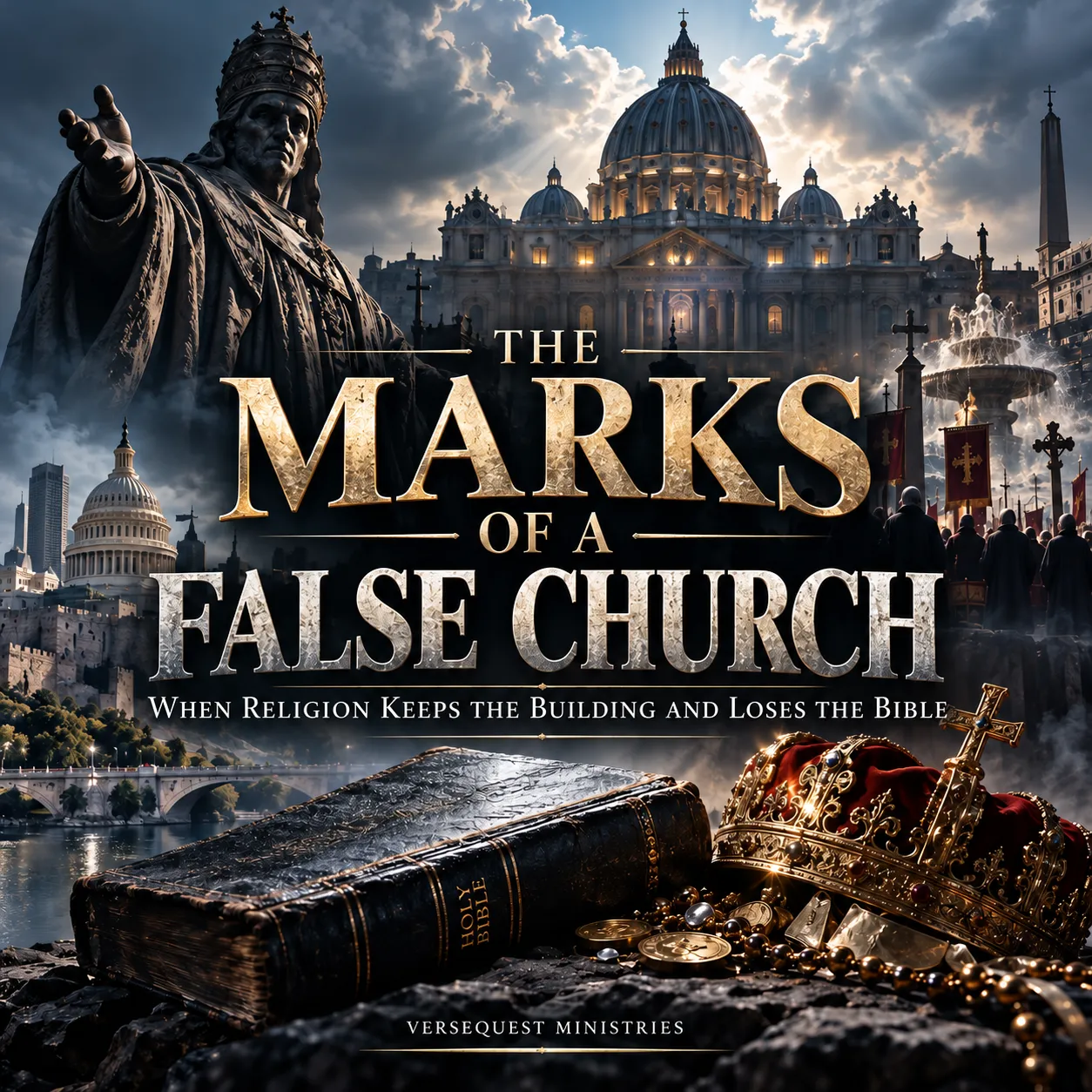
The Marks of a False Church – Series 1-10
The Marks of a False Church: When Religion Keeps the Building and Loses the Bible is a comprehensive ten-part King James Bible study examining how religious institutions can preserve the outward appearance of Christianity while abandoning the biblical truths they claim to defend. Grounded in passages including Galatians 1:6–9, 2 Corinthians 11:3–4, Mark 7:6–13, 1 Peter 5:2–3, 2 Peter 2:1–3, and Revelation 17, this series identifies ten serious warnings concerning doctrinal corruption and ecclesiastical apostasy. Each essay investigates a distinct mark: another gospel, another Jesus, human traditions elevated above Scripture, salvation dependent upon religious ceremonies, authoritarian pastoral leadership, financial exploitation, the protection of unrepentant sin, counterfeit miracles and spiritual manifestations, religious persecution of biblical truth, and the pursuit of worldly wealth and political influence. Special attention is given to salvation by grace through faith, the eternal deity and finished redemptive work of Jesus Christ, the authority of the written word of God, legitimate pastoral oversight, biblical church discipline, and the difference between genuine spiritual leadership and religious manipulation. The series also examines the warnings to Laodicea and the prophetic imagery of Mystery Babylon, demonstrating why institutional prosperity, impressive buildings, religious prestige, and enormous congregations cannot establish divine approval. Throughout these studies, careful distinctions are maintained between legitimate biblical practices and their corruption, ordinary church imperfections and deliberate doctrinal rebellion, and the Church’s present responsibilities and future prophetic events. Readers will gain a thorough scriptural foundation for recognizing dangerous religious teachings, evaluating churches according to the King James Bible, defending the gospel of Jesus Christ, and understanding why faithfulness to God’s word must always take precedence over religious traditions, personalities, and institutional power.