
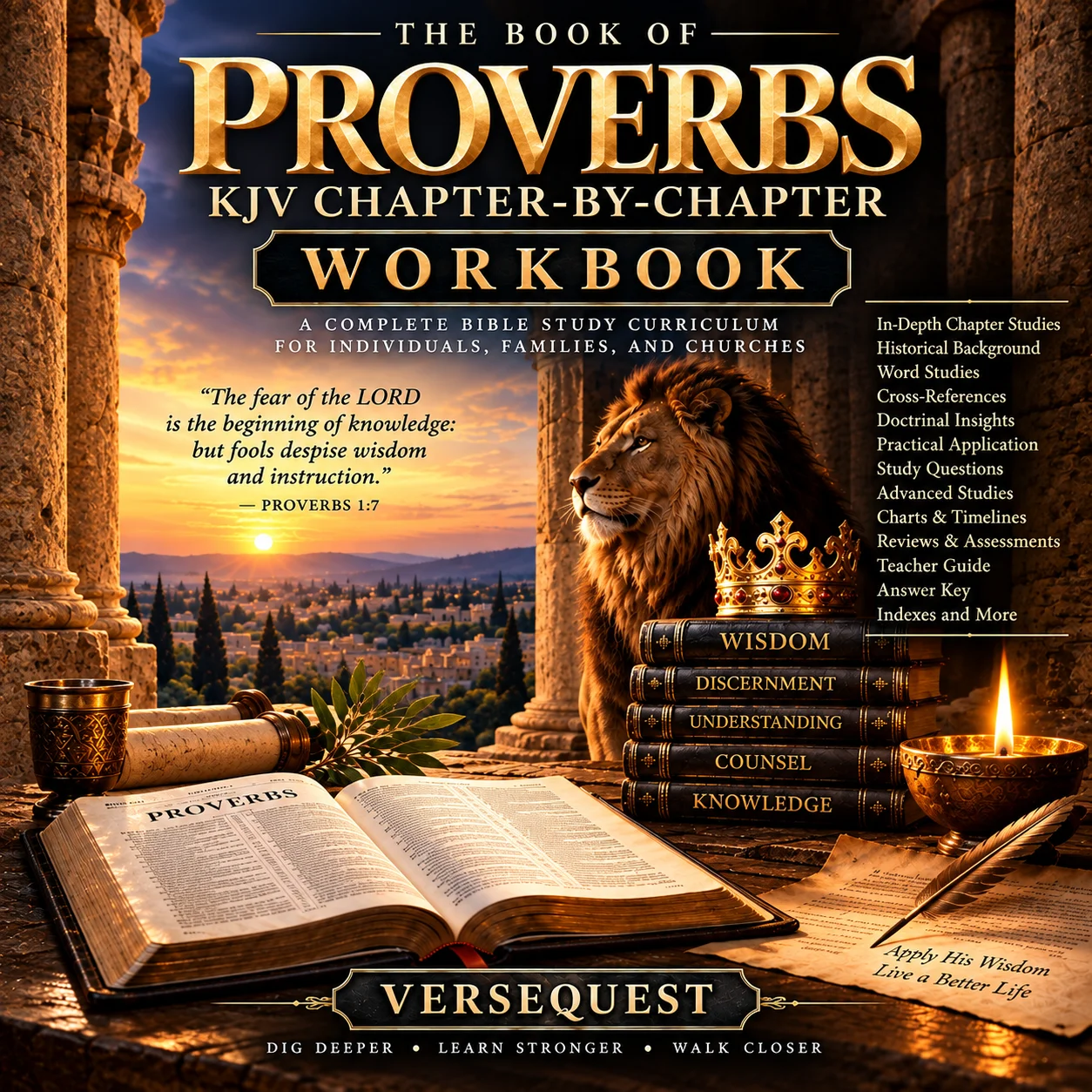
The Book of Proverbs KJV Chapter-by-Chapter Workbook
The Proverbs KJV Chapter-by-Chapter Workbook is a complete 739-page downloadable PDF Bible-study curriculum covering all 31 chapters of Proverbs. Built around the Authorized King James Version, it guides serious students through wisdom and folly, the fear of the LORD, speech, work, money, family, discipline, purity, friendship, justice, government, the strange woman, the virtuous woman, difficult sayings, KJV vocabulary, and the practical consequences of wise and foolish choices.
The workbook includes detailed chapter studies, observation exercises, proverb clusters, character contrasts, doctrine and right division, cross-reference workshops, special studies, reviews, teach-back exercises, teacher guidance, 31 advanced studies and worksheets, 24 master charts, an 18-page final assessment, expanded KJV Proverbs glossary, subject and Scripture indexes, teaching tools, final teaching project, course record, and certificate of completion.
At $19.99, this digital workbook is designed for personal Bible study, homeschool curriculum, Sunday school, church classes, discipleship, sermon preparation, ministry training, and anyone who wants to move beyond reading isolated Proverbs and learn how the entire book teaches biblical wisdom.
$19.99
Description
The Book of Proverbs KJV Chapter-by-Chapter Workbook is a complete 739-page downloadable PDF Bible-study curriculum covering all 31 chapters of Proverbs. Built around the Authorized King James Version, this workbook is designed for Bible students who want to move beyond isolated favorite verses and learn how Proverbs develops wisdom, character, conduct, judgment, discernment, and the fear of the LORD across the entire book.
Proverbs reaches into the places where everyday life is actually lived. It addresses wisdom and folly, speech and silence, work and laziness, riches and poverty, marriage and sexual purity, parents and children, friendship and conflict, anger and self-control, honesty and deceit, business and money, debt and surety, rulers and justice, pride and humility, correction and reproof, counsel, reputation, alcohol, temptation, discipline, the heart, the strange woman, the virtuous woman, and the consequences attached to wise and foolish choices. The workbook helps the student trace these subjects through Proverbs instead of studying each saying in isolation.
Every chapter receives structured study designed to train the reader to work directly from the KJV text. Chapter units examine the chapter focus and principal themes, close textual observation, proverb clusters, wisdom characters and contrasts, KJV vocabulary, doctrine and right division, cross-references, difficult sayings, special studies, written reviews, teach-back exercises, teacher guidance, suggested answers, theme tracing, cause-and-effect relationships, practical wisdom case studies, and personal study and teaching notes.
Special attention is given to how Proverbs should be interpreted. A proverb describing the normal moral consequences of conduct is not automatically an unconditional promise to every individual in every circumstance. Students learn to recognize commands, comparisons, observations, warnings, promises, prophecy, numerical sayings, contrasts, and cause-and-effect relationships. Interpretation comes before application, and the original setting is preserved while legitimate present-day applications are carefully drawn.
The workbook also teaches right division throughout Proverbs. Solomon’s kingdom setting, Mosaic law, universal moral truth, future prophetic material, and principles confirmed as Church-age doctrine are distinguished rather than blended together. Students are taught to separate what the text explicitly states from strong inference, possible connections, and speculation.
Major passages and difficult questions receive focused attention. The workbook examines Wisdom’s call, the strange woman, trusting the LORD, chastening, marital faithfulness, the things the LORD hates, temptation and adultery, personified Wisdom in Proverbs 8, Wisdom and Folly’s competing invitations, soul winning, child discipline, the way that seemeth right, the power of the tongue, strong drink, training a child, the fall of the just man, coals of fire, answering a fool, faithful rebuke, confession and forsaking, the meaning of “vision” in Proverbs 29:18, Agur’s questions concerning God’s Son, the purity of God’s words, and the virtuous woman of Proverbs 31.
Beyond the 31 primary chapter studies, the curriculum contains 31 advanced studies with corresponding worksheets. These return to major subjects for deeper investigation and require the student to trace themes throughout Proverbs, compare Scripture with Scripture, examine difficult interpretations, distinguish explicit statements from inference, and prepare teaching outlines directly from the Bible.
The workbook also includes 24 two-page master chart studies covering major divisions and recurring subjects throughout Proverbs. Students can build their own whole-book reference system for wisdom and folly, the fear of the LORD, speech, work, money, family, purity, government, friendship, anger, pride, justice, Agur’s numerical sayings, the virtuous woman, and other major themes. A dedicated chart also examines the relationship between Proverbs and New Testament teaching.
An extensive 18-page final assessment tests chapter identification, topical mastery, interpretation, difficult passages, KJV vocabulary, extended written responses, and the student’s ability to teach the book. The workbook also contains a 14-page expanded KJV Proverbs glossary, selected subject and Scripture indexes, personal-study guidance, homeschool guidance, Sunday school guidance, sermon-preparation tools, grading and assessment guidance, a memory and review plan, a final teaching project and rubric, course record and reflection pages, and a certificate of completion.
This resource can function as a serious personal Bible-study course, a homeschool Bible curriculum, Sunday school material, church-class curriculum, discipleship material, sermon and lesson preparation, or ministry-training coursework. The homeschool guidance provides a possible 36-week approach, allowing roughly one chapter per week with additional review, advanced study, charts, and final assessment.
The purpose is not to replace the Bible with a workbook. The purpose is to train the student to read, observe, compare, rightly divide, apply, and teach back the King James Bible. By the end of the course, the goal is for the student to be able to open Proverbs, recognize its major divisions and characters, explain its central doctrines and practical themes, handle difficult sayings carefully, build KJV cross-reference chains, and teach its wisdom from Scripture.
The complete 739-page digital PDF is $19.99 and is designed for repeated study, printing, note-taking, teaching, review, and long-term reference.
The Fear of the LORD — The governing foundation of true knowledge and wisdom, beginning in Proverbs 1:7 and remaining central through the conclusion of the book. Wisdom Versus Folly — Proverbs repeatedly places two ways, two characters, two choices, and two consequences before the reader. Knowledge, Understanding, Discretion, and Instruction — Related but distinct elements in the development of biblical judgment. The Wise Man, Fool, Simple, and Scorner — Character types whose responses to truth, correction, temptation, and instruction reveal their spiritual and moral condition. Wisdom Personified — The public call of Wisdom, the creation material of Proverbs 8, and the need to distinguish explicit statements from theological inference. The Strange Woman — A sustained warning concerning seduction, adultery, sexual sin, flattering speech, and the road leading toward destruction. The Virtuous Woman — Proverbs 31's concluding portrait of strength, diligence, wisdom, household stewardship, compassion, honour, and the fear of the LORD. Speech and the Tongue — Truth, lying, gossip, talebearing, flattery, rebuke, restraint, soft answers, foolish speech, and words fitly spoken. Work and the Sluggard — Diligence, laziness, preparation, excuses, harvest, poverty, stewardship, and the consequences of refusing labour. Riches and Poverty — Wealth, honest gain, generosity, covetousness, oppression, contentment, haste to be rich, and the limitations of money. Surety, Debt, and Financial Prudence — Biblical warnings concerning financial obligation, pledges, borrowing, and careless commitments. Marriage and Sexual Purity — Marital faithfulness contrasted with adultery, illicit desire, seduction, and sexual destruction. Parents, Children, and Discipline — Parental instruction, correction, chastening, honour, obedience, and the responsibility to train children wisely. Friendship and Neighbours — Faithfulness, rebuke, companionship, offences, counsel, loyalty, and the influence people have upon one another. Anger, Strife, and Peacemaking — The progression of contention, the danger of uncontrolled anger, and wisdom in restraining conflict. Pride and Humility — Self-exaltation, destruction, honour, correction, humility, and dependence upon the LORD. Kings, Rulers, and Justice — Government, judgment, righteousness, oppression, counsel, leadership, and the responsibility of rulers. The Heart — Desires, motives where explicitly revealed, thought, direction, spiritual condition, and the command to keep the heart diligently. Cause and Consequence — Proverbs repeatedly teaches that character produces conduct and conduct carries consequences. Right Division — Solomon's kingdom setting, Mosaic law, universal moral principles, prophetic material, and Church-age application are distinguished carefully. Proverbial Principle Versus Unconditional Promise — The workbook teaches students not to turn every normal principle of biblical wisdom into an absolute guarantee. KJV Vocabulary — Words including subtilty, froward, discretion, equity, reproof, surety, talebearer, sluggard, contentious, prudent, strange woman, and virtuous are studied in biblical context. Agur and Numerical Sayings — Proverbs 30 receives special attention for its questions, grouped observations, God's pure words, and references to the Son. Lemuel and the Virtuous Woman — Proverbs 31 is studied as the deliberate conclusion to the book's instruction concerning wisdom, leadership, women, household life, and the fear of the LORD.
The controlling principle of Proverbs is established almost immediately: “The fear of the LORD is the beginning of knowledge: but fools despise wisdom and instruction” (Proverbs 1:7). Biblical wisdom therefore cannot be reduced to intelligence, education, cleverness, financial success, or the ability to navigate life efficiently. Proverbs begins wisdom with a man’s relationship to the LORD and repeatedly measures wisdom by conduct, speech, judgment, correction, righteousness, and the consequences produced by a chosen path.
One of the most important distinctions in studying Proverbs is recognizing how a proverb works. Many proverbs describe the normal moral order established by God rather than giving an unconditional guarantee that every circumstance will always produce an identical immediate result. This becomes especially important when studying statements concerning wealth, poverty, health, long life, children, government, prosperity, and consequences. A careful student must identify whether a passage is a command, contrast, comparison, observation, warning, promise, prophecy, or numerical saying before building doctrine from it.
Proverbs constantly teaches by contrast. The wise man is placed beside the fool. The righteous stand against the wicked. The diligent worker is contrasted with the sluggard. The truthful witness stands opposite the liar. The strange woman is eventually answered by the virtuous woman. Humility is contrasted with pride, a soft answer with grievous words, honest gain with dishonest wealth, and correction received with reproof rejected. These contrasts teach the student to recognize that character eventually produces conduct and conduct carries consequences.
The opening chapters establish many of the book’s controlling categories. Wisdom calls publicly. The simple must decide whether he will remain simple. The scorner resists correction. The fool despises wisdom. The evil man and strange woman represent paths from which wisdom delivers. Proverbs 5–7 provide sustained warnings concerning adultery, seduction, sexual temptation, marital fidelity, and the destructive progression by which a man can move from observation to temptation, consent, and ruin.
Proverbs 8 demands especially careful treatment. Wisdom is personified and speaks in connection with the LORD’s creative work. The workbook therefore requires the student to distinguish what the passage explicitly says from theological comparison and inference. A Christ-centered connection should never be converted into a claim that every statement made by personified Wisdom is automatically an explicit statement about Jesus Christ.
Beginning especially in Proverbs 10, the form becomes increasingly concentrated. Individual sayings may move rapidly from speech to money, labour, justice, family, anger, kingship, friendship, poverty, honesty, or discipline. The student must resist forcing an artificial narrative onto collections of sayings. Instead, the workbook teaches theme tracing and proverb clustering so that repeated subjects can be followed through the entire book.
Speech receives enormous attention. Proverbs examines lying, gossip, flattery, talebearing, answering before hearing, angry words, restrained speech, rebuke, truthful witness, and words spoken at the proper time. The tongue is not treated as a minor personality issue. Words reveal character and can produce consequences far beyond the moment in which they are spoken.
Work and money are treated with equal seriousness. Proverbs contrasts diligence with sloth, honest gain with dishonest wealth, generosity with oppression, prudent financial judgment with foolish surety, and lasting character with the deceptive appearance of riches. The student learns that biblical wisdom addresses the workplace, household, marketplace, debt, property, planning, and stewardship as surely as it addresses explicitly religious activities.
Family instruction runs throughout the book. Fathers and mothers instruct children; sons are commanded to hear; correction and discipline are examined; marriage is defended; adultery is exposed; and Proverbs 31 closes with the virtuous woman whose fear of the LORD stands above the temporary value of outward beauty.
Some of the book’s best-known verses require particularly careful contextual study. Proverbs 22:6 must be examined according to proverbial form rather than automatically treated as an unconditional guarantee. Proverbs 26:4–5 demonstrates that apparently opposite instructions may address different circumstances rather than constitute a contradiction. Proverbs 27 examines faithful rebuke and friendship. Proverbs 28 connects confession and forsaking with mercy. Proverbs 29:18 concerns revelation and law rather than becoming a slogan for modern goal-setting. Proverbs 30 emphasizes that “Every word of God is pure” and warns against adding to His words.
The final measure of mastery is not whether the student has filled in 739 pages. It is whether he can open the King James Bible, identify the form of a saying, explain its context, compare it with Scripture, preserve necessary doctrinal distinctions, answer difficult questions carefully, and teach its truth without turning a proverb into something God never said.
The Proverbs KJV Chapter-by-Chapter Workbook is designed to function as a complete teaching curriculum rather than merely a book to read once and place on a shelf. For personal Bible study, the student can work through Proverbs one chapter at a time, beginning with close observation of the KJV text and progressing through chapter themes, proverb clusters, vocabulary, character contrasts, doctrine, right division, cross-references, difficult sayings, special studies, review questions, and personal application. The repeated method teaches the student how to study Proverbs independently rather than simply supplying conclusions.
For homeschool Bible curriculum, the workbook provides enough structured material for an extended course through all 31 chapters. The included guidance specifically provides for a 36-week approach using approximately one chapter per week with review weeks, advanced studies, charts, and the final assessment. Written exercises require students to support their answers with Scripture, distinguish different kinds of proverbial statements, trace themes across the book, define KJV vocabulary from context, and explain what they have learned in their own words.
For Sunday school, church Bible classes, small groups, and discipleship, teachers can select the central chapter-study material for class instruction and assign advanced worksheets or theme-tracing exercises during the week. Teacher and Leader Guide pages help keep discussion anchored to the biblical text, while review questions and teach-back exercises encourage participation without reducing the lesson to opinion sharing.
Pastors and Bible teachers can use the workbook for sermon and lesson preparation. Chapter maps, proverb clusters, KJV vocabulary studies, cross-reference workshops, difficult-saying examinations, special studies, advanced investigations, and topical master charts provide starting points for both expository and topical teaching. The workbook repeatedly trains the teacher not to detach a familiar proverb from its immediate setting simply because the verse makes a convenient sermon title.
The resource is particularly useful for topical teaching because Proverbs repeatedly returns to major subjects such as wisdom and folly, the fear of the LORD, speech, work, money, debt, honesty, parenting, discipline, marriage, sexual purity, friendship, anger, strife, pride, humility, justice, rulers, poverty, riches, the heart, the fool, the simple, the scorner, the sluggard, the strange woman, and the virtuous woman.
For ministry training, the workbook develops a repeatable Bible-study method: text first, literary form second, context third, Scripture comparison fourth, right division fifth, and application last. Students are also trained to distinguish Explicit statements, Strong Inferences, Possible connections, and Speculative conclusions, helping them become more careful when teaching difficult or disputed passages.
The final teaching project allows the student to demonstrate mastery by preparing either a 30-minute overview of Proverbs or a 20-minute chapter lesson, including structure, key text, cross-references, a difficult saying, right division, and lawful application.
The primary companion to this workbook should always be an Authorized King James Bible, since the entire course is designed around reading, marking, comparing, and explaining the KJV text itself. A good KJV concordance is especially useful for tracing recurring words such as wisdom, knowledge, understanding, instruction, fool, simple, scorner, righteous, wicked, heart, way, path, reproof, and fear.
A KJV cross-reference Bible or cross-reference system can help students extend the reference chains begun in the workbook. A reliable Bible dictionary may also be useful after the student has first examined a word in its immediate context and compared its other KJV occurrences. This is particularly helpful for expressions such as froward, subtilty, surety, talebearer, scorner, strange woman, and other vocabulary emphasized in Proverbs.
Job, Psalms, Ecclesiastes, and James are especially valuable companion books for studying biblical wisdom. Genesis and Deuteronomy provide important background for creation, law, family, morality, covenant responsibility, and the fear of the LORD. The New Testament should be consulted wherever it quotes, repeats, confirms, or doctrinally applies principles found in Proverbs.
For broader VerseQuest study, the completed Psalms KJV Chapter-by-Chapter Workbook, 1 Chronicles KJV Chapter-by-Chapter Workbook, and 2 Chronicles KJV Chapter-by-Chapter Workbook can complement this course by providing additional study in wisdom, worship, Davidic history, kingship, the temple, Scripture, judgment, and right division.
Related products
-
Names of Christ
-
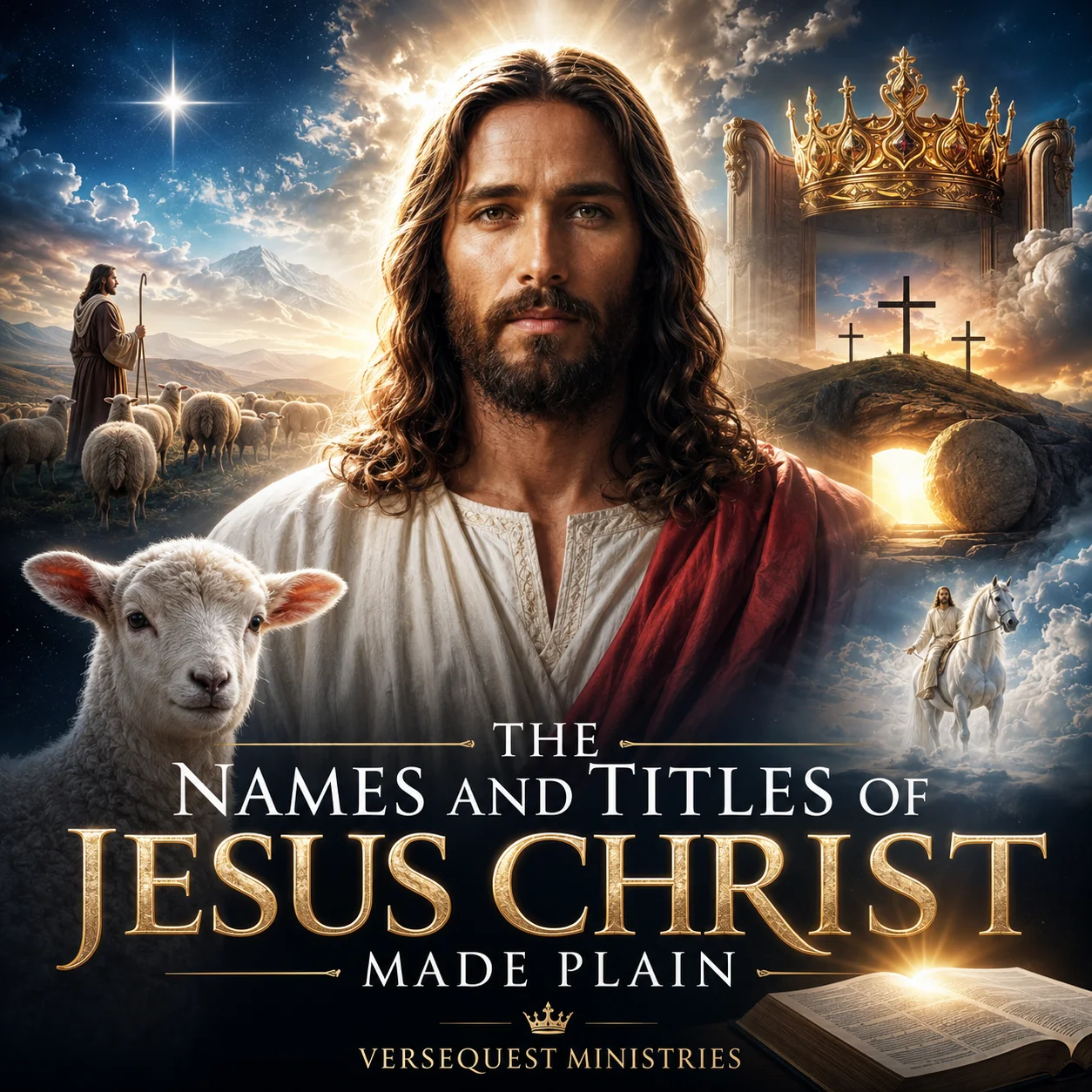
- The Names and Titles of Jesus Christ Made Plain
- A complete 100-essay KJV Bible study on the names and titles of the Lord Jesus Christ, showing His deity, humanity, blood atonement, resurrection, priesthood, headship over the Church, shepherd care,…
- $29.99
- Add to cart
-
-
Kingdom Hall
-
-71%
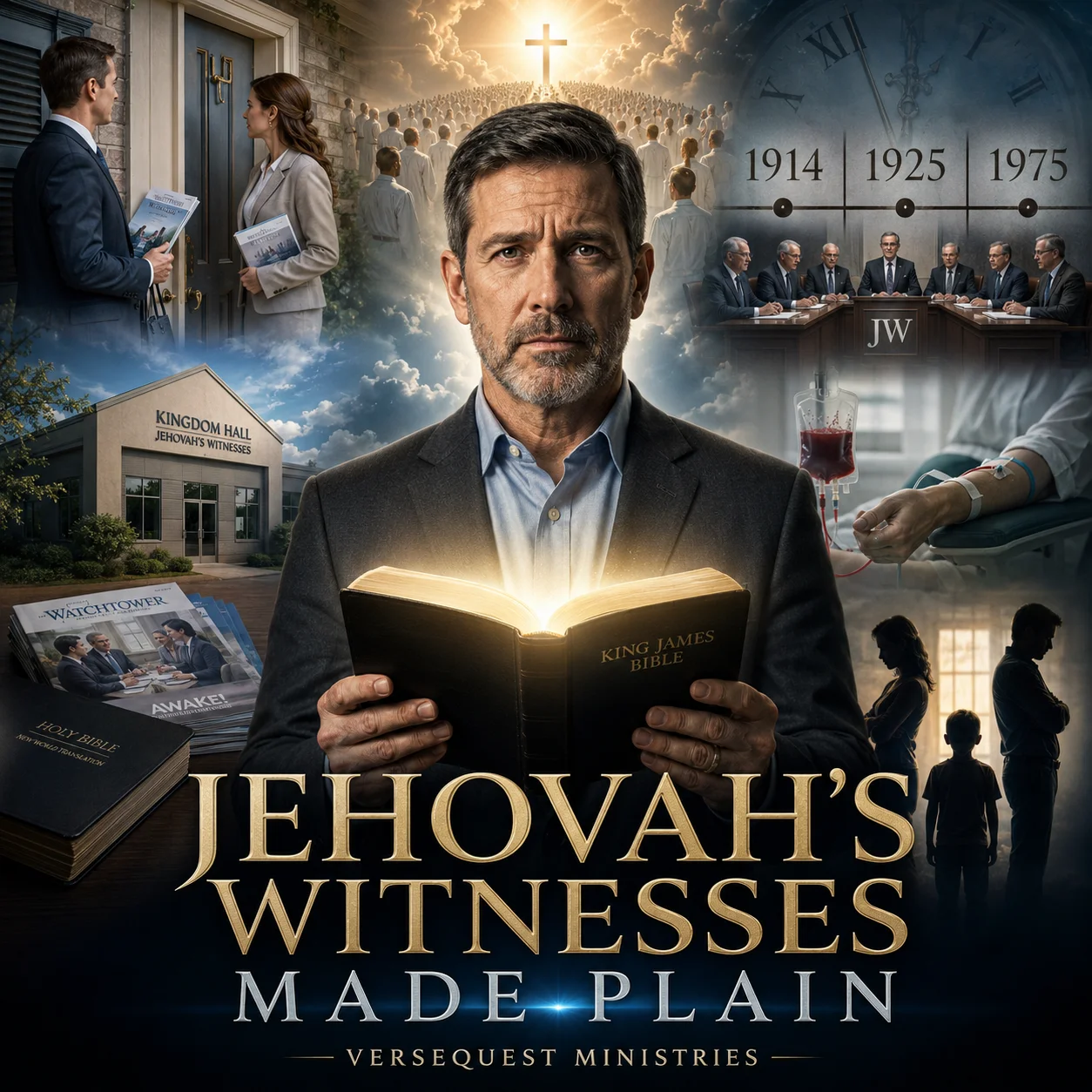
- Jehovah’s Witnesses Made Plain – 574-Page KJV Watchtower Study
- A massive 574-page VerseQuest study exposing the Watchtower system from the King James Bible. This detailed 100-essay book covers the false Christ, false gospel, New World Translation, failed prophecy, 144,000,…
- Original price was: $34.99.$9.99Current price is: $9.99.
- Add to cart
-
-71%
-
Jesus Christ
-
-10%

- The Lord Jesus Christ Made Plain – 637-Page KJV Bible Study
- A massive 637-page, 100-part KJV Bible study on the Person and work of the Lord Jesus Christ. This premium VerseQuest resource covers His deity, incarnation, blood, cross, resurrection, present ministry,…
- Original price was: $39.00.$34.99Current price is: $34.99.
- Add to cart
-
-10%
-
The Rapture
-
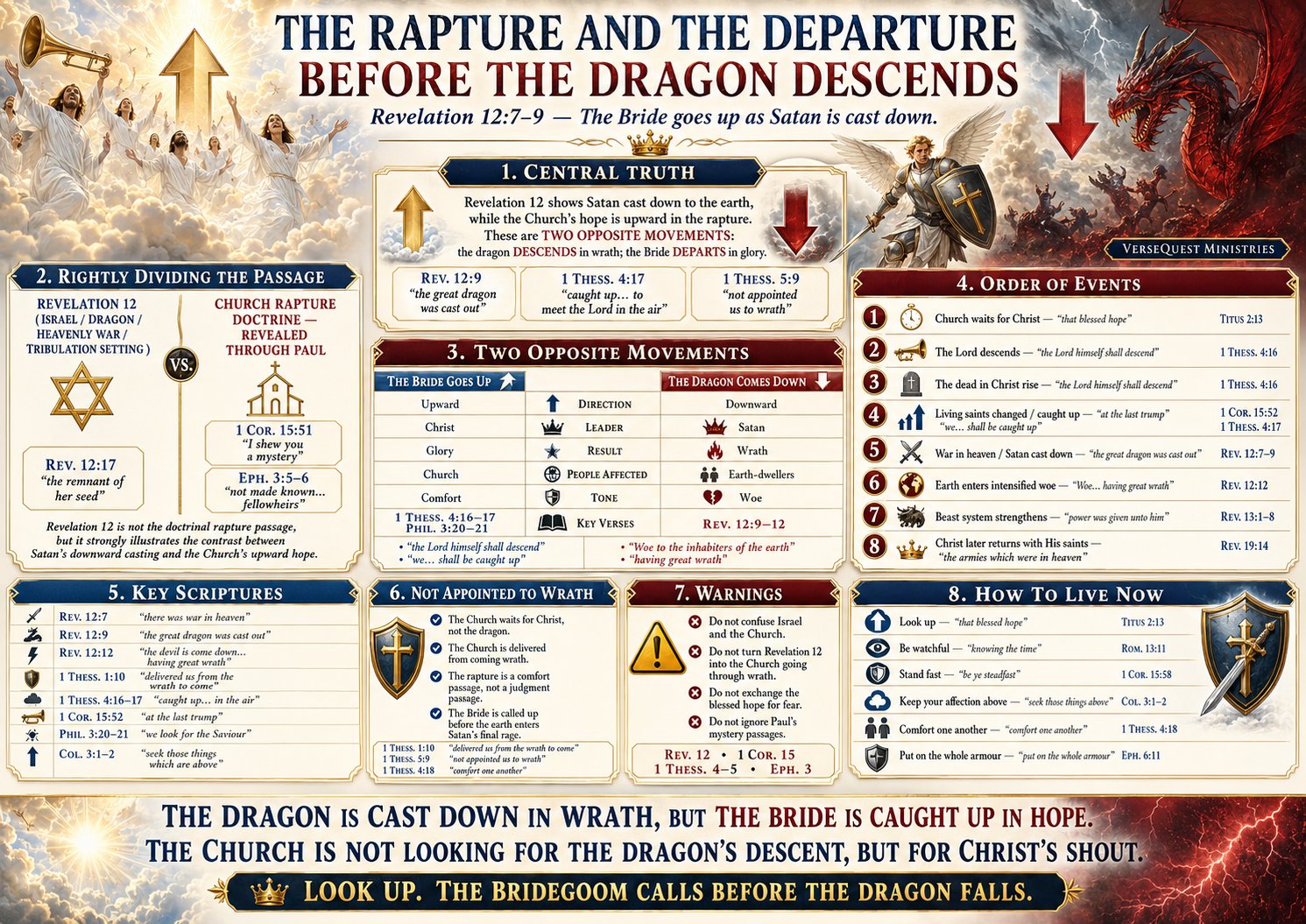
- The Rapture and the Departure Before the Dragon Descends – Printable Bible Study Chart
- Printable KJV Bible study chart on The Rapture and the Departure Before the Dragon Descends, showing the Bride caught up before Satan is cast down in wrath. This premium VerseQuest…
- $4.99
- Add to cart
-
-
The Rapture
-
-67%
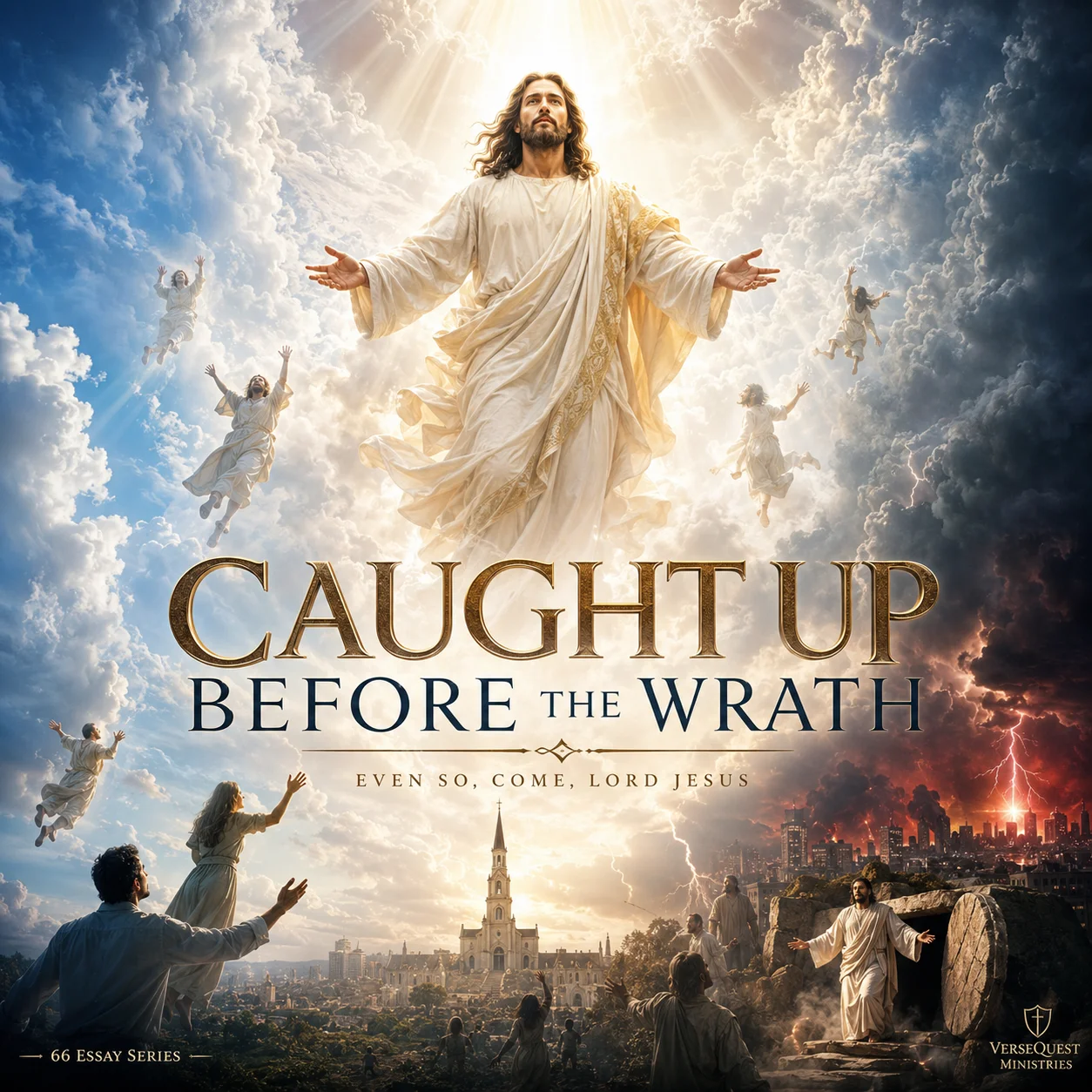
- Caught Up Before the Wrath – 66-Essay KJV Rapture Study
- Caught Up Before the Wrath is a 430-page premium KJV Bible study defending the pre-tribulation Rapture of the Church from a rightly divided, dispensational perspective. This 66-essay VerseQuest Ministries book…
- Original price was: $29.99.$9.99Current price is: $9.99.
- Add to cart
-
-67%