
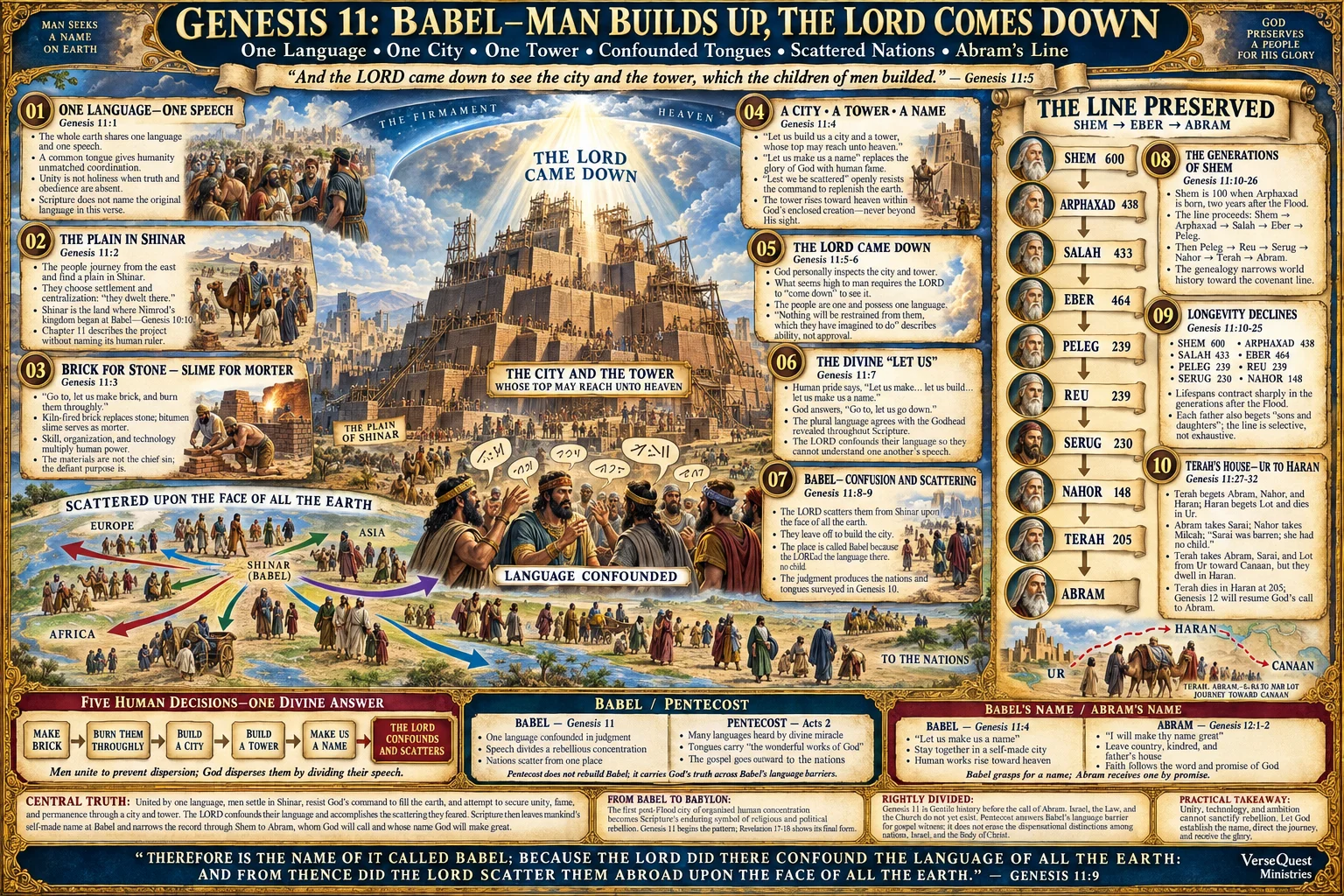
Genesis 11 – Babel: Man Builds Up, the LORD Comes Down, Languages Are Confounded, and the Nations Are Scattered (KJV Bible Study Chart)
This Genesis 11 Bible Study Chart provides a detailed, visual overview of the Tower of Babel, the confounding of tongues, the scattering of the nations, and the preserved line from Shem to Abram. Designed from a rightly divided KJV perspective, it explains the unity of the post-Flood world, man’s proud attempt to build a city and tower in Shinar, and God’s intervention in judgment. The chart also highlights the contrast between Babel and God’s later work among the nations, while tracing the genealogy that leads toward Abram and the covenant story. Ideal for Bible study, teaching, homeschool, and sermon preparation, this chart helps readers understand Genesis 11 as a key turning point in world history, national division, and God’s redemptive plan.
$4.99
Description
Genesis 11: Babel — Man Builds Up, the LORD Comes Down is a detailed KJV Bible study chart tracing mankind’s post-Flood rebellion from one language and centralized settlement in Shinar to the building of Babel, the confusion of tongues, the scattering of the nations, and the preservation of the chosen line from Shem through Eber to Abram. Genesis 10 records the resulting families, tongues, lands, and nations; Genesis 11 explains the dramatic historical event that produced their linguistic division and geographical scattering.
The chapter begins with “the whole earth” speaking one language and one speech. Common language gives mankind remarkable ability to cooperate, but unity by itself is not holiness. The descendants of Noah journey from the east, discover a plain in Shinar, and settle there despite God’s earlier command to replenish the earth. Shinar is already associated with the beginning of Nimrod’s kingdom in Genesis 10, preparing the setting for the first great organized post-Flood concentration of human power.
The builders manufacture brick and use slime for mortar, demonstrating ingenuity, organization, technology, and collective effort. None of those things is inherently evil. The problem is the purpose directing them. They declare, “Go to, let us build us a city and a tower, whose top may reach unto heaven; and let us make us a name.” Their programme is centred upon themselves. They seek permanence, centralized strength, fame, and unity while specifically resisting dispersion: “lest we be scattered abroad upon the face of the whole earth.” Man’s pride builds upward while his obedience moves downward.
Genesis then records one of Scripture’s great ironies: “And the LORD came down to see the city and the tower.” Humanity imagines it is reaching heaven, yet Heaven must come down to inspect the achievement. God acknowledges the extraordinary potential of a united people speaking one language, but His statement that “nothing will be restrained from them” describes their collective capacity, not His approval of their rebellion.
The LORD answers mankind’s “let us” with His own divine “Go to, let us go down.” God confounds their language so that they cannot understand one another’s speech. Communication collapses, construction stops, and the centralized rebellion is broken. The city receives the name Babel because there the LORD confounded the language of all the earth and scattered mankind abroad. What man refused voluntarily, God accomplishes through judgment.
The chapter then leaves Babel’s self-made name and turns toward the line God preserves. Shem’s genealogy advances through Arphaxad, Salah, Eber, Peleg, Reu, Serug, Nahor, and Terah to Abram. Lifespans contract dramatically after the Flood, and the biblical narrative narrows from all nations toward the man through whom God will begin a covenant programme of worldwide blessing.
The contrast is striking. Babel says, “Let us make us a name.” God soon tells Abram, “I will make thy name great.” Man grasps for greatness through rebellion; Abram will receive blessing through faith and obedience. Genesis 11 therefore moves from human unity without God to divine separation for God’s purpose. Babel scatters the nations, but God preserves the line through which Abraham, Israel, and ultimately Jesus Christ will enter the biblical story.
Genesis 11, Tower of Babel, Babel, one language one speech, plain of Shinar, brick and slime, let us make us a name, city and tower, LORD came down, confused languages, confounded tongues, scattering of nations, origin of languages, Nimrod and Babel, Genesis 10 and 11, Shem genealogy, Eber, Peleg, Terah, Abram, Babel versus Pentecost, Babylon in prophecy, human pride, centralized rebellion
Genesis 11 explains how the post-Flood human family moved from one language and concentrated settlement to multiple languages and worldwide dispersion. Genesis 10 records the nations according to their families, tongues, countries, and peoples, while Genesis 11 supplies the historical cause of that linguistic division. The order is not contradictory; Genesis often gives an overview before returning to explain a critical event in detail.
The whole earth originally possesses one language and one speech. Scripture does not identify that original language, so claims that it was Hebrew or any other specific known language go beyond the text. The doctrinal emphasis is mankind’s extraordinary unity and communicative ability before Babel.
The people journey from the east and settle in the plain of Shinar. Genesis 10:10 has already associated Babel and Shinar with the beginning of Nimrod’s kingdom. Genesis 11 does not name Nimrod as the ruler of the Babel construction, so that connection should be treated as contextual rather than as an explicit statement that Nimrod personally directs every event in the chapter.
The builders make brick thoroughly and use slime for mortar. Technology itself is not condemned. Scripture’s concern is the purpose motivating their enterprise. The same human abilities that may serve lawful purposes become instruments of rebellion when organized against God’s revealed will.
Genesis 11 Bible studies, Tower-of-Babel teaching, origin-of-languages studies, Babel and Babylon lessons, Genesis 10 and 11 comparisons, human-pride studies, unity and rebellion teaching, biblical nationalism and nations, Shinar studies, biblical genealogy, Shem-to-Abram studies, Babel-versus-Pentecost teaching, Acts 2 comparisons, Abram preparation, prophecy background, homeschool Bible curriculum, Sunday school lessons, Christian school teaching, Bible institute classes, pastoral training, sermon preparation
King James Bible, Strong’s Concordance, Thompson Chain-Reference Bible, Treasury of Scripture Knowledge, Nave’s Topical Bible, Genesis 10–12 study notes, Tower of Babel Scripture studies, Table of Nations charts, ancient Shinar and Mesopotamia maps, Nimrod studies, Shem-to-Abraham genealogy charts, Acts 2 Pentecost studies, Babylon Scripture chains, Revelation 17–18 resources, biblical language studies, Genesis genealogy resources, VerseQuest Genesis charts
Related products
-
Bible Prophecy Charts
-
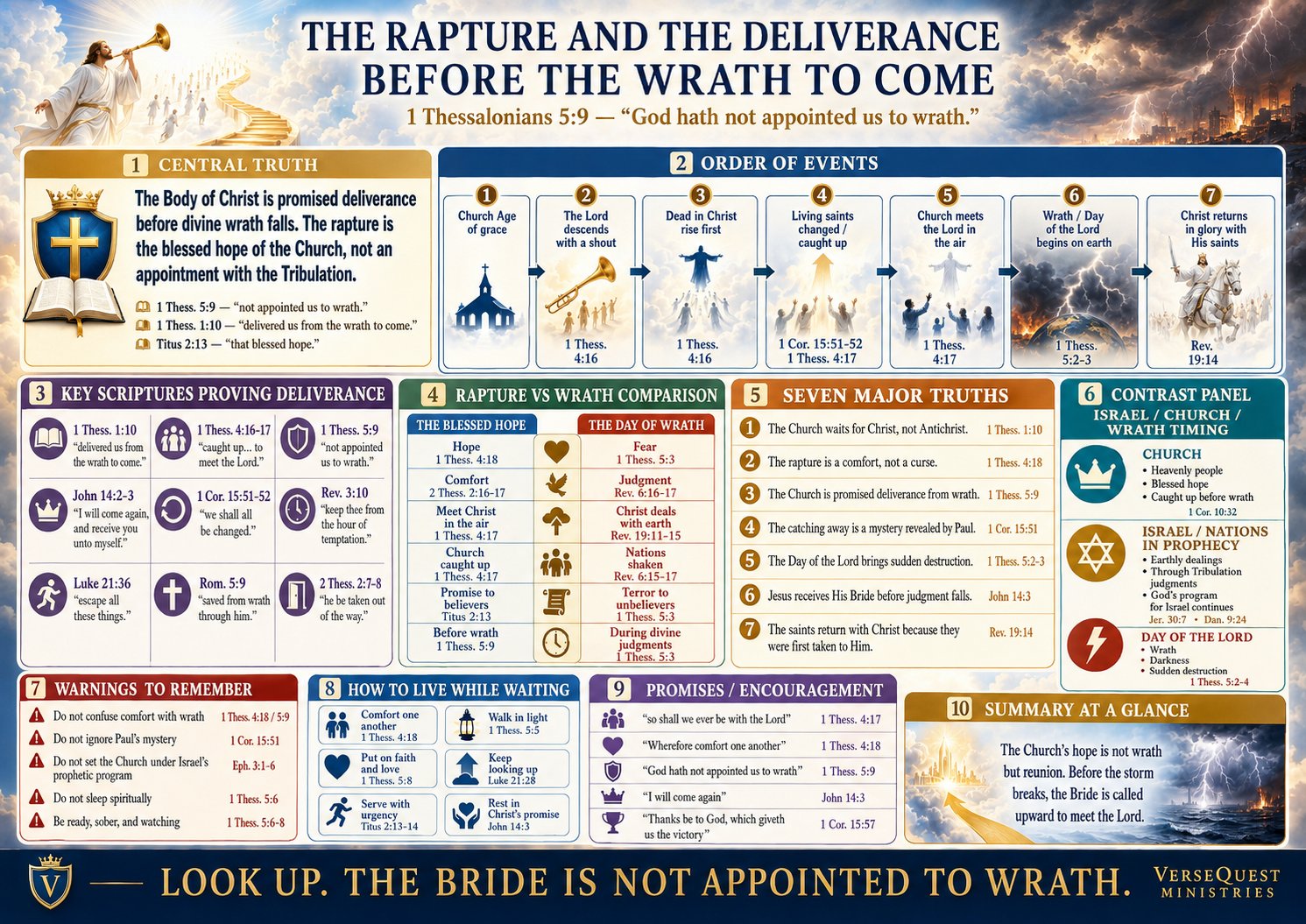
- The Rapture and the Deliverance Before the Wrath to Come – Printable Bible Study Chart
- Printable KJV Bible study chart on The Rapture and the Deliverance Before the Wrath to Come, showing from 1 Thessalonians 5:9 that the Church is not appointed to wrath. This…
- $4.99
- Add to cart
-
-
The Rapture
-
-67%
- Caught Up Before the Wrath – 66-Essay KJV Rapture Study
- Caught Up Before the Wrath is a 430-page premium KJV Bible study defending the pre-tribulation Rapture of the Church from a rightly divided, dispensational perspective. This 66-essay VerseQuest Ministries book…
- Original price was: $29.99.$9.99Current price is: $9.99.
- Add to cart
-
-67%
-
Messianic Prophecy Studies
-
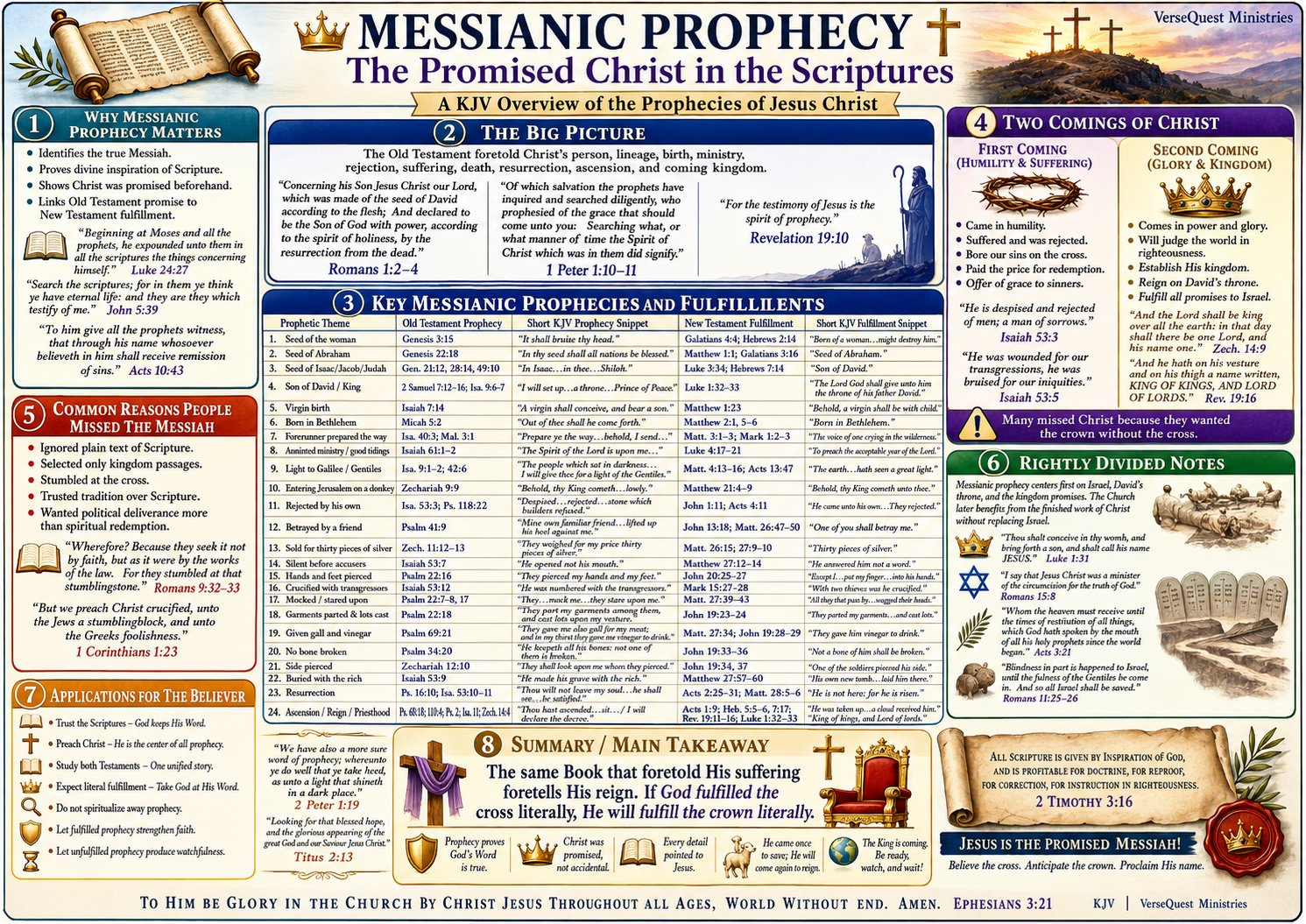
- Messianic Prophecy KJV Bible Study Chart – Printable Download
- This printable Messianic Prophecy KJV Bible Study Chart gives a clear overview of Old Testament prophecies fulfilled in Jesus Christ, including His lineage, birth, suffering, crucifixion, resurrection, and future reign.…
- $4.99
- Add to cart
-
-
Chart Collections
-
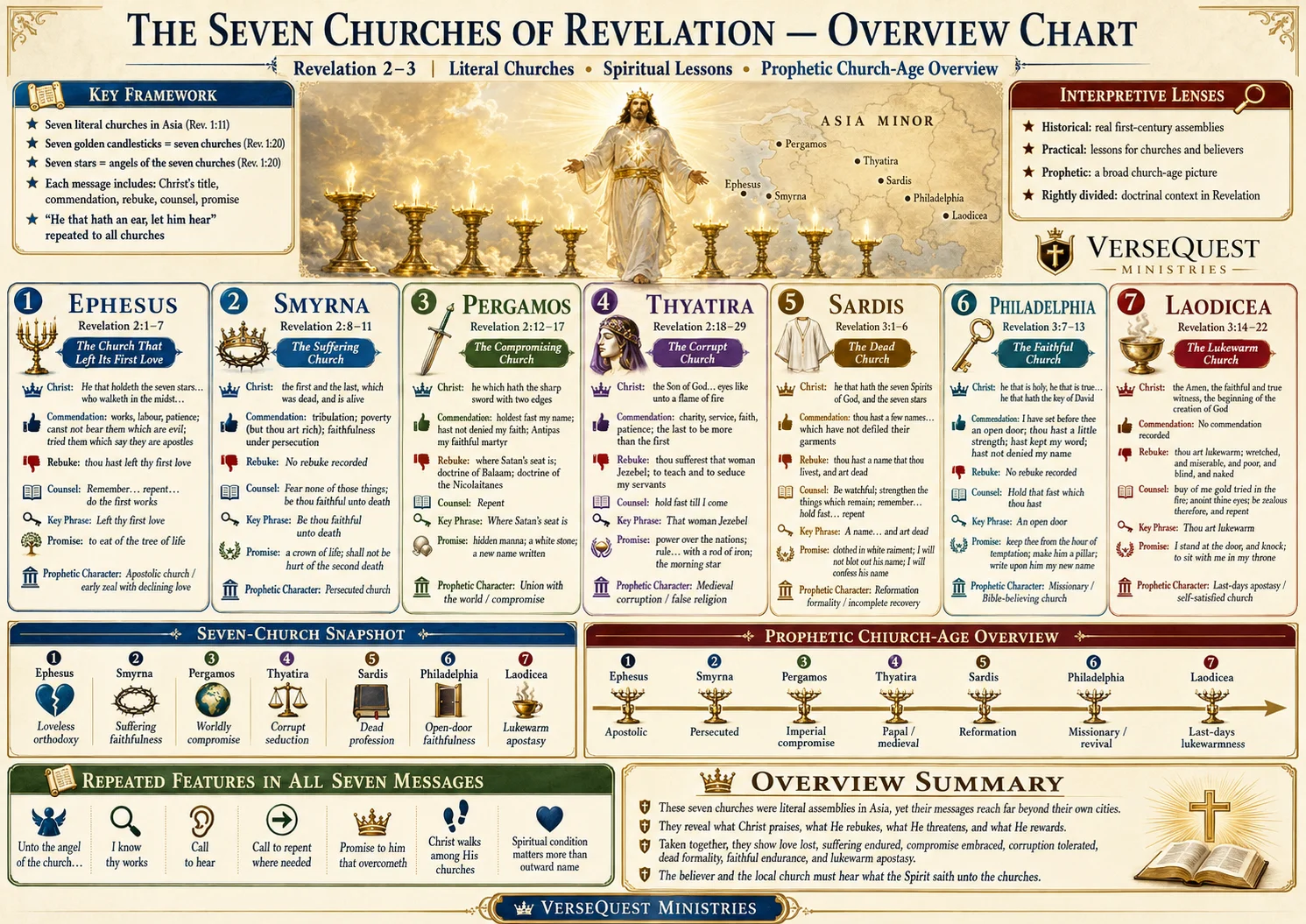
- The Seven Churches of Revelation Chart Collection – Christ Walking Among the Candlesticks
- A premium VerseQuest Ministries™ PDF chart collection covering the Seven Churches of Revelation in Revelation 2–3. Includes one overview chart plus individual KJV Bible study charts for Ephesus, Smyrna, Pergamos,…
- $12.99
- Add to cart
-
-
Jesus Christ Studies
-
-67%
- Jesus Christ Prophet Priest and King – 441-Page PDF Study
- A 441-page premium KJV PDF study on Jesus Christ as Prophet, Priest, and King. This detailed VerseQuest book covers Christ’s prophetic ministry to Israel, His finished sacrifice and present intercession…
- Original price was: $29.99.$9.99Current price is: $9.99.
- Add to cart
-
-67%