
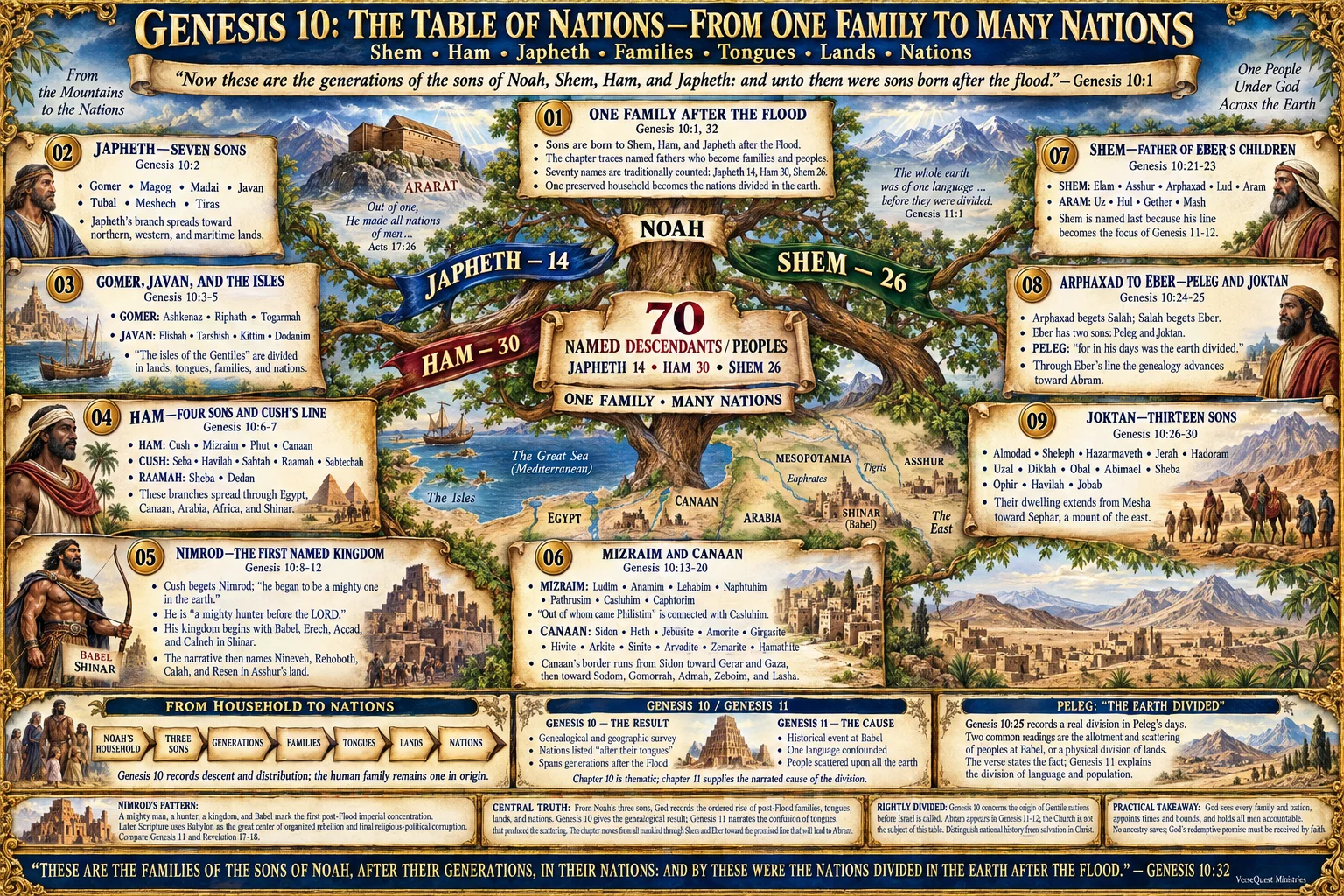
Genesis 10 – The Table of Nations: Shem, Ham, Japheth, Nimrod, Babel, and the Division of the Post-Flood World (KJV Bible Study Chart)
Explore Genesis 10 with this detailed KJV chart tracing the Table of Nations from Noah through Shem, Ham, and Japheth, including the traditional 70 descendants and peoples, Nimrod and Babel, Mizraim and Canaan, Eber, Peleg, Joktan, the division of nations, and the chosen line leading toward Abraham.
$4.99
Description
Genesis 10: The Table of Nations — From One Family to Many Nations is a detailed KJV Bible study chart tracing the descendants of Noah through his three sons, Shem, Ham, and Japheth, and showing how the post-Flood human family developed into distinct families, tongues, lands, and nations. The chapter bridges the Flood narrative of Genesis 6–9 with the rebellion at Babel in Genesis 11 and the call of Abram in Genesis 12. It explains where the nations came from, how the biblical record organizes their descent, and how God preserves the chosen line through Shem while the Gentile nations spread across the earth.
Genesis 10 begins with one preserved household emerging from the ark. From Noah’s three sons come the peoples who repopulate the post-Flood world. The chapter is traditionally understood to list 70 named descendants or peoples, commonly counted as 14 through Japheth, 30 through Ham, and 26 through Shem. This number has long been associated with the Table of Nations, but the greater truth is that mankind remains one family in origin even as God records its later national divisions. Acts 17:26 confirms that God “hath made of one blood all nations of men for to dwell on all the face of the earth.”
Japheth’s seven sons include Gomer, Magog, Madai, Javan, Tubal, Meshech, and Tiras. Their descendants are associated especially with northern, western, and maritime peoples. Genesis repeatedly uses the categories lands, tongues, families, and nations, showing that God views human society through real genealogical and territorial distinctions rather than through an evolutionary account of unrelated racial origins.
Ham’s line includes Cush, Mizraim, Phut, and Canaan. From these families come peoples associated with Egypt, Canaan, portions of Africa, Arabia, and Shinar. Genesis 10 also introduces Nimrod, the first individual in Scripture connected with the beginning of an organized kingdom. He is called a mighty one and mighty hunter before the LORD, and his kingdom begins with Babel, Erech, Accad, and Calneh in the land of Shinar. His appearance prepares the reader for the organized human rebellion described in Genesis 11.
Shem’s descendants become increasingly important because Scripture narrows the redemptive line through him. Shem fathers Elam, Asshur, Arphaxad, Lud, and Aram, while the genealogy through Arphaxad advances toward Eber, Peleg, and ultimately Abram. Genesis 10 therefore does more than describe geography; it preserves the line through which God will later call Abraham, create the nation of Israel, and eventually bring Jesus Christ into the world according to the flesh.
Peleg receives special attention because Genesis says, “in his days was the earth divided.” This may refer particularly to the division and scattering of peoples associated with Babel, while some interpreters have also considered a physical division of lands. Genesis 10 records the resulting nations; Genesis 11 supplies the historical event explaining how one language became many tongues and how mankind was scattered abroad.
The chapter therefore stands at a major turning point in biblical history. One family becomes many nations, yet God remains sovereign over the entire process. Genesis 10 prepares the way for Babel, Abraham, Israel, Gentile history, and the later prophetic dealings of God with the nations. The message is clear: humanity has one origin, nations exist under God’s providence, and the promised line continues through Shem toward Abram and ultimately toward Jesus Christ.
Genesis 10, Table of Nations, Shem Ham and Japheth, seventy nations, descendants of Noah, post-Flood world, origin of nations, one blood all nations, Japheth descendants, Ham descendants, Shem descendants, Nimrod, Babel, Shinar, Mizraim, Canaan, Eber, Peleg, Joktan, land divided, Genesis 10 and Genesis 11, Gentile nations, line to Abraham, biblical genealogy, biblical geography
Genesis 10 records the descendants of Noah’s sons after the Flood and explains the genealogical foundation of the post-Flood nations. The chapter repeatedly uses the categories of generations, families, tongues, lands, and nations. This establishes a biblical explanation for national origins rooted in one human family rather than separate evolutionary racial beginnings.
The traditional Table of Nations count is 70 named descendants or peoples, commonly arranged as 14 from Japheth, 30 from Ham, and 26 from Shem. The exact counting method can be discussed because certain names may represent individuals, tribes, cities, or peoples, but the traditional total remains a useful summary of the chapter’s structure.
Japheth’s descendants include Gomer, Magog, Madai, Javan, Tubal, Meshech, and Tiras. Their lines are traditionally associated with northern, western, and maritime regions. Those geographical identifications are drawn from later biblical references, ancient geography, and historical study rather than from Genesis 10 alone.
Ham’s sons are Cush, Mizraim, Phut, and Canaan. Their descendants are associated with major regions including Egypt, Canaan, Shinar, portions of Africa, and Arabia. Genesis therefore records early peoples long before many later national names appear in biblical history.
Nimrod emerges from Cush’s line and is described as a mighty one and mighty hunter before the LORD. Genesis 10:10 records the beginning of his kingdom with Babel, Erech, Accad, and Calneh in Shinar. He represents the first named concentration of post-Flood imperial power and prepares the narrative for Babel in Genesis 11.
The chart’s description of Nimrod as a pattern of centralized rebellion is an interpretive conclusion based especially upon his association with Babel and the development of later biblical Babylon. Genesis 10 itself records his might, hunting, kingdom, and cities, while Genesis 11 describes the corporate rebellion at Babel.
Shem’s genealogy becomes especially important because Scripture progressively narrows the chosen line through Arphaxad, Salah, Eber, Peleg, and eventually Abram. Genesis 10 therefore serves both as a survey of Gentile nations and as preparation for the Abrahamic line that becomes central beginning in Genesis 11–12.
Eber has two sons, Peleg and Joktan. Genesis 10:25 states that in Peleg’s days “was the earth divided.” Scripture states the fact without describing the event in this verse. Genesis 11 supplies the division of language and scattering of peoples at Babel, making that the most natural immediate connection. Some interpreters also propose a physical division of land, but the verse itself does not settle that question explicitly.
Joktan’s thirteen sons form another significant branch of Eber’s family, with their dwelling extending from Mesha toward Sephar, a mount of the east. These names contribute to the broader population of Arabia and eastern regions within the traditional geographical interpretation.
Genesis 10 and Genesis 11 should be read together. Genesis 10 records the resulting nations, families, lands, and tongues; Genesis 11 explains how mankind moved from one language and concentrated settlement to confused languages and worldwide scattering. Biblical narrative does not always arrange every event in strict chronological sequence before supplying genealogical summaries.
Genesis 10 also prepares for later dispensational distinctions. The chapter concerns Gentile nations before Israel is called through Abram. Israel does not yet exist as a nation, and the Church, the Body of Christ, remains future mystery truth. Proper interpretation allows Gentiles, Israel, and the Church to retain their distinct biblical settings.
The central lesson is that all nations descend from one human family and remain accountable to one Creator. God establishes national boundaries and providentially orders history while simultaneously preserving the chosen line through which His redemptive promises will advance.
Genesis 10 Bible studies, Table-of-Nations teaching, biblical genealogy, origin-of-nations studies, Noah’s descendants, Shem-Ham-Japheth studies, Nimrod teaching, Babel preparation, biblical geography, Gentile history, Abrahamic-line studies, Genesis 10 and 11 comparisons, biblical ethnology, prophecy-background studies, homeschool Bible curriculum, Sunday school lessons, Christian school teaching, Bible institute classes, pastoral training, sermon preparation
King James Bible, Strong’s Concordance, Thompson Chain-Reference Bible, Treasury of Scripture Knowledge, Nave’s Topical Bible, Genesis 9–12 study notes, Table of Nations charts, biblical genealogy resources, ancient Near Eastern geography maps, Genesis 11 Babel studies, Nimrod Scripture studies, Shem-to-Abraham genealogy charts, First Chronicles 1 comparisons, Acts 17 nation studies, Deuteronomy 32 studies, Gentile-nation prophecy resources, VerseQuest Genesis charts
Related products
-
KJV Bible Study Resources
-
-60%

- Practical Christianity for Daily Battles – 329-Page KJV Study PDF
- A premium 329-page KJV study PDF with 40 full essays applying sound, rightly divided Bible doctrine to real daily Christian battles. Topics include temptation, anxiety, marriage, parenting, pornography, grief, church…
- Original price was: $24.99.$9.99Current price is: $9.99.
- Add to cart
-
-60%
-
The Rapture
-
-67%
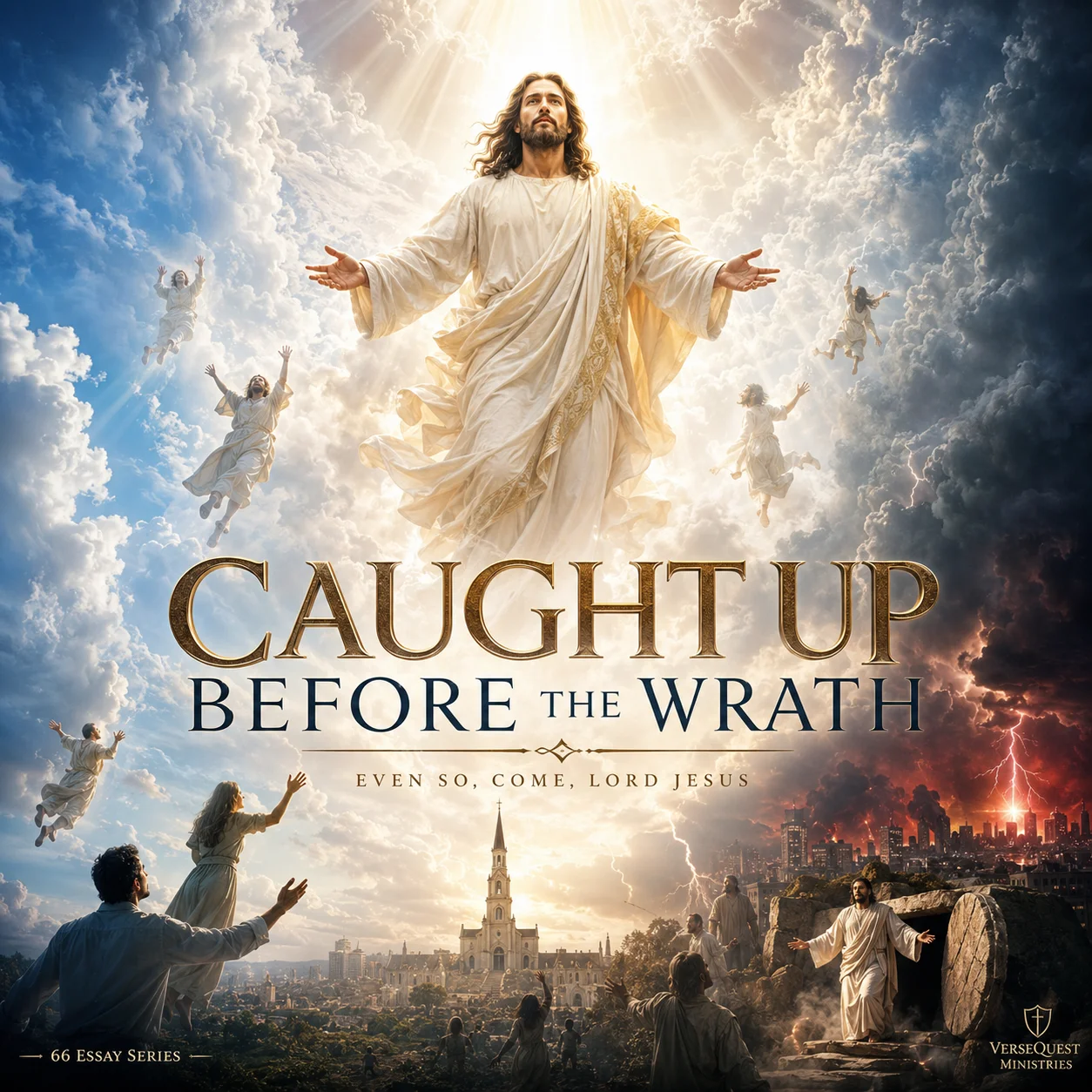
- Caught Up Before the Wrath – 66-Essay KJV Rapture Study
- Caught Up Before the Wrath is a 430-page premium KJV Bible study defending the pre-tribulation Rapture of the Church from a rightly divided, dispensational perspective. This 66-essay VerseQuest Ministries book…
- Original price was: $29.99.$9.99Current price is: $9.99.
- Add to cart
-
-67%
-
Chart Collections
-
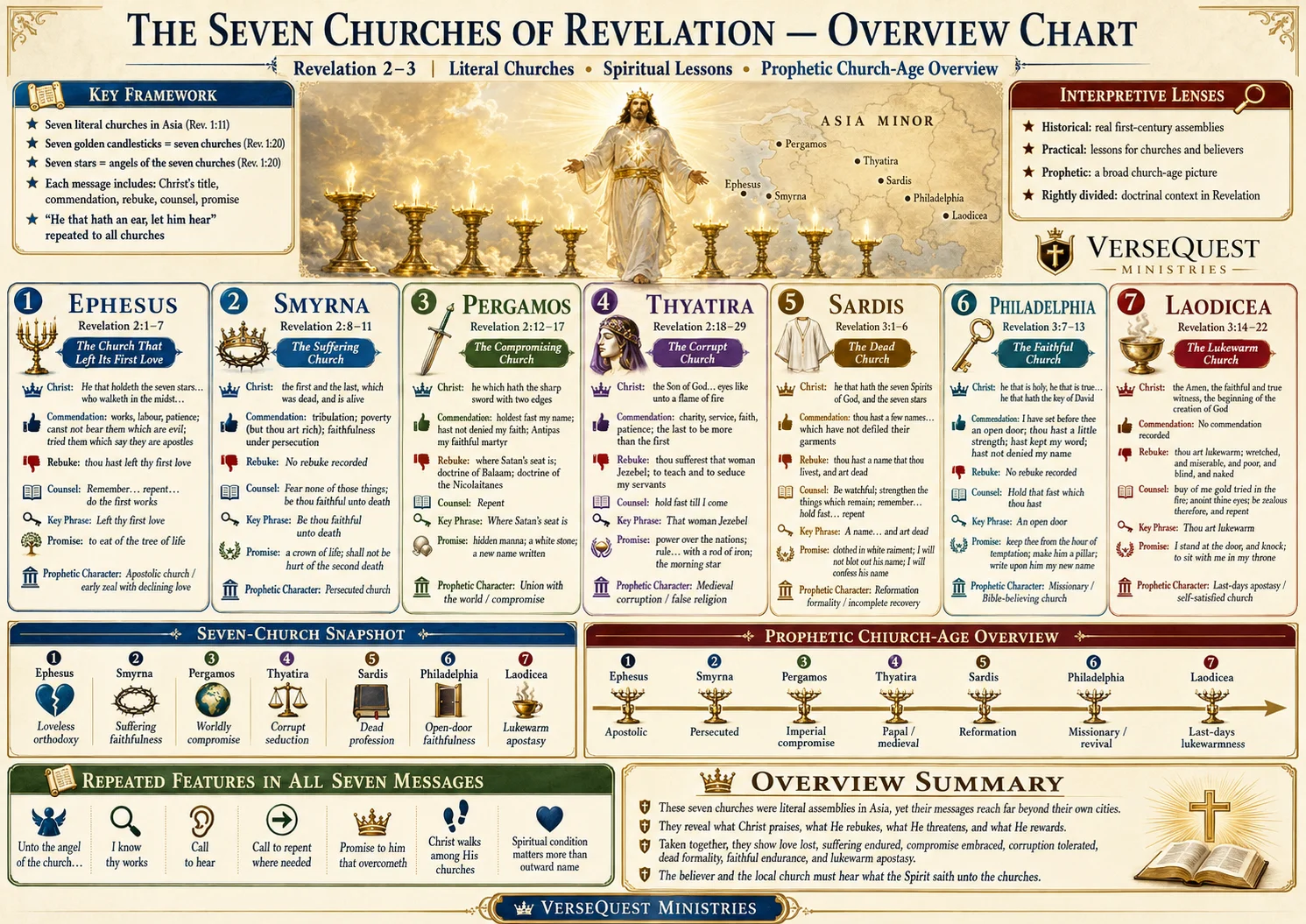
- The Seven Churches of Revelation Chart Collection – Christ Walking Among the Candlesticks
- A premium VerseQuest Ministries™ PDF chart collection covering the Seven Churches of Revelation in Revelation 2–3. Includes one overview chart plus individual KJV Bible study charts for Ephesus, Smyrna, Pergamos,…
- $12.99
- Add to cart
-
-
Doctrine Series
-
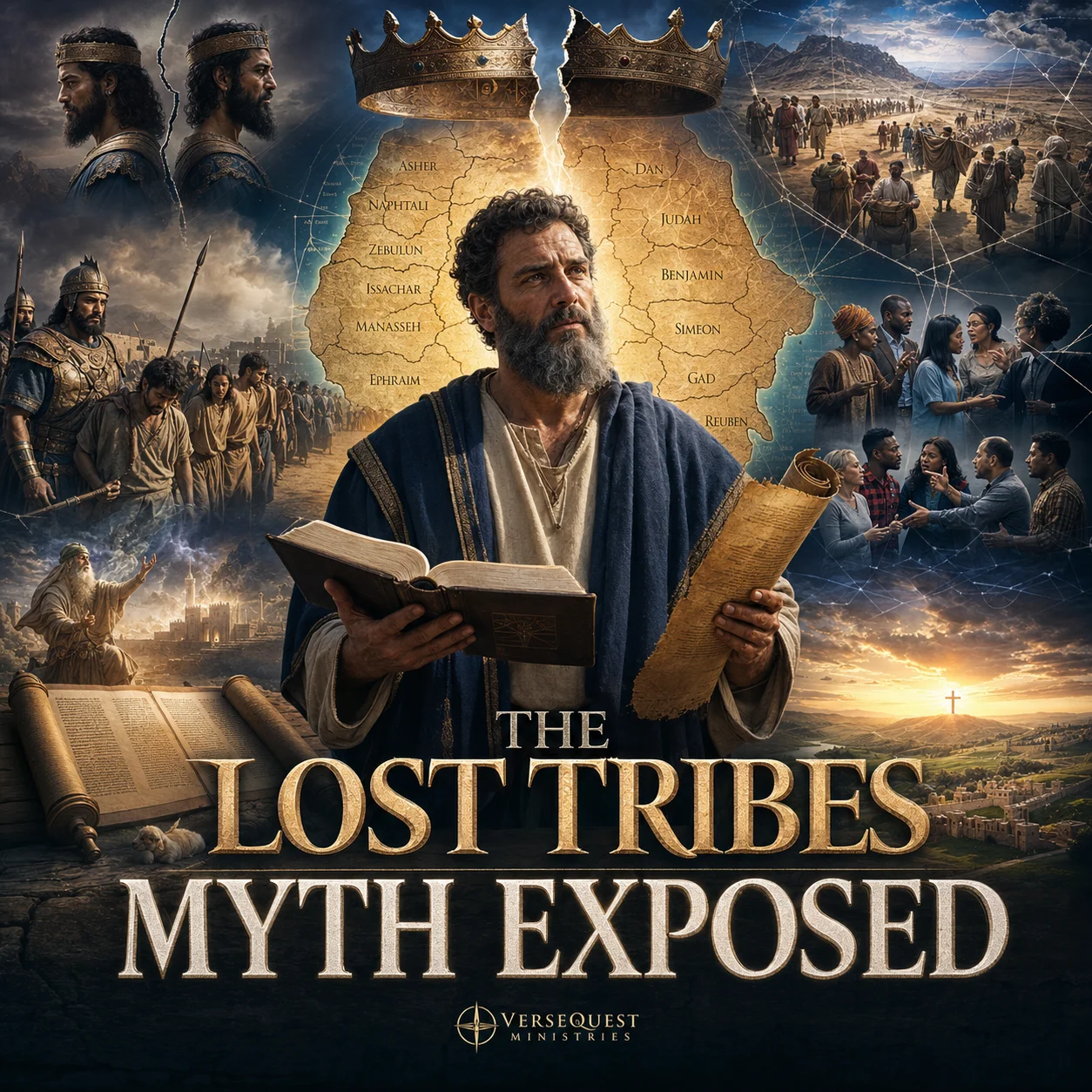
- The Lost Tribes Myth Exposed (213-Page Premium Study)
- A 213-page premium KJV study exposing the Lost Tribes myth, tribal identity errors, prophecy abuse, race theories, and false Israel claims through 35 detailed essays.
- $24.99
- Add to cart
-
-
Jesus Christ Studies
-
-67%
- Jesus Christ Prophet Priest and King – 441-Page PDF Study
- A 441-page premium KJV PDF study on Jesus Christ as Prophet, Priest, and King. This detailed VerseQuest book covers Christ’s prophetic ministry to Israel, His finished sacrifice and present intercession…
- Original price was: $29.99.$9.99Current price is: $9.99.
- Add to cart
-
-67%