
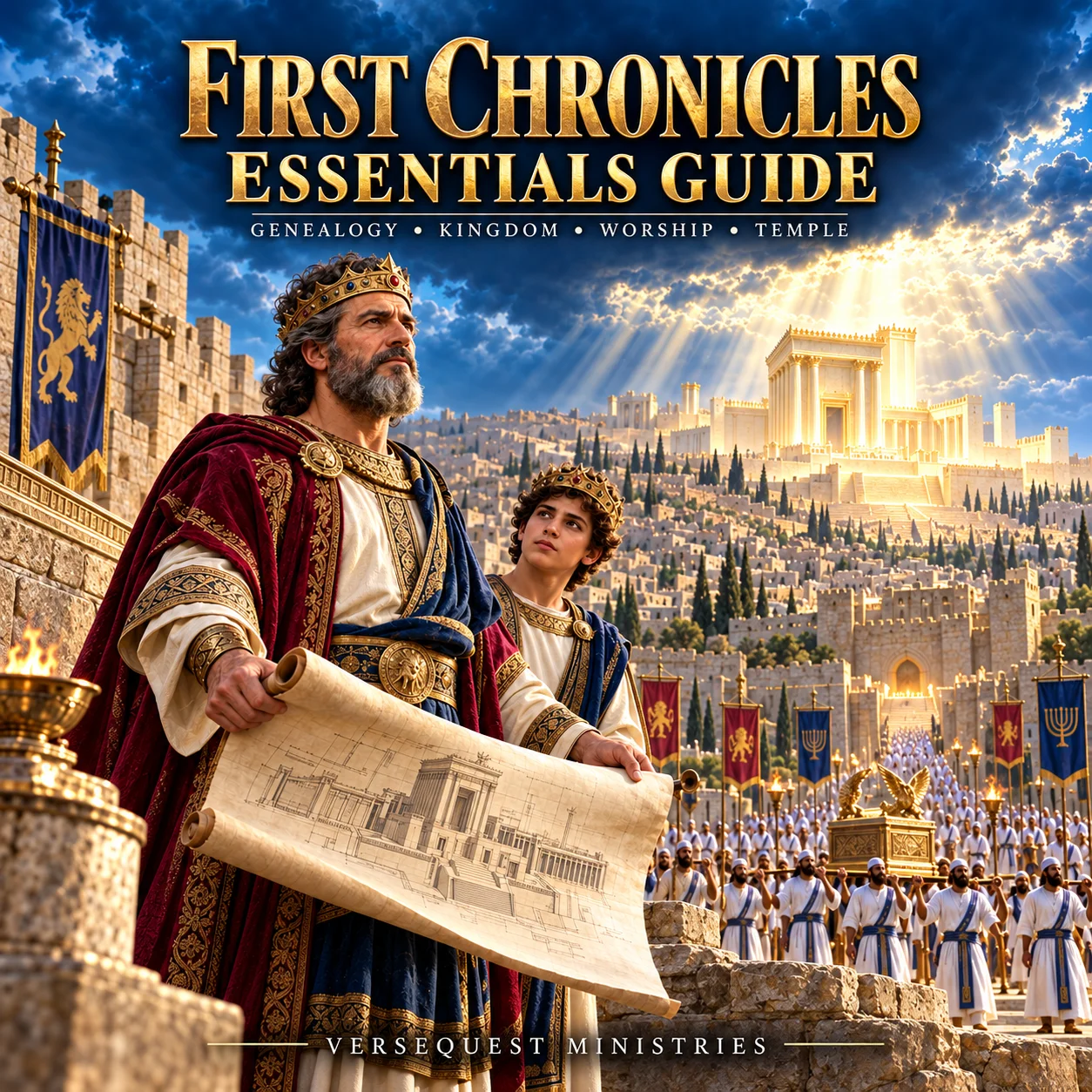
First Chronicles Essentials Guide — KJV Bible Study PDF
The First Chronicles Essentials Guide is a professionally designed 120-page downloadable PDF that makes the genealogies, people, worship, covenants, and historical movements of First Chronicles understandable without reducing the book to a shallow summary.
Through 78 Scripture-centered lessons, readers follow the record from Adam and Israel’s tribes to Saul’s fall, David’s kingdom, Jerusalem, the ark, ordered worship, the Davidic covenant, Ornan’s threshingfloor, temple preparation, Solomon’s succession, and the willing offerings of Israel.
Selected King James Bible passages are printed directly in the guide and accompanied by explanations, important observations, Bible-study lenses, questions, and note space. Orientation pages and 25 master-reference pages provide genealogy roadmaps, tribal distinctions, comparisons, doctrinal guardrails, difficult-passage guidance, teaching material, and final review.
Digital PDF download. 120 pages. 78 lessons. Price: $14.99.
$14.99
Description
The First Chronicles Essentials Guide is a professionally designed 120-page downloadable PDF that provides a clear, organized, and substantial introduction to the entire book of First Chronicles. Through 78 Scripture-centered lessons, the guide explains the genealogies, tribes, royal line, priesthood, reign of David, capture of Jerusalem, ark of the covenant, Davidic covenant, ordered worship, temple preparation, and succession of Solomon.
First Chronicles can appear difficult to new readers because its opening chapters contain hundreds of names, tribal relationships, family lines, offices, and historical connections. This guide helps readers understand why those records matter. The genealogies are not treated as filler. They establish Israel’s historical identity, preserve the distinctions among the tribes, identify the priestly line of Levi, emphasize the royal line of Judah, connect the restored community with its past, and preserve the ancestry through which the Lord Jesus Christ would come.
The guide begins with orientation pages explaining the book’s purpose, structure, historical setting, major movements, principal people, important locations, key terms, and practical methods for reading biblical genealogies. Readers learn to follow the narrowing line from Adam through Noah, Abraham, Israel, Judah, and David while recognizing the distinct roles of Reuben, Joseph, Levi, Benjamin, and the other tribes.
The account then moves from genealogy to kingdom history. The guide explains Saul’s fall, David’s rise, the capture of Zion, the gathering of David’s mighty men, and the unity of the tribes around the king whom God had chosen. The contrast between Saul and David is examined without pretending that David was sinless. Saul’s kingdom ended because of transgression and rejection of the Word of the LORD, while David’s throne became central to God’s unfolding covenant purpose.
Special attention is given to the ark of the covenant and the two attempts to bring it to Jerusalem. The first procession involved enthusiasm, music, and sincere intentions, but the ark was carried upon a new cart rather than according to God’s revealed order. Uzza’s death demonstrates that zeal cannot replace obedience. The corrected procession shows David and the Levites seeking God after the due order, preparing themselves, bearing the ark properly, offering sacrifices, and worshipping with reverence and joy.
Readers also examine the singers, porters, priests, musicians, sacrifices, psalms, and continual ministries established around the ark. David’s public psalm of thanksgiving in First Chronicles 16 becomes an important lesson in remembrance, worship, witness, covenant faithfulness, and the declaration of God’s glory among the nations.
The Davidic covenant in First Chronicles 17 receives careful doctrinal treatment. David desired to build a house for God, but God promised to build David a house. The guide explains the promises concerning David’s seed, house, kingdom, and throne while distinguishing the immediate historical connection with Solomon from the covenant’s ultimate fulfillment in the Lord Jesus Christ. The historical throne belongs to David’s royal line and must not be confused with the Church or reduced to a vague spiritual symbol.
David’s battles, victories, government, mighty men, and defeated giants are placed within the book’s larger purpose. Military success is never presented as an end in itself. The LORD preserved David and established the kingdom so Jerusalem, worship, covenant, and the future temple could occupy their appointed place in Israel’s history.
The census and its consequences form another major section. Readers follow David’s decision to number Israel, Joab’s objection, the resulting judgment, David’s confession, the plague, the angel at Jerusalem, and the purchased threshingfloor of Ornan. At that location, judgment meets confession, sacrifice, mercy, and answered prayer. The site becomes connected with the future house of the LORD.
The final chapters explain David’s extensive preparation for the temple. Although David was not permitted to build it, he gathered materials, organized labor, assigned the Levites and priests, appointed singers and gatekeepers, established treasurers and officers, delivered the divinely revealed pattern, charged Solomon, and encouraged Israel’s leaders to support the work. His example demonstrates that a servant of God can prepare faithfully for work that another person will complete.
The closing movement records the willing offerings of David and the people, David’s great prayer concerning God’s ownership of all things, Solomon’s public recognition, and the peaceful transfer of responsibility. First Chronicles ends with worship, stewardship, preparation, succession, and the preservation of God’s royal purpose.
Every one of the 78 lessons includes the complete selected King James Bible passage, a clear explanation of the text, three important observations, a focused Bible-study lens, questions for further thought, and purposeful writing space. The guide is divided into seven units covering genealogy and covenant identity; Saul, David, and the kingdom; the ark, worship, and Jerusalem; covenant and victory; the altar and temple preparation; ordered service and stewardship; and Solomon’s succession.
The final 25 master-reference pages provide genealogy roadmaps, tribal distinctions, guidance for studying genealogies, comparisons between Saul and David, the two ark journeys, David’s worship system, the Davidic covenant, the census accounts, Ornan’s threshingfloor, temple preparation, ministry organization, giving and stewardship, leadership and succession, Christ in First Chronicles, doctrinal and dispensational guardrails, difficult passages, and a final review of all twenty-nine chapters.
This guide is substantial enough to assist serious Bible students while remaining approachable for beginners. It may be read digitally or printed for personal Bible study, family reading, discipleship, Sunday school, small groups, classroom instruction, sermon preparation, ministry training, or rapid review before beginning a larger commentary.
Covenant identity through genealogy — The opening records connect Israel with creation, the nations, Abraham, Jacob, the tribes, Levi, Judah, David, and the restored community. Genealogies as historical revelation — The names establish real families, inheritances, offices, legal lines, and covenant continuity. Judah and the royal line — Judah receives special attention because the chief ruler and Davidic throne arise from that tribe. Levi and sacred service — The Levites, priests, singers, porters, and other servants are carefully identified and assigned. The distinction between birthright and rulership — Joseph receives the birthright while Judah becomes prominent in royal leadership. Judgment and continuity — Exile and captivity bring real consequences without erasing Israel’s identity or God’s covenant promises. Saul’s rejection — Saul loses the kingdom because of transgression, disobedience, and failure to seek the LORD. David’s accession — All Israel recognizes David as the king appointed by God. Jerusalem and Zion — The capture of Jerusalem establishes the city as the center of Davidic government and national worship. Mighty men and united service — David’s kingdom is strengthened through courageous, skilled, and loyal servants from throughout Israel. Zeal according to knowledge — The first ark procession warns that sincerity and excitement cannot replace obedience to revealed truth. The due order — The corrected ark journey demonstrates preparation, sanctification, authorized service, sacrifice, and reverence. Biblical worship — Music, thanksgiving, sacrifice, remembrance, holiness, witness, and continual service are brought together under divine order. The Davidic covenant — God promises David a house, seed, kingdom, and throne with enduring prophetic significance. Messianic kingship — The royal line and covenant promises direct the reader toward the Lord Jesus Christ, the Son of David. Victory under divine preservation — David’s military victories serve the establishment of the kingdom and preparation for temple worship. Sin, confession, and judgment — The census demonstrates the danger of pride and confidence in measurable human strength. Mercy at the altar — The plague is stayed where confession, sacrifice, divine fire, and mercy meet. The chosen temple site — Ornan’s threshingfloor becomes the location connected with the future house of the LORD. Preparation for another generation — David prepares materials, organization, instruction, leadership, and encouragement for Solomon. Ordered ministry — The closing chapters demonstrate that spiritual service requires calling, structure, accountability, skill, and faithfulness. Stewardship and willing giving — David and the people give freely while confessing that everything already belongs to God. Leadership and succession — David prepares Solomon to receive responsibility rather than merely leaving him a title. Israel’s earthly kingdom — The throne, land, tribes, temple, priesthood, and covenants must be preserved in their proper biblical setting. Christ in First Chronicles — Christ is anticipated through genealogy, Judah, David’s covenant, the royal Son, worship, priestly themes, and the promised kingdom.
First Chronicles begins with Adam because Israel’s history belongs within the history of mankind. The book does not introduce Israel as an isolated religious idea. It traces real people through real generations and then narrows the record toward Abraham, Israel, Judah, Levi, and David. The opening name establishes creation; the succeeding names establish continuity.
The genealogies must be read according to their purpose. A biblical genealogy may follow natural descent, legal descent, tribal organization, priestly qualification, royal succession, family branches, military leadership, or selected covenant lines. Not every genealogy is intended to list every generation in precisely the same manner. Omissions, alternate names, and different arrangements require comparison rather than careless accusations of contradiction.
First Chronicles preserves all Israel while emphasizing Judah and Levi. Judah matters because of the royal line and the Davidic covenant. Levi matters because of priesthood, worship, and temple service. These emphases do not erase the other tribes; they organize the record around the throne and the house of God.
The book interprets Saul’s death rather than merely repeating it. Saul died for his transgression, for rejecting the Word of the LORD, and for seeking counsel from one with a familiar spirit instead of seeking the LORD. Political collapse is therefore explained spiritually and morally.
David’s kingdom is strengthened through the cooperation of many faithful servants. Mighty men, tribal leaders, priests, Levites, singers, porters, craftsmen, officers, and willing givers all contribute to the work. First Chronicles does not present meaningful service as the activity of one gifted personality surrounded by spectators.
The failed ark procession demonstrates that spiritual enthusiasm does not excuse biblical disorder. David and the people were sincere, musical, energetic, and publicly joyful, but sincerity could not transform a forbidden method into obedience. The new cart appeared practical, yet it ignored the appointed responsibility of the Levites.
David later recognized that the breach came because Israel had not sought God after the due order. The corrected procession involved sanctified Levites, appointed bearers, sacrifice, music, thanksgiving, and reverence. Biblical worship is neither cold formalism nor careless excitement. It joins truth, holiness, preparation, joy, and obedience.
David’s psalm in First Chronicles 16 moves from thanksgiving to testimony. Israel is commanded to remember God’s works and covenant, sing unto Him, seek His face, declare His glory among the heathen, give Him the glory due unto His name, and confess that the LORD reigneth. Worship is therefore directed toward God while also bearing witness before men.
The Davidic covenant is the doctrinal summit of the book. David wished to build God a house, but God first promised to build David a house. Solomon would build the temple, but the covenant reaches beyond Solomon to the enduring royal purpose fulfilled in the Lord Jesus Christ. The throne, kingdom, house, and seed should be allowed to retain the meaning God gave them.
David’s victories establish security, but First Chronicles does not permit warfare to become the final subject. Victories prepare the way for worship, government, temple service, and succession. The kingdom’s strength remains subordinate to the covenant purpose of God.
The census exposes the danger of trusting numbers. Israel’s strength could be counted, but the source of Israel’s security could not be reduced to a military total. David’s conscience, confession, and acceptance of responsibility are important, but the account also demonstrates that the consequences of a ruler’s decisions can reach the people under his authority.
Ornan’s threshingfloor joins several of the book’s great themes. Judgment approaches Jerusalem, David confesses, a price is paid, sacrifice is offered, fire falls from heaven, prayer is answered, and the plague is stayed. The place of judgment becomes the place of worship and the future location of the temple.
David was not permitted to build the temple, but he was permitted to prepare for it. He gathered materials, organized labor, arranged ministries, received the pattern, instructed leaders, and charged Solomon. A limitation upon one assignment did not excuse him from contributing faithfully to the larger work.
The detailed divisions of Levites, priests, singers, porters, treasurers, military officers, and civil leaders demonstrate that order is not the enemy of spirituality. Responsibilities were defined so that the work could continue faithfully. Calling, preparation, skill, authority, and accountability belonged together.
First Chronicles 29 presents giving as worshipful stewardship. David and the people offered willingly, yet David confessed that all things came from God and that they had only given back what they had received from Him. Biblical giving leaves no room for boasting.
The book concludes with successful succession. David does not leave Solomon an undefined vision. He gives him instruction, plans, resources, organized personnel, public recognition, spiritual counsel, and a clear charge. Faithful leadership prepares the next generation to carry forward work that one generation cannot finish alone.
For personal Bible study, the guide may be read from beginning to end as an organized survey of First Chronicles. Each lesson begins with the selected King James Bible passage and then helps the reader identify the names, offices, events, commands, promises, and doctrinal distinctions that matter.
For sermon preparation, pastors and preachers can use the lesson titles, central explanations, observation points, Bible-study lenses, questions, and reference pages as foundations for textual or topical messages. Subjects include genealogy, identity, leadership, worship, obedience, covenant, stewardship, preparation, succession, and service.
For Sunday school and small groups, the seven major units provide natural teaching divisions. A class may work through the genealogies, David’s rise, the ark journeys, the Davidic covenant, the census and altar, temple preparation, or the closing organization of Israel’s ministries.
For discipleship, the guide supplies practical lessons concerning obedience, reverence, courage, responsibility, faithfulness, cooperation, confession, giving, leadership, preparation, and serving within an appointed role.
For family study, selected lessons may be read aloud and discussed without requiring a separate curriculum. The printed Scripture passages, explanations, questions, and writing spaces make the material approachable for developing Bible readers.
For classroom instruction and ministry training, the genealogical roadmaps, tribal distinctions, historical comparisons, worship structure, ministry assignments, doctrinal guardrails, and final review material provide an organized framework for teaching the book accurately.
For topical teaching, the guide can support studies on biblical genealogies, Judah’s royal line, the Levitical priesthood, the ark of the covenant, worship, the Davidic covenant, spiritual leadership, stewardship, temple preparation, and the preservation of Israel’s identity.
The primary companion to this guide should be a King James Bible so the reader can study every complete chapter surrounding the selected passages. A Strong’s or Cruden’s concordance can help trace important terms such as generation, Judah, Levi, David, ark, covenant, house, throne, temple, priest, singer, and offering.
The Second Samuel Essentials Guide is a particularly useful companion because it covers David’s reign, Jerusalem, the ark, the Davidic covenant, the census, and the purchased threshingfloor from the perspective of Samuel’s historical account. Comparing the two books reveals the distinctive emphasis First Chronicles places upon worship, priesthood, temple preparation, and covenant continuity.
The First Samuel Essentials Guide provides the necessary background concerning Samuel, Saul, David’s anointing, Saul’s rejection, David’s years of testing, and the events leading to Saul’s death.
The First Kings Essentials Guide continues the history through Solomon’s accession, the construction and dedication of the temple, Solomon’s later decline, and the division of the kingdom.
A reliable Bible dictionary can assist with names, tribes, cities, priestly offices, musical instruments, military groups, and temple terminology. A Bible atlas is useful for locating Jerusalem, Hebron, Gibeon, the surrounding nations, tribal territories, battle locations, and the movements associated with David’s reign.
Genealogical charts, chronological tables, cross-reference tools, and comparative studies of Samuel, Kings, and Chronicles can help readers understand differences in selection, emphasis, and arrangement without treating the accounts as contradictions. Ezra and Nehemiah are also valuable companion books for understanding the restored community and the importance of genealogical identity after captivity.
Related products
-
Jesus Christ
-
-10%
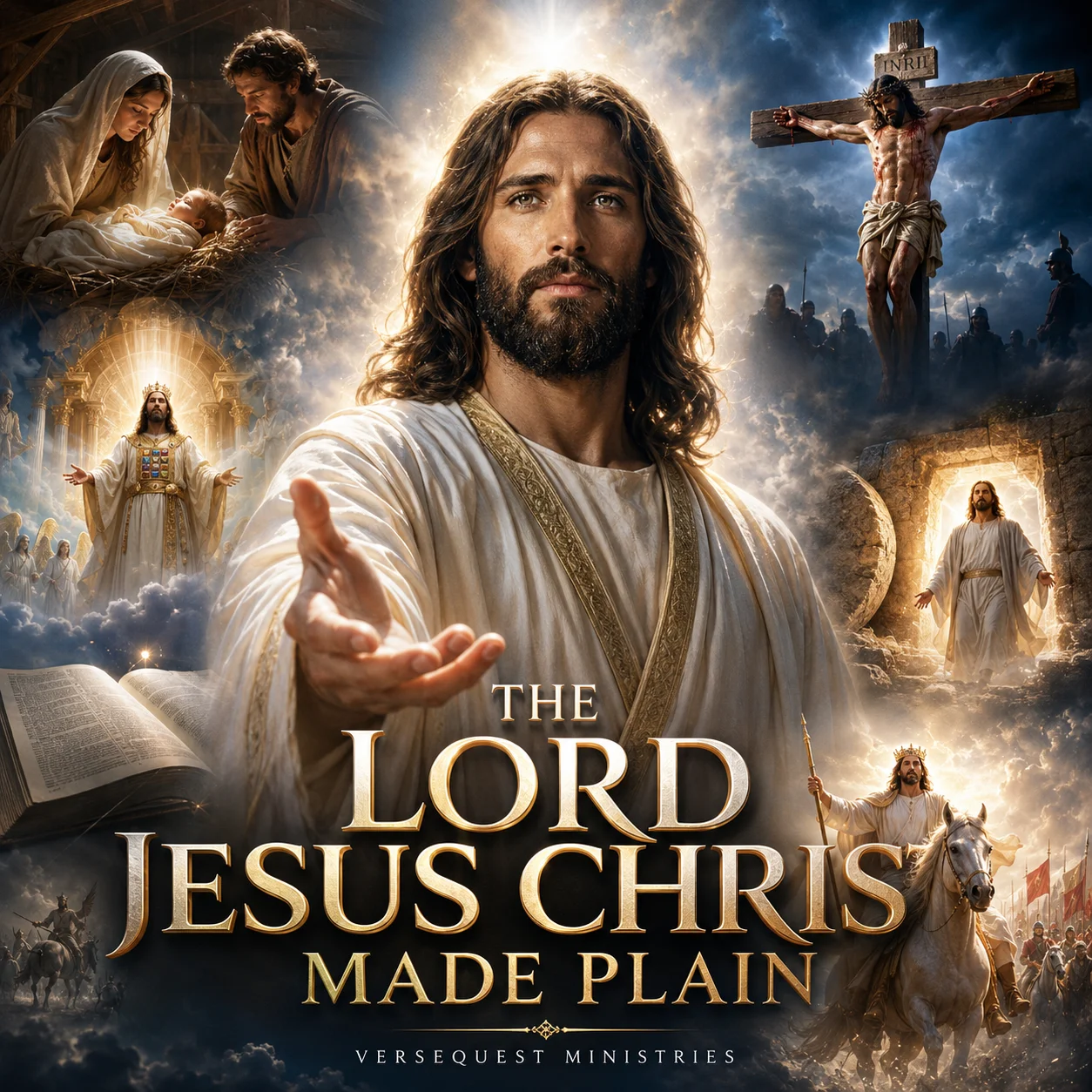
- The Lord Jesus Christ Made Plain – 637-Page KJV Bible Study
- A massive 637-page, 100-part KJV Bible study on the Person and work of the Lord Jesus Christ. This premium VerseQuest resource covers His deity, incarnation, blood, cross, resurrection, present ministry,…
- Original price was: $39.00.$34.99Current price is: $34.99.
- Add to cart
-
-10%
-
Jesus Christ / Christology
-
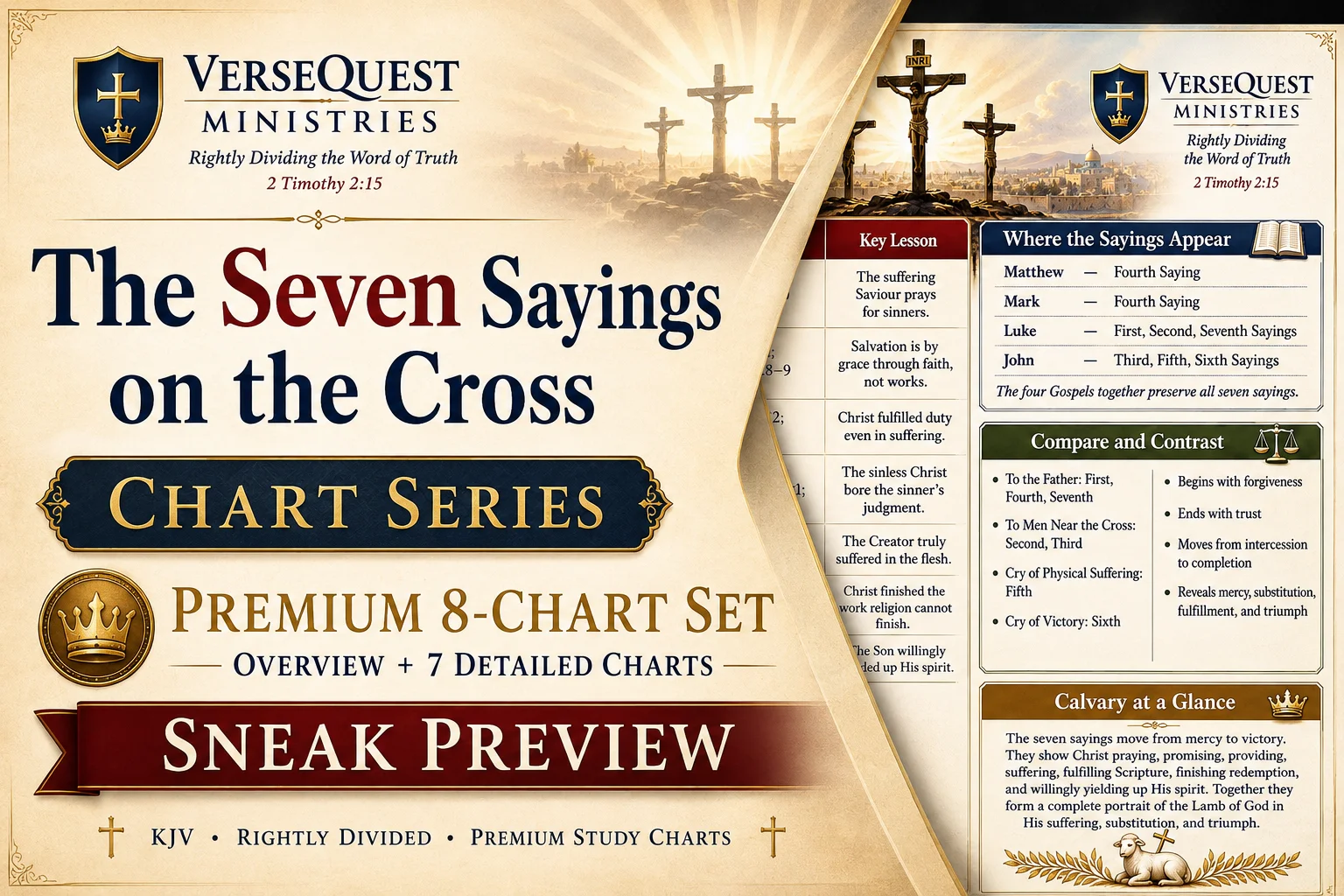
- The Seven Sayings on the Cross – Premium 8-Chart KJV Study Set
- A premium VerseQuest Ministries digital PDF study set on The Seven Sayings on the Cross, featuring an overview chart plus seven detailed KJV Bible study charts. This resource examines Calvary,…
- $12.99
- Add to cart
-
-
Jesus Christ Studies
-
-67%
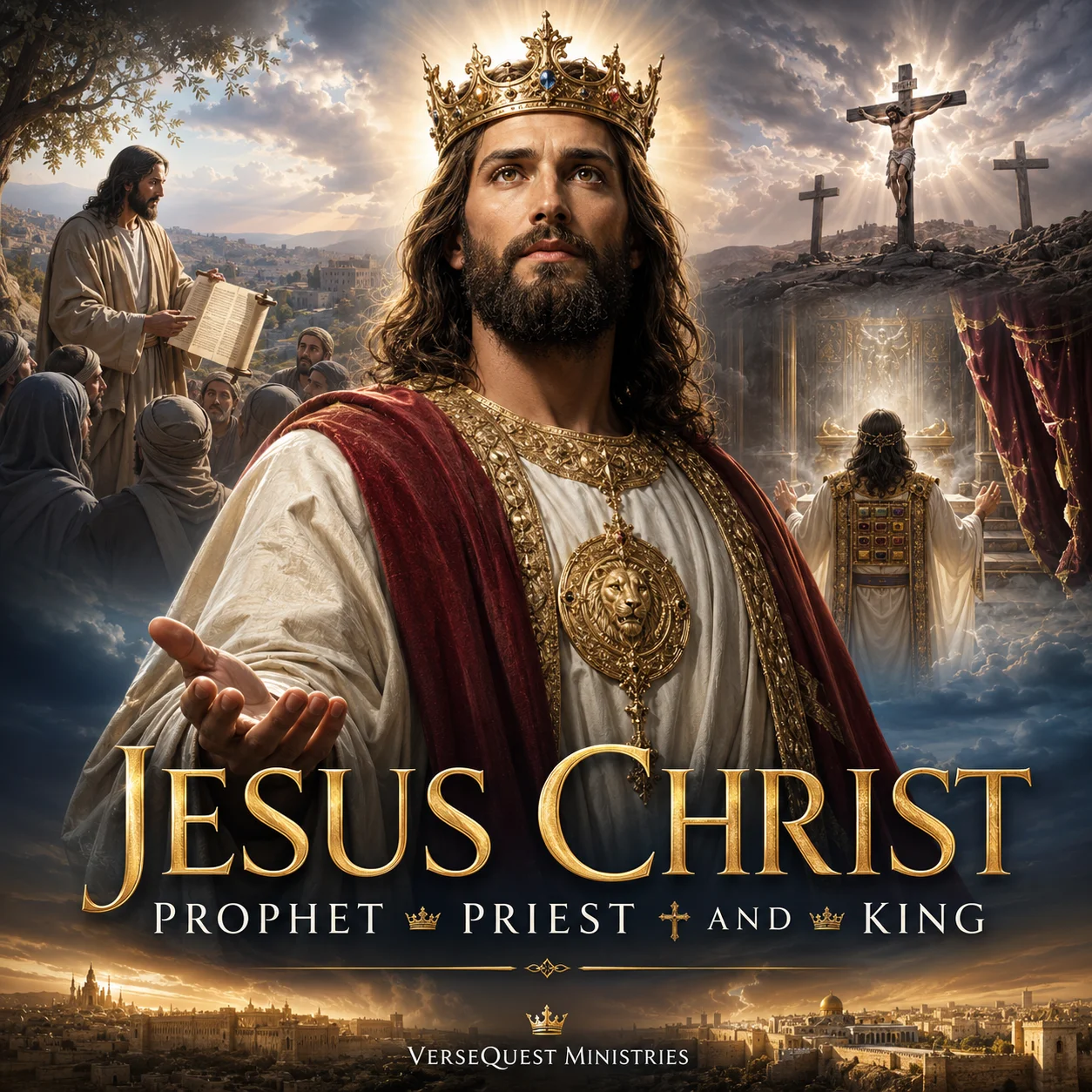
- Jesus Christ Prophet Priest and King – 441-Page PDF Study
- A 441-page premium KJV PDF study on Jesus Christ as Prophet, Priest, and King. This detailed VerseQuest book covers Christ’s prophetic ministry to Israel, His finished sacrifice and present intercession…
- Original price was: $29.99.$9.99Current price is: $9.99.
- Add to cart
-
-67%
-
KJV Studies
-
-67%
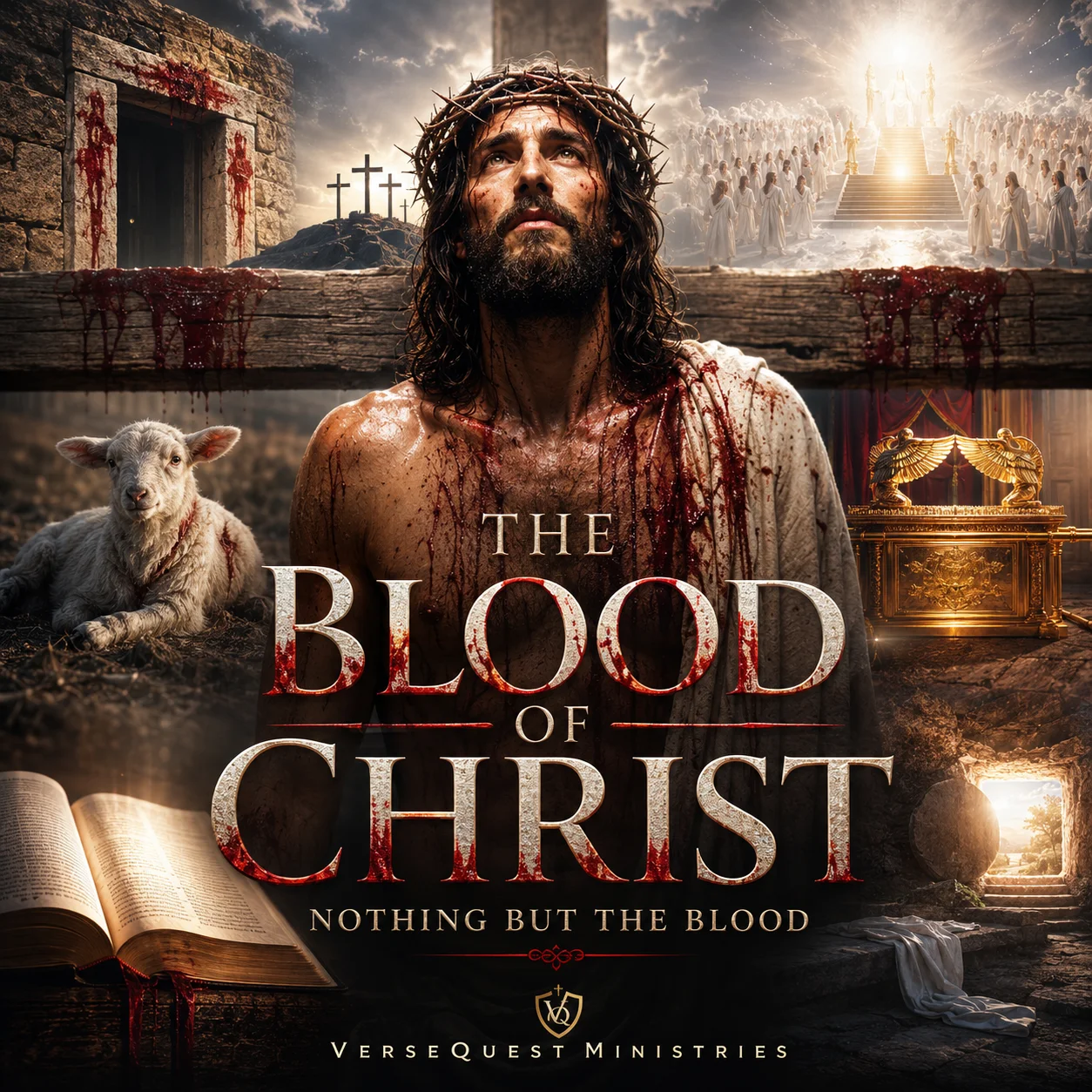
- The Blood of Christ – 66-Study KJV Bible Doctrine PDF
- A 441-page premium VerseQuest PDF featuring 66 detailed KJV Bible studies on the blood of Jesus Christ. This powerful doctrinal resource covers redemption, justification, propitiation, cleansing, access to God, eternal…
- Original price was: $29.99.$9.99Current price is: $9.99.
- Add to cart
-
-67%
-
The Rapture
-
-67%

- Caught Up Before the Wrath – 66-Essay KJV Rapture Study
- Caught Up Before the Wrath is a 430-page premium KJV Bible study defending the pre-tribulation Rapture of the Church from a rightly divided, dispensational perspective. This 66-essay VerseQuest Ministries book…
- Original price was: $29.99.$9.99Current price is: $9.99.
- Add to cart
-
-67%