
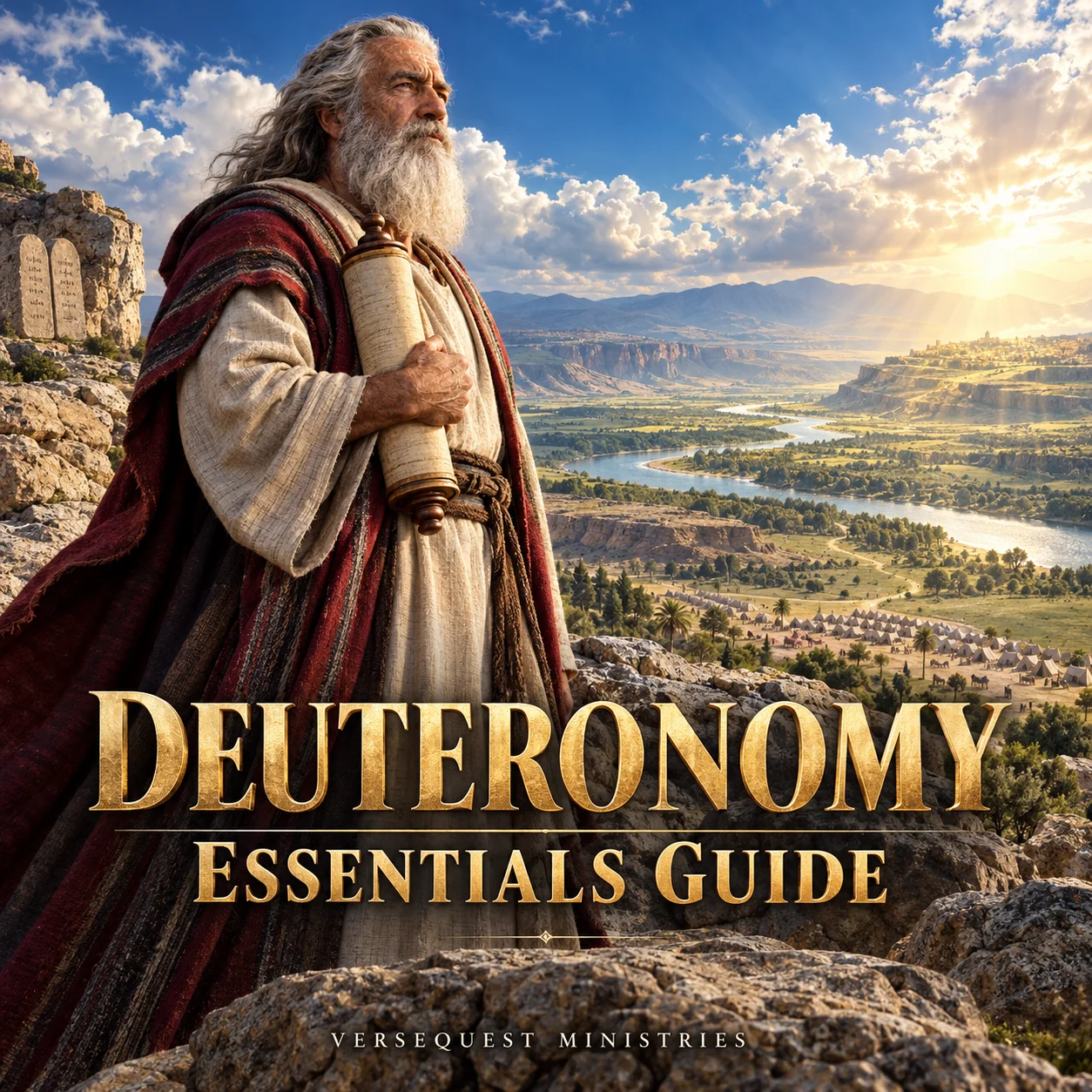
Deuteronomy Essentials Guide
The Deuteronomy Essentials Guide is a 112-page downloadable and printable KJV Bible-study book that gives beginners a clear foundation for understanding Moses’ final words, Israel’s covenant, the wilderness lessons, the commandments, the Promised Land, and the nation’s choice between blessing and cursing.
Every principal passage is printed in full from the King James Bible and accompanied by straightforward explanations, rightly divided distinctions, teaching points, questions, note space, charts, timelines, chapter maps, and final review material. It is an ideal starting place for new believers, busy readers, families, teachers, and anyone who wants the essential message of Deuteronomy without beginning with a large technical commentary.
Digital PDF download: 112 pages — $14.99
$14.99
Description
The Deuteronomy Essentials Guide is a 112-page downloadable and printable KJV Bible-study book designed to make one of Scripture’s most foundational Old Testament books understandable to beginners. It provides the essential framework needed to follow Moses’ final words, Israel’s covenant responsibilities, the lessons of the wilderness, and the nation’s preparation to enter the Promised Land.
Standing upon the plains of Moab, Moses addressed a new generation of Israelites who were about to cross Jordan without him. He reviewed the failures of the past, declared God’s law plainly, warned Israel against idolatry and forgetfulness, established principles governing worship and national life, and set before the people the consequences of obedience and rebellion. This guide walks readers through those subjects in a carefully organized and approachable format.
The study examines Israel’s failure at Kadesh-barnea, God’s preservation of the nation through the wilderness, the restatement of the commandments, the call to love the Lord, the importance of teaching Scripture to children, the appointed place of worship, Israel’s judges and kings, the Levitical priesthood, the prohibition of occult practices, the cities of refuge, the laws governing justice and daily life, and the promise of a Prophet like unto Moses.
Considerable attention is given to the blessings and curses of the Mosaic covenant, Israel’s prophesied dispersion, the promise of national restoration, the Song of Moses, Joshua’s appointment, the blessing of the tribes, and Moses’ final view of the land from Mount Nebo. The guide also explains how Deuteronomy points forward to the Lord Jesus Christ and shows how the New Testament uses this important book.
Every principal passage studied in the guide is printed in full from the King James Bible. Readers do not need to stop repeatedly to locate the verses in another book. Each lesson combines the complete passage with plain explanations, essential teaching points, rightly divided distinctions, thought-provoking questions, personal note space, and a concise “Remember This” statement.
The guide contains twelve structured study units, book and chapter maps, a historical timeline, summaries of important people and places, teaching charts, final review material, and a twelve-point summary of Deuteronomy’s most important truths. Its layout is suitable for personal reading, discipleship, Sunday school preparation, family study, small-group discussion, and ministry training.
This is not an exhaustive verse-by-verse commentary or a technical academic treatment. It is a substantial beginner’s foundation for readers who want to understand Deuteronomy without first working through a large commentary. The Deuteronomy Essentials Guide is available as a 112-page digital PDF for $14.99.
Moses’ final addresses to Israel before his death Israel’s preparation to cross Jordan and possess Canaan The relationship between remembrance and obedience The consequences of unbelief at Kadesh-barnea God’s discipline and provision during the wilderness years The repetition and explanation of the Mosaic law The commandments restated for a new generation Loving the Lord with the whole heart, soul, and might Teaching the words of God diligently to children The danger of forgetting God during prosperity Israel’s election based upon God’s love and covenant The literal distinction between Israel and the Church National and material blessings connected with Israel’s covenant The appointed place of worship The holiness and significance of blood The testing of prophets and spiritual claims The biblical prohibition against occult practices Judges, kings, priests, Levites, and prophets The promised Prophet like unto Moses Civil justice and the requirement for multiple witnesses Cities of refuge and the distinction between murder and accidental killing Righteous warfare within Israel’s national setting Protection of the poor, stranger, fatherless, widow, servant, and laborer Holiness expressed through ordinary responsibilities Honest weights, measures, wages, and business practices Firstfruits, tithes, feasts, gratitude, and public confession Blessings upon national obedience Curses resulting from covenant rebellion Israel’s prophesied siege, defeat, and worldwide dispersion Israel’s future repentance, regathering, and restoration The Song of Moses as a prophetic witness Joshua’s commission as Moses’ successor Moses’ blessing upon the tribes Moses’ death and the continuation of God’s program Jesus Christ revealed as the greater Prophet Deuteronomy’s importance throughout the New Testament
- Central argument: Moses prepares Israel to possess Canaan by reviewing the nation’s history, declaring God’s law, renewing the covenant, and placing life and death before the people.
- Immediate audience: Deuteronomy addresses the literal children of Israel standing upon the plains of Moab.
- Historical setting: The wilderness years are ending. Sihon and Og have been defeated, Moses is approaching death, and Joshua will soon lead Israel across Jordan.
- Purpose of repetition: The law is restated because a new generation must understand how God’s words apply to life in the land.
- Essential vocabulary: Hear, remember, forget not, love, fear, keep, teach, choose, blessing, curse, covenant, and land.
- Foundational failure: Israel’s refusal to enter Canaan at Kadesh-barnea demonstrates how unbelief can reject a plainly stated command of God.
- Faith and presumption: Israel first refused to advance when God commanded and then attempted to advance after He forbade it. Religious enthusiasm is not a substitute for obedience.
- Wilderness purpose: God humbled, tested, preserved, fed, and disciplined Israel so the nation would learn dependence upon His word.
- Prosperity warning: Israel faced the danger of attributing wealth and success to personal strength rather than remembering the Lord who provided them.
- Family responsibility: God’s words were to be taught diligently in the home, discussed throughout ordinary life, and explained when children asked questions.
- Worship: Israel could not worship according to personal imagination. Sacrifices and national worship belonged at the place chosen by the Lord.
- Leadership: Judges, kings, priests, Levites, and prophets were all placed under divine authority. No human office stood above God’s written words.
- The king and Scripture: Israel’s king was required to write and continually read the law so that his heart would not be lifted above his brethren.
- False prophets: Signs and predictions did not excuse doctrinal error. A messenger who led Israel after other gods failed the biblical test regardless of impressive experiences.
- Occultism: Divination, enchantment, witchcraft, familiar spirits, wizardry, and consultation with the dead were expressly forbidden.
- The promised Prophet: The Prophet like unto Moses is fulfilled in the Lord Jesus Christ, as confirmed by apostolic preaching in Acts.
- Civil justice: Serious accusations required careful investigation and more than one witness. False testimony carried severe consequences.
- Mercy within law: Cities of refuge, debt release, gleaning, prompt wages, and protections for vulnerable people reveal that biblical justice is not indifferent to human need.
- Difficult passages: Warfare, civil penalties, marriage regulations, and ceremonial distinctions must be read within Israel’s national and covenant setting.
- Blessings and curses: The promises of prosperity, victory, fruitfulness, disease, siege, defeat, and dispersion concern Israel’s covenant relationship to the land.
- Prophetic importance: Deuteronomy anticipates Israel’s rebellion, judgment, worldwide scattering, repentance, regathering, heart circumcision, and restoration.
- Israel and the Church: The Church may learn from Deuteronomy, but it does not replace Israel, inherit Israel’s civil penalties, or convert Israel’s land blessings into promises of automatic material prosperity.
- The Song of Moses: The song testifies to the perfection of God’s work, Israel’s corruption, divine vengeance, the failure of false gods, and eventual mercy toward God’s land and people.
- Moses and Joshua: Moses prepared what Joshua would continue. God’s program did not end when one faithful servant died.
- Christ in Deuteronomy: Christ is seen in the promised Prophet, the need for a mediator, the curse connected with the tree, and the words He used against Satan in the wilderness.
- Memorable teaching point: Deuteronomy looks backward so Israel will remember, inward so the heart will obey, and forward so the nation will understand the consequences of its covenant choice.
- Further study question: How do the historical books demonstrate Israel experiencing the blessings and curses Moses announced?
- Further study question: How do the prophets build their calls to repentance upon the covenant language of Deuteronomy?
- Further study question: Why did the Lord Jesus Christ answer Satan specifically with passages from Deuteronomy?
- Further study question: How does Israel’s promised restoration prevent replacement theology from controlling the interpretation of the book?
The Deuteronomy Essentials Guide can be used as a personal introduction before reading the entire book of Deuteronomy. Its chapter maps, timeline, structured units, and printed Scripture passages help readers recognize the people, places, covenant terms, historical background, and principal doctrines they will encounter.
For discipleship, the guide introduces new believers to essential Bible-study habits. Readers learn to identify the speaker, audience, covenant, historical setting, promise, warning, and proper application of a passage. The Rightly Divided sections help prevent Israel’s national laws and land promises from being confused with the Church’s present calling.
Pastors, preachers, and Sunday school teachers can use individual lessons to prepare introductory messages on Moses, the commandments, biblical leadership, the Prophet like unto Moses, Israel’s covenant, occult practices, justice, blessing and cursing, or Israel’s future restoration. The concise lesson structure makes it easy to develop a teaching outline without reducing the passage to disconnected talking points.
Families can use the guide for regular Bible reading because the principal passages are already printed on the pages. Parents may read the Scripture aloud, work through the explanation, discuss the questions, and use the note space for family observations.
Small groups and Bible classes can complete one lesson per meeting or examine an entire unit over several sessions. The final review pages provide useful discussion material for checking whether students understand Deuteronomy’s setting, structure, central doctrines, prophetic importance, and relationship to the New Testament.
The guide can also serve as a ministry-training resource for teachers who need practice explaining difficult Old Testament passages carefully. Its treatment of warfare, civil penalties, marriage laws, witnesses, judgment, blessing, cursing, Israel, and the Church demonstrates the importance of context and right division.
A King James Bible for reading the complete book of Deuteronomy in its biblical setting
A KJV concordance for tracing words such as hear, remember, forget, love, keep, teach, blessing, curse, covenant, and land
A Bible dictionary for studying Moab, Horeb, Kadesh-barnea, Jordan, Canaan, Gerizim, Ebal, and Mount Nebo
A Bible atlas showing Israel’s wilderness journey, the territory east of Jordan, and the land of Canaan
A chronological timeline covering the exodus, Sinai, Kadesh-barnea, the wilderness years, and the plains of Moab
A comparison study of the commandments in Exodus and Deuteronomy
A study of the Lord Jesus Christ’s use of Deuteronomy during His temptation
A topical study of the Prophet like unto Moses
A study of Israel’s covenants and literal land promises
A cross-reference study connecting Deuteronomy with Joshua, Judges, Kings, the prophets, Matthew, Acts, Romans, and Galatians
The VerseQuest Genesis Essentials Guide
The VerseQuest Exodus Essentials Guide
The VerseQuest Leviticus Essentials Guide
The VerseQuest Numbers Essentials Guide
The VerseQuest Dispensational Truth Essentials Guide
The VerseQuest Revelation Essentials Guide
Related products
-
Premium VerseQuest Books
-
-75%
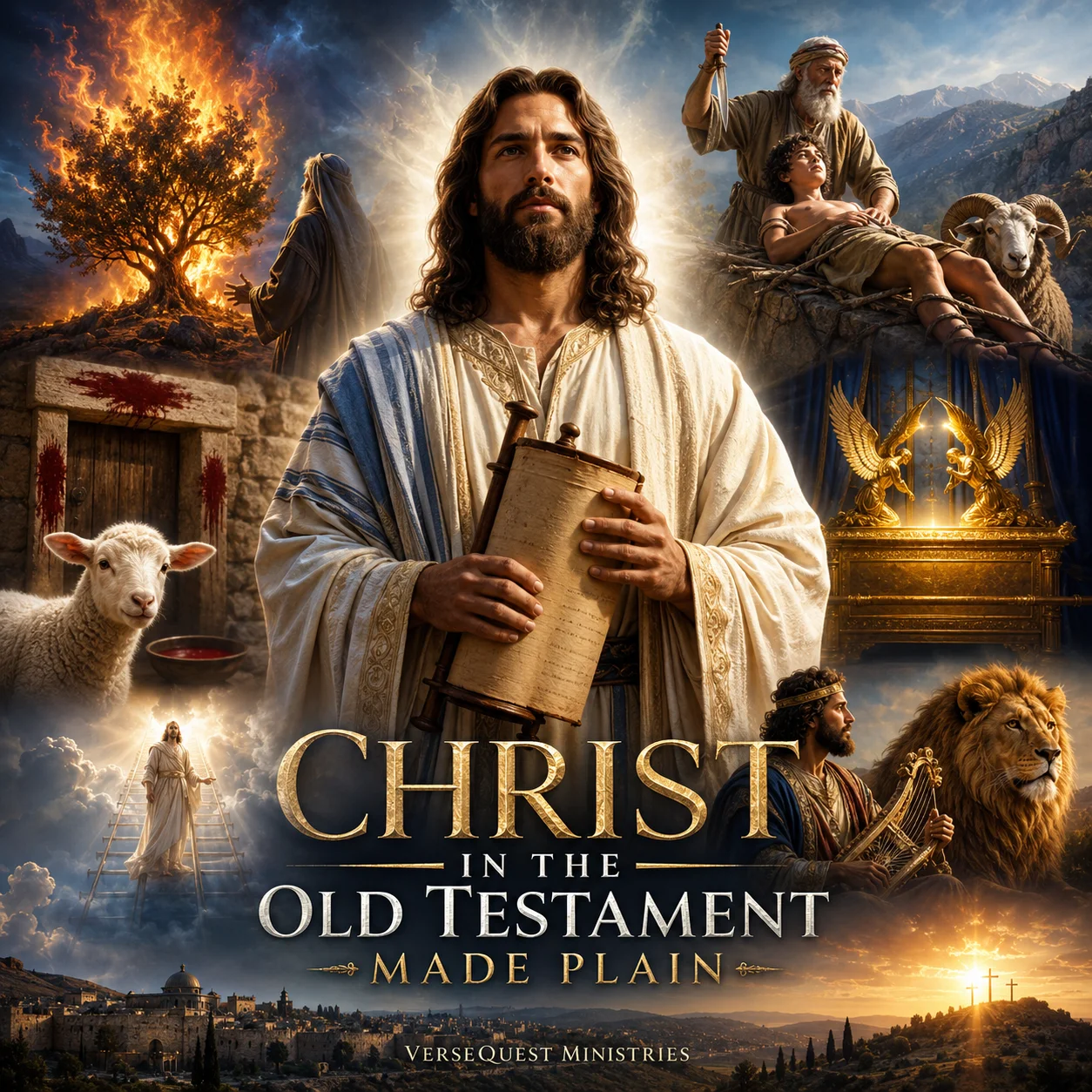
- Christ in the Old Testament Made Plain — 100-Essay KJV Study PDF
- A massive 670-page premium KJV Bible study PDF featuring 100 detailed essays showing Jesus Christ throughout the Old Testament in promise, type, sacrifice, Christophany, prophecy, suffering, resurrection, priesthood, and future…
- Original price was: $39.99.$9.99Current price is: $9.99.
- Add to cart
-
-75%
-
KJV Bible Study Resources
-
-60%
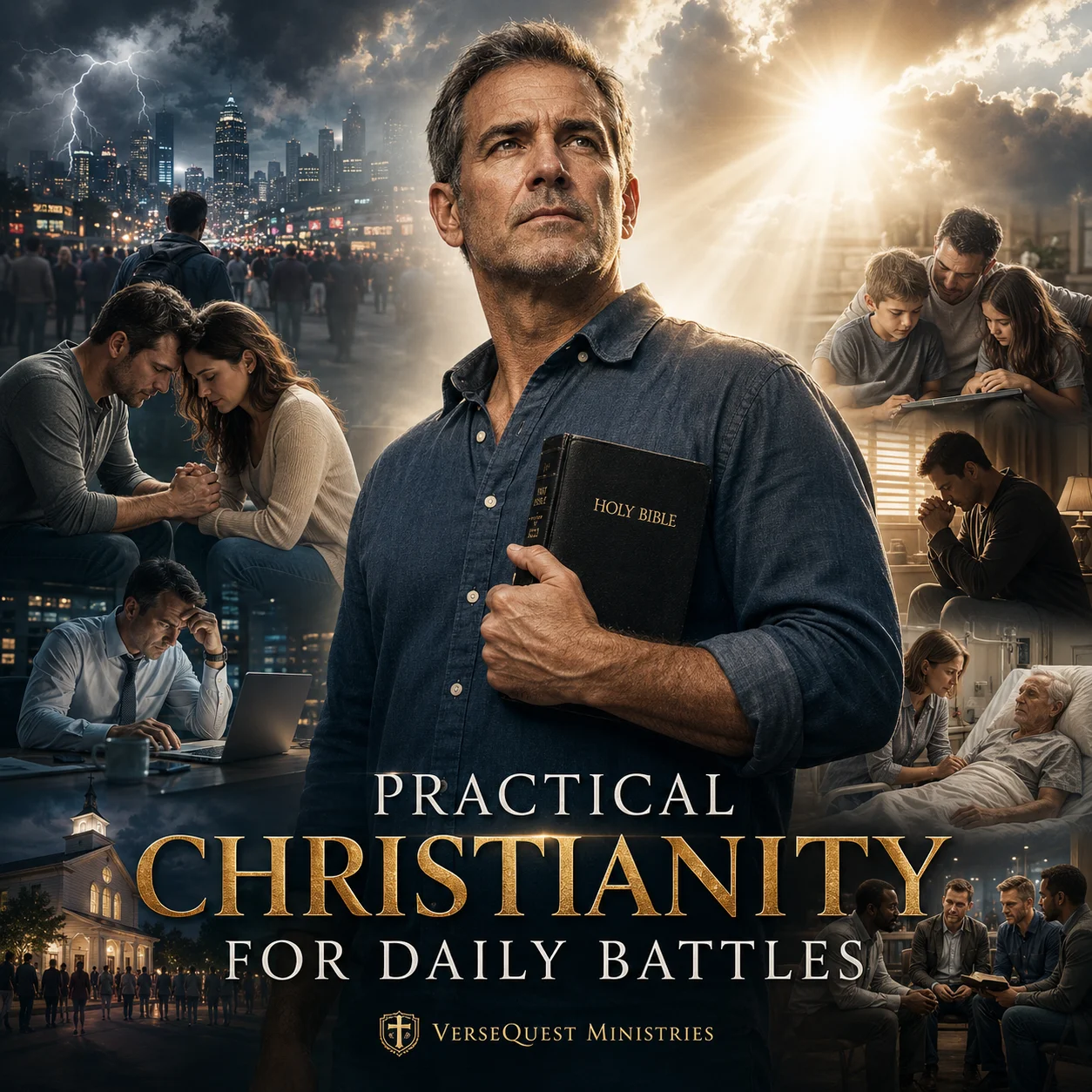
- Practical Christianity for Daily Battles – 329-Page KJV Study PDF
- A premium 329-page KJV study PDF with 40 full essays applying sound, rightly divided Bible doctrine to real daily Christian battles. Topics include temptation, anxiety, marriage, parenting, pornography, grief, church…
- Original price was: $24.99.$9.99Current price is: $9.99.
- Add to cart
-
-60%
-
Jesus Christ Studies
-
-67%
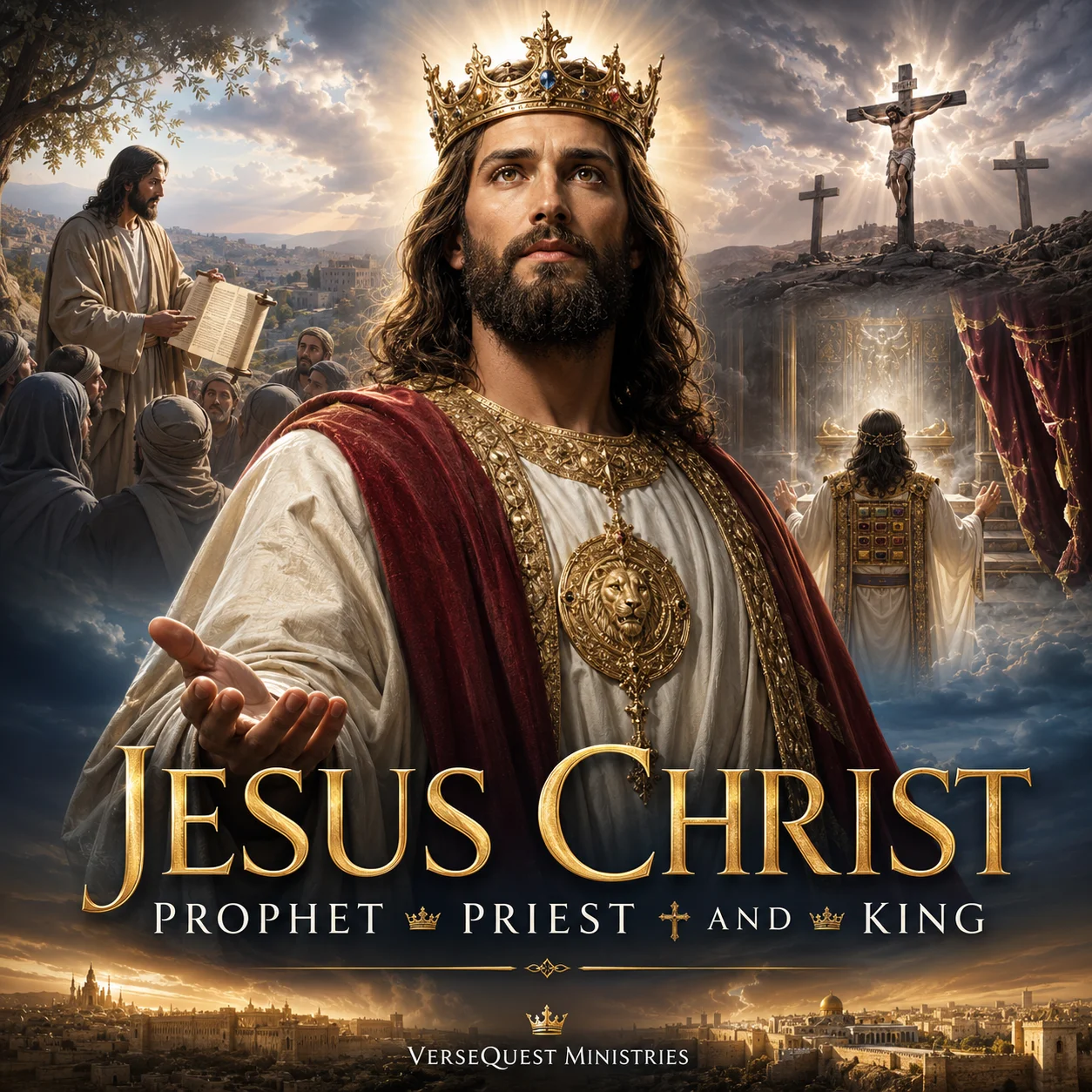
- Jesus Christ Prophet Priest and King – 441-Page PDF Study
- A 441-page premium KJV PDF study on Jesus Christ as Prophet, Priest, and King. This detailed VerseQuest book covers Christ’s prophetic ministry to Israel, His finished sacrifice and present intercession…
- Original price was: $29.99.$9.99Current price is: $9.99.
- Add to cart
-
-67%
-
Heaven
-
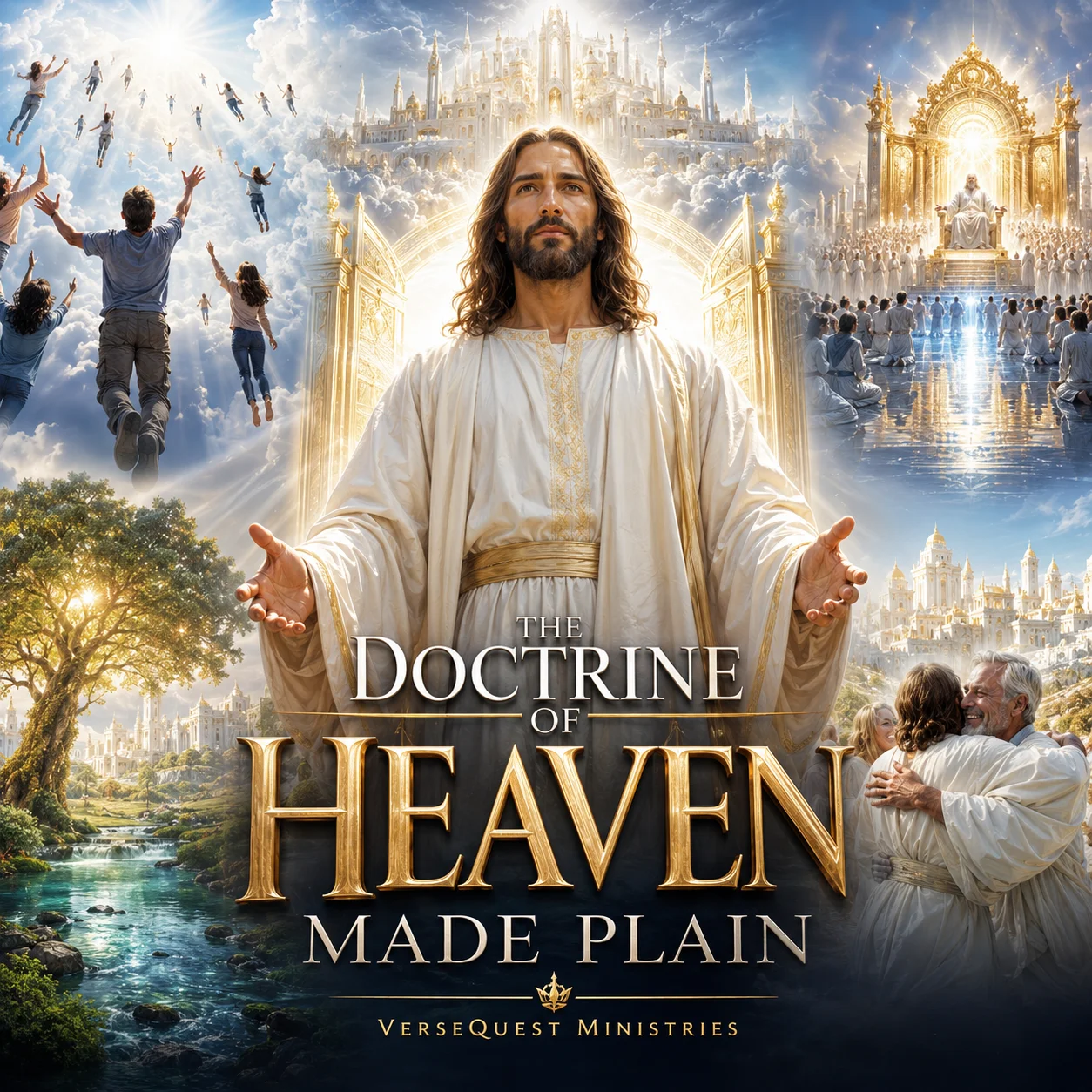
- The Doctrine of Heaven Made Plain — 599-Page KJV Bible Study PDF
- A massive 599-page KJV, rightly divided study on heaven, covering the present heaven, resurrection body, Rapture, Millennium, New Jerusalem, eternal state, hard questions, funeral lies, and cult errors.
- $34.99
- Add to cart
-
-
VerseQuest Premium Library
-
-67%
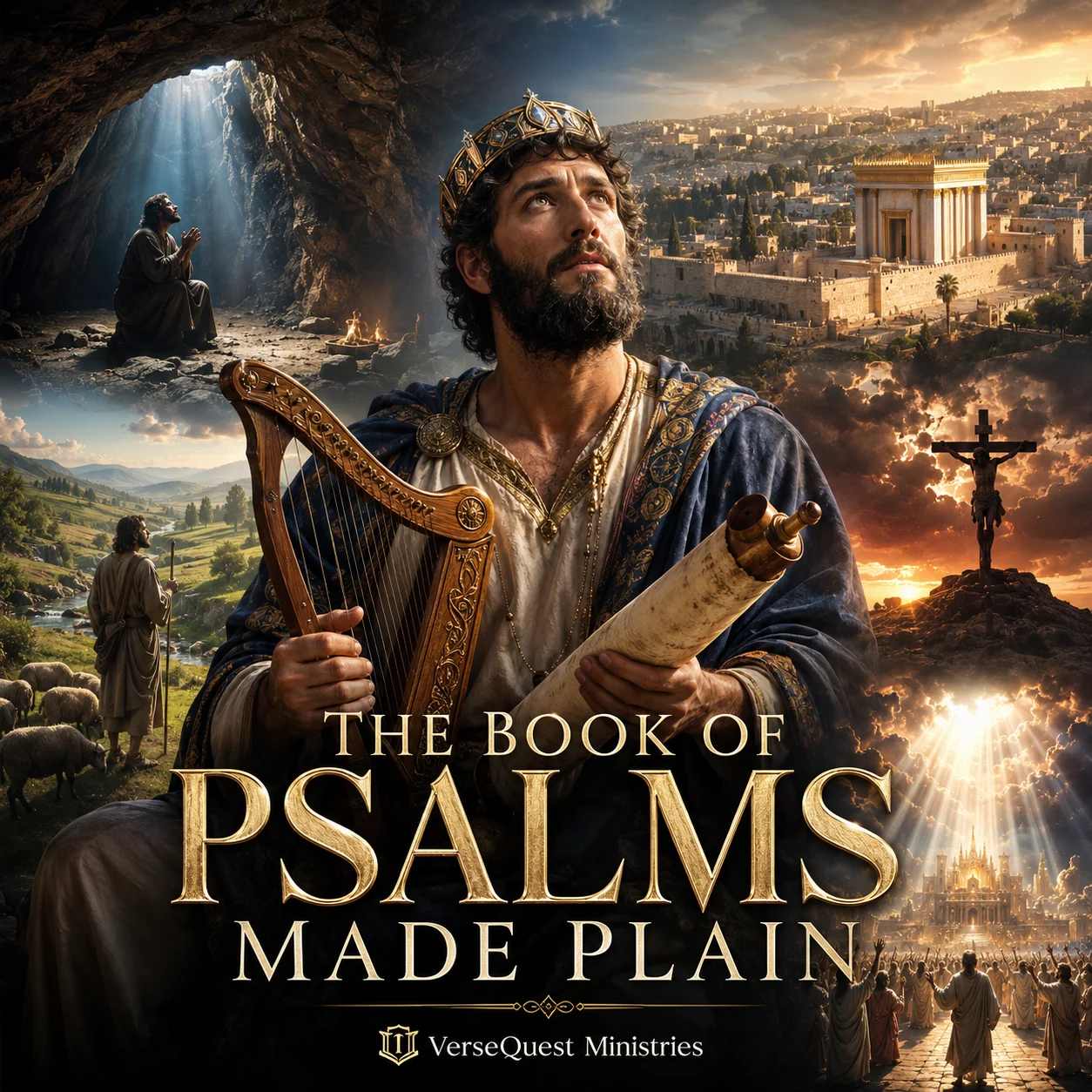
- The Book of Psalms Made Plain – 383-Page KJV Psalm Study
- The Book of Psalms Made Plain is a 383-page premium KJV Bible study featuring 54 detailed essays through the major themes, doctrines, prophecies, prayers, laments, and praises of the Psalms.…
- Original price was: $29.99.$9.99Current price is: $9.99.
- Add to cart
-
-67%